Despite government pledges to create jobs, factory closures are leaving thousands of workers unemployed as Bangladesh’s economic recovery struggles to gain momentum.
The Centre for Policy Dialogue (CPD) on Monday said 95 factories shut down between January and August in Gazipur, Savar-Ashulia, Narayanganj and Narsingdi industrial zones, leaving nearly 62,000 workers jobless.
The closures came as the economy showed some signs of stabilisation, but the broader recovery expected by businesses and households remained elusive amid weak investment, slowing industrial activity, fiscal pressure and incomplete reforms.
CPD’s assessment found that the stability achieved so far remains fragile, with structural weaknesses constraining investment, employment and economic expansion.
Presented at a media dialogue titled “The New Government’s First Six Months: An Economic Review” by CPD Distinguished Fellow Debapriya Bhattacharya, the review assessed government performance on restoring growth through investment and employment, containing inflation and strengthening governance.
CPD reviewed 362 government actions across nine areas, including governance, public financial management, industry, banking, energy, transport, agriculture, education, health and social protection. Of the 31 indicators assessed, 12 improved while 19 deteriorated.
Inflation was among the few areas showing improvement.
Headline inflation declined from 9.1 per cent in February to 8.3 per cent in July 2026, while food inflation fell from 9.3 per cent to 7.2 per cent.
However, the decline has brought limited relief as essential prices remain high and real wage growth stays negative.
“Economic stability and recovery are not the same thing,” Bhattacharya said, arguing that lower inflation and stronger reserves alone cannot signal a turnaround without higher investment, production, employment and growth.
CPD said Bangladesh is moving towards a “protracted economic recovery”, requiring action on fragile banks, weak revenue mobilisation, fiscal constraints and subdued investment.
Investment, industrial production and employment emerged as the biggest concerns.
Industrial growth slowed from around 3.5 per cent to near zero, while private sector credit growth remained historically low. Despite restructuring investment agencies, foreign direct investment recovery has remained below expectations.
CPD said employment policy should focus on creating quality jobs rather than only increasing job numbers. Mustafizur Rahman, Distinguished Fellow of CPD, said industrialisation remained essential for generating decent employment.
Fiscal pressure has added another challenge.
The government’s revenue target of nearly Tk7 lakh crore requires around 42 per cent growth in tax collection, despite a shortfall of nearly Tk1 lakh crore in the previous fiscal year.
CPD estimated the revenue gap could widen to Tk1.3 lakh crore–Tk1.4 lakh crore this fiscal year, potentially putting development spending and the Annual Development Programme under pressure.
Energy remains another major constraint on recovery.
Although gas extraction has improved, industrial gas consumption and electricity generation have declined. CPD said Bangladesh lacks a clear medium-term energy strategy, while gas shortages have affected fertiliser production and created risks for agriculture and food security.
“Energy is burning us,” Bhattacharya said.
CPD recommended reducing dependence on imported LNG, accelerating domestic exploration, expanding renewable energy and developing a coordinated energy strategy.
The organisation said recovery is also being constrained by weak fiscal planning, external shocks, political economy challenges, law-and-order concerns and limited institutional capacity.
“Without a clear roadmap for banking and energy, fragmented initiatives will not deliver the desired results,” Bhattacharya said.
CPD also cautioned against treating higher foreign reserves as proof of recovery, saying reserve growth could partly reflect weaker investment and lower production-related imports.
Despite concerns, CPD highlighted positive measures, including tariff benefits for low-income users, coastal gas exploration tenders, healthcare equipment tax reductions and metro rail fare discounts for senior citizens.
It also welcomed expansion of bonded warehouse facilities beyond the garment sector, bilateral trade initiatives, farmers’ loan waivers up to Tk10,000 and tax reductions on dialysis filters, heart stents and cancer treatment-related products.
However, it raised concerns over alleged political influence and irregularities in the distribution of Farmers Card and Family Card benefits.
CPD said the government needs an integrated reform programme covering banking, revenue administration, energy security, public expenditure, ADP effectiveness, logistics and digitalisation.
It warned that delaying reforms could push Bangladesh back to the “old playbook” of opacity, vested interests and weak accountability in economic management.
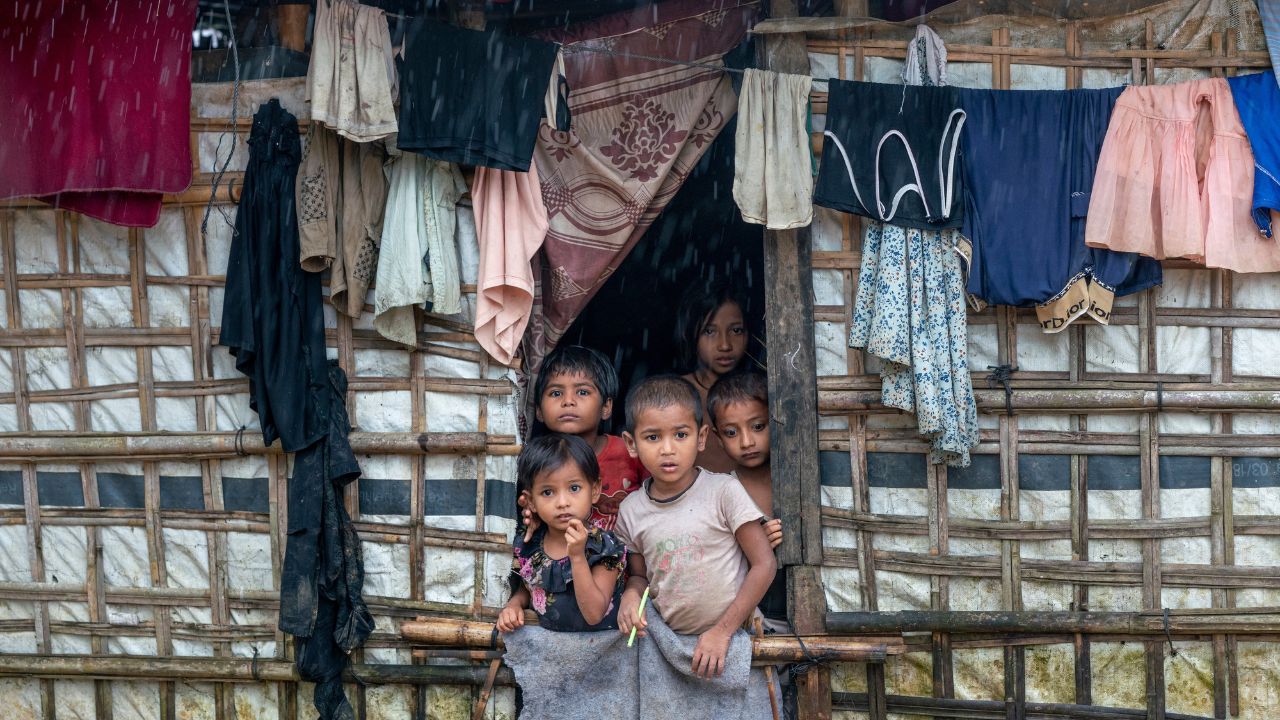
Inside a refugee camp in Ukhiya, Cox’s Bazar, several young Rohingya children gaze outward from the doorway of their shelter constructed from bamboo and plastic sheets during heavy monsoon. Photo: Zakir Hossain/TIMES
Nine years after Myanmar’s military launched its brutal crackdown on the Rohingya in Rakhine State, more than one million refugees remain trapped in overcrowded camps in Bangladesh, increasingly dependent on shrinking humanitarian assistance and exposed to crime, trafficking and deadly sea journeys.
The crisis that began with the mass displacement of nearly 700,000 Rohingyas in August 2017 has entered a more precarious phase. Aid is declining, livelihood opportunities are disappearing and basic services are being scaled back. The pressure is also mounting on Bangladesh, which has hosted the refugees for nearly a decade.
The 2026 humanitarian appeal of $710.5 million was only about 60 per cent funded by early June, according to UN figures. The appeal itself was 26 per cent lower than the previous year. The UN has warned that continued funding cuts could severely worsen conditions for nearly 1.2 million Rohingyas in Bangladesh.\
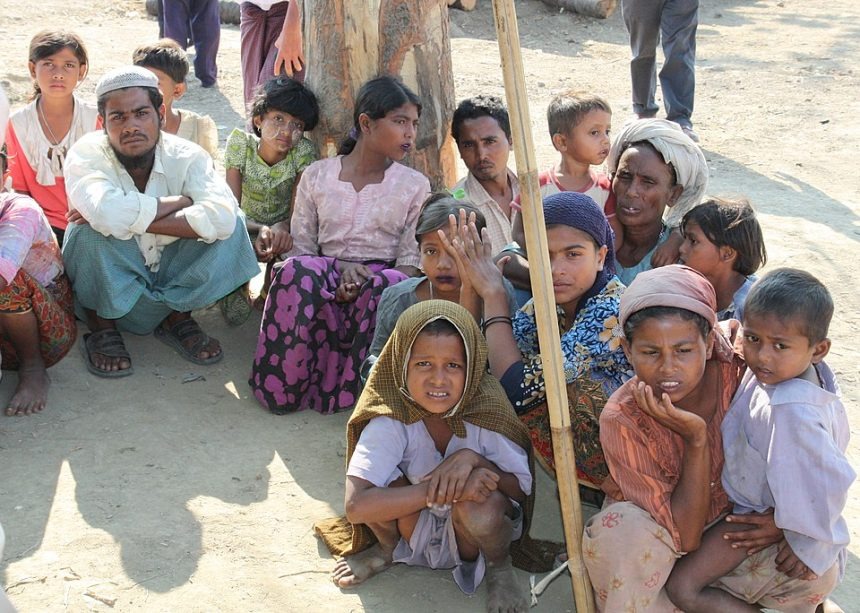
Rohingya refugees of Myanmar took shelter in Ukhiya, Coxs Bazaar Bangladesh Photo: Collected
Inside the camps, the consequences are increasingly visible: smaller food rations, fewer jobs, closed learning centres, deteriorating infrastructure and growing insecurity.
At an event on Sunday, State Minister for Foreign Affairs Shama Obaid Islam warned that declining funding could put food, nutrition, health, education and protection programmes at risk. The impact, she said, would extend beyond the Rohingya community to local populations and regional stability.
Funding crisis and struggle for survival
For refugees who have no legal access to formal employment, the reduction in aid directly affects their ability to survive.
Mujibur Rahman, a resident of Camp 2, said the assistance he receives has fallen sharply.
“We used to receive $12 a month, but now we receive $7. It is impossible to survive an entire month on $7,” he told TIMES of Bangladesh.
He also described deteriorating camp infrastructure, including clogged drains and pedestrian bridges that have become unusable.
The funding crisis is reflected in the broader humanitarian response. In 2026, $710.5 million was sought for food, shelter, healthcare, education and protection, but only $436.9 million had been received or pledged by early May.
The decline in donor funding has been particularly sharp in the case of the United States. According to Human Rights Watch (HRW), US funding for the Rohingya response fell from $300 million in 2024 to $12 million by June 2025.
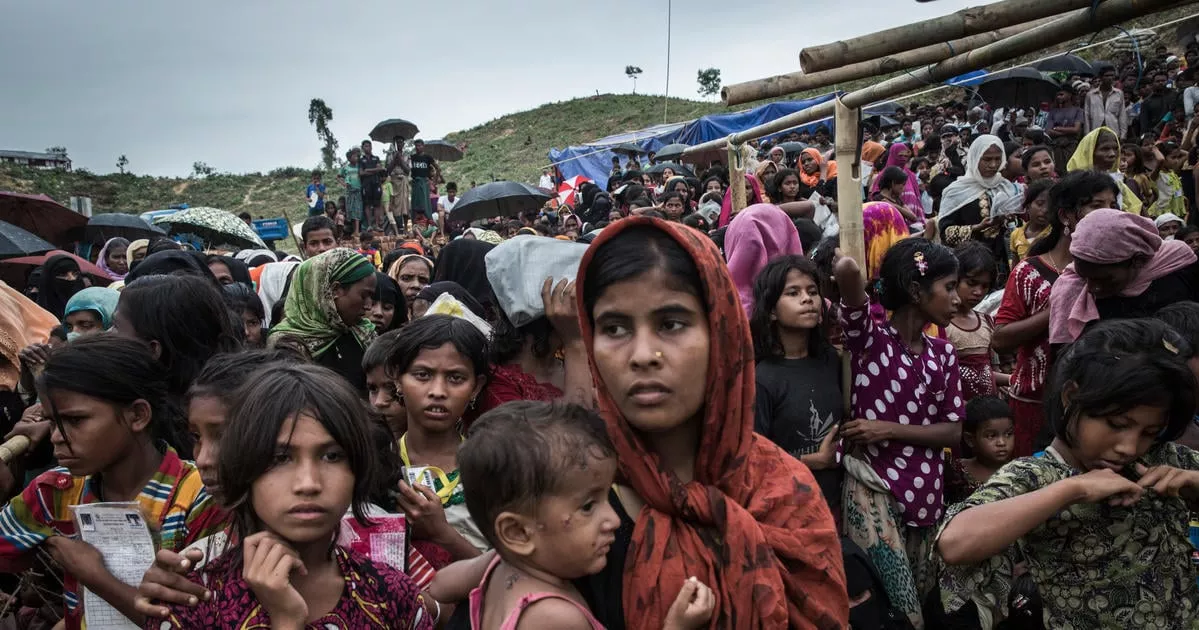
Displaced Rohingya staying at a refugee camp in Cox’s Bazar. Photo: UNHCR
The impact goes beyond food assistance. Jishu Barua, project manager of local NGO Young Power in Social Action, said projects that once employed 30–40 workers for tasks such as repairing walkways and stabilising slopes can now employ only seven or eight because of funding shortages.
Unicef closed hundreds of learning centres in June 2025 due to a lack of funds.
The cuts are also narrowing the already limited opportunities available to young Rohingyas. With restrictions on movement, little access to formal employment and inadequate educational opportunities, many are left with few alternatives.
Save the Children says the camps are among the most densely populated places on earth, while reduced food security, limited livelihoods and inadequate resources are increasingly pushing families towards desperate coping mechanisms.
The consequences are not confined to refugees. Bangladesh has been carrying an increasing share of the financial burden of a crisis that originated in Myanmar.
Bangladesh had already spent nearly $1 billion on the Rohingya response between 2017 and 2022. As international assistance declines, the financial pressure on the host country is becoming harder to sustain.
Crammed camps, crime and trafficking
The camps have become increasingly difficult places to live. Overcrowding, unemployment, poverty and restrictions on movement have created an environment where criminal networks can easily exploit vulnerable residents.
Trafficking has emerged as one of the biggest threats.
Mujibur Rahman said around 100–150 Rohingyas are falling into trafficking networks and leaving the country every day. Increasingly, traffickers reach potential victims through mobile phones, offering promises of jobs, marriage or a better life abroad.
Rohingya refugees unload belongings from a crowded wooden boat after reaching shore in Cox’s Bazar, Bangladesh, as worsening hunger and shrinking aid push many to risk dangerous sea journeys in search of a better life. Photo: Unicef
Young people without education, work or realistic prospects for the future are particularly vulnerable.
Rabi Alam, a resident of Camp 14, said women often undertake risky journeys in the hope of marriage and a better family life. Some Rohingyas who travelled to Malaysia in 2024 experienced violence and sexual abuse but remained silent due to fears of further insecurity.
Traffickers also lure young people with promises of legitimate UN cards, he said.
Abduction has become another major source of insecurity. Jahangir Alam said abductions are particularly common in Baharchhara in Teknaf and around Shalbagan near Camps 26 and 27. The risk increases after evening prayers, he said.
Mohammad Imran, a youth leader in Camp 14, said abductions continue through alternative routes despite security checkpoints, making it difficult to monitor criminal networks.
The deterioration in security has prompted authorities to consider a separate prison facility for Rohingya detainees.
Yaba and criminal economy
The drug trade has emerged as another major threat, drawing vulnerable refugees into a criminal economy.
Authorities have said Rohingyas are increasingly being used as couriers in the cross-border yaba trade. With tighter surveillance along the Ukhiya-Teknaf border, traffickers have shifted to coastal routes, according to officials.
Somen Mondal, deputy director of the Department of Narcotics Control, said goods are smuggled from Bangladesh into Myanmar and yaba is brought back on the same boats.
Small shelters inside Kutupalong and Balukhali are being used to store yaba.
Photo: Collected
HRW has also documented the use of Rohingya children by armed groups to transport yaba through checkpoints.
For many refugees, involvement in the drug trade is less a matter of choice than a result of poverty, unemployment and the absence of viable alternatives. Officials warned that the longer the crisis continues without education, livelihoods and legal opportunities, the greater the space for criminal networks to recruit from the camps.
Deadly sea journeys
As conditions deteriorate, an increasing number of Rohingyas are turning to the sea.
The journey is often presented by traffickers as a route to jobs, marriage or a new life in Malaysia, Indonesia and elsewhere. In reality, it can end in trafficking, abuse, disappearance or death.
According to IOM, more than 6,500 Rohingyas from Bangladesh and Myanmar undertook irregular sea journeys in 2025, with more than 890 people reported dead. Deaths in the Bay of Bengal and Andaman Sea rose sharply from 598 in 2024 to 860 in 2025.
The trend has continued this year. More than 2,800 Rohingyas attempted dangerous sea journeys between January and mid-April, according to UNHCR.
Rohingya asylum seekers disembark from their boat upon landing in Ulee Madon, North Aceh, Indonesia, 16 November 2023. Photo: AP/UNB
Save the Children, citing UN data, reported that 2,907 people departed Bangladesh and Myanmar by boat during the first three months of 2026 — about 85 per cent more than during the same period in 2025. More than half of those making the journeys were women and children.
For people who have spent nine years in confinement with little hope of returning safely to Myanmar, the sea is increasingly seen as a gamble worth taking.
But the boats are often overcrowded and unseaworthy, while traffickers exploit passengers throughout the journey. Women and children are particularly vulnerable to abuse.
The continuing departures underline the failure to provide Rohingyas with a safe and dignified future — either in Bangladesh or through voluntary repatriation to Myanmar.
A crisis Bangladesh cannot carry alone
The Rohingya crisis is now entering its ninth year with no durable solution in sight.
The refugee population continues to grow while aid declines. The camps remain overcrowded, livelihoods are severely restricted and criminal networks are expanding into the vacuum created by poverty and desperation.
At the same time, Bangladesh is being asked to sustain an increasingly expensive humanitarian operation despite facing its own economic and social pressures.
International organisations have warned that recent aid cuts are already undermining health, safety and stability in the camps, while the lack of livelihood opportunities can push refugees towards dangerous sea journeys in search of work.
The danger is that the humanitarian crisis will increasingly become a security crisis — not only for the Rohingyas but also for Bangladesh and the wider region.
The fundamental problem, however, remains unchanged: the Rohingyas are stateless and have no safe place to return to.
Rohingya refugees waiting to be rescued from a boat after a week anchored off the coast of Labuhan Haji in Aceh, Indonesia. While most Rohingya try to get to Malaysia, many are risking their lives on even longer journeys across south-east Asia. Photo: AFP/BSS
Refugee Relief and Repatriation Commissioner (RRRC) Mohammad Mizanur Rahman told TIMES that although the Inter Sector Coordination Group (ISCG) now operates as the Rohingya Coordination Platform, coordination efforts are being hampered by staffing shortages.
He said that, beyond funding constraints, the Rohingyas’ statelessness and prolonged despair are the root causes of trafficking and crime. He added that the widespread use of mobile technology has made it increasingly difficult to track and apprehend traffickers and cautioned that the problem cannot be resolved overnight.
As UNHCR spokesperson Babar Baloch has warned, the growing number of deaths on irregular routes should push the international community to act before another year becomes another deadly chapter in the Rohingya crisis.
Nine years after the genocide, the brutal reality for Rohingyas is stark: remain trapped in increasingly desperate camps, fall prey to crime and trafficking, or risk their lives at sea in the hope of finding a better future.
Acting Editor: M Abul Kalam Azad Published by Md. Mashud Razzaq, on behalf of Media Dreams Ltd. Address: 05, Sonargaon Janapath Road, Sector-07, Uttara, Dhaka-1230, from Shariatpur Printing Press, 28/B Toyenbee Circular Road, Motijheel, Dhaka-1000,
News and Commercial Offices: EDB Trade Centre (Level-13), 93 Kazi Nazrul Islam Avenue, Karwanbazar, Dhaka-1215.
Email: info@tob.news, Telephone (PABX): 02-41010681-84, Mobile: +88-01335127700.