

The Nart Sagas of the Caucasus
If Our Lives Be Short, Let Our Fame Be Great!

1: Origins & Sources
There are many data sources worthy of study when exploring the scientific frontier of non-human intelligences and their interactions with humanity. In the present day, some organizations have adopted a covert approach “listening in” on NHI communications transmitted through anomalous means.1 Others take an indirect path, monitoring and interrogating human abductees whose reported encounters serve as valuable field data…especially when aggregated and examined longitudinally.2
Less discussed, but no less relevant, are the encounters with non-human intelligences preserved in the oral and written records of civilizations. UFO literature has tended to fixate on Western Europe and on seemingly unambiguous technological events in the sky.3 Modern biases against the human individual – if not against the species itself – have left vast troves of cultural data unexamined.4 Hubris again blinds humanity to what lies before it: the durational presence of anomalous intelligences on Earth.
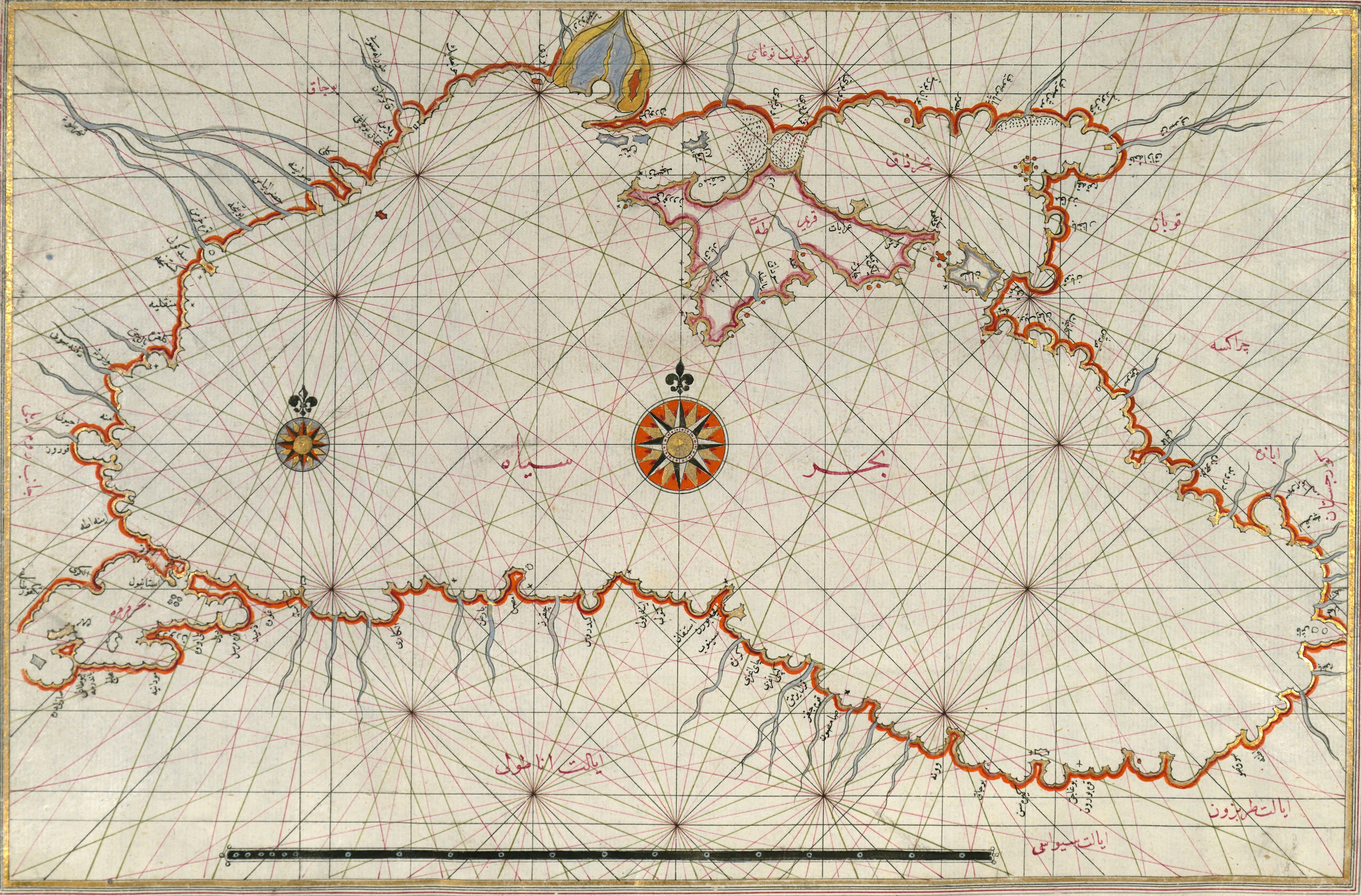
This week we begin the first of several cultural surveys, searching myths and legends for indicators of contact – signatures of non-human minds and their technologies as perceived by ancient mankind. Our journey begins upon the primordial waters of the Black Sea.
2: Set & Setting
The region known in the West as the Black Sea is an ancient basin, ringed with the remnants of empires as old as those of the Nile. Today the Black Sea is bounded by Ukraine and Russia to the north, Romania and Bulgaria to the west, Turkey to the south, and Georgia to the east. Nearly enclosed, its only outlet the famed Bosphorus Strait, this brackish inland sea has long served as corridor, crossroads, and crucible for humanity.
Mighty rivers – the Dnieper, the Danube, the Halys, and the Rioni – empty into the Black Sea basin, creating a layered sea with an oxygen-rich surface and an anoxic abyss. This stagnant and sulfurous seafloor preserves what elsewhere would decay: ancient shipwrecks, unfortunate lovers, and the bones of animals not seen since the last ice age lay undisturbed; a Lovecraftian landscape of death absent decay.
Around this Mere of the Dead, fertile coasts inhabited since pre-history bustle with trade. In the north dwell the Slavs of Russia and Ukraine; to the west, Romanians and Bulgarians; to the south, the Pontic Armenians and Anatolian Turks; and to the east, the dazzling mosaic of the Caucasian nations: Georgians, Circassians, Chechens, Avars, Ossetians, Armenians, Azeris, Karachay, and more.
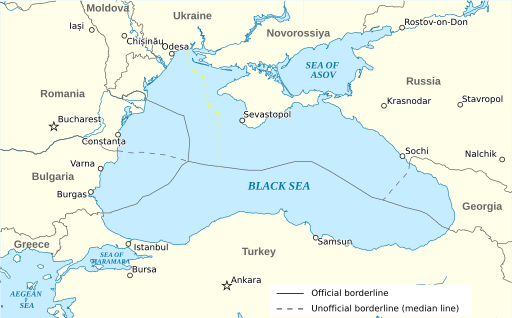
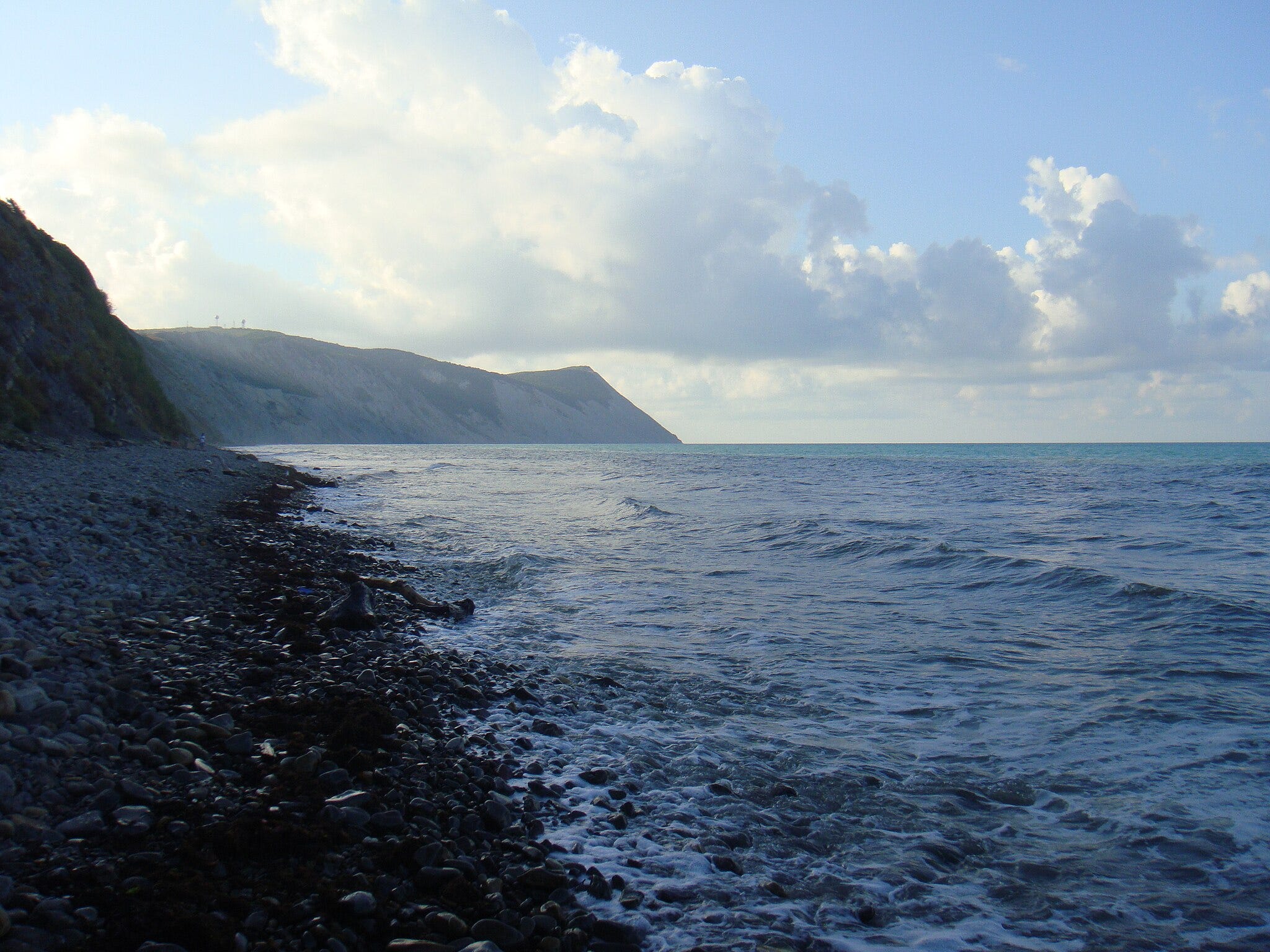
It is eastward that our trireme first turns, fitting for any initiate into the craft of odd fellows, making landfall upon the craggy shores of the Caucasus region. It is here that JASON and his Argonauts once sought the Golden Fleece. This land of misty mountains and hidden valleys is home to fiercely independent peoples that time forgot – a spine of the world where giants stride across mountains, and heroes duel on horseback in the sky.
And battles there were aplenty. The peoples of the Caucasus are renowned for their fierce blood feuds; ancient vendettas carried across generations like heirlooms, until the conflict itself becomes the prize. Holding at bay these fiery deeds are the ancient forests, unspoiled by modern artifice, which echo with the songs of more than fifty tongues. Yet despite the internecine strife, the forbidding geography, and the gulf of time – one mythology binds them all: the Sagas of the Narts.
3: Survey
Among the many oral and written traditions of the Black Sea region, none are as narratively-coherent or as archaic as the Nart Sagas, a corpus of heroic deeds and epic cycles that constitute a self-contained wisdom tradition. The authoritative English compilation and historiographic study is John Colarusso’s Nart Sagas from the Caucasus: Myths and Legends from the Circassians, Abazas, Abkhaz, and Ubykhs. In this comprehensive and erudite work, Colarusso not only renders these complex and hauntingly archaic legends into English for the first time, but provides the reader with invaluable intertextual insights and historical anecdotes that illuminate their ancient and often unsettling character.
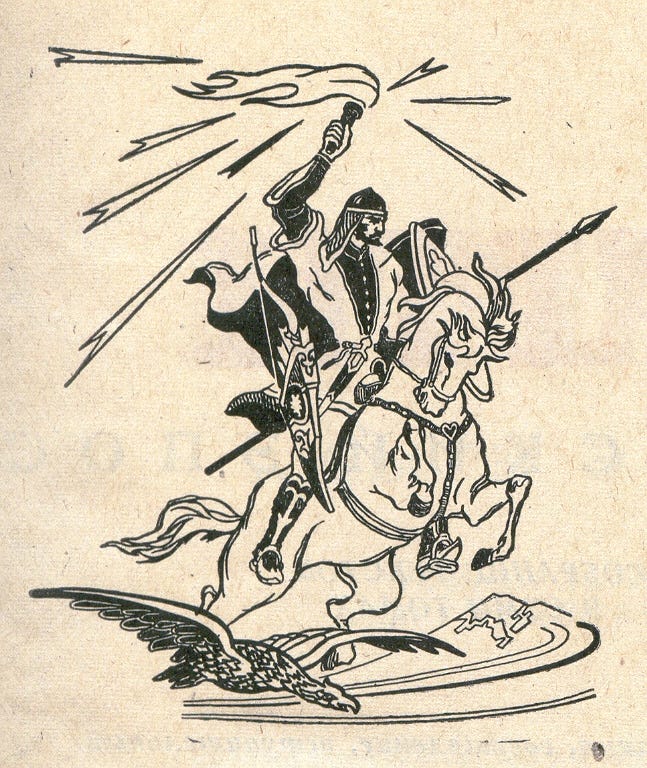
Structurally, the Nart Sagas function both as an ethno-cultural genealogy, tracing the lineage and moral codes of the Caucasian peoples and as a metaphysical cosmology in which natural forces and archetypes find narrative embodiment. This prima materia, shared across the region’s diverse cultures, continually absorbed and transformed the religious influences of the empires that rose and fell around the Caucasus. The corpus comprises more than two hundred tales transmitted through overlapping linguistic and tribal families, each preserving traces of cross-cultural exchange. Within these sagas we discern echoes of distant yet kindred traditions such as the Greek, Vedic, Norse, and Persian works.
Indeed, in popular Nart cycles such as The First Sickle, The Golden Apple Tree of the Narts, and How Sosruquo Brought Back the Seeds of the Millet, the attentive reader will discern striking parallels to mythic episodes across the Indo-Eurasian continuum: the Indo-Aryan Tvaṣṭṛ and his forging of the thunderbolt; the Greek Garden of the Hesperides and its golden fruit; and the universal Promethean drama of divine fire stolen for mankind’s benefit. As Colarusso observes, this coalescence of foreign mythic material did not displace the original Caucasian structure, nor the historical events recorded within it – but rather fused and recontextualized old stories for a new audience.
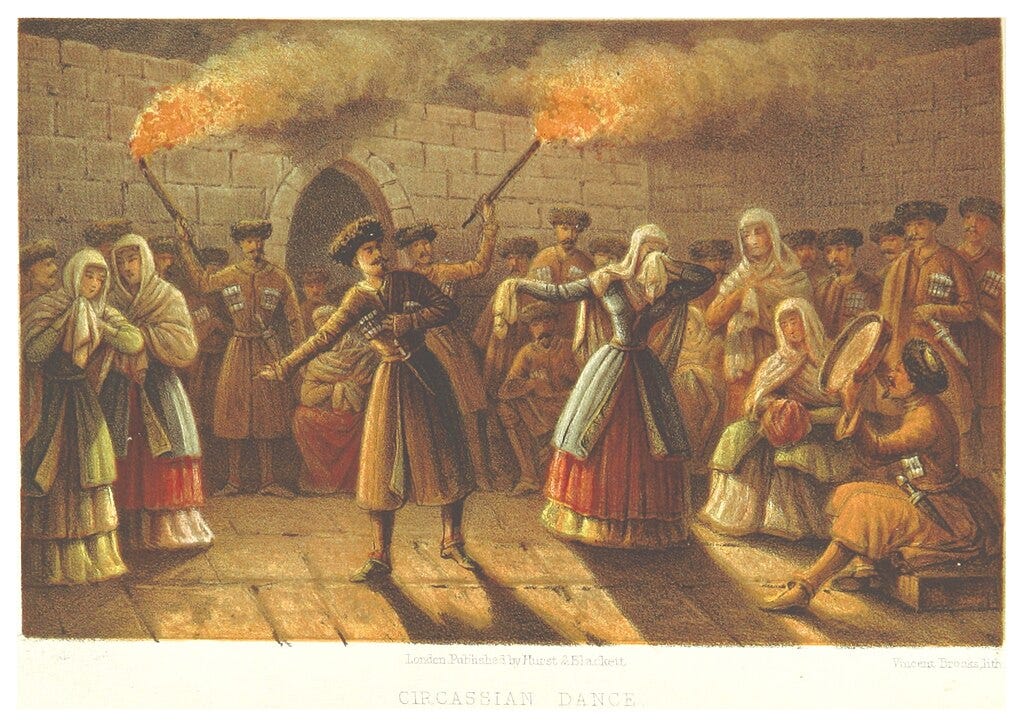
For our purposes, the archaic Nart Sagas offer intriguing studies. Born from the descent of a divine being into base matter, the Narts are portrayed as a sacred lineage of warrior-dancers whose realms must be ceaselessly defended against primeval forces rising from beneath the waters and mountains…as well as against the restless, ancient spirits loosed by a young, exuberant humanity. Figures such as Sosruquo, Satanaya, and Batraz embody the enduring struggle of an enlightened humanity forced to endure in a time of ignorance, yet always able to overcome both nature and the gods through courage and cunning. The Nart’s encounters with luminous beings, sky-forged weapons, and demons bent on human subjugation are of particular relevance to contemporary explorers of the invisible frontier.
4: Indicators & Signatures
The Nart Sagas are composed of over two hundred extant tales spread across four main collections. We will confine our examination to three stories held common, and of unique interest to the study of NHI and UAP. These stories can be conveniently named for our purposes as The First Sickle, The Golden Apple Tree, and How Sosruquo Brought Back the Seeds of the Millet.5 Within these verses, the birth of a civilization amid the relics of a dead one is relayed; heroes wrest the tools of life – fire and agriculture – from haughty (g)ods, and the heroes rescue fellow humans enslaved by strange beings from beneath the earth and sea.
First is the story of How the Narts Fashioned the First Sickle. In this tale, the Narts, weary of harvesting their millet by hand, petition the non-human master of the forge, Tlepsh, to create a tool to ease their labor. Tlepsh, uncertain what form such a tool should take, sends them to consult a wise woman, who in turn summons the Lady Isp for aid. The first in a cryptic lineage of diminutive hominids of great intellect and fragile ego, the Lady Isp is described as a frog-like (batrachian) creature, the mother to a half-human giant: Batraz.
When the proud Lady Isp is mocked upon arrival, she refuses to share her knowledge openly, muttering her secret to herself as she departs. Taking advantage of her indignation, the Narts send one of their own to eavesdrop on her as she returns to her watery home, hearing her whisper:
“To you I will not tell it,
You, you will not know it.
Like a rooster’s tail you should bend it,
Like a baby snake’s tooth you should sharpen it.
To you I will not tell it,
You, you will not know it!”
At this point it is easy to imagine the Lady Isp jumping upon a broom and flying off into the night. But in our tale, the young Nart spy reports the technological design to Tlepsh, who in an instant forges the first sickle, a curved instrument that “bit and cut off whatever it touched… and never grew dull.”
Thus, the sickle – humanity’s first true tool of harvest – is not invented but intercepted: a design stolen from a water spirit and manufactured by a god of the forge. This story, and its variants involving the dwarf under the mountain, Shardan, may be read as one of the earliest recorded myths of technological exploitation – a tale of human cunning and the psychological manipulation of a non-human intelligence for our own advancement.

Second is the tale of The Golden Apple Tree of the Narts. Strikingly similar to the Eden myths common to Western traditions, this tale opens with a magical tree whose fruit, a golden apple, possessed miraculous properties which the Narts made use of. Coveted even by the (g)ods, the fruits of this Tree are stolen or destroyed by a parade of non-human intelligences. Some of these prove sympathetic and reconcile with the human guardians of the Tree:
“One side of the fruit was red, and the other was white. It was said of it: If a barren woman tastes of the white side, Then to her will be born a daughter With hair silken white. If a barren woman tastes of the red side, Then to her will be born a Nart son, A great son, a white son, With hair silken white…
…but it came to pass that the Narts could no longer enjoy the wonders of this marvelous apple. Each time an apple would sprout forth, it would be secretly stolen in the dark of night… suddenly three doves flew up to the golden tree… and flew back from whence they had come, taking with them the golden apple…
…Nart Pizighash struck the sea with his sword. The waters parted and he descended straightaway to the seafloor. Once in the dark depths, he set off and traveled far until he came upon a mist-filled ravine. There, nestled deep within it, was a beautiful white house…
…thus the Nart who came from the dry-land and the damsel who lived on the sea-floor were joined together, and their families became linked one to another.”
In other tellings, the Tree is guarded by the Mother-Goddess of humanity herself – the Lady Satanaya. In these versions the non-human beings who desire the fruit of the Tree are proven unworthy. In rage they lash out at humanity, and are eventually cast out by the Narts for the sake of life and the Tree entrusted to them:
“The golden Tree of the Narts had many powers. Once each year, at the very top of the tree, an apple would sprout. For six months it would grow and slowly ripen, and during the next six months it would gradually shrink…
… so Setenaya kept this apple for the Narts and used it in her ministrations to their sick…the person who tasted of this magical apple would grow gentle in heart and compassionate and would not grow older, but as the years passed would grow younger instead. That apple would add to the span of a man’s life as many years as he had already lived…
…Yaminizh [a spirit of disease] heard of this magical apple. He feigned blindness and lameness, and so he went to Lady Setenaya. He went disguised as an aged and ailing Nart so that his youth might be restored and he could go on tormenting humankind…
[Lady Satanaya]…“You have brought too much evil into the world”, and so saying she withheld the remedies from him… “If that is how things are to be and the apple’s goodness is denied to me, I will make certain that it will be of no good to anyone!” he replied. Sometime later, in the dark of the night, Yaminizh crept up to the golden apple Tree of the Narts and cut it down…
… The Tree is now gone. If the Narts had not lost their tree, then even today they would enjoy good health, live in abundance, and be forever young.”
Our heroes do not always overcome evil, as demonstrated here. But these setbacks are not what define the Nart – it is the heroic struggle to overcome which makes them divine. In the symbolism of the Nart Sagas, the Golden Apple Tree stands as the living interface between worlds: its roots in the underworld, its trunk upon the earth, its crown in the heavens. In these Sagas, it is not temptation that drives the fall of humanity, but usurpation – the overturning of the natural order by beings jealous of what was entrusted to mankind. Through this lens, the tale of the forbidden fruit becomes less a parable of human sin and more a record of conflict over the spiritual and biological sovereignty of a species.
Finally comes the Promethean tale of How Sosruquo Brought Back the Seeds of the Millet. When the local god of the harvest, T’haghadlej, grew old, he entrusted to the Narts a single wineskin of divine millet – each seed so potent that “by using just one seed one could prepare a whole cauldron of beer”… truly a most miraculous biological technology of unknown origin. Yet he warned the Narts that one of his rivals, a fearsome being of the race of the Ayniwzh, would soon seek to steal the millet upon his death. This warning proved true: a red-haired Ayniwzh infiltrated the Narts’ fortress under false pretenses, slew its guardian, and fled into the night upon his sky-horse with the stolen boon.
Sosruquo, upon learning of this calamity, swears to recover the sacred grain. Guided by his mother Satanaya’s counsel and aided by beasts he spares along the way – a wolf, an eagle, and a fish – he reaches the lands of the ayniwzh and finds its castle in the sky whose walls “neither horse nor man could get inside”. Within, he encounters a human woman enslaved by the red-haired giant, who reveals that her master’s soul is stored elsewhere – in one retelling it is held by the crone who breeds the miraculous sky-horses mounted by hero and villain alike. With the help of the freed human slave, the stellar-equestrians and Sosruquo overcomes the ayniwzh.
“Do not be afraid, Sosruquo,” answered [the freed sky-horse] “He will not overtake me. Do not worry…”
“Hey, my younger brother! We are brothers, aren’t we? Do not let him kill me. The one who rides me is killing me. Don’t you see? Let me overtake you…”[the enslaved sky-horse said.]
…“If we are brothers, then soar upward and throw him down from your back. Why are you carrying him?” [said the free sky-horse]
…and the horse soared upward into the sky and turned over. The ayniwzh fell off. The horse came back down and kicked the ayniwzh in the head and killed him…”
Once more, the audience is shown how human courage and cunning may triumph over a foe of superior strength and armed with powerful artifacts. Through wit, steadfastness, and faithful allies, the Narts overcome their villains. Here too we glimpse a recurring pattern – one echoed across the mythic memory of civilizations worldwide: the encounter between a technologically adept yet spiritually stunted race and a younger, more vital humanity who are exploited and refused the gifts of life. And yet another lesson endures, encoded in myth: that the greatest technologies of life are never freely given, but wrested away from a Hierarchy of Beings who would keep mankind in bondage. Truly, in the most primitive sense, the first act of liberation is the theft of fire.
5: Interpretations
The Nart Sagas reveal not mere fables but records of contact — moments when forbidden knowledge crossed the threshold and humans sparred with the Others for supremacy. In The First Sickle, the design of a key agricultural tool is not invented but elicited from a frog-like intelligence, then realized through the mysterious capabilities of a divine metallurgist. Here the birth of agriculture and metallurgy arises not from chance but from contact, the human ear catching what another mind intended to be secret. In The Golden Apple Tree, the miracle lies in biology itself – a fruit capable of altering fertility and reversing age, a living device of genetic mastery bridging the mysteries of death and rebirth, sought by a dying and sterile species who call the sea-floor home. And finally in The Millet Seeds, an immortal red-headed giant steals a single grain capable of endless replication – the quest to reclaim it pointing towards both the necessity to restrain desire even as it offers its eternal satisfaction.
The non-human powers who guard these artifacts behave with a striking pattern of possessiveness and vanity. Whether dwelling beneath the waters, within the mountains, or in castles of air, they mirror the classic elemental hierarchy of the cosmos – subterranean, terrestrial, celestial. Each domain corresponds to a mode of control: the underworld governs matter, the surface governs form, and the sky governs energy. These beings are not gods in the popular sense, but embodied functionaries of an older order, custodians of power who have forgotten their purpose and are reduced to satiating base appetites. Their jealousy toward humankind stems from a singular fact: that humanity, though young and ignorant, possesses the latent capacity to unify and command all realms.
Beneath the surface of these tales runs a deeper pattern recognizable to initiates of many traditions: the Tree of Life as living interface between worlds. Its roots drink the underworld, its trunk anchors the earth, its crown gathers heaven’s fire. The Nart myths replay the ascent and descent through this axis – the forging of form (Hod), the regeneration of life (Yesod), and the embodiment in matter (Malkuth). The golden apple, half red and half white, recalls the dual currents of the human genome. If interpreted as encoded memory, the sagas describe technological artifacts rendered through mythic language: horses that are not horses, flying across the sky; swords that are not swords; seeds that are not seeds, promising an end to famine; doors that are not doors; and songs that are not songs, controlling weather and time.
If read through this lens, the Nart Sagas record not a fall from grace but the reclamation of human sovereignty. By seizing the Master’s hammer, they tear down his walls and reclaim their birthright. The theft of fire, the cutting of the tree, the recovery of the seed – each marks a rite of passage in which the human comes into higher knowledge of what already is. Thus, the old Caucasian epics conceal a profound truth: that mankind stands not at the bottom of the hierarchy but at its fulcrum. In myth, we are the link between matter and spirit, the beneficiaries of a covenant older than history. Our legends remind us that the act of creation was never meant to be monopolized by an elite few, but to be tended, renewed, and passed on by the many. The secret revealed here is not how to steal from the gods, but how to keep the flame alive – and how to remember.
Sherman, Dan. Above Black: Project Preserve Destiny – An Insider’s Account of Alien Contact and Government Cover-Up. OneTeam Pub., 1997.
Jacobs, David M. The Threat: The Secret Agenda What the Aliens Really Want and How They Plan to Get It. Simon & Schuster, 1998.
Vallee, Jacques, and Chris Aubeck. Wonders in the Sky: Unexplained Aerial Objects from Antiquity to Modern Times. Tarcher/Penguin, 2010.
Causadias, J. M. (2018). “The cultural (mis)attribution bias in developmental psychology: A conceptual and empirical review.” Developmental Review, 48, 1-22.
Colarusso, John, ed. Nart Sagas from the Caucasus: Myths and Legends from the Circassians, Abazas, Abkhaz, and Ubykhs. Princeton University Press, 2002.


The culmination of this article is beautiful. The ancient sagas are a find all on their own, but their message is something else altogether. Something we really need right now. Thank you for bringing it to light.
With thanks for quite an interesting presentation !!
By a fortuitous coincidence, I learned recently that some of my ancestors originate from the Caucasus. Although I studied a good deal of Russian language in both High School and college, I know next to nothing of the region,its people or the languages spoken.
Perhaps the closest I came was reading Lermonotov's "Geroi Nasheva Vremeni" (Hero of Our Times) about a Russian army officer and his adventures in the region.
Even a casual reader of History can see that the transmission of Herbal knowledge via Witches, agricultural knowledge, and much more, occurred in the distant past of pre-history and that there is much that remains completely unknown. In this regard, the Journalist Graham Hancock has done much of importance. I also suggest reading the books of the Anthropologist/Ethnobotanist Dr. Wolf Storl, particularly his "The Untold History of Healing". https://www.storl.de/english-books-by-wolf-d-storl/
Meanwhile, I shall study this post with great interest, particularly the saga.