Advertisement
Advertisement

Commentary

Commentary: Faishal Ibrahim’s resignation needs more transparency for proper closure

Without more information, the public has made all sorts of speculation and ill-informed judgement – the most damaging of which are not about the nature of the minister’s interactions with a woman, says veteran newspaper editor Han Fook Kwang.

Commentary: Faishal Ibrahim’s resignation needs more transparency for proper closure

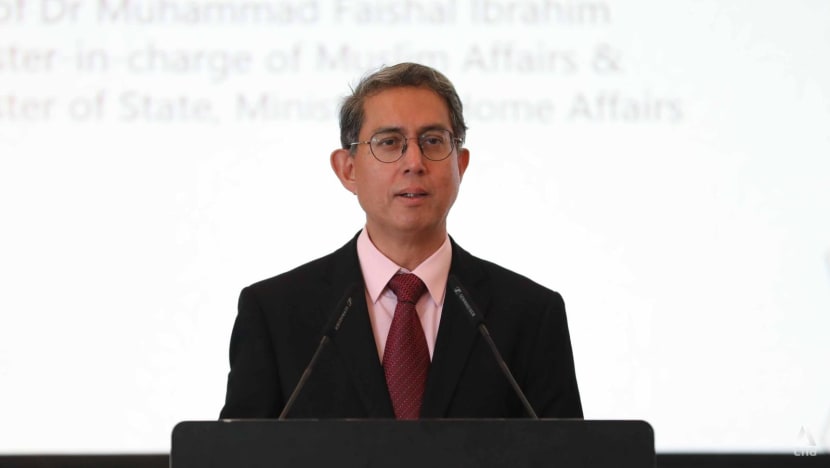
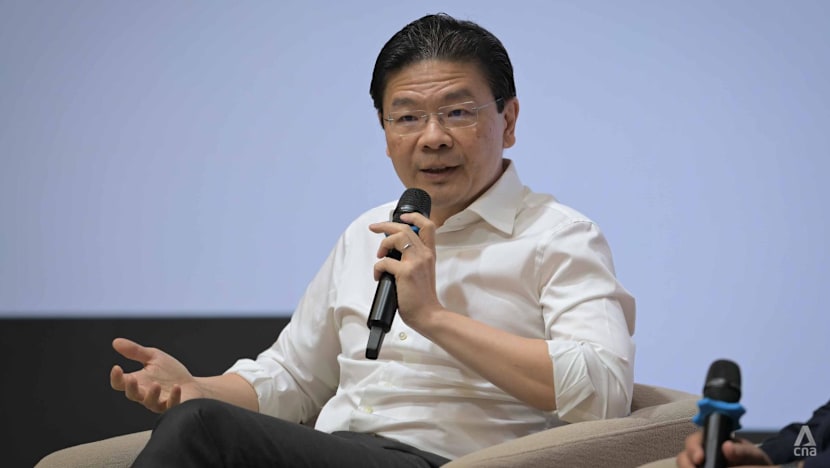
Acting Minister-in-charge of Muslim Affairs Faishal Ibrahim speaking at the SCIS advisory panel meeting on Jun 24, 2025. (File photo: CNA/Lim Li Ting)

Listen
8 min
New: You can now listen to articles.

This audio is generated by an AI tool.

24 Jul 2026 06:00AM
Read a summary of this article on FAST.
FAST

SINGAPORE: Whatever your views about the sudden resignation of Acting Minister for Muslim Affairs Faishal Ibrahim, you have to feel for the man.

It is a huge personal tragedy to lose your job as a minister and sitting Member of Parliament in such a public manner, amid so much speculation about what was done and said in private messages to a woman.

The man was, by many accounts, a decent person performing a creditable job and had recently been promoted to acting minister. It is not hard to imagine what he and his family are going through now.

But the thing is that we cannot say whether he deserved such an outcome because we do not really know what happened.

CNA Games
Show More
Show Less

That is a major problem. When you can’t form a view about it because of a dearth of information, there is no proper closure for the public.

In its place, all sorts of speculation and ill-informed judgment have taken root, many of which might be completely off the mark and unfair to the man or the woman involved.

These wild guesses include not just what he did but the decision made by Prime Minister Lawrence Wong to accept Assoc Prof Faishal's resignation.

While Mr Wong has made clear that the outcome would have been the same regardless of which minister had been in Assoc Prof Faishal's shoes, several questions remain unanswered: Where did he cross the line and fall short of the standards expected? What are these standards anyway? Has the bar been set too high for public officers in matters concerning personal conduct that are not related to the job they perform?

WHAT HAS BEEN SAID AND THE QUESTIONS THAT REMAIN

What we have are Mr Wong’s statement and the letters exchanged between Mr Wong and Assoc Prof Faishal on the matter.

Home Affairs Minister K Shanmugam subsequently posted about the matter on Facebook, while Mr Wong also spoke about it at a press conference unveiling his new Cabinet line-up.

At the press conference on Wednesday (Jul 22), Mr Wong described his initial reaction as "disbelief and shock" when he first saw the email which the woman sent to his office. The email contained screenshots and other information regarding her interactions with Assoc Prof Faishal.

Mr Wong said that he had initially even thought that the contents were fabricated.

While this indicates how severe the indiscretions were, it probably led to more public intrigue over the contents of the email.

The prime minister also addressed concerns about whether Assoc Prof Faishal had been dealt with too harshly, saying that if it had happened to any other MP, "the same process, the same standards would apply and the same consequences would have followed".

He added that Assoc Prof Faishal himself had accepted his actions were “not tenable” and that he had requested to step down.  

All this is fair enough but it still did not provide the complete picture.

In his earlier public statement, Mr Wong also said the matter was referred to the police after both parties accused the other of harassment.

“After carefully considering the facts and circumstances, and in consultation with the Attorney-General Chambers, it was assessed that no criminal offence had been committed by either party,” Mr Wong’s statement read. “But there was a separate question of whether Assoc Prof Faishal’s conduct met the standards expected of a political office holder and MP.”

Assoc Prof Faishal had this to say in his resignation letter to the prime minister: “While there was no physical relationship between us, and I did not intend for the interactions to develop into one, there was a lapse of judgment on my part in the way I handled the interactions, and in failing to establish clearer boundaries at an earlier stage. On reflection I recognised that my conduct fell short of the standards expected of me and was not consistent with the responsibilities entrusted to me.”

Given the scarcity of information provided, it is not surprising there are questions about whether Assoc Prof Faishal should have resigned. This much is clear: There was no physical relationship between the two. Everything thus hinges on the nature of those online messages, but not enough has been revealed to determine one way or other whether they crossed the line to result in such a spectacular fall.

Mr Shanmugam’s Facebook post on Wednesday acknowledged the many questions being asked about the affair and provided additional information which is worth quoting here:

“Faishal explained that he was worried the lady might react negatively if he abruptly cut her off. Nevertheless, his responses were, objectively, inappropriate and questionable. They come across as engaging with her. Indeed, that was how the lady interpreted his responses, and said she was encouraged to continue.

“The lady became angry when Faishal subsequently tried to put a stop to the online exchange. She emailed PM, sent some of the messages and pictures and alleged harassment.”        

I am afraid after reading this I am still no clearer what were in the messages or pictures that were deemed inappropriate and questionable. 

They remain a mystery. If anything, a plain reading of Mr Shanmugam’s comments might even reinforce the feeling that Assoc Prof Faishal had been dealt with too harshly as it appears he did try to stop the exchanges but the woman reacted angrily to this and escalated the matter.

POLITICS OF DISMISSAL

Of all the speculation, the most damaging are not about the nature of the interactions but those to do with the politics of the dismissal.

For example, there is this observation by political analysts in various reports that the prime minister had to take decisive action because of the fallout from how his predecessor handled the Tan Chuan Jin affair.

Then Prime Minister Lee Hsien Loong had not acted immediately to remove the ex-Speaker of Parliament after discovering an affair between the latter and another MP, Ms Cheng Li Hui. He had explained that by giving the matter some time, he had hoped to give them a softer exit, and save them and their families the pain and embarrassment they are suffering now.

“In retrospect, and certainly now, knowing how things eventually turned out, I agree. I should have forced the issue sooner,” Mr Lee said in August 2023. “I placed much weight on protecting their families – perhaps too much.”

In the case involving Assoc Prof Faishal, Mr Wong had pointed out that the fact that it was no longer a private matter had forced him to conclude there was no way for Assoc Prof Faisal to continue in office.

"A complaint has been made against him; it has entered the public arena, and that's why we have to undertake this objectively, undergo a process where we listen to both parties, and we certainly took pains to listen to Faishal's explanations as well," he said. "But after doing all that, we also have to look at the evidence and the facts.”

The different circumstances surrounding the two cases are clear, but that has not stopped the observers from arguing that Mr Wong had to act more firmly lest he be accused of making the same mistake.

I hope this isn’t the case because it should not be how these matters are dealt with. If a minister has fallen short of conduct expected of him, one has to look at what he actually did and punishment imposed according to the severity of the act.

The trouble with getting politics involved is that you are likely to swing from one extreme to another according to public sentiment, with no consistency in the standards applied.

The best policy is to be open and transparent, to disclose as many facts as is possible without revealing unnecessarily personal details, and to be clear and unambiguous about the rules.

Everyone should know what is expected and where the boundaries are. If the rules are too vague and ambiguous, the natural tendency is to play safe and become overly cautious. But ministers are not civil servants and a large part of their job is to engage and interact with their constituents, to understand how they feel about issues and help solve their problems.

It is not an easy balance to strike - to be able to empathise and show their human side, yet not cross the line and become emotionally involved.

Hence, the need to be as clear as possible about the rules and to make them public.

It is still not too late for the ruling party to do so and bring proper closure to the issue. 

Han Fook Kwang was a veteran newspaper editor and is Senior Fellow at the S Rajaratnam School of International Studies, Nanyang Technological University.

Source: CNA/ch

Sign up for our newsletters

Get our pick of top stories and thought-provoking articles in your inbox

Subscribe here
Inbox
FAST
Advertisement

Singapore

US hits Singapore with 12.5% tariffs, citing failure to ban imports produced with forced labour

The Ministry of Trade and Industry previously said that about one-third of Singapore's domestic exports to the US could be affected by the tariffs. 

US hits Singapore with 12.5% tariffs, citing failure to ban imports produced with forced labour

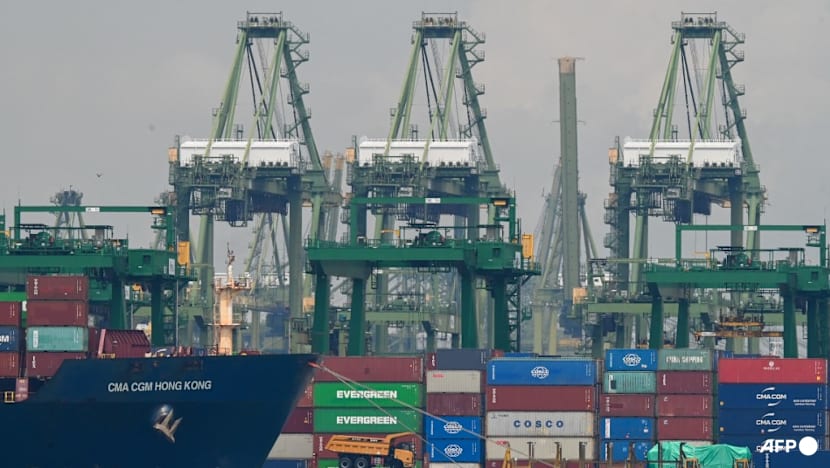
Containers at the Pasir Panjang port terminal in Singapore on Jun 1, 2026. (File photo: AFP/Roslan Rahman)

Listen
3 min
New: You can now listen to articles.

This audio is generated by an AI tool.

24 Jul 2026 10:28AM (Updated: 24 Jul 2026 11:11AM)
Read a summary of this article on FAST.
FAST

SINGAPORE: The United States will impose a 12.5 per cent tariff on select Singapore goods from Friday (Jul 24), after concluding that the country does not have sufficient measures to block imports produced wholly or in part with forced labour.

The move follows a US Section 301 investigation into 60 trading partners over their alleged failure to enforce bans on imports of goods produced with forced labour.

The US Trade Representative concluded in June that 54 of these economies, including Singapore, China and Britain, "failed to impose and effectively enforce a forced labour import prohibition", and proposed a 12.5 per cent tariff on certain goods.

A lower 10 per cent tariff was suggested for 16 economies that were under probe as they have laws explicitly banning imports made with forced labour or committed to prohibiting them.

CNA Games
Show More
Show Less

Singapore’s Ministry of Trade and Industry had earlier said that about one-third of the country’s domestic exports to the US could be affected by the tariffs. CNA has contacted the ministry for comment on the latest announcement.

Singapore has engaged with the US since the investigation was launched, maintaining that it does not condone forced labour and has a comprehensive framework to tackle such practices domestically.

Foreign Affairs Minister Vivian Balakrishnan said on Thursday that Singapore had told the US it has "no technical or economic basis" for imposing tariffs on it.

"I made a point quite categorically that the US has a surplus, a trade surplus against us. In fact, it is growing," Dr Balakrishnan said after meeting US Secretary of State Marco Rubio on the sidelines of the 59th Association of Southeast Asian Nations (ASEAN) Foreign Ministers' Meeting.

"Nevertheless, you know as well as I do that the American administration, for its own domestic political reasons, needs to raise tariff revenue," he said.

Speaking on America’s trade surplus with Singapore, the minister said he was trying to find a way to show the US that his country is not their target.

“But we also need to make sure we don't become collateral damage in the overall scheme in which tariffs are going to be raised by the US with all its trading partners," he added.

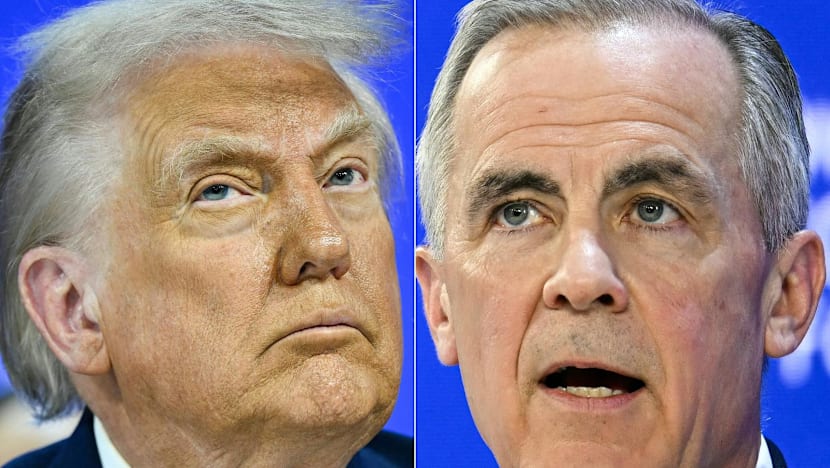
The new tariffs will take effect on Friday, the same day a separate round of global duties introduced earlier this year by US President Donald Trump is set to expire. Officials said the latest measures are designed to be more resilient to legal challenges.

Goods already subject to sector-specific tariffs – such as steel and aluminium – will not be affected.

Goods entering under the US-Mexico-Canada free trade pact will also be exempt, a US official told reporters.

Source: CNA/rl(gs)

Sign up for our newsletters

Get our pick of top stories and thought-provoking articles in your inbox

Subscribe here
Inbox
FAST
Advertisement

Singapore

More Singapore landlords turn to multi-tenant rentals for higher returns

As Singapore's private rental market stabilises after years of rising rents, some landlords are moving away from leasing entire homes to a single household in favour of multi-tenant rentals.

More Singapore landlords turn to multi-tenant rentals for higher returns

Ms Josephine Liu converted her 30-year-old landed property in Pasir Panjang into eight rental units. Most of the units have their own kitchenette, bathroom and washing machine.

Listen
4 min
New: You can now listen to articles.

This audio is generated by an AI tool.

24 Jul 2026 10:25AM
Read a summary of this article on FAST.
FAST

SINGAPORE: More landlords in Singapore are converting their properties into multi-tenant rentals as they seek to boost rental income. Some co-living operators say they have seen up to a fourfold increase in such enquiries from property owners over the past year. 

The shift comes as the private rental market stabilises after years of rising rents, prompting some landlords to rethink the traditional single-tenant model. 

Advertisement

Ms Josephine Liu is among property owners making the shift. She spent S$200,000 (US$155,000) converting her 30-year-old landed home in Pasir Panjang into eight rental units. Most of the units look similar to a studio apartment, with its own kitchenette, bathroom and washing machine. 

Ms Liu said she decided to switch to the multi-tenant model after finding that renting to a single family did not generate enough income to cover her mortgage.

“I had a condo unit before, (from) 2020 to 2023, renting out to a family. I would be at least 20 to 30 per cent short in terms of paying my mortgage,” she said.

As she has a full-time job, Ms Liu engaged a co-living operator to manage the property. Before proceeding with the renovation, she carefully worked through the finances to ensure the higher rental income could justify the investment and management costs. 

“I (went) through the numbers repeatedly, and after paying off the management company, the remaining amount is still way better than if you rent it to (one) family,” she said.

Advertisement

Ms Liu said the model has paid off, with her rental revenue increasing by about 50 per cent.

Property investor Arthur Lim also opted for the multi-tenant model, after identifying a city-fringe condominium with a layout allowing him to carve out two extra rooms with only minor renovation works.

“I saw potential to create additional rooms in the large living area that is enough for me to place the basics – a bed, a study table, a wardrobe,” said Mr Lim.

His six-room rental unit is now almost fully occupied throughout the year.

CNA Games
Show More
Show Less
Property investor Arthur Lim's six-room rental unit is almost fully occupied throughout the year.

ARE HIGHER RETURNS GUARANTEED?

Property analysts say that strong demand for affordable, flexible and furnished room rentals, coupled with the growing presence of established co-living operators, has encouraged more landlords to consider the model.

Advertisement

“We've seen private rents increase (by) around 50 per cent over the last five years,” said Mr Josh Rose-Nokes, head of living research for Asia Pacific at Cushman & Wakefield.

“Affordability is really critical and renting a room is a much more affordable entry point for tenants into the private rented sector.”

Mr Rose-Nokes said the co-living model may bring in more rental income, but that does not necessarily mean landlords will earn more money because it also comes with higher operational and management costs. 

Bespoke Habitat, which manages more than 600 co-living units in Singapore, said enquiries from homeowners looking to maximise rental income from their houses have grown significantly over the past three years.

Its founder and CEO Ernee Ong said the company previously managed fewer than five properties on behalf of landlords but now oversees about 50.

Advertisement

NOT EVERY PROPERTY MAKES THE CUT

But not every property is suitable for the multi-tenant rental model, said Mr Ong.

“A lot of people feel that it's simple. You just get the units, rent out to individual tenants, and (you) make money on it. It doesn't work that way,” he said. 

He added that operators assess factors such as location, nearby schools and business parks, and tenant demand before taking on a property.

Condominium by-laws are another consideration, as some management corporation strata titles (MCSTs) do not permit co-living arrangements.

“We will usually go down and ask what the application’s requirements are. Each MCST has its own workflow. If the MCST says no, we respect that,” he said.

The tenant profile has also begun to evolve, with more young Singaporeans enquiring on co-living concepts as they seek greater independence, noted Mr Ong.

“People who (have just) started working and are financially independent want to test it out (to see) how it looks like without staying near their parents.”

Source: CNA/oc(dn)

Sign up for our newsletters

Get our pick of top stories and thought-provoking articles in your inbox

Subscribe here
Inbox
FAST