

Hainan Documents Reveals Plans for Long March 9's Wenchang Factory
Several hundred pages of documents regarding the ‘Joint Workshop Rocket Base Project’ were made available online in recent days.

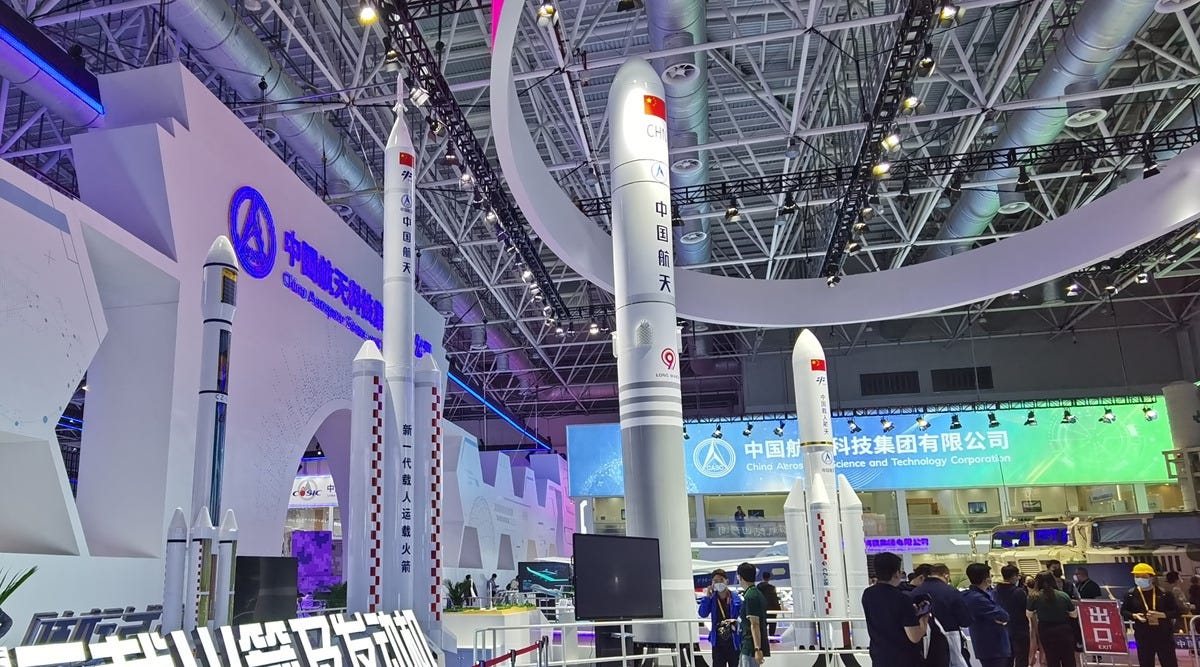
With plans to build space-based solar power stations, gigawatt-scale orbital computing facilities, support a crewed Moon research station, and enable missions to Mars, the Long March 91 is set to be China’s next big rocket, figuratively and literally, as it is planned to be 10.6 meters in diameter and over 110 meters tall. A first flight of the launch vehicle is currently expected around 2030.
To facilitate the giant launch vehicle, a massive factory is being established in Wenchang (文昌市), Hainan (海南) province, near its two launch sites to both integrate and manufacture the launch vehicle. The decision to have both of those facilities in the province was dictated by the Long March 9’s size and related transportation costs if it were built elsewhere. Early ground breaking and soil sampling of the construction site began in April.
As part of the process to build the Long March 9’s Wenchang facilities, officially labeled the ‘Joint Workshop Rocket Base Project’, the government of Hainan recently received documents from the Aviation Industry Corporation of China’s Planning and Design Institute (中国航空规划设计研究总院有限公司) outlining their construction plans, contracted by the China Academy of Launch Vehicle Technology. Those documents were then made publicly available on the province’s official website2.
The documents, in their several hundred pages, detail basically everything about the first phase of the project with extensive architectural drawings, manufacturing stations, launch vehicle preparations and maintance bays, and general needed commodity supplies. As reported upon groundbreaking, the documents confirmed that the construction site will occupy 101.5 square kilometers (71.8 square kilometers for the factory itself) for a facility that will be 380.5 meters in length, 182.4 meters in width, and up to 119.5 meters in height, while being completed by May 2028.
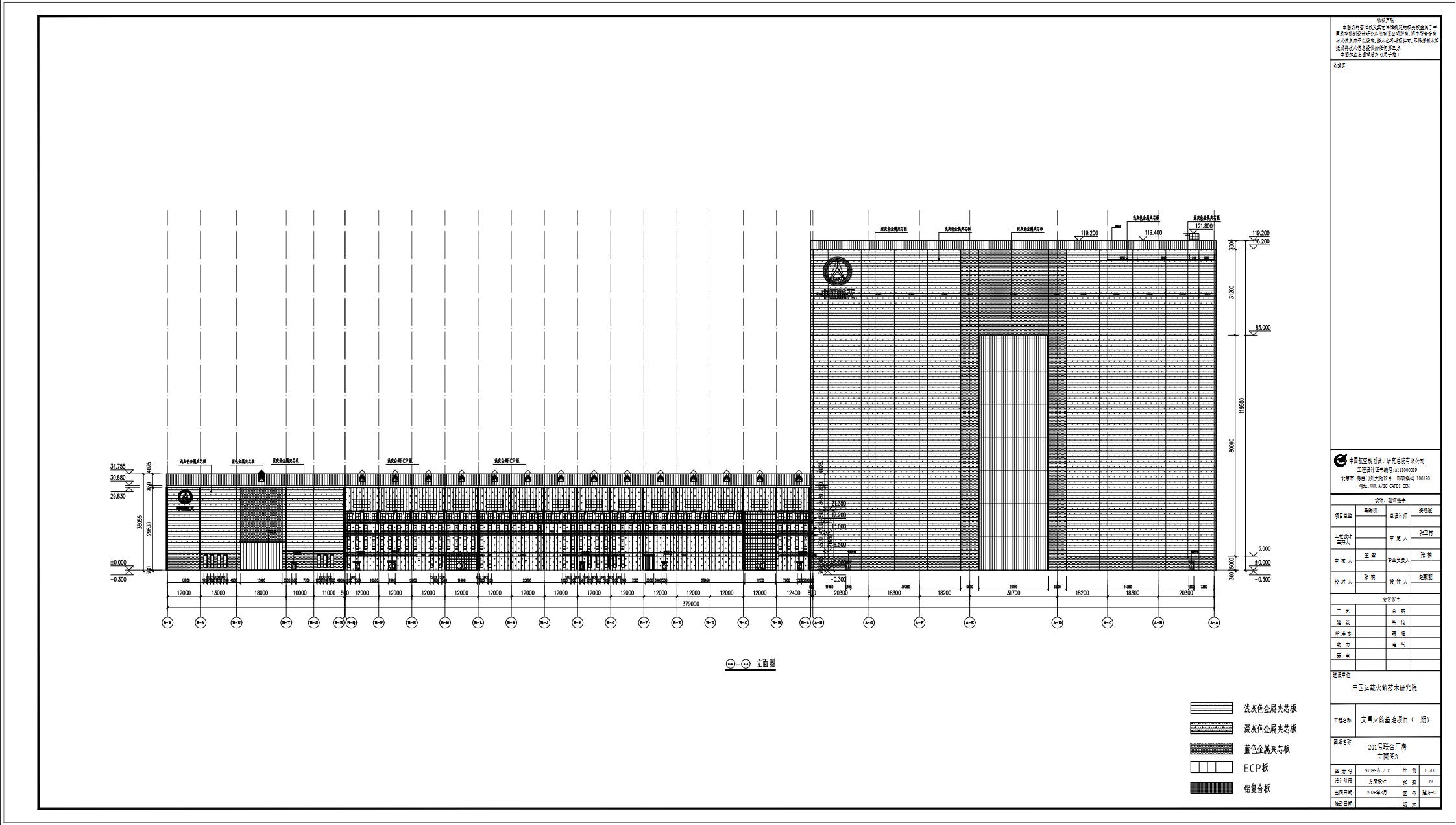
The smaller half of the facility, standing 35.3 meters tall, is dedicated to the manufacturing of the Long March 9, taking in raw resources and completed engines made elsewhere. Documents detail that the production section is split into four areas, used as follows:
B1: primary propellant tank and structures production space for turning metals into cylindrical sections and domes.
B2: additional production space for propellant tanks and structures.
B3: dedicated to inspecting hardware at various stages of production via X-ray imaging.
B4: to be used as a four-floor office space with meeting rooms, exhibitions for visitors, on-site computer systems, and production management equipment.
Each of those areas is planned to have soundproofed walls between them and on the outside. B3 will also have 700 millimeter thick walls and a 500 millimeter thick roof for radiation shielding.
Over in the huge section of the site is the Long March 9’s integration and preparation bays, split into 119.5 and 81.3 meter areas. The shorter of those will allow for the rolling in of completed propellant tanks for all three stages, where the second and third stages will be joined and fully outfitted. It will also be used to prepare payload fairings. In the tallest part, first-stage boosters will be equipped with recovery hardware and their many engines. Six bays to install hardware will exist, with access available from just above the floor and platforms at heights of 13.5, 31.5, 55.5, and 79.5 meters. An additional closed-off platform at 100 meters up will be used to show off the Long March 9 to visitors.
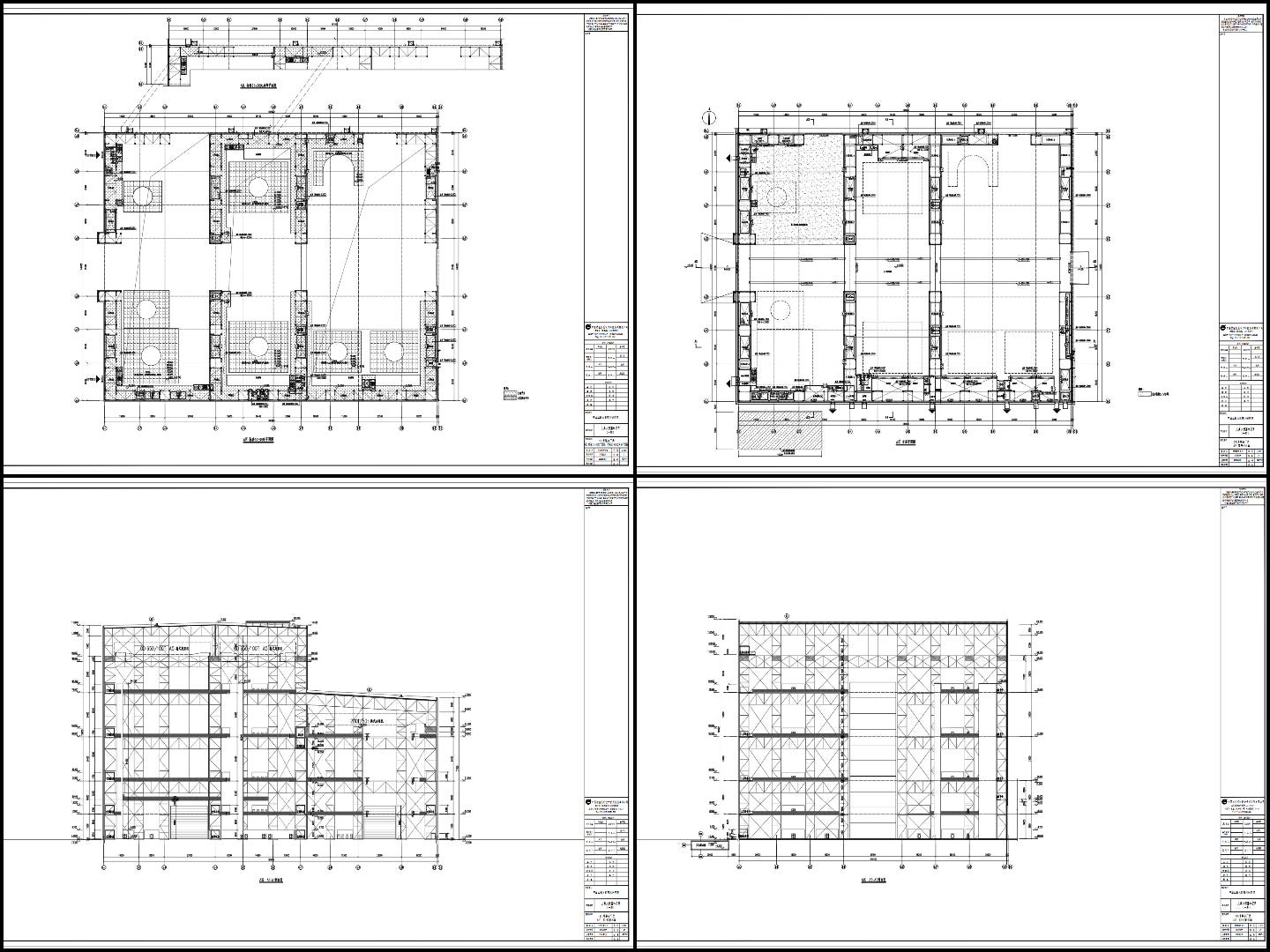
Hardware in both parts of the facility cannot be moved by humans due to their immense weight. As such, many cranes are planned to be installed. For integrating the Long March 9 in its bays, there will be two bespoke 51.3 meter span cranes able to handle 650 tons, another two unique 650 ton able cranes with just a 40.4 meter span, and two 65 meter span cranes able to manage 200 tons in its shorter area. In the manufacturing section, there are planned to be eleven cranes with spans up to 58.5 meters while handling 100 tons at most.
Across the remainder of the construction site, there will be testing facilities for equipment and hardware, technical and digital support systems, a new power substation to provide electrical power from the provincial grid, and a commodity supply station to bring in clean water and take away industrial wastewater.
Of course, building the Wenchang facilities will be expensive, with the documents disclosing that cost projections estimate a 2.757 billion Yuan (406.85 million United States Dollars as of June 5th) price tag. Capital to fund the construction is said to have come from the China Aerospace Science and Technology Corporation, the China Academy of Launch Vehicle Technology, and several provincial government sources in Hainan.
All of the areas detailed by the documents just share information on phase one of the project. A larger plot of land next door is being reserved for the second phase, which is not yet detailed. It will likely expand available space for maintaining flown stages and optimizing preparation processes.
While the documents focused on the launch vehicle’s manufacturing and integration facilities, plans for mission preparation areas disclosed that a fairing sized up to a 15-meter-diameter and 40-meter-long can be supported. Previously, there were no known plans for a fairing that large, only one to be in line with 10.6-meter-wide stages. When illustrated on the Long March 9’s two-stage variant, the 15-meter fairing looks truly massive and would easily make the launch vehicle the tallest made to date. The three-stage version would be even taller if the fairing is being seriously pursued.

Currently, the Long March 9 is expected to be able to lift the following with first-stage reuse:
150,000 kilograms to low Earth orbit
54,000 kilograms to a trans-lunar trajectory
44,000 kilograms to a trans-martian trajectory
Second-stage reuse figures are not clearly defined.
Depending on your location or current traffic to it, the website may not load.


Thank you. It was really funny to watch how the launch vehicle renderings were made from the factory body drawings :)