Advertisement
Advertisement

Singapore

NSP chief Lim Tean quits after less than 2 years

NSP chief Lim Tean quits after less than 2 years

Mr Lim Tean. TODAY file photo

22 May 2017 01:40PM (Updated: 22 May 2017 10:51PM)
SINGAPORE — For the sixth time in as many years, the National Solidarity Party (NSP) will be looking for a new chief. On Monday (May 22), Mr Lim Tean said he was calling it quits barely two years into the post of secretary-general, citing a “fundamentally different” approach to politics between him and the party.    Mr Lim, 52, who had assumed NSP’s leadership shortly before the General Election in Sept 2015, announced his decision via a Facebook post, making public his letter of resignation.    This came after a string of high-profile departures including that of his predecessor, Ms Hazel Poa, who left abruptly in 2015 after returning to the post on an interim basis.    She had then cited a disagreement with the party’s decision to do an about-turn and contest the MacPherson single-member seat.    Mr Lim, who joined NSP in 2011, also resigned as a party member.    In the Facebook post, he pointed to internal party misgivings about his participation in a Speakers’ Corner event in March, where he spoke about the water-price hike, and the party’s silence on the changes to the Elected Presidency (EP) scheme.    “The turning point for me was over the issue of the 30 per cent water-price hike ... It was an issue I felt passionately about ... it was an issue that troubled most Singaporeans, and one that I thought the NSP would wholeheartedly embrace. I was therefore surprised to learn that elements in the party disapproved of me taking part in the event,” said Mr Lim, who had informed NSP president Sebastian Teo of his resignation last Thursday.   On the party’s position on the EP, which he described as “one of the greatest constitutional matters of our time”, the legal consultant said: “I eschew the type of politics where people, especially politicians, are frightened to speak up because of personal considerations. To me, that is a complete dereliction of one’s duty.”    Speaking to TODAY, Mr Teo said Mr Lim’s resignation was due to “technical” and not “opinion” problems, and the party has had longstanding sets of procedures which council members must follow.    They must tell the council about any projects or engagements they wish to take part in or carry out, and a consensus must be reached. On the Speakers’ Corner event, Mr Teo said Mr Lim did not do so: “I don’t remember that we had a discussion on that.”    But this was disputed by Mr Lim, who told TODAY that the council had known “all along” he was due to speak at the event. “It was a heated issue … and I’d have thought that the NSP … would be speaking out of concern for ordinary Singaporeans on such a major issue,” he said. “The fact that the (council) didn’t go along surprised me.”    He added that the NSP had previously decided to speak up on the EP amendments, but “changed its mind” when he raised the matter again earlier this year.    Responding, Mr Teo said the party felt that it should have a clear view of the situation before reacting. But Mr Lim wanted to do things “straight away”, he added.    The appointment of the next secretary-general will be left to the party’s council to decide, Mr Teo said, and that the matter had not been discussed yet as there was no “burning … urgency”.    In June 2015, following the resignation of lawyer Tan Lam Siong as secretary-general just three months before the 2015 GE, TODAY had reported about rifts within the party between new faces and the longer-serving members.    Political experts said the party’s rapid turnover of secretary-generals in recent years pointed to a lack of leadership stability.    Institute of Policy Studies deputy director (Research) Gillian Koh said the latest resignation suggested the party was still “unable to settle into a new equilibrium and project a clear brand and policy platform”, as well as “generate a following”, whether during or between elections. She noted that some old-guard members — including Mr Teo, 69, who has been party president since 2006 — would also have “rather strong views about what the party should or should not do”.    Singapore Management University law lecturer Eugene Tan said the constant departures could indicate “deep internal differences within the party elites” and significant issues which the party must resolve.    It also raises questions about leadership renewal and points to “difficulties” in attracting and retaining younger party members within its leadership. “The question’s whether the party can better accommodate differences in views, and having a process by which these differences can be managed would be important,” added Assoc Prof Tan.
Source: TODAY

Sign up for our newsletters

Get our pick of top stories and thought-provoking articles in your inbox

Subscribe here
Inbox
Advertisement

Singapore

President Tharman to make first state visit to Malaysia

This will be Mr Tharman's first state visit to Malaysia, Singapore's Ministry of Foreign Affairs said.

President Tharman to make first state visit to Malaysia

Singapore President Tharman Shanmugaratnam (centre) on Sep 5, 2025. (Photo: CNA/Wallace Woon)

New: You can now listen to articles.

This audio is generated by an AI tool.

12 Jul 2026 10:38AM (Updated: 12 Jul 2026 10:44AM)
Read a summary of this article on FAST.

SINGAPORE: Singapore President Tharman Shanmugaratnam will make a state visit to Malaysia from Sunday (Jul 12) to Jul 15 at the invitation of Malaysia's King Sultan Ibrahim Sultan Iskandar.

This will be Mr Tharman's first state visit to Malaysia, the Ministry of Foreign Affairs (MFA) said in a statement, adding that it comes after Sultan Ibrahim's state visit to Singapore in May 2024.

During his visit, Mr Tharman will have meetings in Kuala Lumpur and Selangor.

Mr Tharman will be received by a welcome ceremony at the Istana Negara and meet with Sultan Ibrahim and Malaysian Queen Raja Zarith Sofiah, who will also host a state banquet.

CNA Games
Show More
Show Less

Singapore's head of state will receive a call from Malaysian Prime Minister Anwar Ibrahim, said MFA.

Mr Tharman will also meet leaders from the economic and finance sectors at the Kuala Lumpur Business Club, engage business leaders at a breakfast roundtable, and attend a reception hosted for overseas Singaporeans in Malaysia.

In Selangor, Mr Tharman will have an audience with the Sultan Sharafuddin Idris Shah, the state's sultan. He will also meet Selangor chief minister Mr Amirudin Shari.

Mr Tharman will be accompanied by his wife Ms Jane Ittogi, Minister for Sustainability and the Environment and Minister-in-charge of Trade Relations Grace Fu, Minister of State in the Ministry of Foreign Affairs and the Ministry of Social and Family Development Zhulkarnain Abdul Rahim and Mayor of Central Singapore Denise Phua.

Members of Parliament Nadia Samdin and Edward Chia and officials from the President’s Office, MFA, and the Ministry of Sustainability and the Environment will also be joining the trip.

Source: CNA/nh

Sign up for our newsletters

Get our pick of top stories and thought-provoking articles in your inbox

Subscribe here
Inbox
Advertisement

Singapore

WhatsApp reserves high-profile usernames ahead of privacy feature rollout, Singapore leaders' names blocked

Checks found that usernames corresponding to the names of some Singapore political leaders, including @LawrenceWong and @KShanmugam could not be registered.

WhatsApp reserves high-profile usernames ahead of privacy feature rollout, Singapore leaders' names blocked

WhatsApp's new username feature being rolled out. (Photo: CNA/Shadma Shaikh)

New: You can now listen to articles.

This audio is generated by an AI tool.

11 Jul 2026 05:49PM
Read a summary of this article on FAST.
FAST

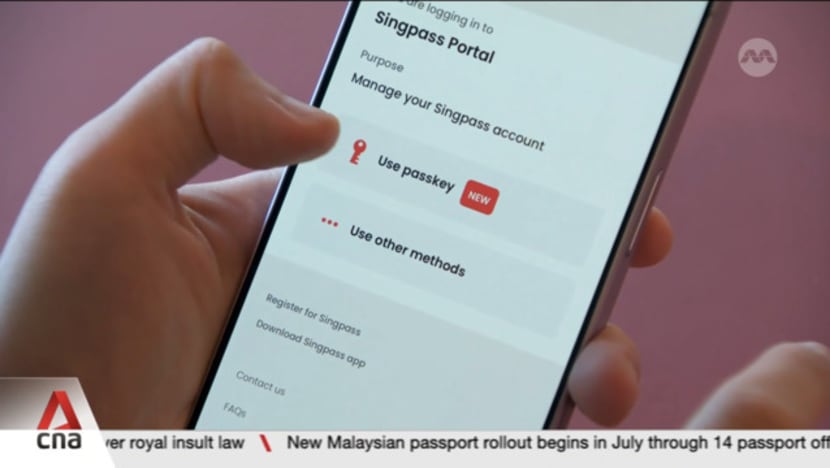
SINGAPORE: Meta-owned messenger WhatsApp has reserved high-profile usernames, including those of public figures and government entities, ahead of the rollout of its new username feature, a privacy measure that will allow users to connect without sharing their phone numbers.

The move aims to prevent impersonation so that such usernames can be claimed only by their legitimate owners. Lookalike derivatives of known names have been held as well, said WhatsApp in response to queries from CNA on Saturday (Jul 11). 

Checks by CNA found that usernames such as @LawrenceWong, @KShanmugam, @OngYeKung and @VivianBalakrishnan have been blocked. They match the names of Singapore’s Prime Minister, Home Affairs Minister, Health Minister and Foreign Minister, respectively.

Variations of these names have also been reserved. Checked showed that @LawrenceWong_ and @LawrenceWong1 are also not available.

CNA Games
Show More
Show Less

WhatsApp announced last month that it would introduce usernames in gradual updates worldwide, allowing users to message others without sharing phone numbers.

Users can reserve their preferred username on WhatsApp before the new feature launches and will be notified when it is available in their countries.

"When it becomes available and someone sends you a message for the first time via your username, we will show you if they're a new account, if they’re your contact, if you have groups in common, and if they’re based in a different country, so you can decide whether to respond," said WhatsApp on Saturday.

It added that users will still need a phone number to use WhatsApp and that the recipient's exact username is needed to message.

The platform will also limit the number of new people an account can contact, block repeated attempts to guess usernames and use systems to detect and remove activity associated with impersonation and abuse patterns.

In India, the username feature has raised concerns that it could make scams more convincing.

Indian authorities have asked Meta to pause the feature's rollout and explain the measures it will take to prevent fraud and impersonation.

According to India's Ministry of Home Affairs, Indians reported losses of 224.95 billion rupees (US$2.3 billion) to cyber fraud in 2025. The number of complaints rose about 24 per cent year-on-year to 2.4 million.

Source: CNA/dc

Sign up for our newsletters

Get our pick of top stories and thought-provoking articles in your inbox

Subscribe here
Inbox
Advertisement

Singapore

Several flights from Singapore cancelled as Typhoon Bavi takes aim at Taiwan and China

Typhoon Bavi, described as one of the largest storms to hit Taiwan in more than 30 years, has already caused significant damage in parts of Asia.

Several flights from Singapore cancelled as Typhoon Bavi takes aim at Taiwan and China

A fisherman handles a rope near a fishing boat as waves crash over a breakwater in Yilan on Jul 10, 2026, as Typhoon Bavi moves toward northeastern Taiwan. (Photo: AFP/I-Hwa Cheng)

New: You can now listen to articles.

This audio is generated by an AI tool.

11 Jul 2026 10:38AM
Read a summary of this article on FAST.
FAST

SINGAPORE: Several flights between Singapore and North Asia have been cancelled as Typhoon Bavi approaches Taiwan and China after battering parts of the region.

Singapore Airlines (SIA) said in an advisory that four flights to and from Taipei on Saturday (Jul 11) have been cancelled. 

Ten SIA flights to and from Shanghai’s Pudong International Airport over the weekend have also been affected.

“SIA will be contacting all affected customers to inform them about the flight cancellations or changes to the flight schedules,” the airline said.

CNA Games
Show More
Show Less

“As the situation remains fluid, other SIA flights may be affected.”

Passengers are advised to check the status of their flights before heading to the airport and to contact the airline for rebooking options if their travel plans are affected.

Airlines such as EVA Air, China Airlines and Xiamen Airlines have also cancelled flights from Singapore’s Changi Airport to the affected region.

Typhoon Bavi, described as one of the largest storms to hit Taiwan in more than 30 years, has already caused significant damage in parts of Asia.

At least 15 people were killed and six others remain missing after landslides triggered by heavy rains on the southern Philippine island of Mindanao, authorities said.

In Taiwan, nearly 9,000 people have been evacuated from their homes, with more than half in the mountainous eastern county of Hualien. Hundreds of flights have been cancelled, while schools and businesses across northern and eastern parts of the island have been shut.

The storm is expected to bring maximum sustained winds of up to 155kmh, with gusts reaching 190kmh, according to Taiwan’s Central Weather Administration. Its wide radius - about 380km - makes it the largest typhoon to affect the island in decades.

More than 28,000 troops have been placed on standby for emergency response.

A bicycle falls on the ground in the heavy rain as Typhoon Bavi approaches in Ishigaki, Japan, Jul 10, 2026. (Photo: REUTERS/Kim Kyung-Hoon)

The typhoon has also disrupted travel in Japan’s southwestern islands, where dozens of flights have been cancelled and businesses forced to shut.

After passing Taiwan and Japan, Bavi is forecast to make landfall in eastern China over the weekend, where recent storms have already left dozens dead and caused severe flooding.

Source: CNA/gs

Sign up for our newsletters

Get our pick of top stories and thought-provoking articles in your inbox

Subscribe here
Inbox
Advertisement

Also worth reading

Advertisement
Advertisement

Women

Life as a football fan’s wife: I still don’t get offside, but I understand why it’s ‘the people’s game’

She still cannot confidently explain what makes a foul, but being married to a football fan has made CNA Lifestyle writer Izza Haziqah care about match results, World Cup underdogs and the social issues surrounding the game.

Life as a football fan’s wife: I still don’t get offside, but I understand why it’s ‘the people’s game’

The writer and her husband at the home stadium of Arsenal Football Club in 2022 – being married to a football fan made her realise she can still enjoy the sport without knowing anything about it. (Photo: Izza Haziqah)

New: You can now listen to articles.

This audio is generated by an AI tool.

11 Jul 2026 07:18AM
Read a summary of this article on FAST.
FAST

The FIFA World Cup has been in full swing since the first whistle on Jun 11, and many of us have been adjusting our work and sleep schedules to catch late-night and early-morning matches, organising watch parties with friends, and taking note of kick-off times.

I am, however, not talking about football fans. 

I’m talking about a breed in the football ecosystem that doesn’t get nearly as much attention: the wives of football fans.

Football has an incredibly massive fanbase. According to FIFA, roughly five billion people worldwide watched at least one 2022 World Cup match. Meanwhile, the English Premier League 2024-25 season saw a weekly global audience of 1.87 billion, according to Win Sports Online. 

CNA Games
Show More
Show Less

No doubt, a good portion are women who can explain an offside, analyse a formation and tell you exactly how a player substitution changed the match.

This isn’t about them. 

This is about us, non-fans with little interest in the sport, who "married into" football and very quickly realised how much space it took up in our lives. 

We can now tell the position of our partner’s favourite team on the league table and confidently name at least three players from their favourite club (five, on a particularly good day).

This is one of the strange yet charming things about marriage: You learn the language that brings your spouse joy, then slowly figure out how to support it.

If that language is football, something else also happens.

You become unexpectedly competitive and even protective of your spouse’s team. You find yourself caring about a game that never really interested you. 

You may not understand every technical detail – I surely don’t – but you appreciate why so many people love it.

SUPPORTING THE SPOUSE’S CLUB NO MATTER WHAT

Fans in Singapore celebrating Arsenal’s English Premier League win at Clarke Quay on May 24, 2026. (Photo: Reddit/Dumas1108)

The cardinal rule when you marry into football? Support your spouse’s club, no matter what.

So goodbye to the tiny bit of Liverpool loyalty I inherited from my father. My allegiance had to shift to Arsenal – or at least convincingly pretend it had.

My husband fell in love with football more than 20 years ago, during Arsenal’s Invincibles era in the English Premier League (EPL), when the club went an entire league season without losing a single game. That made him a lifelong supporter.

Before a match, I’ll catch him glued to his phone, reading line-ups and injury updates. During the game, I’ll hear the occasional shouting at the referee, disbelief at a missed chance, or triumphant celebration after a goal.

If his team wins, he’ll happily spend the rest of the evening reading blogs, watching analysis videos and reliving the goals. If they lose, let’s just say it’s probably not the best time to ask him about new furniture.

Over the years, I’ve watched his football shirt collection grow. I now own an Arsenal shirt, too. My son, let’s be honest, never had any say in the matter. And oh, it was so, so sweet to witness the team take the Premier League title this year, after 22 years – because it brought so much joy to our home. 

In the World Cup, my husband has a soft spot for the underdogs. By extension, I also support the same countries he does.

During the 2022 World Cup, I went along with his unwavering support for Morocco, only for us to feel crushing disappointment after witnessing the team’s loss in the semi-finals. 

This year, I’ve listened to his passionate arguments for the underdogs who have captured his heart – Japan, Egypt, Morocco again. Regardless of my knowledge of the players and their history, I know the countries I’m supposed to root for.

UNDERSTANDING THE BEAUTIFUL GAME WITHOUT KNOWING WHAT’S GOING ON

At first, I didn’t really care much about the team itself. I wanted them to win because my husband’s mood – and therefore, the energy of the household – depended on the final score. 

Along the way, however, I began to get involved. My interest is piqued when I see headlines related to player transfers, and I can even keep up with banter between fans of rival clubs or countries – gleefully teasing them when we win, and pretending to hide if our team loses. 
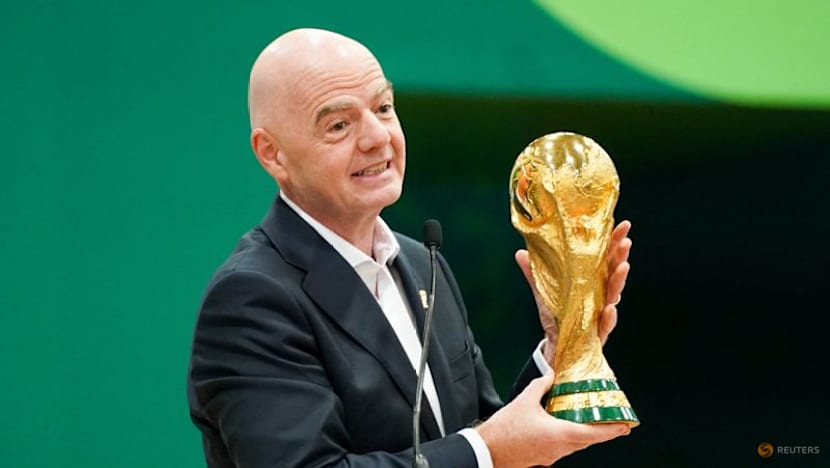
Football’s accessibility and people-centric elements make it so much fun to enjoy, even as someone who is fan-adjacent.

I’ve watched my husband, an introvert who avoids talking to strangers at all costs, happily greet people he has never met simply because they are wearing an Arsenal jersey or a vintage Japan football shirt.

You don’t need to speak football fluently to be invited to celebrate, groan, or shout at the referee along with everyone else. Seeing people cry over a goal or a missed chance, while witnessing thousands of strangers experience the same emotion together, is moving.

I still wouldn’t call myself a full-on football fan. Despite my husband explaining, for the umpteenth time, what the Video Assistant Referee (VAR) system does and why a particular substitution says everything about the team manager’s game plan, I still can’t repeat the rules back to you.

Unlike sports such as fencing, baseball or golf – all of which I have tried watching but got completely lost – football asks very little of the viewer. The objective is wonderfully simple: Get the ball into the other team’s net.

Because of that, I can usually tell when a team is dominating possession, helped by the fact that everyone is wearing matching jerseys. I can feel it when the entire stadium collectively holds its breath because the ball is inches from the goal. And I definitely know when someone scores. 

LEARNING ABOUT THE WORLD THROUGH FOOTBALL 

Because of my husband, I became familiar not only with some players, but also with the wider world surrounding the game.

I have learnt why underdog victories feel especially sweet, and picked up life lessons, one being that no matter how many goals a team can lead by at the start of the match, nothing is ever certain until the final whistle blows. 

Another thing I picked up is also how closely linked football is to politics, money, race, national identity, environmental criticism and global inequality. 

And perhaps because the sport is so big, so beloved and so deeply tied to people, governments, corporations and unimaginable amounts of wealth, controversy is inevitable.

My husband’s love for the sport has also led me to pay closer attention to the controversies surrounding the sport and the World Cup. 

A recent example was FIFA’s decision to overturn the suspension of American player Folarin Balogun following intervention from United States president Donald Trump ahead of the US-Belgium match, which drew condemnation against political interference in the game.

Football also continues to wrestle with racism directed at Black and dark-skinned players, criticism over the environmental cost of tournaments, and questions about the influence of money, states and governing bodies on what is supposed to be the world’s game. 

I only came across these stories because my husband shares more football lore and drama than I ever expected to absorb. Along the way, football taught me far more about the world than I could ever imagine. 

Whenever the issues around football come up, however, my husband always concludes with the same point: “The politics can be dirty, but football is still the people’s sport.”

What he means is that the game is meant to be enjoyed with other people – fans and rivals alike – and is accessible to both players and viewers, no matter their economic background and level of talent. 

Football is a game you enjoy more with people around you. (Photo: CHIJMES)

The idea of football being a people’s sport is also why we enjoy watching matches in communal spaces

Our favourites are Keat Hong Community Club, which has screened selected World Cup matches throughout the tournament, Kallang Wave Mall, where fans can gather for the closing stages, and the shawarma restaurant near my parents’ home, which has screened all the matches since the start of the tournament. 

When we watch football with others in communal spaces, emotions are heightened and the experience is elevated: Every miss is louder and more heartbreaking, every goal more jubilant. Football is truly something people experience together.

I used to know only Messi-versus-Ronaldo and would roll my eyes at the intense dedication of football fans. I’d wonder why anyone would let a game affect their mood so deeply.

But since my marriage into the game, I’ve learnt to appreciate the sport in my own way. Along with that, I’ve found myself caring about football, too.

CNA Women is a section on CNA Lifestyle that seeks to inform, empower and inspire the modern woman. If you have women-related news, issues and ideas to share with us, email CNAWomen [at] mediacorp.com.sg.

Source: CNA/iz

Sign up for our newsletters

Get our pick of top stories and thought-provoking articles in your inbox

Subscribe here
Inbox