Note to readers: This piece is part of the Investor Meta Skills series, where I typically cover the thinking and learning. This is Part II of a three-part series on the science of studying: Part I was about getting material into your head, this one is about keeping it there, and Part III will be about pulling it back out when you need it. By the end of the series, you’ll have all 63 science-based techniques for learning more and forgetting less.
In Part I, the main goal was getting the material into your head in the first place. Encode it for meaning, wrestle with it, make yourself do something with it rather than stare at the page. Suppose you have done all of that well. You still have a problem, and it begins the moment you close the book: what you just learned starts slipping away almost immediately, and within a few days most of it is gone.
This is the storage problem, and if you don’t do anything to improve it, you will forget the material. Memories decay, fresh learning interferes with what came before, and knowledge that never gets consolidated never becomes permanent at all. We’ll tackle storage through three lenses. The first is biological: sleep, naps, exercise, and the timing of caffeine and food affect how much of what you encoded actually survives the night. The second is scheduling: when you review, how far apart your sessions are, and whether you revisit something while it still feels easy or wait until it has started to fade. And a third, how you organize the material so competing memories stop crowding each other out.
Much of what follows happens when you are not studying at all. Several of the strongest strategies in this part have more to do with your evenings, your sleep, and your calendar than with your textbook. The protocols below work both levers: how to protect and exploit consolidation, and how to space your reviews so that the material you spent time to encode in Part I is still there when Part III asks you to pull it back out.
Let’s begin.
STORAGE
Protect sleep as a learning tool. Never trade a night of sleep for more study; sleep deprivation cuts declarative-memory performance by 20 to 50%. Why It Works: Consolidation, the biological process that turns fragile traces into stable long-term memories, happens mostly during sleep. Deprivation before or after learning impairs it, and prolonged deprivation can do permanent damage. No study technique buys back the loss. How to Apply It: Cap study at a time that still leaves you a full night before the exam, and treat that sleep as part of the study plan rather than recovery from it. Common Mistake: Pulling an all-nighter, feeling “prepared,” and scoring worse than if you’d slept six hours and studied less (Young & Jílek, 2019).
Study right before bed. Put your hardest learning session in the evening, right before sleep. Why It Works: Material you encode close to sleep gets consolidated right away, with little interference from whatever else you’d otherwise be doing while awake. The same consolidation mechanism that makes napping work runs across a full night’s cycles too. How to Apply It: Move heavy reading, flashcard review, or problem sets into the last 60 to 90 minutes before bed, and avoid scrolling or fresh intellectual input afterward. Common Mistake: Studying hard at 2pm, then watching three hours of television that interferes with consolidating the morning’s work (Young & Jílek, 2019).
Time naps to the sleep cycle. Keep a nap either short, around fifteen to twenty minutes, or long enough to finish a full ninety-minute cycle, and avoid the sixty-minute middle. Why It Works: A brief nap tops up alertness while staying above deep sleep, so you wake clear-headed. Surface out of slow-wave sleep, which you drop into roughly half an hour in, and you pay for it with sleep inertia, a stretch of grogginess that can swallow the alertness you were after. A full cycle brings you back up to light sleep before you wake, so you capture a real consolidation window and come out clean. Cycle length varies from person to person and night to night. How to Apply It: Set an alarm before you lie down rather than trusting yourself to wake on time. After a heavy encoding block, give yourself the full cycle; when you only need to clear brain fog before a meeting, take the short one. Common Mistake: Lying down “just for a bit,” surfacing partway through deep sleep, and losing the rest of the afternoon to a foggy brain (Brooks & Lack, 2006; Mednick et al., 2003; Diekelmann & Born, 2010).
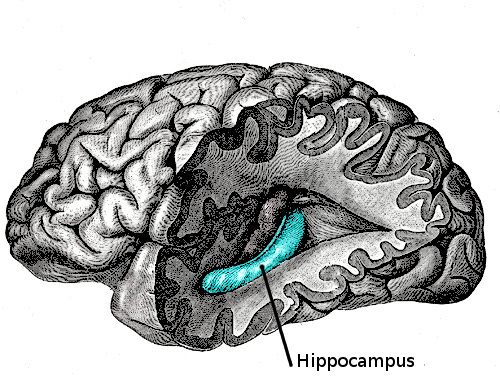
Exercise four hours after learning. Put a 30-to-40-minute aerobic bout at 60 to 80% of max heart rate roughly four hours after an intense encoding session. Why It Works: Van Dongen et al. (2016, Current Biology) tested three groups on picture-location memory and found the four-hour-delay exercise group beat both the immediate-exercise and the no-exercise groups at 48-hour retrieval, with more hippocampal pattern similarity. The mechanism is catecholamine and BDNF elevation during the consolidation window, which is separate from exercise as a state-dependent cue. How to Apply It: After you study hard material in the morning, schedule a moderate run, bike, or swim for the early afternoon, and sustain chronic aerobic training at three to five sessions a week for the long-term hippocampal gains (Erickson et al. 2011 found roughly 2% hippocampal volume growth over 12 months). Common Mistake: Exercising right after studying, which shows no consolidation benefit in controlled trials, or expecting structural gains from resistance work alone (van Dongen et al., 2016; Erickson et al., 2011).
Dose caffeine after encoding. Take roughly 200 mg of caffeine after a hard learning session rather than before, and keep it at least six to eight hours from bedtime. Why It Works: Borota et al. (2014, Nature Neuroscience) found that 200 mg of caffeine after encoding significantly improved 24-hour mnemonic discrimination, on an inverted-U where 100 mg was too little and 300 mg added nothing (though a 2020 replication found the effect small at best). Adenosine-receptor antagonism boosts noradrenergic signaling during consolidation, so the benefit targets storage rather than the initial encoding. How to Apply It: Finish the study block, then drink a 12-ounce coffee or a 200 mg dose, and schedule intense study for before early afternoon so the caffeine doesn’t wreck your sleep, since Drake et al. (2013) found 400 mg six hours before bed cut sleep by about an hour. Common Mistake: Using caffeine chronically as a morning stimulant rather than a post-learning aid, or dosing late and sacrificing the sleep consolidation that matters more than the caffeine (Borota et al., 2014; Drake et al., 2013).
Fuel the demanding session. Show up to hard cognitive work well-hydrated and with moderate glucose available, especially for tasks that need sustained attention and episodic memory. Why It Works: Messier’s 2004 review found that 25 to 50 g of glucose 15 to 30 minutes before a demanding task reliably boosts episodic memory, especially under divided attention. A hydration deficit as small as 1 to 2% of body mass impairs attention, working memory, and mood (Adan 2012; Ganio et al. 2011); the brain burns roughly 25% of your resting glucose and needs extracellular water to run. How to Apply It: Before a 90-minute block, eat a moderate-GI meal, drink about 500 mL of water on waking and 250 mL an hour during work, and judge hydration by pale-straw urine rather than thirst. Common Mistake: Loading high-sugar snacks that trigger reactive hypoglycemia mid-session, or trusting thirst signals that lag behind the real deficit, especially in older adults (Messier, 2004; Adan, 2012; Ganio et al., 2011).
Guard the hippocampus from chronic stress. Keep chronic stress low, and build recovery routines that lower your resting cortisol. Why It Works: Sapolsky’s and Lupien’s work shows that sustained glucocorticoid elevation causes CA3 dendritic atrophy, suppresses adult neurogenesis, and lowers BDNF; Lupien et al. (1998) found that elderly adults whose cortisol rose steadily over five years had 14% smaller hippocampi and impaired hippocampal-dependent memory. Cushing’s, recurrent depression, and PTSD all produce 8-to-20% hippocampal volume loss. How to Apply It: Treat sleep, daily aerobic exercise, and social connection as cortisol regulators with measurable effects (moderate exercise lowers resting cortisol by roughly 15 to 20% over weeks), and protect at least one unplugged hour a day. Common Mistake: Treating chronic stress as a personality trait rather than a modifiable risk to the memory hardware itself (Sapolsky, n.d.; Lupien et al., 1998).