
Jay_Zynism/iStock via Getty Images
TS Lombard global macro strategist Dario Perkins on Monday raised red flags over the artificial intelligence (AIQ) investment boom, warning that the ecosystem's financials paint a troubling picture of self-reinforcing spending rather than genuine commercial traction.
Perkins pushes back against widespread claims that AI technology has already transformed the U.S. economy. "The technology is not the reason the US avoided recession. Neither is it the reason productivity surged," he wrote in a note. "There is no real evidence it is putting people out of work. And the whole 'wealth effects' thing is mostly vibes."
The strategist's central concern lies in what he calls the "circularity" problem plaguing AI revenues. His analysis estimates that 85% of AI ecosystem revenues still come from capex recycling—hyperscalers and model developers purchasing from each other—rather than from corporate and consumer subscriptions outside the tech industry. That ratio has remained stubbornly consistent over the past two years and has recently been trending upward, not down.
"The more the hyperscalers invest, the more AI revenues rise," Perkins notes. "One company's capex is another company's revenues. The whole AI ecosystem is circular."
For the bull case to prove sustainable, Perkins argues the industry must demonstrate a meaningful shift toward external revenue sources. Genuine sustainability requires non-tech companies and regular consumers willing to pay for AI services—presumably because of productivity gains those tools actually deliver. Until that transition materializes in the data, the strategist remains unconvinced that the current trillion-dollar annual capex splurge can generate a worthy return on investment.
Assessing the circularity issue further, Perkins "estimated the share of the AI ecosystem’s revenues that comes from capex recycling rather than from outside the ecosystem (e.g. corporate and consumer subscriptions). The results were a little troubling. 85% of revenues are still coming from capex recycling – similar to two years ago, and recently that ratio has been going UP rather than down. That is not evidence of sustainability."
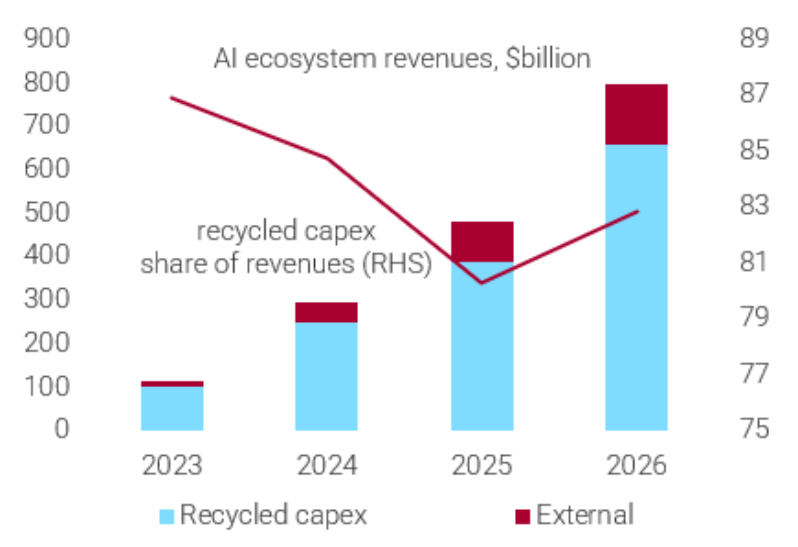
TS Lombard


