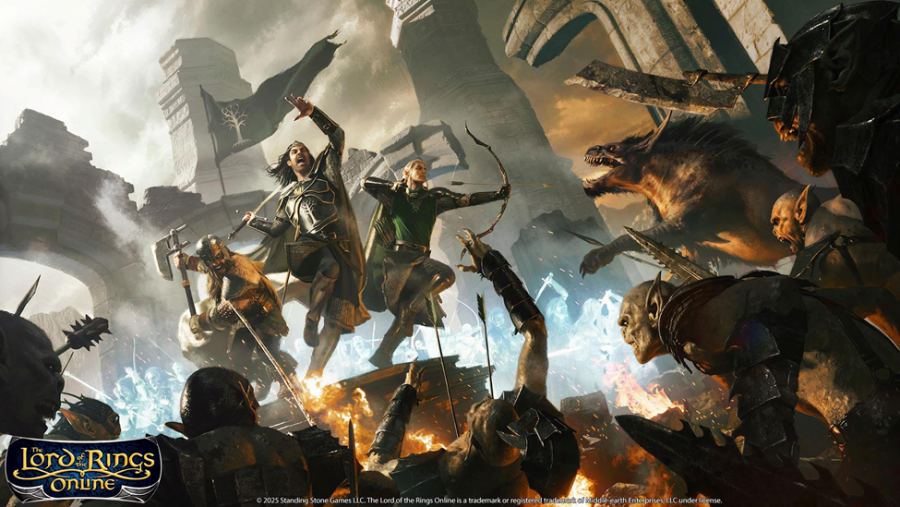
In our previous episode…
In my previous piece, I posed the following question. Let’s say something straight out of the wildest isekai-stories came true; you find yourself in the fantasy world of your favorite game. Of course, the most likely outcome of such a scenario is that you’d become a monster’s lunch before noon. But let’s say you avoided that fate and managed to build a real life for yourself there, even befriending your favorite characters in that game. And one day, one of them sees you praying—probably about not becoming lunch—and asks about your beliefs. So. How would you even begin to answer them? The first challenge you’d likely face in doing so, over there in that world, is that you’d have found nothing that resembles our belief in God here.

In most of video gaming’s imaginary worlds, you’d find no God. At least, none that Christians would understand as such anyway: an all-powerful, all-knowing, all-loving God that created and sustains all things. Now, there may be religions that look like Christianity, with its offices, trappings, and wrongdoings—real or imagined, yet even those religions won’t believe in that kind of God. Instead, you’d likely find many “gods” worshiped in that world, presiding over different domains, and none like the God of Christianity.
Now, this is not some rant about lack of Christian representation; I wanted to point out something much more interesting. The challenge of speaking about “God” inside such game-worlds was the same kind of challenge that the first Christians historically faced. That was the pagan world they lived in—a world with many “gods,” yet no “God.” Yet, in communicating their faith, these first Christians did not simply introduce some new foreign god that would displace all the others. Instead, from the apostle Paul to early theologians like Athenagoras and Augustine, they found something in that pagan worldview—a belief in something deeper, higher, and grander than even its greatest gods. And then they identified that as what Christians really mean by “God.” God, which is actually not a god.
But our previous conversation left out another key reason why games we play tend to feature “gods,” but no “God.” I call it the One-Punch Man problem.
The One-Punch Man Dilemma
So, who or what is the One-Punch Man? Well, he’s a superhero of an anime/manga series who can defeat anything—anything—with just one punch. Needless to say, the dramatic tension of his story does not lie in whether or not he can defeat the monster of the day. Quite the opposite, in fact—he’s becoming increasingly bored of fighting monsters. Imagine what would happen if you try to put that character in a game; actually, don’t, since one’s been out for a while. And the thing is, you can’t really “play as” the One-Punch Man in that game—not normally anyway—since he’s, well, invincible. After all, it wouldn’t be a very fun game if you simply win every fight by pressing the button “X” once. The game instead has various gimmicks, like playing as some other character, while you try to survive long enough for One-Punch Man to arrive on the scene, and then presumably, resolve the battle with a single punch.
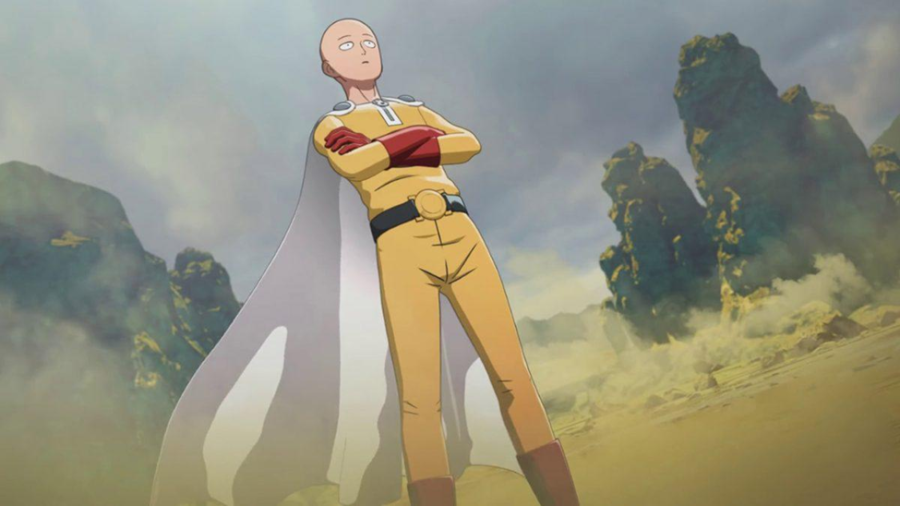
The One-Punch Man problem—also called the Superman problem—is about what happens when you introduce an invincible character to a story. After all, what story can you tell with a character who has no meaningful enemy, challenge, or difficulty?
The problem is infinitely greater with God, because at least with One-Punch Man, there are still things he can’t solve—his increasing boredom, lack of social recognition for his feats, or his odd inability to swat annoying mosquitoes. But God can literally do anything. As a character in a game, One-Punch Man would beat any enemy with a single press of a button; but God can, well, just about change anything and everything in that game—like turning a fighting game into a dating-sim, for example. So, how do you put that kind of character inside a game?
You can’t.
“God” as a character in a game
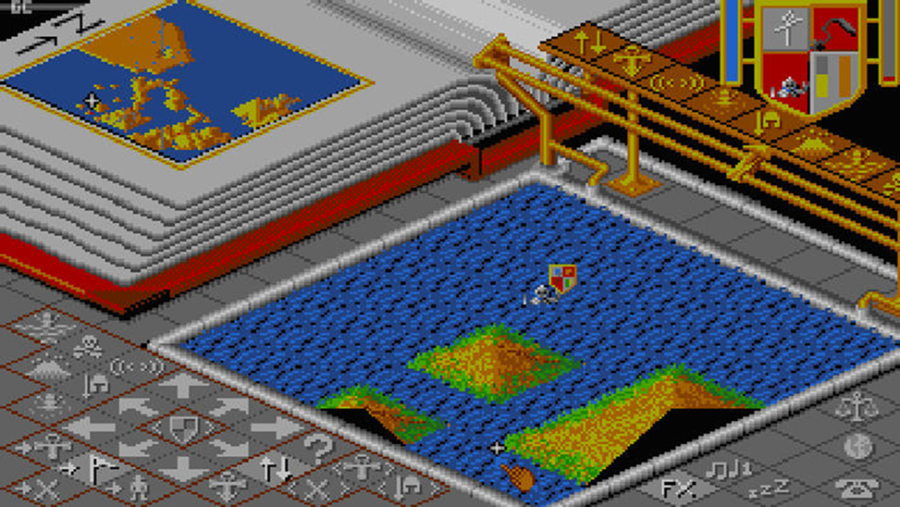
Wait, aren’t there games where you actually do play as God? And I don’t mean the recent game making some noise, “I am Jesus Christ”—that raises an entirely different question, which is for another time. I mean games where you play as lightning-throwing, mountain-melting, ruling-from-heaven, kind of god. Because it turns out that there’s an entire genre of such games, literally named “God-Sim.” There’s the classic, Populous, made way back in the days of yore (1989) followed by later games like Black and White, Godus, and the like. And you indeed play as a god that can reshape continents, perform miracles, smite unbelievers, and so on. But even in those games, you’re still bound to the system and rules of that game; there’s a very specific set of things you can do with the click of your mouse, and nothing more. And that means you’re not really playing as “God” as understood by religions like Christianity, because if you are, such things cannot limit you; in fact, you should be able to remake the entire game from scratch, from its basic system and rules, to something mundane like the UI.
So, games can never have God as a “playable” character. Which is kind of obvious, I suppose. It’s probably a good thing, too, for many of us who’d feel that it’d be, well, blasphemous. But can God be an NPC? Can there be a game where God is a character you can encounter? Of course, many developers would avoid putting God of a real-world religion inside their games for fear of offending people, but many others would relish offending those same people—I’m looking at you, Shin Megami Tensei! But never mind whether they’d be willing to; can they, if they want to? And it turns out that “God,” even as an NPC, still raises the One-Punch Man problem (and if it doesn’t, that’s one glaring sign that the depiction of God in that game is utter nonsense).
You can even say that the very premise of almost every game makes God as a meaningful NPC impossible. Why? Because God is not only infinite and unlimited, but personal and good. That means God would take sides in a conflict, and the other side should, in theory, have about as much chance as a snowflake in hellfire. The very fact that you, as a player, must still face off against some great and ancient evil, or fight in some great war, or survive some cataclysm, implies that such “God” is conspicuously absent in that world.
And if you’re familiar with Christian theology, you’d recognize that this is the video-game version of a quite famous real-life question: the Problem of Evil.
Where art thou, God, when the world is so messed up?
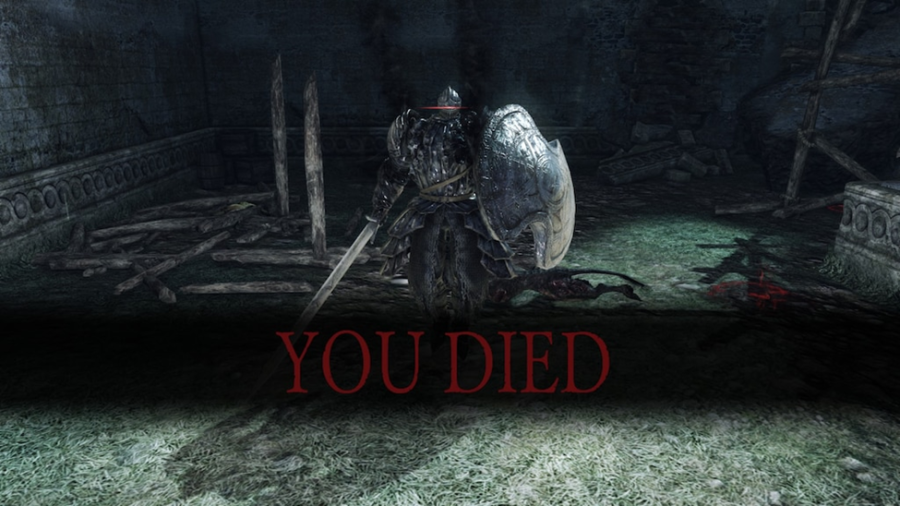
Let’s be honest. Most of the imaginary worlds in our games are horrible places to live. That is what they are if becoming a monster’s lunch is something we need to worry about. Not that our world here is entirely lacking in its own horrors, though our monsters tend to come in the form of humanity and our actions. This then raises the question: where are You, God, and what are You doing about all of this? Or is it that You’re nowhere at all? That, in a nutshell, is the problem of evil in Christian theology.
Still, there are a few game worlds where people do believe in a God that closely resembles the one Christians worship. And they address this seeming “absence” of God in one of two ways.
For the first example, the Dragon Age series presents us with a religion called the Chantry. According to its teachings, the all-powerful Maker created all things with His Word—sound familiar? But the world of Dragon Age is filled with nasty things like the Blight, darkspawn, and demons. So why do they exist, and what is the Maker doing? Well, the Chantry has an answer for this, too. The gist of it is that the Maker has turned away from his Creation because they did horrible things, including unleashing the aforementioned Blight. The final straw was how they betrayed the Maker’s human bride (it’s complicated) and burned her at the stake. So, the Maker has let things go to hell, literally, until humanity and its Chantry can prove themselves to him (Yes, it’s interesting how in Christianity, God answers our betrayal of the Son of God by doing the exact opposite, but that’s a different topic). Anyway, all this is assuming that the Chantry’s teachings are true, which are openly questioned in-game.
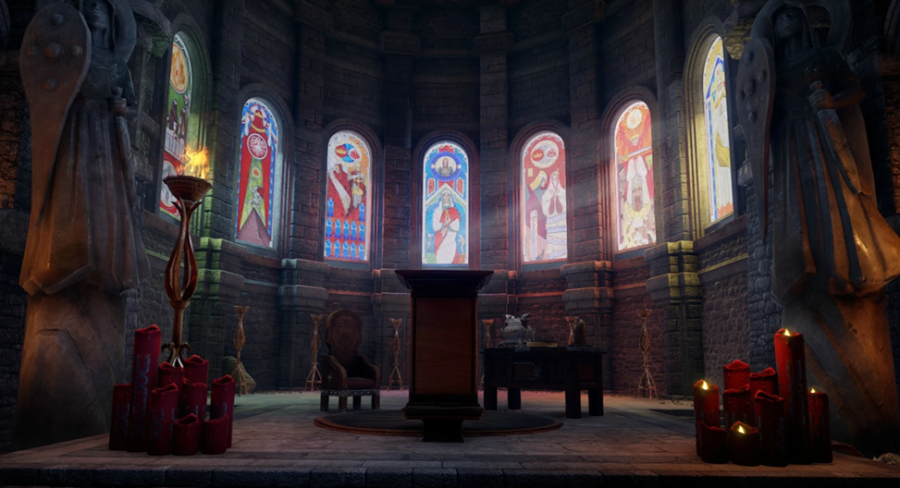
Then there’s the Age of Wonder series, which I briefly referenced in my previous piece. Now, the inhabitants of the world of this series—or rather, countless worlds of a multiverse—all hold a belief in a supreme, singular Creator of the cosmos, called the “Allfather.” This belief was in turn taught by the Archons, the setting’s most ancient and powerful celestial beings that guided the younger races. But again, whether their teachings are true remains in doubt. And in one of the recent story-campaigns that feature these Archons—Archon Prophecy—they let slip that not even they fully know the will of the Allfather, which comes in the form of prophetic visions, which they often misunderstand. Their answer to what God is doing is… they don’t know.
So both answers introduce a kind of “distance” between the world and God. First, there’s a distance of what is actually known about God. Everything that’s said about the Creator is simply what the characters in that world believe—matters of faith, not confirmed in-game. Which is rather true-to-life, as everything we say about God in our world, so far, remains a matter of faith. However, there’s something more important to this distance between God and the world.
Here’s what I mean.
The question of “Where” God is turns out to be important
According to Christianity and other monotheistic religions, God is not an entity in the world. The problem is that when we hear this, we tend to imagine that this just means God resides in some heavenly world “outside” our universe. This “God in Heaven” imagery is a way for us to wrap our heads around the idea that God is not in the world. But it’s not an accurate one.
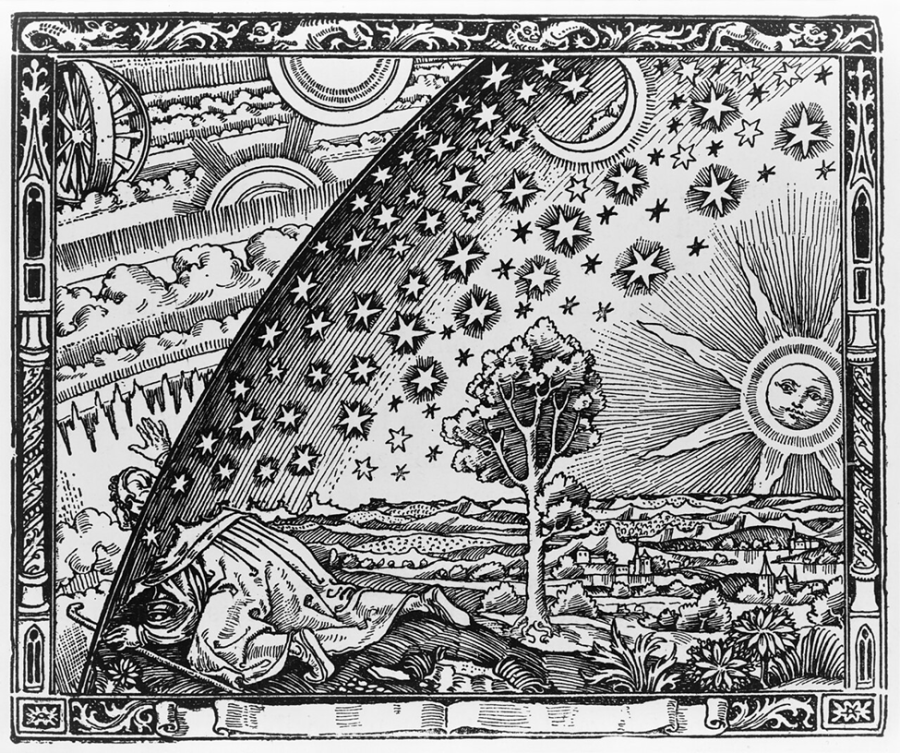
Take this example. Ancient peoples in the times of the Old Testament tended to believe that their greatest gods resided either in the sky, or perhaps the “highest heaven” beyond it—a kind of divine celestial realm. Consider this prayer by King Solomon: “But will God really dwell on earth? The heavens, even the highest heaven, cannot contain you. How much less this temple I have built!” (1 Kings 8:27, 2 Chronicles 6:18). The implication? There is no realm, earthly or heavenly, where God “resides”; but Solomon goes on to pray that God can meet those who genuinely seek Him, even inside a temple building built by human hands (1 Kings 8:28-30).
But what does this mean for our question: “Where” is God?
Here’s a helpful analogy. Where is the author of a story inside the story they tell? And imagine the author speaking the story, rather than writing it down. After all, in Genesis, God “speaks,” not “writes,” to create the cosmos. So, say Shakespeare recites his entire play of Hamlet. Where is he in that story? Well, in one sense, nowhere; you won’t find Shakespeare as a character in Hamlet. Yet in another sense, everywhere, since everything in the story is the author speaking for the characters. The author is everywhere, and nowhere at all. That‘s the distance between God and the world.
It’s no wonder, then, that it’s so hard to place God as a character inside the world of our games. We’ve been poking at things in that world, its powers, forces—and gods!—and different realms, from earth to the “highest heaven,” to make room for God. Yet, that entire world as a whole would be what is being spoken by this “God”! The whole cosmos, from earth to the heavens, from people to the gods, every moment, is being spoken by Him even now. So… maybe we can start with that when we answer our friend in such a world!
This analogy still has one big flaw, though. If God is like the author of a story, and that story—the world—has horrible things in it, then why is God speaking that story? Doesn’t that make God, well, evil? So it turns out we haven’t really escaped the One-Punch Man Problem. Not yet anyway.
God as the Author of a “Game” we all create together
The thing is, in Christian theology, every analogy about God has its limit and needs to be supplemented with correctives. And our corrective is that there is one thing about God speaking His “story” that’s quite different from someone like Shakespeare reciting his play. Well, actually several things. For example, there’s a world “outside” the stories that human authors tell—the world where we live. But there is no “outside” to God’s “story,” since it includes literally everything. But the other big thing is, in God’s “story,” characters in it have minds of their own. We call that “Free Will.”
Now, I think this idea of “free will” is often underused in popular conversation; what I mean is that we tend to bring it up only as a defense regarding why there’s evil in the world. So basically, “this or that bad thing is not God’s fault, it’s because we have free will.” And while that’s true, we sort of have it backward. To put it in terms of science-nerds, it’s like talking about Einstein’s Theory of Relativity, only as an explanation of why spaceships can’t go faster than light. And while that’s true, Relativity is so much more than that. It radically changes how we are to think about the physical universe. Same thing with “free will.”

The thing is, “Free will” is not some loophole for God to get away with how the world is screwed up. It’s instead a key design feature of His Creation—a key aspect of why God created the world in the first place.
You can think of it this way: God not only created the world, but also invites His creation—especially us—to participate in making the world that will follow. Which isn’t to say we can rewrite the ultimate laws of physics or something. Rather, God is speaking the story of the universe not as some closed, fixed text, but as a kind of infinitely open conversation, which we can join in. That is to say, we are invited to “fill in the content” of God’s story, so to speak. Of course, the direction of how to best fill in that content, according to Christianity, is exemplified in the life of Jesus and written down in the Bible. But all this raises a very interesting analogy for God and the world—for gamer geeks anyway.
The world God has created is like a massive open-world game.
And I mean “game” not in the sense that God’s Creation is just some frivolous entertainment, but in the sense that we take part in how it unfolds. After all, that’s the key difference between a novel and a game. We are not merely “readers” or “listeners”; we are participants. Of course, this analogy has its own limits. God is creating the world like a “game,” but there’s no computer in which he inputs codes or “runs” the program. But then again, in the author analogy, God is not writing the story on paper.
The “codes”—the laws, principles, and structures—are spoken, so to speak, just as the story is. The “game” analogy here is to help us understand just what kind of story is being spoken by God. It is not a fixed text, but an infinite, interactive saga in which its characters are also like the players.
Ok, but what about Evil and the One-Punch Man problem?
Well, that’s fine and all, but what happens when some of the participants make that game—the world—a horrible place? After all, our games—like MMORPGs—have moderators that’d run such people out. Shouldn’t God do something like that, too?
But then the question is, what should God do if God is not a player, but the very speaker of the whole “game”? Why’s that a problem? Well, because the key point of that “game” is for its players to “fill in the content.” So if some of the players are doing just that—filling in the content—but doing so in ways that ruin it for others… how should you respond without going against the point of the game, especially when you’re not a player?
And it turns out that the Christian Gospel has a rather surprising answer. But since I’m writing for Geeks Under Grace, and not The Journal of Theological Studies, we’ll explore that answer by going into the story of The Lord of the Rings…Or rather, the story that presents us with the cosmic backdrop to it all: the Ainulindalë section of The Silmarillion.
In the next article.