


A Brief History Of South Korea's Weirdest Urban Legend: Killer Fans

Every country has its own bizarre superstitions. In Iceland, many people still believe in elves, despite elves never once returning the favor. Millions of Americans think that the country is run by alien lizards, while the rest just wish it was. And in a surprisingly wide variety of countries men live in constant fear that magical thieves will steal their penis, even though that's only ever happened once (and the police have promised us they're looking into it). But quite possibly the strangest superstition comes from South Korea, where some folks appear to have spent most of the 20th century convinced that sleeping in an enclosed room with the fan running is a recipe for instant death.
Obviously at this point you're thinking "Oh come on, Cracked. How can fan death be weirder than elves ripping your dick off, or whatever you were just rambling about?" But it's very unusual for a common household appliance to be the subject of such a terrifying myth, like if every toilet in Taiwan had a giant "murder machine" warning sign. It also seems like fan death would be pretty easy to test for yourself, assuming you have a fan and a child you won't miss. That sounds like a dark joke, but one South Korean professor actually did test the story by leaving his daughter's fan on all night (in fairness, he checked on her every five minutes). He concluded that fan death was a myth, but by that point the urban legend was far too popular to debunk.
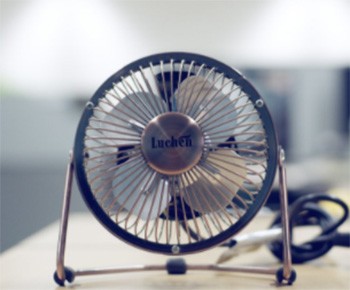
Now the first thing to note is that we're not trying to pick on South Korea, a technologically advanced wonder-topia that's probably about three years away from world domination. Roughly 40 percent of all Americans have multiple flavors of bleach in the fridge for drinking and recently signed their house over to Frank Stallone's unlicensed superchurch. Another 40 percent all got tetanus breaking into an abandoned fish factory for an Instagram shot, and are treating it entirely using a $14,000 crystal egg Gwyneth Paltrow sold them from the back of an unmarked van. The remaining 20 percent will be released from Elon Musk's brain chip testing camps only long enough to write-in vote for Kanye West while open-mouthed kissing every poll worker as a show of strength. We're in no position to judge!
Don't Miss
How exactly fan death is supposed to work has always been a little unclear, although it's generally agreed that cracking open a door or window instantly removes all danger. Some people say that the cool air from the fan can cause hypothermia, others that fans can create a "vortex" of air that interferes with breathing. (Just as a note, if your fan instantly turns the room into a swirling hellscape of ice and whirlwinds, you may have the setting too high.) Meanwhile, the South Korean government has warned that fans can cause people to suffocate by blowing exhaled carbon dioxide right back into their lungs. Although again, very few people choose to sleep slammed upright against the bedroom wall by a fan blast so strong every breath must fight to escape.
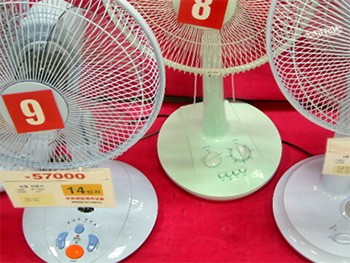
The belief is so widespread that fans in South Korea are sold with a built-in timer, ensuring that the fan will shut off automatically after a couple of hours if you happen to accidentally nod off with your Dyson Deathblade running. Many also come with a warning that "this product may cause suffocation or hypothermia." Honestly, at this point we assume every Korean electronics shop is just staffed by an old man waving a staff and screaming stuff like "Turn back! Flee from this place before these mechanical reapers claim another life!" Although we have to admit that including a warning label for a fictional problem is a pretty impressive commitment to customer safety, especially compared to American companies that spend billions each year lobbying against warning labels for products made entirely out of broken glass and ricin.
Even the South Korean government has repeatedly gone on record warning about the deadly risk of fans. In 2005, the Korea Consumer Agency listed "asphyxiation from electric fans and air conditioners" as the most common summer time injury, claiming that it killed around 10 people a year. Again, we'd make fun of that, but if 10 deaths is really Korea's most dangerous summertime injury then they're doing amazing. More people die on every single American river when their inner tube pops and sends them shooting through the blades of a fan boat. More people die because they try to chug something called a yard-garita while sprinting towards a slip-and-slide and end up carved in two by a crazy straw. More people die every time Steve Aoki stage-dives in a particularly studded belt.

There are some examples of Korean newspapers warning about the dangers of fans as far back as the 1920s, but the theory really seems to have taken off in the 1970s. At the time, South Korea was a poverty-stricken land ruled by a tyrannical dictator, a bit like the Quibi campus now. The country faced a series of power shortages and it's even rumored that the government deliberately started the fan death rumor to convince people to conserve energy by unplugging their fans at night. That's almost certainly not true, but we'd still like to see something similar tried in America, perhaps by sending an undercover FBI agent to stand outside every house fire wailing "If only he had recycled!"
The dictator was eventually forced from office by a combination of old age and his spy chief firing a fatal bullet directly into his face, but the fan death myth only grew stronger even as South Korea transitioned into a wealthy modern democracy. Korean newspapers published at least 10 stories about fan death every year between 1990 and 2004, while even prominent medical professors were happy to go on record claiming that fans could easily trigger deadly hypothermia. Basically imagine the Dean of Harvard Medical School pointing at a small rotary fan and declaring "that thing will suck your soul out like a Dementor" and you'll have some idea of the effect.
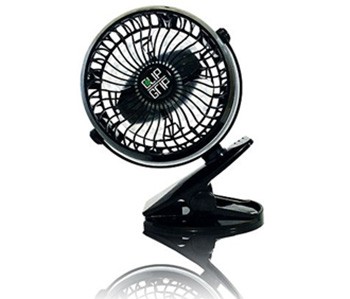
So it's really not that hard to understand why people would believe in the myth, considering just how often the country's biggest newspapers reported it as fact. In 2007, for instance, it was reported that the first fan death of the summer was a middle-aged man found dead in a motel room with his fan whirring away. That same year, reports emerged claiming that a group of five students had attempted suicide by locking themselves in a room with a running fan. Fortunately, one of the students chickened out and turned off the fan before the gentle air current could melt anyone's face like the end of Raiders of the Lost Ark.
This all prompted at least one distinguished professor to issue a public statement debunking the reports: "People believe in fan death because they see a dead body and a fan running. But normal, healthy people do not die because they slept with a fan running." Another doctor performed autopsies on several supposed "fan death" victims, revealing that they were mostly suffering from heart or lung disease. This was presumably very annoying news for the local police, whose jobs must have been way easier when you could just chalk up every mysterious motel death to an appliance attack. Next they'll be saying that not everyone found dead near a TV was claimed by that evil little girl from The Ring.

South Korean newspapers mildly adjusted to this by noting that fans were merely exacerbating underlying conditions like alcoholism. For example, in 2013 a 58-year-old died after drinking heavily, then falling asleep with the fan running. Some of Korea's biggest newspapers reported this as a case of fan death, explaining that drinking lowers your body temperature (true!) and that the added cool air from the fan had therefore caused the man to freeze to death. Which is basically impossible (a fan can lower your body temperature slightly, but nowhere near enough to contribute to hypothermia). And even by the story's own logic, "drinking so much poison that a light breeze crumbles your body like a saltine" shouldn't really be reported as "Breezes: The Deadly Killer!"
In fact, the opposite might be true, since it's widely believed that fans can be mildly dangerous at high temperatures. That's because a fan blowing hot air against your skin can create a convection effect, removing moisture and raising body temperature. The World Health Organization warns that using fans during extreme heat waves may increase dehydration or other problems. The exact temperature where fans become dangerous depends on the humidity (the dryer the worse), but the American EPA says fans should be avoided once the heat index climbs above 99 degrees fahrenheit (37.2C). On the other hand, researchers from the University of Sydney say that number is "not based on any evidence whatsoever" and that fans are only dangerous once humidity drops to extreme lows. The exact danger zone remains unclear, although it's probably best not to pack the mini-fan for your next trek through the Danakil desert.
The heating effects of fans have been seized upon by believers to argue that the myth is real, even though overheating was never suggested as a cause of fan death until it became the only remotely plausible explanation left. Much of this centers on a researcher called Larry Kalkstein, who was completely unaware of the fan death myth when a Korean newspaper asked him about it. Kalkstein innocently agreed that "fans can cause problems" and had to spend the next decade insisting that he did "not believe in fan death" in the traditional Korean sense. Let that be a lesson to scientists: Immediately assume all reporters are trying to trick you into demonizing a household appliance.
These days, the fan death legend is finally dying out, with few young South Koreans believing the story anymore. That's largely due to the Internet, which has helped kill off all the old urban legends your parents used to terrify you with. And it's not like the rest of the world ever lacked in those. Every parent in America used to be convinced that swimming less than 30 minutes after eating would result in being sucked straight into the clammy depths of the community pool, where your seaweed-tangled corpse would remain eternally, bony fingers brushing occasionally against the the feet of Mrs. Feldstein's second grade swimming class. Also we're pretty sure that there was something about chewing gum clogging your intestines for seven years? Like we said earlier, nobody is judging you on this one Korea!
Top image: Anze Furlan/Shutterstock
Must Read


4 Heartwarming Stories That Aren’t Really Heartwarming At All

The news keeps telling me about sad children, and I don’t like it. Sometimes, they’re reporting a newsworthy tragedy, and they’re right to inform me about this, whether I enjoy hearing it or not. Other times, however, this miserable story is supposed to make me happy. They frame the tragedy as a prelude to triumph — but it’s a meager and exaggerated triumph, which serves only to highlight how sad the original story was.
I do not experience “all the feels” upon hearing these stories. I experience a few specific feels. Rather than feeling fuzzy and warm, I feel frazzled and heated when I hear that...
A Prank Victim Gets a Target Shopping Spree
Don't Miss
The Story: Three men approached eight-year-old Gabe Lyles at a Target this past summer. Singling him out because they saw his hearing aid and concluded he was deaf, they told him they represented YouTuber Mr. Beast. They blindfolded Gabe and his father, telling them to fill their cart with whatever they could, and Mr. Beast would foot the bill. The men didn’t represent Mr. Beast at all; they were just pranking the boy. But when the community heard the story, they donated some money, and Target matched it, and so Gabe got a shopping spree after all. “How quickly your day can change with a little kindness,” concludes the news story.

But Wait…: Screw you, news, for forcing me to know this horrible story. Gabe emerged from the ordeal with some Nerf guns, but that doesn’t cleanse my mind of the image of these bros blindfolding a deaf child and watching him bump into shelves while failing to navigate a toy aisle. And I realize I’ve now forced you to know the story and to picture Gabe and his father’s faces as they realize they were tricked, but at least I’m not pretending this is a happy tale.
“It made me feel heartwarming and happy,” said Gabe. I presume he was prompted to say this, because what kid says they “feel heartwarming”? No one feels heartwarming. A story is heartwarming (or at least the news report claims it is).
I’m also picturing the people at Target discussing this whole thing.
Assistant: So, about that prank with the deaf kid. The town of Southington put together a donation, and they want us to match it.
Boss: Oh no. How much?
Assistant: Two hundred dollars.
Boss: Oh! Phew, that’s not a lot of money for us to have to put up.
Assistant: Actually, it’s not money. They bought a Target gift card, and they want to know if we’ll donate one, too.
Boss: A Target gift card... which he can only spend at Target?
Assistant: That’s right.

Boss: So, we’re not really donating $200, are we? We’re offering a 50 percent discount on a purchase of $400?
Assistant: That’s if he spends the exact balance on the cards. Factor in the profit margin on these toys, and this might actually make us money.
Boss: And in return, we get a national news story about how awesome Target toys are? Corporate is going to get such a kick out of this.
A Make-A-Wish Kid Wishes to Feed the Homeless for a Year
The Story: Two years ago this week, Make-A-Wish put together an event for 13-year-old Abraham Olagbegi. Abraham, though not terminally ill, had undergone a risky bone marrow transplant, which qualified him for a visit from the foundation that makes dreams come true. He didn’t ask to fly to Paris or to shoot a bear. He instead asked to feed the homeless of Jackson, Mississippi for one year. What a selfless wish. Faith in humanity restored!
But Wait…: First, let’s get one thing out of the way: Wishes from 13-year-olds with aplastic anemia are not a practical way of solving homelessness. I won’t elaborate, because if you’d like a deeper dive into that, we previously did a whole article on this brand of pseudo-inspirational story, where larger widespread problems persist. So, let’s set aside whether homelessness continues to exist (of course it does). If Make-a-Wish really fed the homeless for a year, that’s still a pretty big deal, isn’t it? Except, they couldn’t do that.
The average cost of delivering a wish was $11,000, as of a few years ago; Make-A-Wish doesn't share a more recent figure than that. Even with some of that vanishing as administrative costs, that leaves plenty to give a child a once-in-a-lifetime experience, but doing something for a person for an entire year on that budget is trickier. Doing something for lots of people for an entire year on that budget is impossible. So, what Make-A-Wish did was arrange one event where Abraham could serve 80 meals in a park. They pledged to continue this for one Saturday a month for the next year, which arguably does count as doing it “for a year,” though “12 meals” doesn’t sound as impressive.

Local churches and businesses paid for the food. After organizing the first meal, Make-A-Wish spoke to the news about future meals, saying sponsors had “already supplied two servings.” That’s a rather modest donation to report on.
Abraham, however, saw no need to limit himself to whatever Make-A-Wish could facilitate. He opened a GoFundMe to pay for meals in 2022, 2023 and beyond. While most GoFundMe campaigns fail in obscurity, Abraham had quite an advantage, in that the national news had shared his story. Two years into this fundraiser, it has reached less than 4 percent of its funding goal.
Maybe that’s for the best. If this endeavor succeeds, that’s a huge jerk move actually, because it now makes every other Make-A-Wish child look bad. (I kid, I kid. Keep doing the Lord’s work, Abraham.)
Whole Town Rallies to Make Bullied Girl the Homecoming Princess
The Story: A school in West Branch, Michigan, nominated Whitney Kropp to the homecoming court in 2012. Then Whitney learned the other kids had picked her as a prank. She spent the whole night crying. She became suicidal. Her sister, however, shared her story with the world. A Facebook page supporting her got thousands of likes. Businesses gave her a free dress and a makeover. She attended the homecoming ceremony after all and was crowned princess.
But Wait…: I’m not here to mock popularity contests. To the people who place importance on them, they’re exactly as important as they seem. But surely whatever pleasures come from winning such a contest are canceled out if the winner knows they are not really popular? On the other hand, if the winner really were popular, then they surely knew it, and this whole underdog story is imaginary.
Is being hailed online as a bullied teen an enjoyable experience? If anything, mightn’t the online attention multiply what humiliation the original prank offered? That’s if the original prank was even that humiliating; I wonder if the story has left out some details that make it worse than it reported, maybe involving pig’s blood.
Is that really a dream scenario, winning a contest because of pity after being thrust into the national spotlight? And if you haven’t been preparing for this role for a long time, do you even have the diplomatic experience necessary to represent the monarchy in matters of state?
Dying Kid Gets to Watch the New Pixar Movie
The Story: Colby Curtin had vascular cancer, and in 2009, she was 10 years old and dying. That year, she saw Monsters Vs. Aliens, which came with a trailer for the next Pixar movie. She looked forward to watching it. A month later, the plan was for the hospice to provide a wheelchair to take her to the theater to see the new film, but that didn’t work out. Soon, she couldn’t leave her room. But her mother managed to get in touch with Pixar, who sent someone over with a DVD. Colby got to watch the movie after all. She had been fighting to stay alive just to see this movie, and thanks to Pixar, she died with this wish fulfilled.

“There’s not enough time, dammit!”
But Wait…: That movie was Up. It was the saddest possible movie for her.
My issue here isn’t with the famous opening segment of Up. That’s the part everyone talks about when they call Up a tearjerker, and it’s the best-remembered part, and it’s the best part, but though it’s sad, it’s only as sad as it intends to be. I’m instead referring to the message of the film, as delivered by the emotional climax. This is a scene sometimes called the Pixar Moment, the part in many Pixar films where the hero learns their entire quest was pointless and discovers what truly matters.

Carl has spent most of the movie journeying to Paradise Falls in South America, fulfilling a dream of his late wife Ellie, who always wanted to go there but never did. Finally reaching there feels hollow. He opens Ellie’s “adventure book” (a scrapbook where she planned to document a life of travel) and discovers that she did fill it, with photos from their many decades married to each other. She didn’t achieve that one dream of hers, but that didn’t matter. What mattered was the long fulfilling time she spent just being a normal person and growing old.
To an old person watching this movie, Up offers an inspiring message. They’ll look back at their own life, which might be unremarkable but had plenty of satisfying moments, spread across many years. Most young people will feel inspired, too. Their future life may or may not offer wild adventures, but the simple joys of adulthood will be good as well. Those in the middle of their lives also take from this a positive lesson. They might reassess what path they’re on, and the guidance on what’s truly rewarding may spare them from a midlife crisis.
But when you are 10 years old and dying, “All that matters are the many years you spent with your loved ones” is not an uplifting message. You never got to have those many years with your loved ones. If you were struggling to stay alive to watch this movie, watching it was your Paradise Falls, and Up is telling you that’s hollow. Something else matters, and you’ll never have it.

Walt Disney Pictures
This story was treated as more heartwarming in the retelling, particularly among Pixar fans back when the company was untouchable. I’m convinced the original reporters were aware this was pure tragedy. The original report notes that the mother didn’t know the plot of the movie before they watched it, and says that as part of a goodie bag, Pixar sent Colby her own adventure book she could fill up. “I’ll have to fill those adventures in for her,” said her mother.
Colby died seven hours after watching Up. Her last thoughts must have been, “Wow, life looks good. I wish I got to live it.”
If only she’d asked for an advance DVD of Twilight: New Moon instead. Bella picks Edward in that one, it’s wonderful.
Follow Ryan Menezes on Twitter for more stuff no one should see.
