Advertisement
Advertisement

Singapore

Tunnelling under an overpass, preserving a monument: The engineering challenges behind the Circle Line loop

The three new stations – Prince Edward Road, Cantonment and Keppel – open for public preview on Jul 4 and enter service on Jul 12.

Tunnelling under an overpass, preserving a monument: The engineering challenges behind the Circle Line loop

The tunnel boring machine used to complete the loop for the Circle Line. (Photo: LTA)

Listen
4 min
New: You can now listen to articles.

This audio is generated by an AI tool.

18 Jun 2026 12:00PM (Updated: 18 Jun 2026 02:08PM)
Read a summary of this article on FAST.
FAST

SINGAPORE: Cars continued passing along the Keppel Viaduct as a tunnel that would complete the Circle Line (CCL) loop was being bored directly beneath it.

It was one of several engineering challenges involved in building the three new CCL stations – Prince Edward Road, Cantonment and Keppel – which open for public preview on Jul 4 and enter service on Jul 12.

The tunnel between Cantonment and Keppel stations had to pass through the pile foundations of two viaduct piers while traffic continued flowing above, the Land Transport Authority (LTA) said on Thursday (Jun 18). Pile foundations are long columns drilled into the ground to support a structure’s weight.

To carry out the works safely, smaller micropiles were drilled next to the planned tunnel alignment to serve as a new foundation for the viaduct. Its weight was transferred from the original piles to the micropiles using hydraulic jacks. 

CNA Games
Show More
Show Less

Once the original piles were no longer load-bearing, they were disconnected and the tunnel boring machine excavated through the space.

The procedure took about eight months in 2021, with vehicles passing overhead throughout, unaffected.

The Keppel Viaduct piles after they were cut. (Photo: LTA)

TUNNELLING UNDER A NATIONAL MONUMENT

Tunnelling under the former Tanjong Pagar Railway Station posed a different challenge: ensuring the 94-year-old structure could withstand underground works.

The tunnel boring machine passed 6.7m below the railway station's pile foundations, and protection measures were needed to safeguard heritage elements including the building's clock, marble statues and mural tile artworks in the main hall.

The interior of Tanjong Pagar Railway Station being protected during the tunnel boring process. (Photo: LTA)

The station's platform canopy was cut into 63 pieces and relocated in 2017, then fully restored in 2024. Each panel weighed about 60 tonnes and had to be carefully transported from storage before all 63 pieces were reconnected.

Cantonment station will feature a curved platform ceiling with stained glass murals, a nod to the curved ceiling and murals inside the historic railway station.

At Prince Edward Road station, the tunnels had to be stacked one above the other – rather than running side by side as in a conventional station – because of the station's close proximity to high-rise office buildings and the Keppel Viaduct. 

Tunnel boring machines came within about 3m of the nearest building's foundations.

Building linkways to connect the platform to station exits presented another challenge, as many ran beneath busy roads. 

Engineers installed a protective roof of heavy steel pipes underground to stabilise the ground, then used smaller boring machines to excavate beneath it.

“This avoided traffic disruption, diversion of underground utilities and minimised disturbance to stakeholders,” said LTA.

The Kim Chuan Depot extension will also open on Jul 12, allowing it to house and maintain more CCL trains. An additional 23 trains will be progressively rolled out with the new stations.

The stabling yard in Kim Chuan Depot extension. (Photo: LTA)

Systems integration for the CCL – coordinating technologies such as train signalling, power supply and platform screen doors – was more complex than for other rail extensions. 

Completing the loop required testing continuous operations in both clockwise and anti-clockwise directions across a range of service patterns and scenarios. Conventional lines typically operate between two terminal stations.

The added complexity meant systems integration and testing took longer than for other rail projects, LTA said, reflecting the wider scope of validation needed for full-loop operations.

Source: CNA/jx(cy)

Sign up for our newsletters

Get our pick of top stories and thought-provoking articles in your inbox

Subscribe here
Inbox
FAST
Advertisement

Singapore

Singapore music studios feel the squeeze as clients turn to AI-generated content

Some firms say project budgets have fallen by up to 60 per cent as artificial intelligence becomes increasingly common in music and voiceovers.

Singapore music studios feel the squeeze as clients turn to AI-generated content

Music and audio firms say artificial intelligence is becoming a larger part of the production process. (Photo: iStock)

New: You can now listen to articles.

This audio is generated by an AI tool.

18 Jun 2026 04:29PM
Read a summary of this article on FAST.
FAST

SINGAPORE: Artificial intelligence is helping music studios in Singapore produce content faster and at lower cost, but industry players say it is also driving down project budgets and squeezing creative professionals.

Several firms told CNA that clients are increasingly turning to AI-generated music and voiceovers, leading to lower project budgets and changing expectations about what creative work should cost.

Some reported varying levels of budget pressure, with declines ranging from 10 to 40 per cent and certain projects seeing cuts of up to 60 per cent. 

Yet the issue, they say, is not simply about technology replacing people, but how AI is shaping perceptions of the value of creative work.

DISRUPTION TO CREATIVE OUTPUT

For decades, new technology has helped music studios work faster and more efficiently.

Digital audio workstations replaced analogue tape machines, while cloud services enabled remote collaboration. This meant shorter production timelines and lower costs.

But Mr Donny Pereira, managing director and founder of audio production company plusONE, believes AI represents a different kind of shift.

“With the dawn of AI, the difference here is dabbling in creative output … which then in turn determines the perceived value of the human output,” he said.

Mr Pereira said some plusONE projects have seen budget cuts of up to 60 per cent over the past two to three years, even as the volume of content being produced continues to grow. 

Part of the challenge is that AI tools allow clients to generate rough music concepts or voiceovers themselves before approaching studios.

"If the compression of budgets begins from the top (and) filters down, we are the first to be cut," he said.

CNA Games
Show More
Show Less

AI VOICES SEEN AS FASTER, CHEAPER

AI-generated voices are becoming a common feature in music production, advertising and content creation.

Tasks that once required voice actors, studio recording sessions and multiple rounds of revisions can now be completed within minutes.

"There are more requests right now for using AI voices, as opposed to a real human voice," said Mr Pereira.

Mr Donny Pereira, founder and managing director of audio production company plusONE, speaking to CNA in an interview.

"We can quickly change things on the fly. We can do it 10 times at the cost of one. It helps a lot in terms of processes, time, budgets."

But he added that many voice talents, musicians and freelancers are now feeling the effects.

According to Mr Pereira, plusONE has reduced its use of freelancers by about 20 to 30 per cent as clients increasingly request AI-generated alternatives.

"It is a whole ecosystem of the talent community that's impacted by the usage of AI,” he said.

STUDIOS ADAPTING TO SURVIVE

While some local studios see AI as a threat, others are incorporating it into their workflows.

At Zynth Studios, AI is used to generate musical ideas and mock-ups that help composers move more quickly during the development stage.

Creative director and lead composer Muhammad Zahin Anwari said AI can be useful when deadlines are tight.

"When we are creating mock-ups for pitching projects for our clients, we work with very short timelines," he said.

"AI is definitely very helpful when it comes to generating work in a very fast way."

The company has also used AI to explore chord progressions, analyse musical references and overcome creative blocks.

But Mr Zahin stressed that the technology is being used only as an assistant.

"I do believe that AI is a tool for assisting artists instead of fully replacing our entire workflow in music."

CLIENTS STILL COME BACK TO HUMANS

Despite AI's growing capabilities, studios say clients are often dissatisfied with fully AI-generated music and voiceovers.

Mr Zahin said Zynth Studios has received feedback from customers who found AI-generated voices lacking in emotion and authenticity.

“We have this complaint … whereby the voices are not natural enough, or it's lacking in expression, which is rightfully so. It's not a human being,” he said.

The company has also found that clients frequently struggle to connect with AI-generated music, even if they cannot immediately explain why.

Mr Muhammad Zahin Anwari, creative director and lead composer at Zynth Studios, says AI can help speed up music production but remains a tool rather than a replacement for human creativity.

"Clients will always say that they're not sure why it doesn't sound good," said Mr Zahin.

"That is really the honest answer. They're just not sure why it's not resonating."

Mr Zahin believes this is because AI still struggles to replicate the human experiences that often shape creative work.

“Machines cannot experience pain. Machines cannot experience sacrifice. (They) cannot experience having to yearn for something or even to mourn for losses,” he added.

HUMAN CREATIVITY BECOMES MORE VALUABLE

Music agency Cross Ratio Entertainment has also seen project budgets decline, estimating reductions of between 10 and 30 per cent over the past few years.

Assistant manager Lim Yinghui said tasks such as copywriting, transcription, translation and the creation of certain marketing assets are increasingly being handled with AI tools.

At the same time, clients continue to seek services such as artist development, branding and community building that rely heavily on human creativity and relationships.

Ms Lim said the rise of AI may ultimately increase appreciation for authentic creative work.

“As much as technology can increase efficiency, the important things, like culture, storytelling, artistic expression, still come from the people,” she added.

“Authentic human creators also become a bit more valuable.”

WHAT OF THE NEXT GENERATION OF CREATIVES?

For some studios, the bigger concern lies not with today's established professionals but tomorrow's creatives.

Mr Pereira questioned how future composers and sound designers would develop their skills if many entry-level tasks become automated.

"With automation, we are seeing a new age of where (the) entry and mid-level workforce is kind of ambiguous and maybe not needed,” he said. 

"You don't wake up the next day just to become a senior composer or senior sound designer, you got to learn the curve, you got to learn the art. If everything is automated, where do we begin?"

Industry players are also calling for clearer guidelines on the ethical use of AI, stronger protections for creators and more education on how the technology should be used in creative work.

They say more AI-related training and education is needed, stressing that students should continue to learn the fundamentals of music and creative work from the ground up.

Source: CNA/mp(ca)

Sign up for our newsletters

Get our pick of top stories and thought-provoking articles in your inbox

Subscribe here
Inbox
FAST
Advertisement

Singapore

Woodlands heartland retailers fear RTS Link impact as sales slow and costs rise

They are calling for measures such as rental support, more community events and the continuation of CDC vouchers to help sustain their businesses.

Woodlands heartland retailers fear RTS Link impact as sales slow and costs rise

For some merchants in Woodlands, business has become increasingly challenging.

Listen
4 min
New: You can now listen to articles.

This audio is generated by an AI tool.

18 Jun 2026 04:01PM
Read a summary of this article on FAST.
FAST

SINGAPORE: Heartland retailers in Woodlands are worried that the Johor Bahru-Singapore Rapid Transit System (RTS) Link could draw more shoppers across the Causeway, adding to pressures from slowing sales, rising costs and weaker consumer spending.

With the cross-border rail link slated to begin operations next year, they are calling for measures such as rental support, more community events and the continuation of Community Development Council (CDC) vouchers to help sustain their businesses.

Their concerns come as a government task force studying the impact of the cross-border rail link is expected to release its recommendations soon. 

RISING COSTS, SLOWING SALES

For some merchants in Woodlands, business has become increasingly challenging.

CNA Games
Show More
Show Less

Mr Jacky Ong, a partner at Keat Hong Furniture Trading, said: “It is quite hard for us because (even though) the RTS is not yet open, our sales have already dropped.”

He noted that more consumers are turning to online purchases, and he believes the RTS Link could further divert spending to Malaysia.

“In the future, maybe (after the RTS) opens, it will drop more – maybe by 20 to 30 per cent. So we are trying ways to see how to maintain or cut costs,” he added.

“If the rent is too high and we all cannot survive, we’ll have to let go of our shop.”

Mr Ong expects more Singaporeans to cross into Johor Bahru for shopping once the rail link becomes operational and hopes the government can provide more support to local businesses.

“After you deduct our rent, our costs (and) our workmanship, we can’t earn much,” he said. “We also have families to support.”

At Guan Chuan Chan Medical Hall, owner Ken Wong said sales have fallen by about 18 per cent this year.

“This is mainly because prices have gone up due to the war,” he said. “The cost of goods has increased across the board.

“Customers are also more cautious when spending money, so they are not as willing to buy things as they were before.”

Despite concerns, Mr Wong remains cautiously optimistic about the opportunities the RTS Link could bring.

“Since we're in the northern part of Singapore and very close to Johor Bahru, it's more convenient for people to go there,” he noted.

“However, I hope it can become a win-win situation, where people from Johor also come to Singapore to shop. That would be the ideal outcome.”

CALLS FOR CONTINUED SUPPORT

Retailers said help with business costs would go a long way in helping them stay afloat.

Some pointed to CDC vouchers as a key driver of spending, with some estimating that the scheme has boosted sales by as much as 20 per cent.

“As retailers, our biggest concern is utilities and rent. If electricity costs don't increase further, or if there can be some discounts, that would be the best,” said Mr Wong.

“We have to accept that times are changing. We need to adapt and keep up with the changes.”

Other merchants suggested measures such as free lunchtime parking and more community events to attract shoppers and increase footfall.

Woodlands Mart, a neighbourhood mall in the area, has seen visitor numbers rise during events held at its atrium.

Retailers there said more of such activities could help raise awareness of the heartland mall and draw more visitors, particularly once the RTS Link opens.

Sembawang West Member of Parliament Poh Li San acknowledged that some businesses may be more affected than others when the RTS Link opens.

“We will take this chance to work with them to see how we can help them, in terms of managing their business costs, (bringing) more footfall … (and) items that will also benefit the residents.”

Woodlands Mart, which is nearly three decades old, is also preparing for the future with plans for a facelift.

These include upgraded escalators, toilets, and, possibly, a sheltered event space, alongside efforts to refresh the mall's tenant mix.

Grassroots leaders are exploring ways to inject more vibrancy into the area.

Ms Poh said: “I think all in all, it is about how we can really create hyper-local kinds of activities that are very well coordinated with their lifestyles … to make it more convenient and comprehensive for our residents.”

Source: CNA/ca(mp)

Sign up for our newsletters

Get our pick of top stories and thought-provoking articles in your inbox

Subscribe here
Inbox
FAST
Advertisement

Singapore

45-bed Pasir Panjang nursing home has licence revoked over lapses

Windsor Convalescent Home was found to have serious and systemic lapses in resident safety, clinical care and infection control practices.

45-bed Pasir Panjang nursing home has licence revoked over lapses

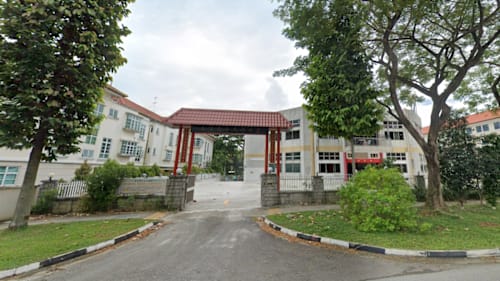
369 Pasir Panjang Road, the premises of Windsor Convalescent Home. (Image: Google Street View)

Listen
5 min
New: You can now listen to articles.

This audio is generated by an AI tool.

18 Jun 2026 03:21PM (Updated: 18 Jun 2026 04:29PM)
Read a summary of this article on FAST.
FAST

SINGAPORE: The Ministry of Health (MOH) issued a notice on Thursday (Jun 18) to revoke Windsor Convalescent Home’s licence to provide nursing home services.

Windsor Convalescent Home currently operates a 45-bed nursing home service at 369 Pasir Panjang Road.

MOH said it found "serious and systemic" lapses at the home, and it will be unable to provide nursing home services from Oct 30 at its permanent premises.

“The licence revocation date of four months from now takes into consideration the time required to transfer current residents of Windsor Convalescent Home to other nursing homes,” said the ministry in a press release.

CNA Games
Show More
Show Less

“However, to safeguard the safety and well-being of nursing home residents given findings of serious and systemic lapses in compliance with requirements under the Healthcare Services Act 2020 (HCSA), MOH has deployed an interim care team to Windsor Convalescent Home with effect from Jun 18,” it said.

This is to ensure that residents continue to receive proper care throughout this process, it added.

Windsor Convalescent Home at 369 Pasir Panjang Road on Jun 18, 2026. (Photo: CNA/Ili Mansor)

LAPSES IN RESIDENT SAFETY, CLINICAL AND NURSING CARE

An MOH audit in April found “serious and systemic” lapses in resident safety, clinical and nursing care, and infection control practices, said the ministry.

These were compounded by a lack of control, governance and oversight by Windsor Convalescent Home’s key office holders, it added.

The lapses included: 

  • Failure to conduct appropriate reviews for residents in multiple aspects, including falls, pressure injuries and weight loss
  • Failure to follow up on or adhere to the residents’ care plans
  • Poor medication management, such as omission of medications, use of expired medications, and discrepancies in medication quantity
  • Failure to provide adequate basic care to residents
  • Neglecting residents’ fundamental care needs, such as basic grooming
  • Failure to provide appropriate nutrition for residents based on their individual needs
  • Failure to store food ingredients used to prepare meals for residents appropriately, with some ingredients found to be expired
  • Inadequate infection prevention and control practices
  • Failure to implement infection prevention and control measures
  • Failure to ensure hygiene and sanitation in housekeeping processes
  • Lack of governance and oversight by key office holders
  • Failure of the key office holders to exercise clinical governance over the care delivered to residents
  • Failure to provide oversight of the operation and maintenance of the premises

The health ministry issued a notice to the nursing home on May 5 regarding its intention to revoke the home’s licence. 

“Windsor Convalescent Home was given the opportunity to submit representations within 14 days in respect of the intended revocation for MOH’s consideration,” said the ministry. 

This was extended to 28 days after the nursing home requested an extension, it added. 

MOH said it received these representations on Jun 3. 

After “careful consideration” of them and MOH’s audit findings, the ministry determined the home was unable to continue providing nursing home services safely, it said.

Windsor Convalescent Home at 369 Pasir Panjang Road on Jun 18, 2026. (Photo: CNA/Ili Mansor)

INTERIM CARE TEAM

The interim care team deployed to the nursing home is from Vanguard Healthcare. 

“Vanguard Healthcare Pte Ltd will inform all affected residents and their next-of-kin of the revocation of Windsor Convalescent Home’s licence,” said MOH.  

It will also work with the Agency for Integrated Care (AIC) to make arrangements for the residents to be transferred to other nursing homes of their choice and eligibility, added the ministry.

MOH said it would work closely with Vanguard Healthcare to ensure no new residents are admitted before Windsor Convalescent Home’s licence revocation comes into effect.

The audit was part of MOH’s ongoing audit of selected nursing homes with identified areas for improvement. 

This is to gauge compliance with infection prevention and control practices, as well as basic custodial and nursing care, it said. 

“MOH will not hesitate to take regulatory actions if licensees and/or key appointment holders are found to have fallen short of regulatory requirements to deliver adequate and appropriate care,” it added. 

MOH said it intends to share the findings with the nursing home sector on a suitable platform and work with AIC to enhance support available for the sector. 

“This includes training to equip them with the necessary skillsets to adhere to the required standards of care,” it said. 

Licensees are reminded to comply with the HCSA, the applicable regulations and conditions of their licences at all times, said MOH. 

“MOH will continue to monitor all nursing homes to ensure compliance with HCSA requirements.”

CNA has asked MOH how often nursing homes are audited and if any residents were harmed by Windsor Convalescent Home's lapses.

Source: CNA/nh(sn)

Sign up for our newsletters

Get our pick of top stories and thought-provoking articles in your inbox

Subscribe here
Inbox
Advertisement

Dining

Haidilao Singapore launches coriander-themed menu with hotpot broth, drinks and more

Haidilao Singapore has launched a limited-time coriander series.

Haidilao Singapore launches coriander-themed menu with hotpot broth, drinks and more

Haidilao Singapore now has a coriander-themed menu, available for a limited time. (Photos: Haidilao Singapore)

Listen
1 min
New: You can now listen to articles.

This audio is generated by an AI tool.

18 Jun 2026 02:12PM
Read a summary of this article on FAST.
FAST

Great news for those who love coriander. Haidilao Singapore has announced that it has launched a limited-time coriander-themed menu that's available at outlets starting today (Jun 18).

The menu comprises four items.

First up is the Extra Coriander Soup Base, which, true to its name, is a broth that's loaded with coriander. According to Haidilao, the base is made for diners "seeking a more adventurous hotpot option, with a flavour profile that builds in intensity".

If you prefer to eat coriander in its true form, you'll be glad to know that the limited-time menu also has fresh coriander, which you can select as an add-on for your hotpot dinner.

Once you're done, you can wash it down with the remaining two items: the Coriander Spritzer and the Coriander Cocktail.

Haidilao Singapore has also said that diners who order any item from the Coriander Series will be invited to pose for a commemorative photo with the “Coriander Lover Honour Certificate”, designed to mark the undoubtedly adventurous dining experience.
 

Source: CNA/hq

Sign up for our newsletters

Get our pick of top stories and thought-provoking articles in your inbox

Subscribe here
Inbox
Advertisement

Singapore

Man who sued neighbour for battery, assault and harassment loses suit, must pay S$10,000 in costs

The claimant had no evidence to back his claims, while the neighbour produced CCTV footage and call logs to support his account.

Man who sued neighbour for battery, assault and harassment loses suit, must pay S$10,000 in costs

Screengrab from Google Street View of the block the disputing parties live in.

Listen
6 min
New: You can now listen to articles.

This audio is generated by an AI tool.

18 Jun 2026 12:28PM
Read a summary of this article on FAST.
FAST

SINGAPORE: A man who sued his neighbour for about S$40,000 (US$31,085) for alleged assault and battery has lost his suit due to lack of proof and must pay his neighbour S$10,000 in costs.

Mr Mah Kiat Seng lives along the same corridor as his neighbour in Block 633, Pasir Ris Drive 3.

He sued for S$20,000 in damages for assault and battery, S$10,000 for harassment and S$10,000 in aggravated damages over three incidents that occurred between July 2024 and May 2025.

The neighbour denied committing assault, battery and harassment.

THE THREE INCIDENTS

According to a judgment published on Wednesday (Jun 17), Mr Mah claimed he was walking from his flat to the common rubbish chute at the lift lobby to throw rubbish on Jul 15, 2024.

He said he was returning to his flat when his neighbour passed him at the lift lobby.

Mr Mah claimed that his neighbour's father directed vulgarities at him for about a minute, complaining that he was making too much noise while walking in his slippers.

Mr Mah alleged that his neighbour then scolded him using vulgarities, adopted an "attacking posture with clenched fists and raised hands", and charged at him.

He claimed that his neighbour grabbed his right hand, causing him pain. Mr Mah said he managed to pull away and run off, leaving his slippers behind as his neighbour kicked them and continued cursing.

The second incident on Mar 27, 2025 involved the neighbour going to Mr Mah's flat to "hurl a litany of expletives" at him, he claimed.

The neighbour called the police, who came down and took statements.

In the third incident on May 1, 2025, Mr Mah claimed the neighbour again directed vulgarities at him while walking towards his flat.

Mr Mah called the police, who again took statements and reviewed footage from the closed-circuit television (CCTV) camera mounted at the neighbour's flat.

Mr Mah argued that his neighbour had assaulted and battered him during the July 2024 incident and harassed him in the other two incidents.

District Judge Chiah Kok Khun said the legal burden of proof lay with the claimant, Mr Mah.

In this case, he had no independent evidence of the alleged assault and battery, no witnesses, no photos of any injury and no medical evidence of any injury sustained.

Mr Mah also failed to prove that his neighbour had harassed him.

"As with his claim for assault and battery, I have nothing more than the claimant's words. They are mere assertions without evidence," said the judge.

THE NEIGHBOUR'S ACCOUNT

In contrast, the neighbour gave a different account of what happened. He said he had no dealings with Mr Mah and had not spoken to him before the July 2024 incident.

That day, the neighbour said he was returning to his flat after taking his dog to the ground floor to relieve itself.

He was holding the leash with one hand while exiting the lift when he saw Mr Mah at the door of his flat.

The neighbour said he heard Mr Mah shouting vulgarities at his father, who used a walker, and challenging him to a fight.

The neighbour said that when he asked Mr Mah why he was shouting, Mr Mah responded aggressively and used vulgarities.

They exchanged heated words and Mr Mah left his slippers behind when he went home.

The neighbour recalled sliding the slippers back towards Mr Mah's flat. However, he said he did not charge at Mr Mah nor grab him, nor did he adopt any attacking posture.

He added that he was much stronger and bigger than Mr Mah, and the latter would have suffered injuries had he really attacked him.

According to the neighbour, the police arrived on the scene but he declined initially to file a police report. It was only after Mr Mah shouted that "this is not the end of it" that the neighbour said he lodged a police report as he was concerned Mr Mah would harm his dog.

The judge noted that Mr Mah had filed a private summons against his neighbour for the July 2024 incident, but the Attorney-General's Chambers intervened and withdrew the complaint against the neighbour.

As for the March 2025 incident, the neighbour said he was looking after a stray cat that had been left in front of his flat.

He said he was contacting the National Parks Board (NParks) to hand the cat over for treatment of its open wound and apparent malnourishment.

While he was on the phone with NParks, the cat went past Mr Mah's flat.

The neighbour said he was following the cat when Mr Mah came out of his flat and shouted at him while filming.

The neighbour explained that he was helping a stray cat, and said Mr Mah raised his voice and used abusive language.

The neighbour produced a CCTV recording showing that he was holding a bowl of food for the stray cat, as well as a mobile phone call log displaying his call with NParks.

Regarding the final incident in May 2025, the neighbour said Mr Mah was stomping his feet loudly when leaving and returning to his unit, waking the neighbour's mother and causing her distress.

The neighbour wanted to speak to Mr Mah to resolve matters and went to his flat, but could not find him.

He then returned to his flat. This was captured on CCTV footage, which showed the neighbour walking towards and then back from Mr Mah's flat without any gestures, confrontations or vulgarities.

The neighbour also produced footage of Mr Mah shouting in front of his flat.

The judge found that Mr Mah had failed to prove on a balance of probabilities his claims of assault, battery and harassment and dismissed the claim.

He fixed costs at S$10,000 to be paid by Mr Mah to his neighbour.

Source: CNA/ll(sn)

Sign up for our newsletters

Get our pick of top stories and thought-provoking articles in your inbox

Subscribe here
Inbox
Advertisement

Singapore

Singapore launches S$48 million scheme to help media firms create digital content and adopt AI

The Digital Content and Capability Development programme, announced by Senior Minister of State for Digital Development and Information Tan Kiat How, will span four years.

Singapore launches S$48 million scheme to help media firms create digital content and adopt AI
Media professionals can get support for digital content creation and AI adoption through IMDA's new Digital Content and Capability Development programme. (Photo: iStock)
Listen
4 min
New: You can now listen to articles.

This audio is generated by an AI tool.

18 Jun 2026 11:53AM (Updated: 18 Jun 2026 04:19PM)
Read a summary of this article on FAST.
FAST

SINGAPORE: Media professionals will be given support to create digital content under a new S$48 million (US$37.3 million) programme, the Infocomm Media Development Authority (IMDA) said on Thursday (Jun 18).

The Digital Content and Capability Development (DCCD) programme, announced by Senior Minister of State for Digital Development and Information Tan Kiat How, will span four years.

More than 87 per cent of people in Singapore aged 15 and above access top social media sites like TikTok, YouTube and Facebook weekly, marking a shift in local audience behaviour towards digital platforms, IMDA said.

"We are starting from a good position with our Made-with-Singapore content making waves outside Singapore," Mr How said in his speech at the launch of the programme.

 "At the same time, standing still is not an option," he added.

The programme aims to support media professionals in responding to this shift through two main pillars: Digital content development and capability development.

Digital content development supports the creation and distribution of content that reflects how local audiences discover and connect with stories across social platforms, digital channels and mobile-first formats.

"This includes supporting Singapore stories that can resonate with youth, adults and seniors through relevant formats and narratives," IMDA said.

Capability development targets innovation in digital storytelling, emerging formats and technologies, and production approaches, including artificial-intelligence-generated content and short-form live action and animated episodic content.

"It will also foster experimentation with and adoption of AI-assisted workflows for content development, production and localisation," IMDA said.

"This will enable media professionals to focus more time on the creative aspects such as creative direction, storytelling and narrative crafting, as well as business development and pitching."

"The Digital Content and Capability Development programme will support the digital content creators looking to scale up in more established formats. We will call for proposals across areas such as micro dramas and shorter TV series, while also supporting capability development," Mr How said.

CNA Games
Show More
Show Less

To join the DCCD programme, media companies will participate in an accreditation exercise, which will assess their current content development capabilities and track record. 

Accreditation exercises will be held twice yearly, and accredited companies will be eligible to participate in calls for proposals. 

In the first exercise, 117 companies were accredited, with the first call for proposals launching on Jun 18 and running until Jul 31.

Media professionals can also develop their AI skills under the National AI Impact Programme, unveiled earlier this year, to enhance content creation and streamline repetitive parts of the production process, IMDA said.

The authority aims to train 100,000 non-tech professionals across various industries to be "AI bilingual" over the next three years.

Eligible professionals can use their SkillsFuture credit for courses under the programme. National Trades Union Congress members can also tap on the union training assistance programme for additional support.

The DCCD programme builds on IMDA's S$200 million talent accelerator programme, which was launched in December 2025 and is also aimed at strengthening Singapore's media talent.

This brings the total amount that IMDA is setting aside to support the media industry over the next few years to S$250 million.

"IMDA is committed to supporting Singapore's media ecosystem in developing new digital content formats and building digital capabilities to remain innovative and competitive," IMDA said.

"Collectively, these efforts also help create opportunities to better connect with Singapore audiences across various platforms, with the potential for selected stories and formats to travel beyond Singapore."

Source: CNA/rk(kg)

Sign up for our newsletters

Get our pick of top stories and thought-provoking articles in your inbox

Subscribe here
Inbox
Advertisement

Singapore

Man admits sending SM Lee doctored photo of Marina Bay Sands on fire as 'prank'

An administrator of Senior Minister Lee Hsien Loong's Facebook page saw the image and message shortly after it was sent and lodged a police report.

Man admits sending SM Lee doctored photo of Marina Bay Sands on fire as 'prank'

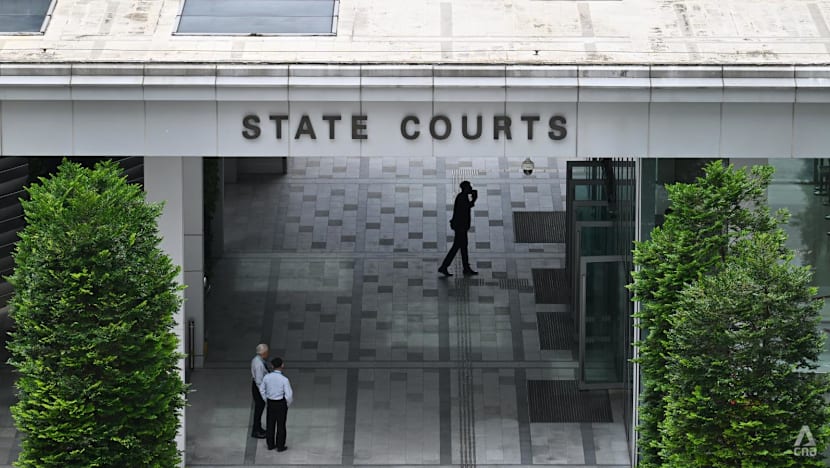
Andie Tan Kok Yong at the State Courts on Jun 18, 2026. (Photo: CNA/Alyssa Tan)

Listen
3 min
New: You can now listen to articles.

This audio is generated by an AI tool.

18 Jun 2026 11:31AM
Read a summary of this article on FAST.
FAST

SINGAPORE: A man is facing jail time for sending an edited photo of Marina Bay Sands (MBS) on fire to Senior Minister Lee Hsien Loong's Facebook page while mentioning a "bomb".

Andie Tan Kok Yong, a 35-year-old Singaporean, pleaded guilty on Thursday (Jun 18) to one charge of knowingly transmitting a false message under the Miscellaneous Offences (Public Order and Nuisance) Act.

A second charge of obstructing the course of justice by performing a factory reset of his phone will be considered in sentencing.

THE CASE

In September 2025, Tan was using Facebook when he chanced on an image of Marina Bay Sands on fire.

Despite knowing it was fake, he saved the image on his phone and sent it to Mr Lee's official Facebook page via the Facebook messenger function at about 3pm on Sep 29, 2025.

He also sent a message: "Bomb $1,500billion++wit management approved of 1st boss not merlion boss of tan jun yan".

He did so in order to prank SM Lee, and he knew that either Mr Lee or someone reviewing the content would think that MBS had been bombed, the court heard.

An administrator of Mr Lee's Facebook page who was monitoring the page at the time saw the image and message shortly after it was sent.

Concerned, he lodged a police report and took a screengrab of the communications.

The police informed the security management of MBS to step up security patrols and eventually identified Tan as the culprit.

He admitted to being the person who sent the image and message.

The prosecutor sought four to eight weeks' jail for Tan, saying he had essentially perpetuated a bomb hoax.

"In essence, the accused had informed SM Lee (through his official Facebook page) that Marina Bay Sands had been bombed," he said.

The prosecutor added that bomb hoaxes are egregious and clearly intended to create fear, exploit general apprehension and anxiety, and have massive potential to cause major disruptions to the public.

The target building here is of high value, he said, while acknowledging that the false transmission was not particularly credible.

Tan said nothing in mitigation.

Sentencing was adjourned to a later date.

For knowingly transmitting a false message, he could be jailed for up to three years, fined up to S$10,000, or both.

Source: CNA/ll(sn)

Sign up for our newsletters

Get our pick of top stories and thought-provoking articles in your inbox

Subscribe here
Inbox
Advertisement

Travel

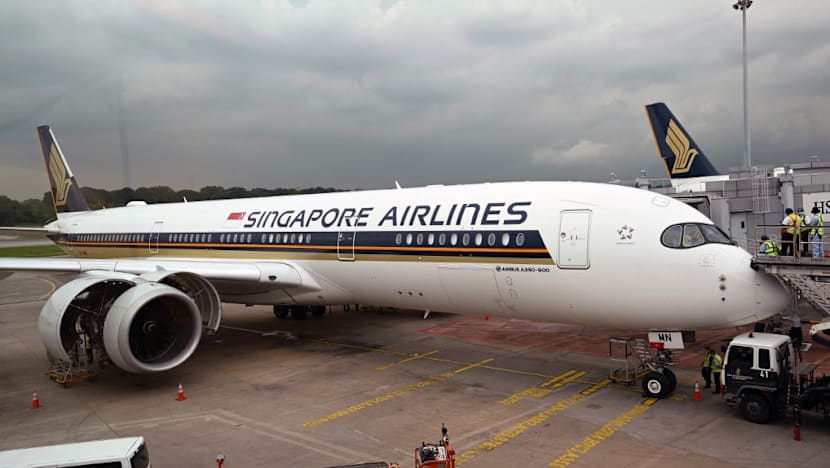
Singapore Airlines launches latest version of cult-favourite mascot Beary

Wearing a Garden City outfit and a sunhat with the signature batik motif, Beary 3.0 comes in a gender-neutral design and is available upon request to young premium-cabin travellers.

Singapore Airlines launches latest version of cult-favourite mascot Beary

Singapore Airlines is rolling out a new version of its teddy bear mascot, Beary, from mid-June 2026. (Photo: Singapore Airlines)

Listen
2 min
New: You can now listen to articles.

This audio is generated by an AI tool.

18 Jun 2026 11:29AM
Read a summary of this article on FAST.
FAST

Singapore Airlines (SIA) is introducing a new version of its popular teddy bear mascot, Beary, from mid-June 2026.

The refreshed design, known as Beary 3.0, features a gender-neutral appearance, a Garden City-inspired outfit and a sun hat adorned with SIA's signature batik motif. It is also around 15 per cent larger than the previous version.

Beary will continue to be available on request for children aged 12 and below travelling in Suites, First Class and Business Class on flights longer than five hours.

The mascot was first introduced in 2007 as a complimentary gift for young premium-cabin travellers. Initially offered as a single teddy bear whose outfit changed periodically, the mascot was refreshed in 2013 with separate boy and girl versions.

CNA Games
Show More
Show Less

Over the years, Beary has appeared in special-edition releases commemorating key SIA milestones such as the launch of new aircraft types and anniversary celebrations. It has also featured in themed collaborations, including Disney-inspired editions and chef-themed bears.

For years, Beary was something of an open secret among frequent flyers. Available only upon request, the teddy bear built a following among those in the know, with some travellers collecting multiple editions over the years.

The teddy bear then shot to fame when travel influencers began posting more about Beary on social media, ending the gatekeeping and allowing more flyers to request and own a Beary. 

While you may not be able to purchase the teddy bear through official means, many enthusiasts of the bear have found various ways to grow their collection. This can be done through purchases on peer-to-peer marketplaces such as Carousell, where people list them for about S$10 to S$15 for the regular version and higher for special editions, or trading their bears with other frequent flyers. 

Source: CNA/iz

Sign up for our newsletters

Get our pick of top stories and thought-provoking articles in your inbox

Subscribe here
Inbox
Advertisement

Singapore

Driver who crashed into school bus charged with dangerous driving injuring bus driver and 2 boys

The collision injured the 71-year-old bus driver, two schoolboys and the man's own passengers.

Driver who crashed into school bus charged with dangerous driving injuring bus driver and 2 boys

The remnants of the car after the fire was put out. (Photo: SPF)

Listen
3 min
New: You can now listen to articles.

This audio is generated by an AI tool.

18 Jun 2026 11:00AM
Read a summary of this article on FAST.
FAST

SINGAPORE: A man who crashed his car into a school bus in 2024 was charged on Thursday (Jun 18) with dangerous driving, drink driving and driving against traffic, among other offences.

The incident along Bukit Timah Road in the early morning of Mar 6, 2024 left a burning car on the road and injured the bus driver, two school boys and the man's own passengers.

Tan Yao Cong, a 29-year-old Singaporean, was handed five charges on Thursday: Drink driving, dangerous driving causing hurt, driving against traffic, failing to provide a breath specimen and allowing his vehicle to remain at rest, causing danger to others.

According to a police statement, the police were alerted to a black car driving against the flow of traffic along Cavenagh Road at about 6am on Mar 6, 2024.

When approached by the police, the driver sped off.

Police officers spotted the car zooming along Bukit Timah Road towards Upper Bukit Timah Road, weaving dangerously through traffic and beating a red light before colliding with a private bus making a U-turn.

The car collided with a lamp post and stopped on a grass verge before bursting into flames.

The driver and his three passengers escaped from the burning car. The passengers, along with two boys from the bus, were taken to hospital and the driver was arrested.

For dangerous driving causing hurt, a repeat offender can be jailed for up to four years, fined up to S$20,000, or both. He can also be banned from driving for five years.

The aftermath of the collision. (Photo: SPF)

Tan is accused of driving with at least 148 milligrams of alcohol per 100ml of blood, exceeding the limit of 80 milligrams per 100ml of blood.

He also allegedly failed to conform to a "straight only" sign and went against the flow of traffic along Cavenagh Road.

He is also accused of driving dangerously by going against traffic, narrowly missing another car, before driving at 114kmh and weaving in and out of traffic.

The charges state that he beat a red light at the junction of Sixth Avenue, causing the collision with the bus.

Tan is accused of injuring five people: The 71-year-old bus driver, two school boys aged 10 and nine, and Tan's own passengers - two men aged 24 and 29 and a 34-year-old woman.

Tan also allegedly failed to provide a breath specimen for a breath test and left his vehicle in a position likely to cause danger to others.

The charges stated that he had been previously convicted in 2019 of drink driving and driving without due care and attention.

The prosecution on Thursday said if a guilty plea was made, they would proceed on three charges and take the remaining two into consideration.

Tan made no indication of how he would plead.

The case was adjourned to July for a further mention.

If convicted of drink driving as a repeat offender, he could be jailed for up to two years and fined between S$5,000 and S$20,000. He faces five years' disqualification from driving as a repeat drink driver.

Source: CNA/ll(ac)

Sign up for our newsletters

Get our pick of top stories and thought-provoking articles in your inbox

Subscribe here
Inbox
Advertisement

Singapore

Singapore public holiday dates for 2027 released, with 5 long weekends

Five of the public holidays in 2027 fall on Friday, Sunday or Monday.

Singapore public holiday dates for 2027 released, with 5 long weekends

People watch the New Year’s Day fireworks celebration from the Marina Bay Sands hotel in Singapore. (Photo: Reuters/Edgar Su)

Listen
2 min
New: You can now listen to articles.

This audio is generated by an AI tool.

18 Jun 2026 10:46AM (Updated: 18 Jun 2026 11:05AM)
Read a summary of this article on FAST.
FAST

SINGAPORE: There will be 11 public holidays in 2027, with five long weekends. 

According to dates released by the Ministry of Manpower (MOM) on Thursday (Jun 18), five of the public holidays next year fall on Friday, Sunday or Monday.

Two public holidays fall on a Friday:

  • New Year’s Day (Jan 1)
  • Good Friday (Mar 26)

One public holiday falls on a Sunday:

  • Chinese New Year (Feb 7)

The following Monday will be a public holiday.

Two public holidays fall on a Monday:

  • Hari Raya Haji (May 17)

  • National Day (Aug 9)

CNA Games
Show More
Show Less

There were six public holiday long weekends in 2026, and four in 2025.

Employers and employees may mutually agree to substitute a public holiday for another working day, said MOM.

Employees who are required to work on a public holiday are entitled to an extra day’s salary at the basic rate of pay, in addition to their gross rate of pay for that day, the ministry added.

Employers also have the option of granting time-off-in-lieu, based on a mutually agreed number of hours, for working on a public holiday for workmen earning more than S$4,500 (US$3,497) a month; non-workmen earning more than S$2,600 a month and all managers and executives.

Source: CNA/dy(sn)

Sign up for our newsletters

Get our pick of top stories and thought-provoking articles in your inbox

Subscribe here
Inbox
Advertisement

Singapore

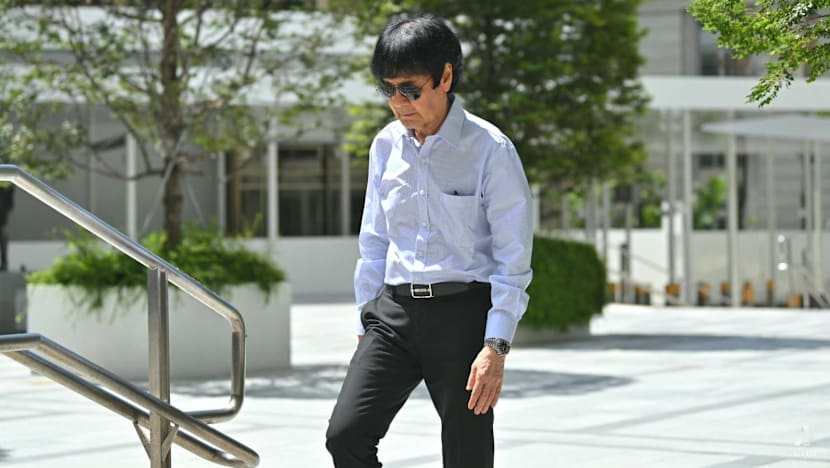
US firms sue Teo Siong Seng, shipping container makers over alleged price-fixing scheme

The suits from US companies were filed against Singamas, China International Marine Containers, CXIC Group Containers and a group of executives, including Mr Teo.

US firms sue Teo Siong Seng, shipping container makers over alleged price-fixing scheme

Pacific International Lines executive chairman Teo Siong Seng. (Photo: Facebook/Pacific International Lines)

Listen
4 min
New: You can now listen to articles.

This audio is generated by an AI tool.

17 Jun 2026 08:39PM
Read a summary of this article on FAST.
FAST

SINGAPORE: Shipping veteran Teo Siong Seng and other executives accused by the United States of conspiring to restrict output and fix the prices of dry containers have been sued by a pair of US firms.

The class-action lawsuits from manufacturer CA Spalding Company and shipping company Daybreak Express are separate from the indictments by the US Department of Justice. They were filed on Jun 2 and Jun 9, respectively.

Both suits were filed against Singamas, China International Marine Containers, CXIC Group Containers and a group of executives, including Mr Teo, who is the CEO and chairman of Singamas. The firms are seeking monetary damages.

CA Spalding, ​which supplies components to aerospace, automotive and other industries, said the alleged scheme forced it to overpay for the cost of shipping goods ​by container.

CNA Games
Show More
Show Less

In its suit, the company said that it is seeking "multiple or treble damages" in monetary relief.

The US Justice Department ​indictment accused the defendant companies, which together manufacture about ‌95 per cent ⁠of the world's standard dry shipping containers, of orchestrating a price-fixing conspiracy.

In the US, it is common for civil lawsuits to follow criminal antitrust prosecutions.

Federal prosecutors said the container manufacturers’ ​customers included “major ​US-based container lessors, ⁠shipping lines, and logistics companies” and that the defendants' price-fixing caused delays and ​higher prices for American consumers.

Standard dry shipping containers, ​which ⁠are unrefrigerated, annually carry billions of dollars of products across the oceans to households in the United States.

The federal indictment said that the accused companies raised the price of dry shipping containers by restricting their output by various means, including by limiting the hours each production line for the containers could run per day, installing video surveillance cameras and agreeing not to build any new container manufacturing factories.

As a result, the price of standard shipping containers roughly doubled between 2019 and 2021, increasing the container manufacturers’ profits by approximately one hundredfold, the Justice Department said.

The alleged conspiracy went on for over four years, from November 2019 to at least January 2024.

US court documents showed that after a December 2019 meeting between the alleged conspirators, a Singamas executive reported to Mr Teo that during the meeting, he had reminded the others “not to be high profile since it might violate the monopoly law or being accused of price manipulation by our customers”.

Mr Teo had purportedly written in response to the executive’s report on the meeting that “we also need to keep low key”.

Since being named by the Justice Department in late May, Mr Teo has taken a leave of absence from his roles at the Singapore Business Federation (SBF) and the Singapore Economic Resilience Taskforce, as well as from the National University of Singapore and the shipping firm Pacific International Lines.

In a statement, Mr Teo said then that he does not intend to seek re-election as SBF chairman when his term ends on Jun 24.

"I have proactively decided to take these leaves of absence to afford myself sufficient time to attend to this matter, and for the best interests of the aforementioned organisations," he said in a separate statement.

Source: CNA/Reuters/nh(rj)

Sign up for our newsletters

Get our pick of top stories and thought-provoking articles in your inbox

Subscribe here
Inbox
Advertisement

Singapore

CNA Explains: How the costly global business of recycling is hurting Singapore's zero-waste push

The challenge now is no longer just getting people to recycle, but ensuring that recyclables are clean enough to find buyers.

CNA Explains: How the costly global business of recycling is hurting Singapore's zero-waste push

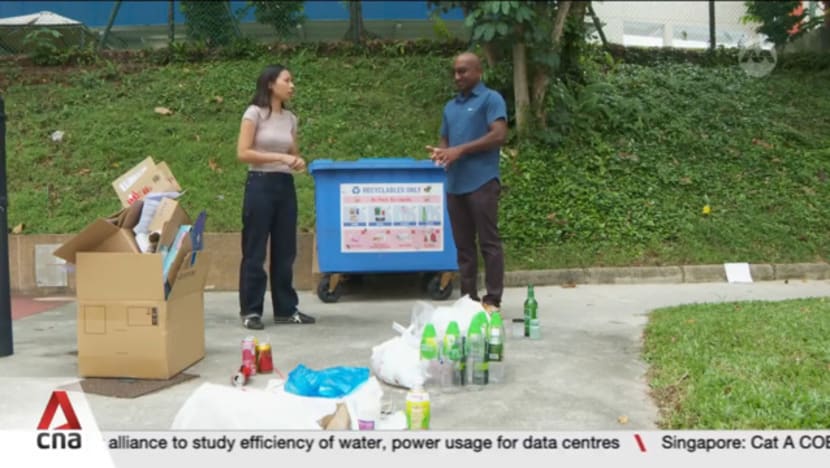
The contents seen in a blue recycling bin at a housing estate in Punggol. (Photo: CNA/Try Sutrisno Foo)

Listen
8 min
New: You can now listen to articles.

This audio is generated by an AI tool.

17 Jun 2026 07:49PM (Updated: 18 Jun 2026 10:19AM)
Read a summary of this article on FAST.
FAST

SINGAPORE: Singapore's government on Wednesday (Jun 17) announced a review of its 2019 Zero Waste Masterplan in light of sliding recycling rates.

When it was first launched, the master plan set a target to raise the overall recycling rate here to 70 per cent by 2030. 

However, since then, the overall recycling rate has slipped from 59 per cent in 2019 to 52 per cent in 2025 – and much of the discussion has been about how domestic recycling rates have declined.

Dr Janil Puthucheary, Senior Minister of State for Sustainability and the Environment, pointed to "significant" shifts in the global economics of recycling as a factor for the dip in overall rates.

CNA Games
Show More
Show Less

Speaking at an event, he said that recycling has become harder to sustain commercially due to disruptions in logistics, volatile commodity prices and tighter import restrictions.

Why are recycling efforts in Singapore dependent on global freight and market conditions? CNA spoke to experts to find out. 

WHAT IS CAUSING A SHIFT IN THE GLOBAL ECONOMICS OF RECYCLING?

Professor Lawrence Loh, director of the Centre for Governance and Sustainability at the National University of Singapore (NUS) Business School, said that the recycling industry is facing a "double whammy".

Demand for recycled materials has weakened due to the costs involved.

Recyclables must be collected, transported, sorted and processed before they can be reused. 

Rising logistics, freight and energy costs have increased the cost of these activities.

The increase in energy costs comes on the back of geopolitical conflicts, such as tensions in the Middle East.

Prof Loh also said that recycling "is not just buying the bottle", but involves an entire supply chain that includes shipping and processing.

At the same time, the cost of producing some virgin materials has fallen, he added.

Technology for extracting or processing raw materials has improved in recent years. As a result, manufacturers may find it cheaper to use virgin materials rather than recycled alternatives.

"The economics does not present itself in a favourable way to enhance this recycling," Prof Loh explained.

"Someone has to factor in the cost, so you have to sell it at a higher price to factor in your freight cost, your fuel cost.

"The buyer overseas, are they willing to buy at such a cost? It may not make economic sense."

Down the line, a buyer may then choose to buy a lower-cost item made from virgin material instead of a more expensive recycled alternative.

In the meantime, overseas markets have become more selective about the recyclables they are willing to accept.

Professor Adrian Kuah, who is a professor of strategy and sustainability at James Cook University, said countries that once accepted mixed or lower-quality recyclables have tightened contamination standards and restricted imports of low-quality imports.

"Recyclables have value only if they are clean, well-sorted and economically useful.

"The global economics of recycling have shifted from 'sending it somewhere cheaper and useful' to 'proving that it is clean, sorted and economically useful'," Prof Kuah pointed out.

Clean aluminium cans and cardboard may have market value, while mixed paper, oily food packaging, contaminated plastic containers and wet recyclables may become worthless or costly to process, he added.

WHY SINGAPORE'S RELIANCE ON OVERSEAS RECYCLERS LEAVES IT VULNERABLE

Industry observers said that Singapore is particularly exposed because much of its recyclable waste is processed overseas.

Singapore's limited land availability constrains the number of recycling facilities and the scale at which recyclables can be processed domestically, which means that many materials have to be exported for recycling.

Ms Grace Fu, Minister for Sustainability and the Environment, said that over the past years, about 90 per cent of recyclables – consisting of metal, paper, glass and plastics – have been exported, mainly to other Asian countries.

This was in a parliamentary reply on the proportion of recyclables from blue recycling bins that have been exported for processing.

Prof Kuah said that since many recyclables are exported overseas for processing, Singapore does not fully control whether collected recyclables are eventually recovered.

"Recycling outcomes depend on overseas demand, commodity prices, shipping costs, foreign import rules and the willingness of other countries to accept Singapore's materials."

He added that if overseas buyers reduce demand, tighten standards or offer lower prices, some materials may become uneconomical to recycle and may instead be incinerated. 

"This is especially relevant for household waste, where the domestic recycling rate remains much lower than the non-domestic rate," he said.

The global economics of recycling have shifted from 'sending it somewhere cheaper and useful' to 'proving that it is clean, sorted and economically useful'.

Singapore’s challenge is not just export dependence, but its combination with contamination, mixed-stream collection and weak demand for recycled materials, Prof Kuah said.

Against this backdrop, Singapore cannot simply focus on getting more people to recycle because ensuring that recyclables are of sufficient quality is just as important.

Zero Waste SG's executive director Lionel Dorai echoed this sentiment. The not-for-profit and non-governmental organisation is leading the drive towards zero waste in Singapore through education and advocacy.

Mr Dorai said: "Many people assume that if something is collected for recycling, it will automatically be recycled. In reality, recyclables need buyers." 

Since Singapore is reliant on overseas markets to process recyclables, reducing contamination and improving the quality of recyclables collected is becoming just as important as getting more people to recycle.

"What can aid this is generating clean stream recyclables from source through waste segregation, because the cleaner the recyclables, the higher the profit margin for recyclers."

HAVE KEY WASTE STREAMS BECOME LESS ECONOMICALLY VIABLE?

Not all recyclable materials face the same challenges.

Prof Kuah from James Cook University said that metals, aluminium and some e-waste streams remain relatively attractive because they contain recoverable value.

The bigger challenge lies with low-value, mixed or contaminated materials – especially mixed plastics, low-grade paper and glass.

A worker prying open used mobile phones and separating the individual parts into boxes at Virogreen, a company that handles electronic waste. (Photo: CNA/Hanidah Amin)

Although glass is technically recyclable, it is bulky, heavy and expensive to transport. 

Without enough demand, transport and processing costs can outweigh the value of the recovered material, Prof Kuah said. 

Glass is one of Singapore's least recycled waste streams, with a recycling rate of just 10 per cent in 2025.

Low-grade paper and cardboard have also become more vulnerable.

"In the past, there were overseas paper mills willing to take lower-grade recovered paper," Prof Kuah said.

"However, global paper prices can be weak, and wet or food-contaminated paper is often rejected. Once paper is mixed with food residue or liquids, its market value falls sharply."

Paper and cardboard had a recycling rate of 31 per cent in Singapore in 2025.

Many people assume that if something is collected for recycling, it will automatically be recycled. In reality, recyclables need buyers.

Plastic remains one of the most difficult waste streams to recycle economically and recorded a recycling rate of just 4 per cent in 2025, the second-lowest among Singapore's waste streams after textiles.

Although cleaner plastics such as PET bottles have a market, mixed plastics are harder to recycle economically, Prof Kuah said.

Plastics require extensive sorting, cleaning and separation – the cost of which may exceed its resale value.

Mr Dorai from Zero Waste SG said: "At the end of the day, the most resilient solution is still to reduce waste in the first place and reuse products for as long as possible, because those actions are less dependent on global recycling markets.

"The data positively reinforces this, because we do see a decline in waste generated, which could imply that residents are reducing or reusing more."

Want an issue or topic explained? Email us at digitalnews [at] mediacorp.com.sg. Your question might become a story on our site.

Source: CNA/wt(sf)

Sign up for our newsletters

Get our pick of top stories and thought-provoking articles in your inbox

Subscribe here
Inbox
Advertisement

Singapore

'Unprecedented' AI buildout drove Singapore's sharpest non-oil exports surge in over two decades: Analysts

Electronics exports nearly doubled in May, with analysts pointing to a concentrated surge in hyperscaler capital spending as the primary driver. 

'Unprecedented' AI buildout drove Singapore's sharpest non-oil exports surge in over two decades: Analysts
Electronics led Singapore's non-oil export growth in May. (File photo: CNA/Ooi Boon Keong)
Listen
6 min
New: You can now listen to articles.

This audio is generated by an AI tool.

17 Jun 2026 06:25PM (Updated: 18 Jun 2026 10:44AM)
Read a summary of this article on FAST.
FAST

SINGAPORE: The global push to build artificial intelligence infrastructure drove Singapore's non-oil domestic exports to their sharpest growth in over two decades in May, with analysts saying the country is well-placed to deepen its position in higher-value parts of the supply chain.

One analyst traced the electronics surge to a "single concentrated force": Microsoft, Alphabet, Meta and Amazon collectively lifting their 2026 capital expenditure plans to more than US$700 billion in late April.

“A handful of the world’s largest technology companies are all scaling toward this direction simultaneously, and the sheer size of those individual commitments is what’s moving supply chains,” said eToro market analyst Zavier Wong.

Singapore's non-oil exports rose 38.4 per cent in May from a year earlier, extending the 24.4 per cent growth recorded in April, Enterprise Singapore said on Wednesday (Jun 17). Chief economist and head of OCBC Group Research Selena Ling described it as the highest rise in two decades.

CNA Games
Show More
Show Less

Electronics exports led the expansion, rising 94.8 per cent in May, following a 66.7 per cent increase in April.

As an electronics export economy, the direction is not new for Singapore. But the scale and concentration of demand have changed, said Mr Wong.

“The export profile is reshaped by AI, though what we’re really seeing is an extreme acceleration of something that is already part of Singapore’s DNA,” he said.

TECH EXPORTS DRIVING GROWTH

In May, exports of integrated circuits rose 80.9 per cent year-on-year, while disk media products and personal computers (PCs) increased 227.8 per cent and 140.9 per cent respectively.

Each category plays a different role in the AI ecosystem, said Mr Ang Wee Seng, executive director of the Singapore Semiconductor Industry Association (SSIA).

Integrated circuits – covering logic, memory, power management and connectivity – form the building blocks of AI systems. Disk media products support the large-scale storage and movement of data across data centres, which AI training and deployment demand at significant scale. PC demand is more indirect, driven by enterprise hardware refreshes, AI productivity tools and the early development of AI PCs that process workloads closer to the user.

“So while not every dollar of export growth is AI-related, a significant portion of the electronics uplift is either directly or indirectly connected to AI demand,” he said. 

Singapore’s electronics exports feed into servers, data centres and networking hardware, which means a lot of that demand is tied to the capital spending decisions of a handful of large tech companies, Mr Wong said.

“When those companies raise their spending guidance, the order flow moves upstream quickly,” he said.

A growing share of demand is now linked to AI infrastructure, data centres, high-performance computing, advanced memory and storage, and efforts to build more resilient global supply chains.

“This plays to Singapore’s strengths as a trusted semiconductor, electronics and advanced manufacturing hub,” he added.

KEY EXPORT MARKETS

Non-oil export figures for nine of Singapore's top 10 markets rose in May. Taiwan, the US and China recorded year-on-year growth of 135.2 per cent, 80.9 per cent and 31 per cent respectively.

Mr Ang said Taiwan's strong showing reflects the continued scale-up of the global chip supply chain, given the island's central role in advanced semiconductor manufacturing and packaging.

The US, home to many of the leading AI chip designers, cloud service providers and hyperscalers – massive cloud computing companies that build and operate large-scale data centres – saw demand closely tied to AI infrastructure investment.

China, despite geopolitical restrictions, continues to require chips, storage and electronic components across consumer, enterprise and industrial applications as a large electronics manufacturer.

“Singapore fits into this picture as a trusted and highly connected node in the global semiconductor supply chain, especially in specialty manufacturing, memory, storage, equipment, materials, assembly, test and regional supply chain coordination,” said Mr Wong.

Indonesia was the exception, contracting 26.9 per cent. OCBC’s Ms Ling attributed the drop to weak domestic demand, likely compounded by volatility in the Indonesian rupiah.

WILL THE SURGE HOLD?

Analysts said non-oil export growth is likely to remain positive in the near term, though monthly figures may not sustain the same pace.

A 38.4 per cent year-on-year increase is “very strong” and may be difficult to repeat as base effects rise in the second half of the year, with potential volatility from inventory cycles, geopolitics, tariffs and capacity constraints, Mr Wee said.

Mr Wong said electronics exports “look durable” as long as hyperscaler capital spending holds.

"We’re witnessing an unprecedented AI buildout that requires ongoing hardware refresh at a pace much faster than any previous technology cycles, which will support continued demand as long as those commitments hold," he said.

But with demand increasingly concentrated in a narrow set of products and customers, that concentration creates sensitivity.

“If the hyperscaler spending gets revised down, the impact will be felt fairly quickly. It’s not the base case right now, but it’s a vulnerability worth keeping an eye on,” he said.

Source: CNA/er(cy)

Sign up for our newsletters

Get our pick of top stories and thought-provoking articles in your inbox

Subscribe here
Inbox
Advertisement

Also worth reading
Advertisement