Advertisement
Advertisement

Commentary

Commentary: Potential redevelopment of Yishun 10 shows gap in preserving Singapore’s built heritage

Architectural, historical and social considerations are often collapsed into a single yes-or-no question: Does a building qualify for conservation? But heritage rarely works so neatly, argues SUTD’s Yeo Kang Shua.

Commentary: Potential redevelopment of Yishun 10 shows gap in preserving Singapore’s built heritage

The site of Yishun 10, Singapore’s first multiplex, could soon make way for a new residential and commercial development. (Photo: Google Maps)

Listen
8 min
New: You can now listen to articles.

This audio is generated by an AI tool.

16 Jun 2026 06:00AM (Updated: 16 Jun 2026 07:20AM)
Read a summary of this article on FAST.
FAST

SINGAPORE: When Yishun 10 opened in May 1992, it looked like nothing else in the heartland.

Its architect, Geoff Malone, a film buff who founded the Singapore International Film Festival, was briefed to design something like “a rocket ship which had landed in Yishun from outer space”. He delivered: A metallic box wrapped in red, studded with strips of red, orange and blue neon.

A renovation in 2010 gave the building a more muted grey palette but its striking design is one reason why it sits on heritage non-profit Docomomo Singapore’s list of 100 significant modernist buildings.

Its deeper significance is social. With ten cinema halls under one roof, it brought cinema into the heartland, attracting more than three million visitors by the end of 1993. Watching films stopped being a special trip into town and became part of everyday life.

CNA Games
Show More
Show Less

Now, Singapore’s first multiplex could soon make way for a new residential and commercial development. The proposed development had some members of the public lamenting the loss of a long-time neighbourhood landmark, yet this value will not lead to retention.

Yishun 10 is not alone. For example, after independence, the Housing and Development Board built a swimming complex in nearly every new town. For a generation, these pools were where we learned to swim and spent our weekends.

They had architectural merits too. The Buona Vista Swimming Complex, which closed in 2014 after 38 years, had a daring 100-metre concrete roof carried on just eight columns. The Bedok Swimming Complex, which drained its pools for good in 2017, was a Singapore Institute of Architects design award winner in 1983. 

These are the very spaces in which social memories were formed, yet like many other post-independence architectures, these pools were judged too young to be conserved and slipped away sooner than we thought.

This is a gap Singapore must now confront. Our conservation system works well for buildings of obvious architectural or historic importance. Still, it is far less equipped to deal with those that may have contributed to Singapore’s architectural history and represented the nation’s coming-of-age years, but deemed not monumental or iconic enough.

These everyday structures, through which ordinary life unfolds, are the missing middle of our built heritage.

A BROAD DEFINITION, NARROW OUTCOMES

To be sure, Singapore’s heritage laws recognise a wide spectrum of value. The Planning Act covers buildings of special architectural, historic or aesthetic interest. The Preservation of Monuments Act goes further, citing cultural, artistic and symbolic significance. 

Meanwhile, some major public projects undergo Heritage Impact Assessments, which examine how proposed works may affect heritage sites and values. There are also separate incentive schemes that encourage adaptive reuse or partial retention in selected areas. 

However, these mechanisms remain selective and fragmented. They do not yet provide a consistent, legible and predictable pathway for the many buildings that sit outside formal conservation lists but still hold genuine value.

Today, architectural, historical and social considerations are often collapsed into a single yes-or-no question: Does a building qualify for conservation? 

Heritage rarely works so neatly. A building may not warrant full conservation yet still deserve careful adaptation or partial retention. It is time to move from a rigid threshold to a more graduated approach. The challenge is not only to identify value, but to make retention feasible for owners when full conservation is neither practical nor necessary.

Equally important is reforming how building codes are applied to older structures. Requirements for structural loading, fire safety and accessibility are necessary and non-negotiable, but they are largely calibrated for new construction. 

When applied to existing buildings, they can impose substantial costs and spatial compromises. In many cases, these tip the balance decisively towards demolition. 

That said, Singapore’s regulatory system is not wholly prescriptive. Fire safety already allows performance-based design in appropriate cases where fire engineering analysis can demonstrate that the intent of the Fire Code is met. 

More broadly, building regulations also recognise that performance requirements may be satisfied through alternative solutions. Extending this calibrated logic more systematically to adaptive reuse would not weaken safety. Instead, it would allow for more proportionate responses that balance risk, cost and heritage value. 

Retention is no longer only a cultural question, but an environmental one too. Demolition and reconstruction carry significant material costs, while adaptive reuse extends the life of existing structures.

FROM THRESHOLD TO GRADATION

One practical step is a clearer managed adaptive reuse pathway for buildings that show social, historical or urban value but fall short of full conservation. This could allow selective retention, partial redevelopment and design-led integration, supported by tailored incentives and more predictable approvals. 

How should we define social or urban value? 

Yishun 10 offers an answer - one that lies less in rare materials or design pedigree than in what the building did to democratise cinemagoing, act as an anchor for shared memory and giving a young town a landmark. 

The old National Library at Stamford Road makes the same point from the other direction. Demolished in 2004 to make way for a road tunnel, the red brick building is still mourned online more than two decades on. Its loss showed that a place can hold immense social value, as a space of learning and growing up, even when it falls outside the usual architectural thresholds. 

The old National Library building at Stamford Road, much-beloved by students and readers of that era, closed in 2004. (Photo: Facebook/Heritage SG Memories)

Redevelopment, when done poorly, may renew the facilities yet sweep away the original form, and with it memories and meaning. Done well, it keeps the old alive within the new.

The reworked Delta Sport Centre, first completed in 1979 as one of the first HDB sports complexes in Singapore, shows how. Its architects respected the original structures, which carry no heritage protection, while adding new facilities and a public route through the site. It won Design of the Year at the 2025 President’s Design Award. 

A CONVERSATION WORTH HAVING

Our statutes already recognise a broad spectrum of heritage value, but what is missing is a framework that can act on that spectrum consistently. 

We do not need to save every building but we do need a system that weighs trade-offs honestly, offers owners viable paths to retention where it makes sense, and carries forward the physical traces of our nation-building era. 

That begins with how we regard the everyday buildings around us. Their value may not be the same kind of heritage as nineteenth-century shophouses, colonial civic buildings or national monuments. It simply lies in a different register: in everyday life, institutional memory, social use and the lived experience of a rapidly modernising city.

In a city built on transformation, the real question is not only what we conserve or demolish, but what we choose to let endure, and in what form.

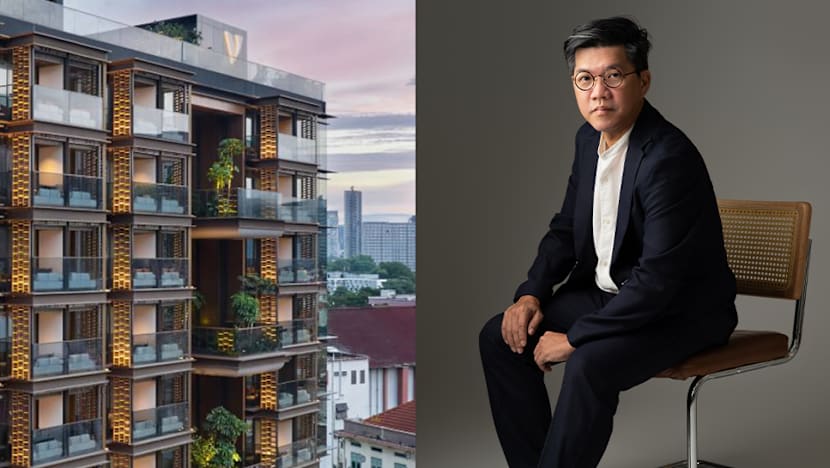
Yeo Kang Shua is Associate Professor of Architectural History, Theory and Criticism, and Architecture and Sustainable Design at the Singapore University of Technology and Design.

Source: CNA/zw(sk)

Sign up for our newsletters

Get our pick of top stories and thought-provoking articles in your inbox

Subscribe here
Inbox
FAST
Advertisement

Commentary

Commentary: Modi’s BJP win in West Bengal is more than an electoral upset

Prime Minister Narendra Modi’s ruling party and its allies now control states covering most of India’s shared border with Bangladesh, says Rahul Verma from the Centre for Policy Research.

Commentary: Modi’s BJP win in West Bengal is more than an electoral upset
India's Prime Minister Narendra Modi arrives at the Bharatiya Janata Party (BJP) headquarters, in New Delhi, India, May 4, 2026. (Reuters/Adnan Abidi/File Photo)
Listen
7 min
New: You can now listen to articles.

This audio is generated by an AI tool.

16 Jun 2026 05:59AM (Updated: 16 Jun 2026 07:21AM)
Read a summary of this article on FAST.
FAST

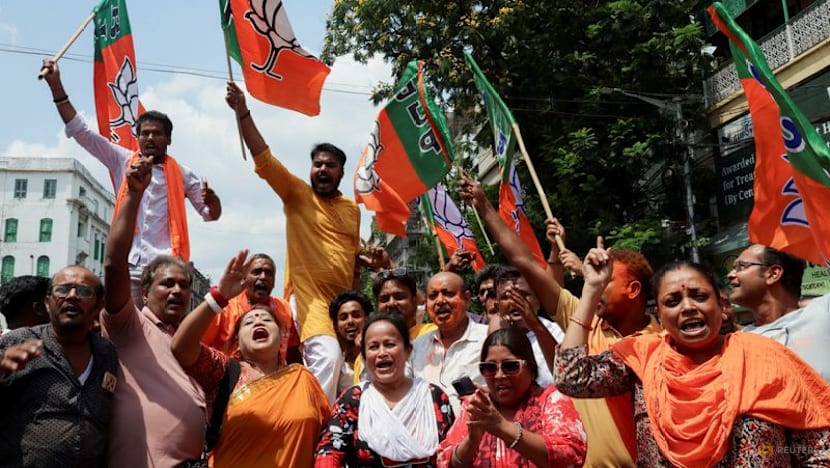
NEW DELHI: The 2026 West Bengal legislative assembly election may come to be remembered as one of the most consequential state polls in contemporary India. It marked the moment when Prime Minister Narendra Modi finally breached one of the last major regional fortresses resisting his expansion of political power.

But the larger significance of West Bengal lies in what it signals beyond the immediate – about the nationalisation of Indian politics and what that might mean beyond India’s borders. 

The Bharatiya Janata Party (BJP) and its allies now govern 22 out of 31 states across India. When Mr Modi came to power in 2014, they held just seven states.

HOW WEST BENGAL WAS WON

West Bengal was supposed to be difficult terrain for the BJP and victory looked an uphill task.

CNA Games
Show More
Show Less

The state’s political culture tends to produce dominant parties. West Bengal was governed by the communist-led Left Front for 34 uninterrupted years before the incumbent Trinamool Congress (TMC) came to power in 2011. TMC leader Mamata Banerjee remained extremely popular despite governing continuously for 15 years. 

And while the BJP has gained considerable ground in previous polls of the last decade, there were structural barriers that historically created a ceiling on its expansion: Muslims constitute nearly 30 per cent of the state’s population, and they had historically backed anti-BJP parties. The BJP was also long viewed by Bengalis as culturally associated with India’s Hindi-speaking political establishment. 

So what changed this time? The single biggest factor behind the TMC’s defeat was serious anti-incumbency sentiment. 

Allegations of extortion and bribery, popularly called “cut money” politics in West Bengal, became politically corrosive. Voters were frustrated that petty corruption had become normalised in everyday interactions between citizens and the party-state machinery.

The deterioration of law and order compounded these frustrations. A widely publicised 2024 rape and murder case of a trainee doctor in a hospital in West Bengal capital city Kolkata sparked outrage about women’s safety. 

This evolved into a symbol of broader anxieties about governance and impunity after allegations of an institutional cover-up. This mattered because women had formed one of the TMC’s most reliable electoral blocs.

BJP’S INCREASING DOMINANCE

This historic win will deepen concerns that India is moving toward becoming a one-party state. Some continue to question the authenticity of the West Bengal results and it will also add further fuel to concerns regarding increasing democratic deficit.

There had been controversy surrounding the Special Intensive Revision (SIR) of electoral rolls, where an update of West Bengal’s list of 76 million eligible voters removed 9 million names. While there are allegations that this disenfranchised a large number of eligible voters and disproportionately excluded Muslim voters in several constituencies, the BJP’s victory margin was too substantial to be explained purely through the SIR process alone. 

The political effect of the controversy was more indirect: It deepened communal polarisation and reinforced the BJP’s broader narrative around illegal immigration, citizenship and demographic anxieties.

But hasty conclusions are a grave injustice to the fact that elections in India remain fiercely competitive, and opposition parties are in power in major states. Tamil Nadu and Kerala went to the polls at the same time as West Bengal and elected very different parties, keeping BJP as a marginal player.

Actor-turned-politician Vijay, president of Tamilaga Vettri Kazhagam (TVK), greets his supporters after filing his nomination papers for the Tamil Nadu state assembly election, in Chennai, India, March 30, 2026. (Photo: Reuters/Riya Mariyam R)

Still, there is no doubt that BJP's political dominance is increasing. But this cannot be solely explained by BJP's resource and institutional advantage as the ruling party. 

The BJP is increasingly setting the agenda of electoral contests. The opposition parties are merely reacting and opposing, rather than adapting and offering viable alternatives. Regional parties that once served as powerful counterweights to BJP's national dominance appear trapped between dynastic succession, ideological exhaustion, and weak organisational machines.

The turmoil within the TMC following its electoral defeat in West Bengal – in which a large faction of party legislators and parliamentarians have parted ways with the parent party – is a reminder that the challenge facing India's opposition parties is no longer merely winning elections, but also preserving party unity after losing them.

WHY ASIA SHOULD PAY ATTENTION

The significance of West Bengal extends beyond India’s domestic politics. It could also reshape dynamics in South Asia.

The BJP now exercises significant influence across much of India’s eastern frontier – from Assam and the Northeast to West Bengal – giving New Delhi greater political coherence in managing one of South Asia’s most sensitive border regions with Bangladesh and Myanmar. 

The BJP has consistently framed illegal immigration from Bangladesh as both a demographic and security challenge. The party now has greater administrative capacity to pursue tighter enforcement of the 4,000km land border India shares with Bangladesh (more than half of which is in West Bengal), as well as citizenship verification measures and anti-infiltration operations.

In West Bengal, the BJP victory has accelerated long-pending efforts to expand border infrastructure. The state’s chief minister said on May 27 that about 57 hectares of land had been transferred to the Border Security Force for fencing projects. Additional land has been allocated around the strategically important Siliguri Corridor, the narrow stretch connecting mainland India to its northeastern states.

It remains to be seen how New Delhi navigates its ties with the new regime in Dhaka when there are heightened sensitivities on both sides of the border, but there is no doubt that the BJP's consolidation along India's eastern border will shape South Asia's strategic landscape in the years ahead.

Across the world, democracies are witnessing the fusion of charismatic leadership, welfare populism and majoritarian politics into durable electoral coalitions. The West Bengal electoral results suggest India may now be moving more firmly in that direction. 

As economic anxieties deepen and global instability grows, the consequences of this political order in the world’s largest democracy will extend far beyond India itself.

Rahul Verma is a Fellow at the Centre for Policy Research (CPR), New Delhi. The views expressed are personal.

Source: CNA/ch

Sign up for our newsletters

Get our pick of top stories and thought-provoking articles in your inbox

Subscribe here
Inbox
FAST
Advertisement

Commentary

Commentary: Why the US government shut down Anthropic’s latest Claude AI model

After realising the power of frontier AI models, the US administration has shifted away from an initial hands-off posture, says this academic.

Commentary: Why the US government shut down Anthropic’s latest Claude AI model

FILE PHOTO: Anthropic logo, a keyboard, and a robotic hand in this illustration taken June 5, 2026. REUTERS/Dado Ruvic/Illustration/File Photo

16 Jun 2026 05:58AM
Read a summary of this article on FAST.
FAST

SYDNEY: On Friday (Jun 12), artificial intelligence lab Anthropic suspended access to its latest Claude models, Fable 5 and Mythos 5, which had been released three days earlier.

The move came in response to an “export control directive” from the United States government prohibiting use of the models by anyone who is not a US national.

Mythos is Anthropic’s most powerful, or “frontier”, model. When first announcing the model in April, the company said it was too good at hacking to release immediately. Instead, Mythos was made available to a handful of organisations (mostly US tech corporations) to use to patch weaknesses in essential digital systems.

Fable is the same basic model, but with added safeguards meant to stop it being used for cybersecurity purposes. This is what was released to the public last week – and almost immediately shut down.

CNA Games
Show More
Show Less

ANTHROPIC AND TRUMP ADMINISTRATION AT LOGGERHEADS

Since early 2025, Anthropic and the Trump administration have been in escalating conflict. The administration has accused Anthropic of making “woke AI” and called chief executive Dario Amodei an “ideological lunatic”.

Early disagreements concerned AI regulation and semiconductor export policy. The dispute sharpened when Anthropic declined to let the Pentagon use its models for domestic surveillance and fully autonomous weapons systems.

The Department of Defense responded by threatening to designate Anthropic a “supply chain risk”, a classification that would have required military contractors to sever ties.

JAILBREAKS

The US government has not yet publicly stated the reason for last week’s directive, but Anthropic says it believes the government became aware of a jailbreak: a method for circumventing the safeguards in Fable that prevent using its most powerful features for nefarious purposes.

These safeguards classify user requests as safe or unsafe before passing them to the AI model. When triggered, the safeguards redirect the request to a less powerful model.

The government’s concern, according to Anthropic, was that the safeguards could be bypassed to extract information useful for cyberattacks.
Guardrails for large language models aren’t bulletproof. They mostly depend on the model’s own capacity to interpret the user’s intentions in making a request.

Beyond the inherent difficulty of this task, a large online community (which my colleagues and I call the Undersphere) is working hard to circumvent AI guardrails. Anthropic acknowledges that “perfect jailbreak resistance is not achievable for any current model provider”.

Anthropic says the research behind the government directive appears to have been produced by engineers at Amazon, which is both a rival to Anthropic and a significant investor.

But this was not the only relevant jailbreak. Within 48 hours of Fable’s release, a researcher using the pseudonym “Pliny the Liberator” published what they identified as Fable 5’s full system prompt to X and GitHub repository.

The system prompt is a hidden set of instructions that helps determine an AI model’s behaviour. It’s unclear exactly how knowledge of Fable’s system prompt could be used in practice, but it has drawn attention in the Undersphere.

A SURPRISE AND AN ONGOING MYSTERY

The deepest problem of making large language models such as Fable secure is that we don’t fully know how they work. According to Oxford University economist and machine learning expert Maximilian Kasy, they work much better than they “should”.

Large language models have billions of internal parameters and are trained on unimaginably vast piles of data using machine learning methods. According to Kasy, we would expect such systems to be “overfitted”: good at reproducing patterns in their training data, but bad at generalising to new situations.

However, modern systems such as Claude and ChatGPT do seem to be able to generalise. Kasy likens modern AI development to alchemy: successful through trial and error, not yet grounded in systematic theory.

As a result, the behaviour of AI models is partly opaque even to their builders.

HARD TO REGULATE

The opacity of the technology is one key reason it’s so hard to regulate. Governments lack independent access to the data, infrastructure and expertise they would need to evaluate proprietary frontier models.

The US administration’s recent executive order on AI security, published two weeks ago, reflects this realisation. As the administration has realised the power of frontier AI models, it has moved from an initial hands-off posture to asking developers to share their models for review before release.

That demand is an implicit admission that the administration does not trust the companies to evaluate, fully and comprehensively, what their own models can do and how they might be misused. The public sees even less, and the consequence is measurable: a survey taken across 25 countries last year found people are, on balance, more than twice as concerned about AI as they are excited about it.

THE FUTURE OF AI SAFETY

AI is a hugely hyped technology. But there is no doubt it is also extremely powerful and unpredictable. Understandably, this combination is very dangerous.

We cannot rely on regulations, as technology will develop more quickly than they can adapt. Nor can we rely on guardrails, as they will be bypassed.

We need a governance framework built for that eventuality: one that can predict and address the consequences of failure.

Such a framework must be global, participatory, and founded on reciprocal trust. These are things the current US administration has shown little capacity to generate.

Francesco Bailo is Senior Lecturer in Data Analytics, Social Sciences and Deputy Director of the Centre for AI, Trust and Governance at the University of Sydney. This article first appeared in The Conversation. 

Source: Others/sk

Sign up for our newsletters

Get our pick of top stories and thought-provoking articles in your inbox

Subscribe here
Inbox
Advertisement

Singapore

New Singapore Cruise Centre terminal at Harbourfront to open in July, ferry operators to move in 2 phases

Travellers heading to Batam and other Indonesian destinations will need to use the new terminal from July. There will be no changes to ferry routes and schedules.

New Singapore Cruise Centre terminal at Harbourfront to open in July, ferry operators to move in 2 phases

A view of the new Singapore Cruise Centre (HarbourFront) terminal located at 5 HarbourFront Avenue. (Image: Singapore Cruise Centre)

Listen
3 min
New: You can now listen to articles.

This audio is generated by an AI tool.

15 Jun 2026 07:37PM (Updated: 15 Jun 2026 07:45PM)
Read a summary of this article on FAST.
FAST

SINGAPORE: Ferry operators are set to begin operations at the new Harbourfront terminal from July, with the move being done in two phases.

The Singapore Cruise Centre said in a press release on Monday (Jun 15) that all ferry and cruise operations will be relocated to its new HarbourFront terminal in two phases in July.

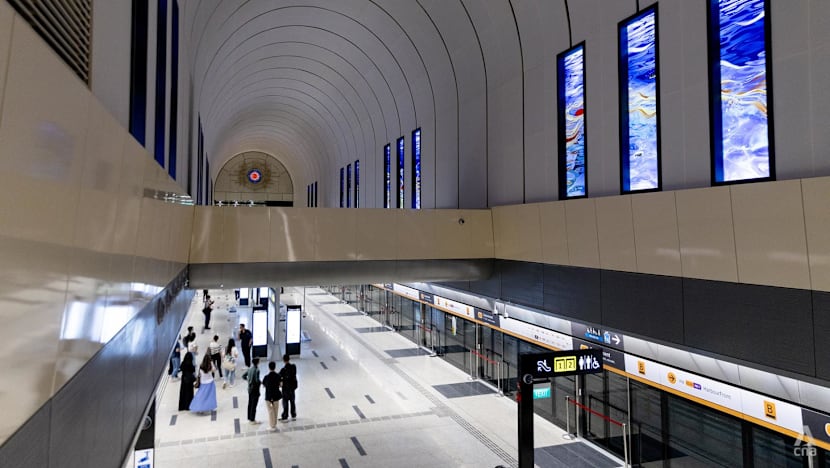
The new terminal, housed in a red-coloured building, is located at 5 HarbourFront Avenue, 70m away from the existing terminal within Harbourfront Centre. It is also directly across the entrance of the Reef at King’s Dock condominium and behind Harbourfront Tower 2, facing the sea.

In October 2025, it was announced that HarbourFront Centre would close in the second half of 2026 to be redeveloped into a 33-storey building with office and retail spaces, which would not include the ferry and cruise terminal.

CNA Games
Show More
Show Less

The cruise centre said that Batam Fast Ferry will start operations from the new terminal from Jul 7, while all remaining ferry operators – Horizon Fast Ferry, Majestic Fast Ferry, Sindo Ferry and Indo Falcon Shipping & Travel, as well as cruise operations – will follow from Jul 15.

There will be no changes to ferry routes, destinations served and scheduling as a result of the move.

Ferry and cruise berth locations also remain unchanged. 

Ferry services to destinations in Indonesia, including Batam Centre, Harbour Bay, Sekupang, Tanjung Balai (Karimun), Gold Coast and Nirup Island, as well as international cruise operations, will continue as usual.

A map showing the new location of the Harbourfront terminal. (Image: Singapore Cruise Centre)

The cruise centre said that passengers may reach the new terminal via HarbourFront MRT station Exit B. They are also encouraged to use public transport to the terminal since parking spaces are limited.

There will be sheltered walkways serving the pedestrian route to the new terminal as well as to the MRT station and VivoCity mall.

The new Singapore Cruise Centre (HarbourFront) terminal features upgraded infrastructure and technology-enabled services designed to enhance the passenger experience, the company said, with more details on its amenities and offerings to be announced at its official opening later this year.

HarbourFront Centre was known as the World Trade Centre when it officially opened in 1978, with a ferry terminal as part of it.

In 2003, the World Trade Centre was renovated and reopened as HarbourFront Centre. 

Source: CNA/fh(sf)

Sign up for our newsletters

Get our pick of top stories and thought-provoking articles in your inbox

Subscribe here
Inbox
Advertisement

Singapore

Motorists to trial roadside electronic parking under ERP 2 from August

The feature allows motorists to start and pay for roadside parking through the ERP 2 on-board unit (OBU) display.

Motorists to trial roadside electronic parking under ERP 2 from August

Roadside parking along Ann Siang Road. (Image: Google Street View)

Listen
4 min
New: You can now listen to articles.

This audio is generated by an AI tool.

15 Jun 2026 06:00PM (Updated: 15 Jun 2026 11:33PM)
Read a summary of this article on FAST.
FAST

SINGAPORE: When parking on the roadside in future, motorists may not need to use the Parking.sg app - they can instead select a car park on their ERP 2 on-board unit (OBU) display and tap start.

When they drive off, the parking session will automatically end.

These functions are part of an upcoming roadside electronic parking (REP) feature under the ERP 2 system, which allows motorists to pay for roadside parking through the OBU display.

The feature will be trialled from August at 644 designated car park locations and cover about 19,000 roadside parking lots across Singapore, a Land Transport Authority (LTA) spokesperson said on Monday (Jun 15). More car parks will be progressively added to the REP system during and after the trial.

CNA Games
Show More
Show Less

About 1,000 motorists will test this new feature. They are also part of a trial for new location-based charging features on ERP 2 that started in June. 

These first two features of the pilot are location-based charging and checkpoint charging under ERP 2, and will be rolled out on Jan 1, 2027. The roll-out date for the REP feature has not been announced.

At present, all designated roadside car park locations in Singapore continue to accept existing payment methods, such as the Parking.sg mobile application.

HOW TO START PARKING SESSION

From August, trial participants will see a P icon appear in the top-right corner of the OBU display.

Motorists have two options. After they have parked, they can tap on the P icon to start the parking session. 

Alternatively, motorists can switch off the vehicle’s engine, and a parking prompt will appear on the OBU for about two minutes. 

Motorists can press the prompt to start the parking session, after which the OBU will shut down automatically.

If the OBU detects only one car park, a single parking option will show on the display, and motorists can press start to commence the parking session. 

But if there is more than one car park in the vicinity, several nearby parking locations may be displayed on the OBU touchscreen. Motorists should select the correct car park from the list, which will typically be the first option shown, before tapping the start button.

Motorists will have to confirm the start of a parking session as it verifies their intention to park and gives them control over when the parking session begins, similar to the Parking.sg app, the LTA spokesperson added.

Doing so also helps ensure that parking charges are applied accurately.

After the parking session begins, a notification saying "parking in progress" will appear on the OBU display with other details, before the OBU shuts down.

HOW TO END PARKING SESSION

The parking session will automatically end when the motorist drives out of the car park, the spokesperson said. 

The parking charges will be displayed and deducted from the motorist’s selected payment mode.

Motorists who have installed the OBU display can pay parking charges via the OBU. It will automatically calculate parking charges without motorists having to estimate or extend their parking duration, said LTA.

The REP function will be introduced to motorists who have installed the OBU touchscreen display. 

As of May 31, about 960,000 vehicles or more than 96 per cent of vehicles in Singapore, have installed the ERP 2 OBU.

LTA said that among the vehicles installed with the ERP 2 OBU, about 98 per cent have opted to install the touchscreen display.

The Parking.sg app will remain in operation after REP is fully rolled out, and motorists without the OBU touchscreen display may continue to use the app.

Since the installation of OBUs was extended to foreign-registered vehicles from Apr 1, over 5,700 foreign-registered vehicles have opted to install the OBU.

More details on the REP trial will be announced at a later date, the LTA spokesperson said. 

Source: CNA/jx(mi)

Sign up for our newsletters

Get our pick of top stories and thought-provoking articles in your inbox

Subscribe here
Inbox
Advertisement

Singapore

Singapore running pilot for ERP 2 location-based charging

CNA's Justin Ong put ERP 2 location-based charging to the test. What worked well, and what didn't?

Singapore running pilot for ERP 2 location-based charging

CNA's Justin Ong puts ERP 2 location-based charging to the test. (Photo: CNA/Syamil Sapari)

Listen
9 min
New: You can now listen to articles.

This audio is generated by an AI tool.

15 Jun 2026 06:00PM (Updated: 15 Jun 2026 11:34PM)
Read a summary of this article on FAST.
FAST

SINGAPORE: An alert that an Electronic Road Pricing (ERP) area is ahead pops up on the car’s on-board unit (OBU) display.

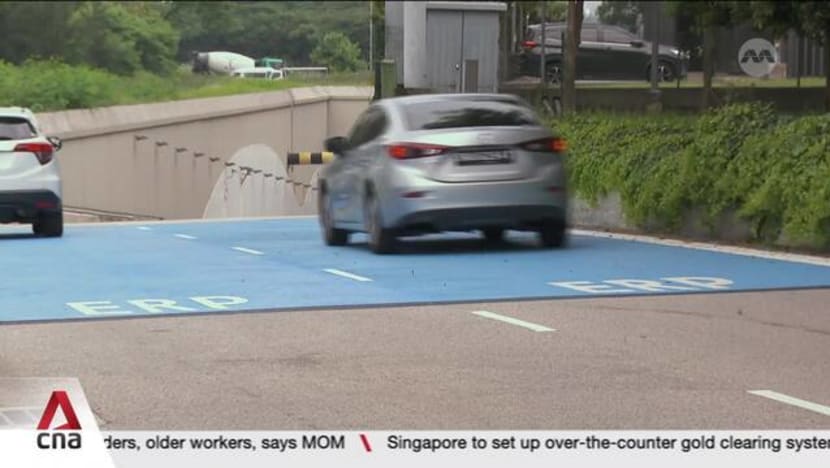
But there is no gantry, and a section of the road is painted in blue - known as an ERP charging zone. As the driver goes over, a second message on the OBU says the charge is paid.

This may not be familiar to drivers under the current ERP system, but it is among the features that could be part of the new ERP 2 location-based charging system when it fully rolls out on Jan 1, 2027.

About 1,000 motorists are part of a trial that started this month on the new location-based charging. CNA was also given the chance to test out these new features.

CNA Games
Show More
Show Less

A Land Transport Authority (LTA) spokesperson said on Monday (Jun 15) that the trial will allow it to gather feedback on ERP 2’s features and user interfaces and make refinements where necessary before a full roll-out to all motorists.

Currently, there are no ERP charging zone alerts on the OBU, and drivers usually rely on physical sightings of the gantry to know that they are about to be charged. The charge will be incurred when the ERP gantry detects the vehicle.

But with Singapore fully switching to the ERP 2 location-based charging system from Jan 1 next year, gantries will no longer be used to demarcate the ERP charge zones.

These ERP gantries will be progressively removed from later this year, starting with those that are no longer in operation.

New road signs and markings could be used to indicate ERP charging locations. A trial for these has been running since March.

But how different will the features be under this new system? CNA puts them to the test.

An ERP alert that will appear as part of a trial of ERP 2's location-based charging. The feature will roll out to the public on Jan 1, 2027. (Photo: CNA/Syamil Sapari)

LOCATION-BASED CHARGING

For those under the trial, ERP 2 location-based charging zones will be introduced at the 22 operational ERP locations.

As ERP gantries will no longer serve as markers of charging locations under the upcoming system, LTA has been testing the effectiveness of new road markings and signs as visual cues along or near expressways at five locations.

This journalist drove past two of the locations.

The first was the ERP at Central Expressway (CTE) from Serangoon Road. When this reporter drove towards the ERP charge zone, an alert came up on the OBU display, showing the location and the amount to be charged. 

Passing directly under the ERP gantry at 7.31am, there was no charge on the screen. This is because under the new satellite-based system, motorists are not charged through the gantry. 

After two seconds, when the car drove over the ERP road markings beyond the gantry, the charge of S$1 (US$0.80) came up on the screen.

The road marking trialled at the ERP charging zone at CTE from Serangoon Road. (Photo: CNA/Justin Ong)

There were also signs flanking both sides of the road showing that it was an "ERP Charge Zone". 

Keeping in mind that there will no longer be physical gantries when the ERP 2 system is fully rolled out on Jan 1, the road markings were sufficient to indicate it was an ERP charging zone. 

The road is painted for a 25m stretch, which was long enough to grab this driver's attention, covering the entire field of vision. 

The signs at the side of the expressway, however, were not eye-catching and easy to miss, being in the peripheral vision of the motorist. They also got lost in the deluge of highway signs and did not stand out. 

In contrast, the soon-to-be-defunct ERP gantries loom large overhead and are unmistakable.

The road markings being trialled at the ERP charging zone at PIE after Kallang Bahru on Woodsville Flyover. (Photo: CNA/Justin Ong)

CNA then tried to drive under the ERP at Pan Island Expressway (PIE) after Kallang Bahru on Woodsville Flyover. This ERP charging zone features a different marking - blue oval ERP road markings on each lane.

Again, the ERP alert popped up on the OBU display, with the same ERP Charge Zone signs also flanking both sides of the expressway.

When driving through the zone at 8.02am, the ERP charge happened a split second after crossing the markings, showing that the satellite-based system was precise in its charging. 

To this journalist, the oval marking was less obvious and smaller than the CTE markings, where the entire zone of the road was painted blue. The smaller ovals were easier to miss.

The charge zone signs on the sides of the expressway were no easier to spot. One of the signs on the left was blocked by another road sign, and could only be seen when the car was a few metres from the charging zone. 

The other three locations that have these trial markings and signs are: PIE westbound before Eunos Link, citybound Ayer Rajah Expressway (AYE) after Jurong Town Hall, and Marina Boulevard to Marina Coastal Expressway eastbound. 

AVOIDING AN ERP CHARGE

CNA then tested whether an alert could help a driver avoid an ERP charge.

LTA said that the ERP alert zones are located around the last possible exit before motorists reach the charging locations, so that motorists can consider an alternative route.

But how long before the nearest exit will the alert appear, and will there be enough time to change route and avoid being charged? 

The vehicle incurs an ERP charge through a satellite-based system. The feature will roll out to the public on Jan 1, 2027. (Photo: CNA/Syamil Sapari)

CNA first tried this on the smaller road of Clementi Ave 2, which has an ERP charging zone on its exit to AYE. 

The ERP Ahead alert came less than 100m from the exit to AYE where the ERP was, and it gave this journalist enough time to avoid entering the lane and being charged.

But avoiding an ERP charge on an expressway was quite different. Driving on the AYE towards the ERP before Alexandra Road, the last possible exit before the charging location was Portsdown Flyover/Queensway.

Travelling on lane 2, would the alert come soon enough to filter to the exit on lane 5?  

The answer was yes – but barely. The ERP alert flashed on the OBU display about 200m from the exit.

This journalist made three quick lane changes and was able to filter into the exit lane in the nick of time. 

Had there been more congestion, or if the car had been on lane 1, it might not have made it safely to the exit.

ACCURATE CHARGING

CNA then sought to test if cars could be mistakenly charged if they drove on a parallel road near an ERP charging area.

One example was Clementi Avenue 2. Should cars choose not to exit to AYE, they would drive on a parallel flyover about 30m away from the ERP charging area.

The satellite-based system passed this test. CNA drove in the left-most lane while passing adjacent to the ERP charging area. 

This was done three times, and there were no charges.

The ERP charging zone was about 30m away from the vehicle travelling on a parallel road, but no charge was incurred. (Photo: CNA/Justin Ong)

OTHER FEATURES

Other features that will be rolled out to the motorists on the pilot include automatic payment of checkpoint tolls.

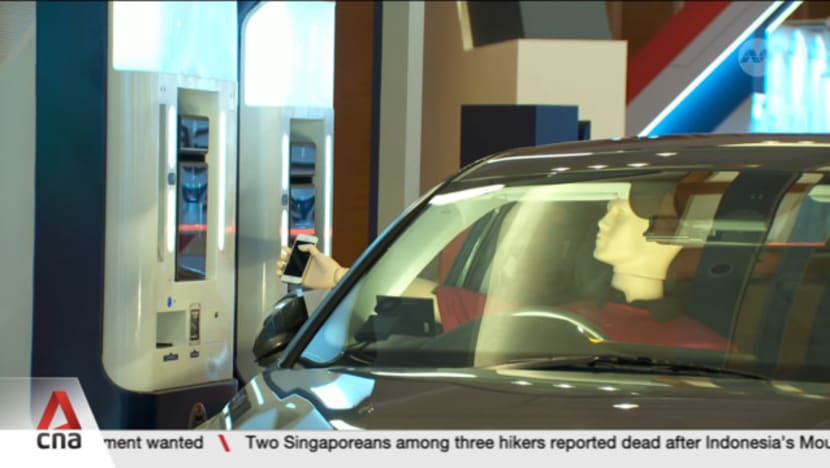
Currently, on the Singapore side of the checkpoint, motorists pay the toll by inserting a NETS CashCard or CEPAS card into a card reader at the immigration booth.

After ERP 2 is rolled out on Jan 1, 2027, a contactless toll collection system will be in place.

The OBU display will show a Toll Ahead alert before motorists reach Woodlands or Tuas Checkpoint.

The motorist will proceed to clear immigration and drive away from the immigration booth. The OBU will then show a notification with the amount to be charged when the vehicle drives on the Woodlands Causeway or Tuas Second Link.

The OBU will then show a successful deduction.

A new roadside electronic parking (REP) system will also be trialled for the 1,000 vehicles starting in August. 

The system will let motorists start parking sessions through their vehicle’s OBU, instead of only the Parking.sg app. 

It can also automatically detect when the vehicle leaves, end the session and calculate charges, removing the need to manually stop parking. 

As of May 31, about 960,000 vehicles or more than 96 per cent of vehicles in Singapore have installed the ERP 2 OBU. Since the installation of OBUs was extended to foreign-registered vehicles from Apr 1, over 5,700 foreign-registered vehicles have opted to install the OBU.

Motorists not participating in the trial may also provide their feedback on the trial road signs and markings at LTA_Pilot_GNSS [at] lta.gov.sg by Jul 31. 

Source: CNA/jx(mi)

Sign up for our newsletters

Get our pick of top stories and thought-provoking articles in your inbox

Subscribe here
Inbox
Advertisement

Commentary

Snap Insight: Iran’s birthday present to Trump comes with a price tag

Iran has succeeded in prioritising an end to the war rather than the nuclear issue US President Donald Trump wanted to resolve, says James M Dorsey from the S Rajaratnam School of International Studies.

Snap Insight: Iran’s birthday present to Trump comes with a price tag
US President Donald Trump in a photo taken on Jun 11, 2026, in Washington. (AP/Jacquelyn Martin)
Listen
5 min
New: You can now listen to articles.

This audio is generated by an AI tool.

15 Jun 2026 05:01PM
Read a summary of this article on FAST.
FAST

SINGAPORE: It was out of character, but Iran gave United States President Donald Trump an unexpected 80th birthday present.

It agreed on Sunday (Jun 14) to the final text of a memorandum of understanding that could end the Iran war. But this gift comes with a price tag.

Iran may have emerged from the war stronger than it was before Feb 28, when the United States and Israel attacked the Islamic Republic. 

The full text of the deal to be signed on Friday has yet to be published, but it will extend the ceasefire by another 60 days and frame negotiations on the future of Iran’s nuclear programme, final arrangements for shipping through the strategic Strait of Hormuz, the lifting of sanctions and the release of frozen Iranian assets.

And Mr Trump is going to find it more difficult than Iran to claim victory credibly. What has his war really achieved?

A HARD SELL

The president will point to the destruction of Iran’s navy and air force, but these barely existed before the war. His claim that the US significantly diminished Iran’s missile and drone stockpiles and ability to replenish them remains contested, with CIA intelligence reportedly estimating in May that Iran retains about 70 per cent of its pre-war arsenal. 

Mr Trump could assert that he achieved regime change in Iran by killing Supreme Leader Ali Khamenei and numerous other senior political and military figures. But the regime remains intact. All that has changed are the faces.

He has also claimed to have set back the Islamic Republic’s nuclear programme by light-years. Mr Trump creates his own reality, but the key question he will have to answer is whether his alleged successes justify withdrawing in 2018 from the 2015 international agreement that curbed Iran’s nuclear programme and created the Strait of Hormuz crisis with its fallout for the global economy.

With fuller negotiations on the nuclear programme only set to begin after the memorandum is signed, there are few details with which to measure success. In that regard, Iran had reaffirmed that “under no circumstances will Iran ever seek, develop or acquire any nuclear weapons” in the 2015 agreement.

On balance, that may be a hard sell beyond his most loyal supporters in a Congressional mid-term election year.

SURVIVAL OF THE ISLAMIC REPUBLIC

For its part, Iran can claim verifiable successes, starting with the survival of the Islamic Republic.

Moreover, Iran retains significant leverage over the Strait of Hormuz, which is unlikely to return to its pre-war status. Iran also has achieved an upfront lifting of the US naval blockade of Iranian ports, which will ease its oil exports.

Sunday’s Israeli attack on Beirut in response to a drone attack by Hezbollah, the Iran-backed militant group in Lebanon, produced not only a reprimand by Mr Trump but also a call on Prime Minister Benjamin Netanyahu to halt all Israeli military operations in Lebanon.

SOME FINANCIAL RELIEF

Crucially, Iran appears to have achieved some financial relief, a key Iranian demand, although details remain murky.

Mr Trump is unlikely to authorise an upfront release of Iranian funds frozen in the United States because that would spark comparisons with the 2015 agreement in which then President Barack Obama freed large amounts of cash. But the US could facilitate the release of funds by third countries.

The bulk of the estimated US$100 billion in frozen assets are not in the United States. They are in China, India, Luxembourg, the United Arab Emirates, among others. 

The UAE recently reportedly agreed to unlock billions of Iranian dollars. It’s not clear if that was part of the US-Iran deal or an effort by the Gulf state to exempt itself from potential future Iranian attacks on Gulf infrastructure.

DIFFERING PERCEPTIONS OF VICTORY

Mr Trump and Iran’s differing perceptions of victory are likely to loom large over forthcoming negotiations on a final settlement. 

Differences over the interpretation and implementation are par for the course. Add to those issues like Iran’s ballistic missile programme and relations with Arab partners, including Hezbollah and Yemen’s Houthis, that the United States wants to discuss but Iran has declared off limits.

Already, some of Mr Trump’s close associates have raised concerns about the deal. South Carolina Republican Senator Lindsey Graham said that “Iran’s view of the agreement seems different than what the American negotiating team is claiming”. Mr Graham also reminded Mr Trump that a final agreement with Iran would have to be submitted to Congress.

Mr Trump has repeatedly claimed victory over more than 100 days of conflict, but even now, his memorandum is not yet a final deal for the end of the war, much less lasting peace.

Dr James M Dorsey is an Adjunct Senior Fellow at Nanyang Technological University’s S Rajaratnam School of International Studies, Associate Editor of WhoWhatWhy, and the author of the syndicated column and podcast, The Turbulent World with James M. Dorsey.

Source: CNA/ch

Sign up for our newsletters

Get our pick of top stories and thought-provoking articles in your inbox

Subscribe here
Advertisement

Singapore

Former Changi chalet among growing number of state properties given new lease of life

Over 20 tenders were launched in Singapore last year to repurpose state properties, signalling a rise in interest in redeveloping old buildings rather than demolishing them.

Former Changi chalet among growing number of state properties given new lease of life

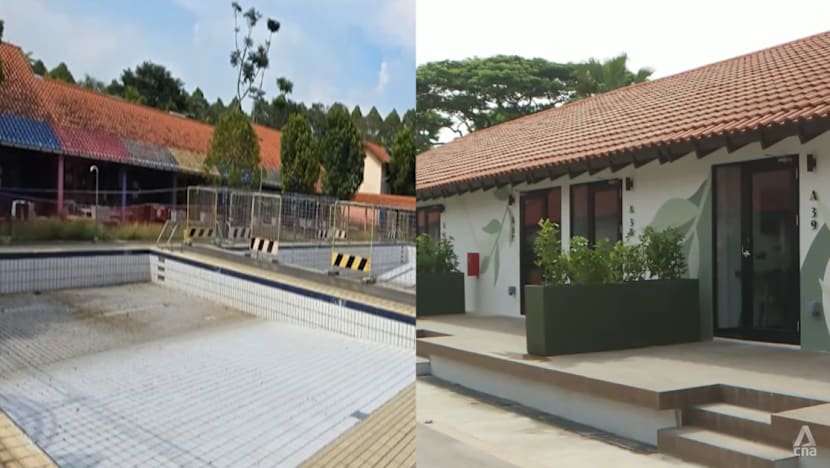
A composite of a disused holiday chalet in Changi (left) and the redeveloped site of Coliwoo Resort Changi, slated to open in August 2026.

Listen
6 min
New: You can now listen to articles.

This audio is generated by an AI tool.

15 Jun 2026 04:12PM
Read a summary of this article on FAST.
FAST

SINGAPORE: A popular holiday chalet along Jalan Loyang Besar sat disused for years after having last served as a temporary workers’ dormitory.

Now, the site in Changi – which is around 40 years old – is undergoing restoration and redevelopment into a co-living resort, with operators seeking to preserve much of its original character.

Timber screens that once separated the chalets have been repurposed into tables and chairs. Developers are also keeping its roofs – made of terracotta clay tiles – and about 40 per cent of the existing landscape, said Coliwoo’s executive chairman and CEO Kelvin Lim.

The Coliwoo Resort Changi, which emphasises sustainability and harmony with nature, is expected to open in August.

"If you were to build it brand new, it would take at least three years. For us, a restoration takes around 10 months and that is already a fast-track programme," Mr Lim told CNA.

CNA Games
Show More
Show Less
The Coliwoo Resort Changi construction site.

Such interest in repurposing ageing buildings rather than demolishing them has been growing in Singapore, with urban planning experts saying that these projects reflect a broader shift towards adaptive reuse.

According to the Singapore Land Authority (SLA), more than 20 tenders were launched in 2025 to repurpose state properties, with former offices, schools and other buildings being transformed into co-living spaces, community hubs and lifestyle destinations.

The agency said it recorded a 50 per cent increase in the number of social entities repurposing state properties for community uses between 2021 and 2024, compared with the previous three-year period.

"In a high-rise, high-density city like Singapore and others around the world, efficiency and sustainability are critical,” noted Ms Elaine Tan, research director at the Centre for Liveable Cities.

“Adaptive reuse demonstrates that retrofitting can be both economically and environmentally advantageous because it delivers quicker returns while strengthening long-term resilience.”

The practice can help cities preserve cultural heritage, retain shared memories and rejuvenate neighbourhoods, she added.

A COMPLEX UNDERTAKING

Among the better-known examples are Temasek Shophouse – a social impact hub along Orchard Road – as well as New Bahru, a cluster of shops and eateries at the former Nan Chiau Girl's High School campus.

Another is The Foundry, a former Elections Department building that now serves as a hub for social impact startups.

But while adaptive reuse offers environmental and social benefits, transforming old buildings remains a complex undertaking.

"Old buildings are not easy. Ageing wears them down and it's made worse by Singapore's very punishing weather,” said SLA CEO Calvin Phua.

A cafe at Temasek Shophouse.

In order to adapt them, people who understand the constraints of old buildings need to be roped in, he added.

"It takes quite a lot of investment to do up old buildings and to maintain them. The people must be able to put it to a use that is viable, and that means a clear market demand for delivered value, and then you can justify your investment you need to put in to transform the old spaces," he pointed out.

One of the most challenging sites under consideration is the Old Kallang Airport. 

Singapore's first airport opened in 1937 and ceased aviation operations 18 years later. Today, the conserved landmark remains vacant while agencies explore potential future uses.

In 2024, the Urban Redevelopment Authority (URA) began seeking input on the site. Among its key suggestions was repurposing the site for “lifestyle, recreational and community uses".

"It's been very challenging to figure out a use that is viable enough to justify the level of investments that are required to make the building work,” said Mr Phua, noting certain conservation requirements that require “a significant amount of investment”.

A bird's eye view of the Old Kallang Airport site.

"The spaces within the building are also quite customised, so you do need to be able to figure out and reimagine how you can turn those old spaces and make good spaces work in the new use,” he added.

“I think a lot of thought is put in to decide what to conserve, what to preserve, what to keep and you do need to respect those conservation requirements.”

Mr Phua said demolition remains a last resort and is considered only when a building's condition or highly specialised design makes reuse impractical.

He added that SLA discusses this with its partner agencies, including URA.

ADDRESSING SOCIAL NEEDS

SLA is also exploring how adaptive reuse can help address emerging social needs, including ageing and community care.

One example is Commune at Henderson, a former school that was converted into a co-living community for seniors and youths.

"Because of the nature of our spaces, we can afford to experiment a little bit, and one area is community care. These are co-living spaces for the aged to age well and live well,” Mr Phua pointed out.

"We have to do our part in talking to people and in lining up the proposed uses for the old properties and to try to get people to reimagine what is possible."

Commune at Henderson, a former school that was converted into a co-living community for seniors and youths.

Mr Phua said adaptive reuse is ultimately about helping Singapore respond to changing needs in a land-scarce environment.

"The reality is that we are a land-scarce country. We don't have infinite amounts of land to put to new uses, so we do need to adjust … (and) we do need to create new spaces to meet new needs and priorities. That transition from the old to the new is always challenging,” he added.

While people have a “certain affinity” for old spaces, reimagining them can get the community to interact with these spaces in a different way, said Mr Phua.

"By making the old buildings available to future generations, we are already providing an opportunity for the stories to be told and the connection to the history and the past of the place,” he added.

Source: CNA/lt(dn)

Sign up for our newsletters

Get our pick of top stories and thought-provoking articles in your inbox

Subscribe here
Advertisement

Singapore

Singapore expresses condolences after Philippines earthquake, stands ready to provide assistance

Singapore expresses condolences after Philippines earthquake, stands ready to provide assistance

Passengers on a pickup truck look at a damaged building a day after a 7.8 magnitude earthquake in General Santos, southern Philippines, on Jun 9, 2026. (File photo: Reuters/Noel Celis)

Listen
2 min
New: You can now listen to articles.

This audio is generated by an AI tool.

15 Jun 2026 02:39PM
Read a summary of this article on FAST.
FAST

SINGAPORE: Singapore Prime Minister Lawrence Wong has written to Philippine President Ferdinand Marcos Jr to express his condolences after an earthquake killed dozens and left a trail of destruction, Singapore's Ministry of Foreign Affairs (MFA) said on Monday (Jun 15).

Mr Wong also said that Singapore stands ready to assist the Philippines as required. 

The 7.8-magnitude earthquake hit the Philippines on Jun 8 and killed at least 61 people.

Major aftershocks in the following days have also left dozens missing. 

CNA Games
Show More
Show Less

There are currently no reports of Singaporeans injured in the earthquake, but MFA said it is closely monitoring the situation.

The ministry has also reached out to e-registered Singaporeans in the affected area to render any necessary consular assistance.

“In view of possible aftershocks, Singaporeans in the affected area are advised to remain vigilant, take all necessary precautions for their personal safety and heed the instructions of the local authorities,” MFA said.

Those who are in or travelling to the Philippines are strongly encouraged to e-register with MFA and to purchase comprehensive travel insurance.

Singaporeans in the Philippines who require consular assistance can contact the Singapore Embassy in Manila or call the MFA Duty Office’s 24-hour hotline at either 6379 8800 or 6379 8855.

Source: CNA/co(ac)

Sign up for our newsletters

Get our pick of top stories and thought-provoking articles in your inbox

Subscribe here
Advertisement

Singapore

Singapore retrenchments climb in Q1, with sharper rise in incidence among degree holders, older workers: MOM

The notable shift in retrenchment incidence among higher-educated workers reflects the ongoing restructuring in the professional and knowledge-intensive sectors, says the ministry.

Singapore retrenchments climb in Q1, with sharper rise in incidence among degree holders, older workers: MOM

Manpower Minister Tan See Leng (right) looking at automated machines demonstrated at Star Furniture's warehouse on Jun 15, 2026. (Photo: CNA/Mak Jia Kee)

Listen
9 min
New: You can now listen to articles.

This audio is generated by an AI tool.

15 Jun 2026 12:30PM (Updated: 15 Jun 2026 11:31PM)
Read a summary of this article on FAST.
FAST

SINGAPORE: An ongoing restructuring in professional and knowledge-intensive sectors drove a notable shift in layoffs among degree holders in the first quarter of 2026, with the incidence of retrenchment rising sharply for this group, the Manpower Ministry (MOM) said on Monday (Jun 15).

The incidence of retrenchment, which refers to the rate of being laid off within a specific demographic, also rose among older workers aged 50 to 59 – rising from 2.8 to 3.1 per 1,000 resident employees.

Overall, the number of retrenchments went up in this time period. MOM's latest quarterly labour market data showed retrenchments rising to 3,830 in Q1 2026, up from 3,690 in Q4 2025.

This was largely driven by restructuring or reorganisation rather than cost-cutting, said MOM. Retrenchments were mainly in external-oriented sectors like manufacturing, financial services and professional services.

CNA Games
Show More
Show Less

The overall incidence of retrenchment, at 1.6 per 1,000 employees, remains "within non-recessionary norms", the ministry added.

Among degree holders, retrenchment incidence rose sharply from 2.6 to 3.1 per 1,000 resident employees. This was the highest incidence among all educational qualification groups, said MOM.

This suggests that restructuring activity in Q1 2026 remained concentrated among higher-educated workers, reflecting "ongoing organisational restructuring in professional and knowledge-intensive sectors", said the ministry.

In contrast, retrenchment incidence fell to 0.7 per 1,000 resident employees for those with secondary school qualifications or lower, and to 1.1 per 1,000 resident employees for those with diploma and professional qualifications.

Professionals, managers, executives and technicians (PMETs) continued to have the highest retrenchment incidence among all occupational groups at 2.6 per 1,000 resident employees, unchanged from the previous quarter.

Despite the slight uptick in retrenchments, MOM said labour market outcomes remained resilient.

For example, the rate of residents returning to employment within six months after retrenchment improved to 60.7 per cent from 57.4 per cent in the previous quarter.

"Improvements were observed among PMETs, degree holders and younger residents aged below 30, suggesting that retrenched workers continued to find employment within a reasonable timeframe," said the ministry.

The re-entry into employment data does not include retrenched workers who became self-employed, took on informal employment or went into training while looking for a job.

Speaking to reporters, Manpower Minister Tan See Leng said: "Retrenchment is never easy. But what encourages me is that we are seeing more retrenched workers finding their way back to employment quicker."

He added that the new Skills and Workforce Development Agency will be "better positioned" to help workers navigate the labour market and connect to new prospects through enhanced career guidance, job-matching and reskilling support. 

IMPACT OF ARTIFICIAL INTELLIGENCE

For the first time, MOM's quarterly labour market report addressed the impact of AI on the workforce by including data the ministry first released in a detailed report in April.

"AI will indeed change the way we work, but what we are seeing so far is that it's actually helping to reshape jobs more than replace them," said Dr Tan.

According to the April data, 6.2 per cent of firms that are implementing or piloting AI usage reported headcount reductions, while 8.5 per cent reported lower hiring.

It was more common for firms to redesign job functions, with 18.9 per cent of respondents doing so after adopting AI.

Dr Tan also pointed out that workers had positive experiences, with about 85 per cent of AI users reporting improvements in productivity, time savings and a higher quality of work.

"This is exactly why helping workers to pick up new skills and adapt to changing job requirements matters so much as more companies adopt AI," he said.

He said the government will continue to provide this support, pointing to the roughly 400 people who benefited from Workforce Singapore's career conversion programmes to train for redesigned roles, including those with AI components, in 2025.

Only 28.5 per cent of companies in Singapore have adopted the technology.

Adoption rates vary across sectors and are highest in digitally intensive and knowledge-based sectors such as information and communications, professional services and financial and insurance services.

Manpower Minister Tan See Leng speaking to the media at Star Furniture on Jun 15, 2026. (Photo: CNA/Mak Jia Kee)

SLOWER EMPLOYMENT GROWTH

While the number of retrenchments rose from January to March 2026, the labour market continued to expand, albeit at a slower pace from the previous quarter.

Total employment grew by 9,400 in Q1 2026, slower than the 17,700 increase in Q4 2025.

The moderation was mainly driven by slower growth in non-resident employment, which is concentrated in the construction and manufacturing sectors, said MOM.

"I know many Singaporeans are concerned about the economy, the global uncertainty and what AI means for their jobs," said Dr Tan.

"These are very real concerns. We understand the challenges that many workers and many fresh graduates have faced, but I want to reassure everyone that even amidst these uncertainties, there are some encouraging signs in the labour market."

He pointed to resident employment growing at a faster rate compared with the previous quarter, from a 3,100 increase in Q4 2025 to 5,400 in Q1 2026.

These gains were in administrative and support services, mainly in employment activities and travel-related services, and in jobs such as customer service, administrative clerks and travel agency clerks.

Resident employment also grew in transportation and storage, and public administration.

Despite higher employment by financial institutions, resident employment shrank in the financial and insurances services category, which reflects that the effect is largely concentrated among self-employed workers in this sector.

"Firms may be prioritising leaner but permanent headcount, while workers gravitate towards stability amid uncertainty," said MOM.

Job vacancies fell to 73,300 in March from 77,700 in December 2025, driven by a decline in non-PMET vacancies.

There continued to be more job vacancies than unemployed people, although the overall ratio of vacancies to the unemployed declined to 1.46 in March from 1.58 in December 2025.

Unemployment rates in March remained low and stable, said MOM – at 2 per cent overall, 2.9 per cent for residents and 3.1 per cent for citizens.

The resident long-term unemployment rate held steady at 0.9 per cent.

ALTERNATIVES TO RETRENCHMENT

The number of employees placed on short work-weeks or temporary layoffs increased to 1,230 in Q1 2026, up from 960 in the previous quarter.

After rising for four consecutive quarters, the number of those placed in such alternative arrangements to retrenchments is now at its highest level since Q4 2021, after reaching unprecedented highs during the COVID-19 pandemic.

Short work-weeks involve reducing hours or working days, while temporary layoffs are when the employee is asked to stop coming to work for a period of time due to a lack of work.

These interim measures are typically read as indicators of economic slowdown, but are seen as better alternatives to retrenchment as they do not completely remove employee benefits and indicate a company's commitment to its workers, MOM has said.

The latest MOM data point to an increased use of such measures in construction and manufacturing, and from production and transport operators, cleaners and labourers in the latest quarter.

"With retrenchment levels remaining low and vacancies robust, the uptrend in employees on short work-week or temporary layoffs reflects firms' increased use of reduced working hours to absorb temporary changes in manpower demand rather than retrench workers," said MOM.

HISTORICAL LOW RESIGNATION RATES

The ministry also noted record lows in resignation rates, which it linked to workers being increasingly reluctant to leave their current positions amid heightened caution over global uncertainties.

The average monthly resignation rate of 1 per cent in Q1 2026 is a historical low, while the financial and insurance services sector recorded its lowest-ever resignation rate of 0.6 per cent.

In high-turnover sectors like food and beverage services and retail trade, resignation rates fell to multi-year lows of 1.8 per cent and 1.4 per cent respectively.

The average monthly recruitment rate of 1.6 per cent is also among the lowest in years, said MOM.

The ministry expected labour market conditions to remain resilient, although firms may adopt a more cautious approach in hiring and wage increases amid heightened global economic uncertainty and geopolitical tensions.

"Labour demand is likely to moderate if external conditions weaken further and elevated global input costs persist," it added.

Source: CNA/dv(nj)

Sign up for our newsletters

Get our pick of top stories and thought-provoking articles in your inbox

Subscribe here
Advertisement

Entertainment

Singaporean actor Xander Pang to play Light Yagami in London's Death Note musical

The 25-year-old actor will play the lead role of Light Yagami in the musical adaptation of the highly-acclaimed bestselling manga at London's Barbican Theatre this July.

Singaporean actor Xander Pang to play Light Yagami in London's Death Note musical

Actor Xander Pang will be playing the character Light Yagami in the upcoming Death Note: The Musical at the Barbican Theatre in London, United Kingdom. (Photo: Death Note: The Musical UK)

Listen
2 min
New: You can now listen to articles.

This audio is generated by an AI tool.

15 Jun 2026 11:10AM
Read a summary of this article on FAST.
FAST

Singaporean actor Xander Pang will be bringing to life the renowed genius Light Yagami in Death Note: The Musical, which will run at the Barbican Theatre in London from Jul 30 to Sep 12.

The musical is based on the bestselling manga written by Tsugumi Ohba and illustrated by Takeshi Obata. Its story follows high-achieving high school student Light Yagami, who discovers a supernatural notebook that allows him to kill anyone whose name is written in it. As he begins using the notebook to eliminate criminals, he attracts the attention of the enigmatic detective L.

In the musical, the eccentric detective will be played by British actor Colin Ryan. Its score is by Broadway composer Frank Wildhorn, with lyrics by Jack Murphy and a book by Ivan Menchell.

Pang, 25, joins a list of actors who have portrayed Light Yagami across different adaptations of Death Note. 

CNA Games
Show More
Show Less

These include Mamoru Miyano, who voiced the character in the iconic anime series; Tatsuya Fujiwara, who played Light in the 2006 live-action films; Masataka Kubota, who starred as the character in the 2015 Japanese television drama; and Nat Wolff, who portrayed the Americanised version of the character, Light Turner, in Netflix's 2017 adaptation.

Originally premiering in Tokyo in 2015, Death Note: The Musical was first staged in Japanese despite having been written in English. A Korean-language production followed later that year, while the show's English-language premiere took place in London in 2023.

In a video shared on the musical's social media, Pang described Death Note as an "iconic" story and said being part of the production was especially "special".

"To see East Asian representation on such a large scale means a lot to me, and I think will mean a lot to a lot of people," he said.

Pang, son of actor, director and Pangdemonium co-founder Adrian Pang, has also previously appeared in productions including The Lightning Thief: The Percy Jackson Musical at London's The Other Palace Theatre and Singapore Repertory Theatre's production of Macbeth, where he played Fleance.

More recently, he appeared in local filmmaker Annette Lee's movie Dream Stall, portraying Preston, a food and lifestyle content creator.

Source: CNA/iz

Sign up for our newsletters

Get our pick of top stories and thought-provoking articles in your inbox

Subscribe here
Advertisement

Entertainment

Hong Kong star Sammi Cheng to stage private session for UOB customers in Singapore this September

UOB customers can redeem tickets for the session via the bank's UNI$ system, which is part of UOB's loyalty rewards programme.

Hong Kong star Sammi Cheng to stage private session for UOB customers in Singapore this September

Sammi Cheng will stage a private session for UOB customers in Singapore this September. (Photo: Instagram/sammi_chengsauman)

Listen
2 min
New: You can now listen to articles.

This audio is generated by an AI tool.

15 Jun 2026 10:27AM (Updated: 15 Jun 2026 10:35AM)
Read a summary of this article on FAST.
FAST

UOB customers in Singapore will soon get the exclusive chance to see Hong Kong superstar Sammi Cheng, 53, live in the flesh. The singer-actress will hold a private session, titled An Evening With Mi, at the Sands Grand Ballroom on Sep 6 for the bank's customers.

Tickets for the session can only be redeemed via UOB's UNI$ system, which is part of the bank's loyalty rewards programme. UOB customers can redeem tickets in the first half of August, on a first-come, first-served basis.

In a statement, Cheng said: "I am really looking forward to this upcoming event. My fans in Singapore have been incredible supporters throughout my music journey, and I want to show my appreciation for their dedication.

"Connecting through music is something I deeply value, and I look forward to sharing a memorable evening with everyone in attendance."

Regarded as one of the biggest names in Cantopop, Sammi Cheng has sold tens of millions of music records worldwide in a career spanning close to three decades. She has been the recipient of numerous prestigious industry awards, including the Jade Solid Gold Best Ten Music Awards Presentation and IFPI Hong Kong Top Sales Music Awards.

She made her acting debut in the 90s and went on to appear in movies that garnered critical and commercial success. In 2023, she won the Hong Kong Film Award for best actress for her role as a foster mother in the film Lost Love.

Source: CNA/hq

Sign up for our newsletters

Get our pick of top stories and thought-provoking articles in your inbox

Subscribe here
Advertisement

Business

Singapore to establish OTC gold clearing system, introduce central bank gold-vaulting services

MAS will remove a 5 per cent cap on physical investment precious metals under tax-incentive schemes for eligible funds and family offices

Singapore to establish OTC gold clearing system, introduce central bank gold-vaulting services

File photo of gold bars. (Image: iStock)

15 Jun 2026 10:22AM (Updated: 15 Jun 2026 01:57PM)
Read a summary of this article on FAST.
FAST

SINGAPORE: Singapore will establish an over-the-counter gold clearing system and introduce central bank gold-vaulting services, Deputy Prime Minister Gan Kim Yong said on Monday (Jun 15), as the country looks to establish itself as a gold trading hub.

The Singapore Exchange will establish an over-the-counter gold clearing system for Loco Singapore, or physical gold stored in Singapore, by the end of this year, Mr Gan told the Asia-Pacific Precious Metals Conference on Monday. 

Six banks - DBS, Deutsche Bank, ICBC Standard Bank, JPMorgan, OCBC  and UOB - will be clearing members, he said.

The Monetary Authority of Singapore (MAS) will introduce central bank gold-vaulting services by October this year to provide foreign central banks and sovereign entities with a secure option to store their gold reserves, Mr Gan said.

CNA Games
Show More
Show Less

"This strengthens Singapore’s proposition as a jurisdiction where reserve assets can be securely held, actively managed, and connected to wider market liquidity during Asian trading hours," Mr Gan said.

The SGX is also exploring a physically deliverable gold futures contract that would enhance price discovery and risk management in Loco Singapore, he said. MAS will remove a 5 per cent cap on physical investment precious metals under tax-incentive schemes for eligible funds and family offices.

Mr Gan said that Singapore will align its market practices with relevant global standards, such as the LMBA Good Delivery framework for large bars, as we as well as delivery and settlement standards adopted by major exchanges such as the Chicago Mercantile Exchange and Shanghai Gold Exchange for kilobars.

"Such alignment will reduce friction for participants operating across markets, while preserving flexibility to accommodate differences in market structures," he added.

The changes emerged from a working group set up earlier this year, and come amid a series of moves by local banks to broaden gold trading and as other financial centres look to expand into gold services.

In May, Reuters reported that Hong Kong Exchanges and Clearing is also looking to relaunch gold futures, as the city ​pushes to become an international gold trading and ‌storage hub.

Last week, DBS, Singapore's biggest bank by assets, said it will offer tokenised physical gold to retail customers, while competitor OCBC has said it will let institutional and private banking clients buy, sell and store physical gold in Singapore.

"Asia’s demand for financial services is growing ... At the same time, global fragmentation and uncertainty are raising the premium on safe, trusted and credible venues for intermediation," said Mr Gan.

"Our initiatives will broaden Singapore’s marketplace, so that institutions and companies can manage investments for the long term, preserve value, and transact with confidence."

Source: Reuters/CNA/ec

Sign up for our newsletters

Get our pick of top stories and thought-provoking articles in your inbox

Subscribe here
Advertisement

Singapore

Singapore launches new initiative to connect mayors from cities amid 'divided and fragmented' world

Such city-to-city cooperation matters more than ever in a world that feels more divided and fragmented, said Singapore's Prime Minister Lawrence Wong at the World Cities Summit.

Singapore launches new initiative to connect mayors from cities amid 'divided and fragmented' world

Prime Minister Lawrence Wong delivers his speech on the second day of the World Cities Summit, Jun 15, 2026. (Photo: CNA/Wallace Woon)

Listen
7 min
New: You can now listen to articles.

This audio is generated by an AI tool.

15 Jun 2026 09:54AM (Updated: 15 Jun 2026 06:17PM)
Read a summary of this article on FAST.
FAST

SINGAPORE: Singapore will launch a new initiative for mayors around the world to connect and exchange ideas, Prime Minister Lawrence Wong announced on Monday (Jun 15).

Such city-to-city cooperation matters more than ever in a world that feels "more divided and fragmented", Mr Wong said on the second day of the World Cities Summit (WCS) at Suntec Singapore Convention and Exhibition Centre.

“Between countries, governments may not always see eye to eye on every geopolitical issue. But cities can still find common ground, exchange practical ideas and learn from one another’s experiences,” he said.

The summit, which runs from Jun 14 to Jun 16,  brings together government leaders, industry experts and academics to discuss topics on urban liveability and sustainability challenges, among others.

CNA Games
Show More
Show Less

City leaders are grappling with many of the same challenges, Mr Wong said.

These include harnessing technology and growing their economy while ensuring people are not left behind, bringing people from different backgrounds together while maintaining social cohesion, and meeting growing infrastructure needs while keeping cities sustainable and liveable.

"There are no perfect answers or silver bullets to these questions. Difficult trade-offs are unavoidable. Every city must navigate its own constraints and tap on its unique strengths to find its own path forward," he said.

"But no city has to do this alone. Because these are shared challenges, there is much we can learn from one another’s experiences."

The new initiative, called the Mayoral Fellowship, will extend opportunities for learning and exchange to leaders beyond the cities that have won the Lee Kuan Yew World City Prize (LKYWCP), he added.

It is one of the three fellowships offered by the LKYWCP Network, which currently comprises 26 cities. The other two fellowships are the Research Fellowship and the Urban Leaders’ Fellowship.  

The inaugural batch of fellows comprises mayors from Agra, Bucharest, Kigali, and Tshwane. Former mayors of Helsinki and Paris will participate as visiting fellows.

"After all, good ideas can come from anywhere, so we want this to be a platform for mayors to engage candidly with one another, share both their successes and setbacks, and build lasting relationships," Mr Wong said. 

"I hope all of these exchanges will spark new ideas, forge enduring partnerships, and strengthen cooperation well beyond this week in Singapore," he added.

Mr Wong also announced the launch of the Liu Thai Ker Distinguished Speaker Series, which will be co-organised by the Urban Redevelopment Authority (URA) and the Housing and Development Board (HDB) later this year.

The series honours the contributions and legacy of the late Dr Liu, who is widely regarded as the architect and first master planner of modern Singapore.

It will feature urban leaders sharing insights on community-centric design and sustainable city-building, WCS said in a media release.  

City planning is a continuous process of learning, adapting and improving, Mr Wong said, adding that cities succeed when they remain open to new ideas while staying anchored to enduring principles.

“We hope the series will inspire new generations of urban leaders and carry forward his legacy of thoughtful, people-centred city building,” Mr Wong said.

GUIDED BY PRAGMATISM

From the beginning, Singapore has been guided not by ideology, but by pragmatism, Mr Wong said.

"We try different approaches, we keep what works, and we change what does not. And above all, we focus on what delivers the best outcomes for Singapore and Singaporeans," he added.

For example, while the country places great emphasis on economic growth, it also recognises that a good life cannot be measured by gross domestic product (GDP) alone, he said.

That is why Singapore protects its natural and cultural heritage and dedicates prime land to such spaces, even in a small, land-scarce city, he said, pointing to Gardens by the Bay and the Rail Corridor.

Additionally, while Singapore believes in the power of markets to allocate resources efficiently, it recognises that markets alone do not always produce the outcomes it wants.

The state takes a more active role in certain areas, such as housing. Today, about eight in 10 Singapore residents live in public housing flats, and the vast majority own their homes, he noted.

“We ensure a sufficient supply of new flats to meet demand, and heavily subsidise them to keep home ownership within reach for Singaporeans,” he said, adding that the government ensures that public housing estates have an inclusive mix of residents.

And while Singapore may be associated with active state planning, what is less visible is the emphasis placed on partnerships and ground-up community participation, Mr Wong said.

For example, Singapore’s approach to an ageing population is to develop Age Well neighbourhoods rather than building exclusive retirement villages.

This is so older citizens can age in place within their own communities and access a wide range of services and support close to home, he said.

"That depends on much more than physical infrastructure. It requires strong partnerships with healthcare providers, community organisations, caregivers and volunteers,” he said.

Mr Wong said these examples reflect a broader philosophy.

He added: “We do not assume that yesterday’s solutions will always work tomorrow. As circumstances change, we continue to learn, adapt and innovate.”

Minister for National Development Chee Hong Tat speaking at the 10th World Cities Summit, Jun 15, 2026. (Photo: CNA/Wallace Woon)

Delivering the welcome address at the Lee Kuan Yew World City Prize lecture in the afternoon, Minister for National Development Chee Hong Tat said today’s urban leaders face a challenge of “extraordinary complexity”.

This involves housing a rapidly growing population while meeting a vast and competing array of needs, all within the constraints of limited land, finite resources and insufficient time, he said.

“A truly successful city must be liveable, vibrant and resilient. It must also be a place where people can live well, build strong communities and grow a competitive economy that can provide good jobs and thriving opportunities,” said Mr Chee, who is also the host of the summit.

Highlighting a new publication by the Prize, Mr Chee said it offers in-depth insights into past and current winning cities and is a valuable resource for leaders navigating complex urban transformation journeys.

Mr Chee said he believes great cities share certain qualities. 

They are led by people who are willing to take a long-term view, laying the ground and sowing the seeds with both current and future generations in mind, he said. 

“They have people who are willing to experiment with new ideas, people who never stop learning from others and from their past successes and failures, and people who continuously seek to improve their city," he added.

"And at the heart of it all, it is always about enhancing the living environment and the lives of the residents they serve." 

Source: CNA/er(mi)

Sign up for our newsletters

Get our pick of top stories and thought-provoking articles in your inbox

Subscribe here
Advertisement

Women

PCOS often isn’t about ovaries and cysts – and its new name better reflects what women go through

Many women with polycystic ovary syndrome don’t have ovarian cysts, despite what its name suggests. Now renamed polyendocrine metabolic ovarian syndrome (PMOS), the condition is increasingly understood as a hormonal and metabolic disorder. Experts told CNA Women what the change means for diagnosis, treatment and long-term health.

PCOS often isn’t about ovaries and cysts – and its new name better reflects what women go through

Polycystic ovary syndrome, or PCOS, is now called polyendocrine metabolic ovarian syndrome, or PMOS, reflecting that the condition goes beyond a woman’s ovaries. (Photo: iStock/EmirMemedovski)

Listen
8 min
New: You can now listen to articles.

This audio is generated by an AI tool.

15 Jun 2026 07:24AM
Read a summary of this article on FAST.
FAST

The condition known as polycystic ovary syndrome (PCOS) is now called polyendocrine metabolic ovarian syndrome (PMOS). The name change was announced on May 12, 2026, at the European Congress of Endocrinology in Prague and published in the medical journal, The Lancet.

Dr Veronique Viardot-Foucault, director of clinical endocrinology at the Department of Reproductive Medicine at KK Women’s and Children’s Hospital, said the idea of renaming PCOS was first raised in 1995 and revisited in 2012. Both times, it did not succeed due to a lack of global leadership, agreement on an alternative name, patient alignment and engagement.

The name change was the result of 14 years of collaboration between international societies and patient groups across six continents.

Dr Viardot-Foucault said the successful outcome was largely driven by patients, who often describe the former name – PCOS – as confusing, misleading and overly focused on fertility.

CNA Games
Show More
Show Less

For example, a patient might seek help for increased hair on certain parts of their body or have irregular periods, and be diagnosed with PCOS. The term suggests polycystic ovaries, which may not match their experience.

The condition may also be managed with a fertility lens even though having children may not be the patient’s concern when they’re diagnosed.

“Medically, PMOS is now understood as a complex, lifelong condition influenced by genetic, developmental, metabolic and environmental factors,” said Dr Viardot-Foucault.

“It affects multiple hormone systems, including reproductive hormones, insulin regulation and brain-hormone signalling, with wide-ranging effects on metabolism, skin, mental health and overall well-being.”

A MULTIDISCIPLINARY APPROACH TO PMOS

There is no change in the diagnosis criteria and treatment of PMOS. However, its new name puts the spotlight on the metabolic and endocrine nature of the condition.

The former name, polycystic ovary syndrome, was confusing, misleading and overly focused on fertility when the condition is complex and affects multiple hormone systems. (Photo: iStock/pain au chocolat)

Dr Clara Ong, obstetrician and gynaecologist at Parkway MediCentre, said the term ‘polyendocrine’ acknowledges that the condition isn’t just an issue with the hormones produced in the ovaries – mainly oestrogen and progesterone – but involves other hormones throughout the body. And ‘metabolic’ explicitly shows that insulin resistance, risk of diabetes, cholesterol issues and cardiovascular health are core features of the condition.

The condition was also often grouped under fertility rather than as a chronic metabolic disease, said Dr Viardot-Foucault. Moving the name away from gynaecological connotations places greater emphasis on the type of care women should receive.

A coordinated, multidisciplinary approach is critical, involving primary care practitioners, endocrinologists, gynaecologists, dermatologists, dietitians and mental health professionals, she added.

“The role of gynaecologists is still relevant as women with irregular periods, fertility concerns, pelvic symptoms or suspected PMOS should still see a gynaecologist, or start with their primary care doctor,” said Dr Viardot-Foucault. “Metabolic issues like insulin resistance are often managed jointly with primary care, endocrinology and dietitians.”

Dr Tng Eng Loon, senior consultant endocrinologist at Nobel Diabetes, Thyroid and Endocrine Centre, said the hope is that the name change will cause health professionals to pay attention to the hormonal and metabolic issues in PMOS and not solely manage the gynaecological aspects.

He added that the name change also removes the stigma of sub-fertility associated with the term PCOS. In some cultures, women with the condition carried a psychological burden from their perceived failure to meet fertility expectations, as well as deal with non-feminine features like male-pattern hair growth, a PMOS symptom.

HOW IS PMOS DIAGNOSED?

As PMOS can mimic other medical conditions such as thyroid dysfunction and pituitary disorders, the first step is to order blood tests to rule these out, said Dr Viardot-Foucault, director of clinical endocrinology at the Department of Reproductive Medicine at KK Women’s and Children’s Hospital.

Next is to confirm the PMOS diagnosis via blood tests for testosterone and anti-mullerian hormone (AMH). A pelvic ultrasound may also be done.

More blood tests are then ordered, such as screening for possible complications or associations like insulin resistance.

A woman will be diagnosed with PMOS if she has at least two of the three main findings:

  • Irregular, infrequent menstrual periods or no periods at all.
  • Increase in facial or body hair and/or blood tests showing high testosterone levels.
  • An ultrasound scan showing multiple small cysts in at least one ovary or a blood test showing elevated AMH levels. The latter is a marker of ovarian reserve, or the number of eggs remaining in a woman’s ovaries; an unusually high result may suggest PCOS, according to the Thomson Medical website.
Expand

THE ROLE OF INSULIN IN PMOS

Dr Ong said that up to 70 per cent of women with PMOS are insulin resistant. This often leads to higher insulin levels in the body and makes it harder to maintain normal blood glucose levels. Therefore, PMOS patients have an increased risk of developing diabetes.

Additionally, excess insulin damages blood vessels and causes chronic inflammation.

“Excess insulin may also cause some women with PMOS to be overweight or obese, particularly in the belly,” Dr Ong added. “This abdominal fat, known as visceral fat, can cause higher ‘bad’ cholesterol and decrease ‘good’ cholesterol. All these factors lead to an increased risk of high blood pressure and heart disease."

About 70 per cent of women with PMOS are insulin resistant and thus, have an increased risk of developing diabetes. (Photo: iStock/Suriyawut Suriya)

Dr Viardot-Foucault stressed that women with PMOS who aren’t overweight should be screened as well, as around 20 to 30 per cent of lean women with the condition also have insulin resistance.

Women with PMOS also have a higher risk of developing metabolic complications, such as gestational diabetes and preeclampsia, during pregnancy and would need close monitoring, she added.

“If a pregnant woman develops high blood pressure or diabetes, her baby is more likely to have growth problems, be born early, have an unusually high or low birth weight, or experience low blood sugar after delivery,” Dr Viardot-Foucault added.

WRONGLY FOCUSED ON CYSTS AND OVARIES

Parkway MediCentre’s Dr Ong said the name PCOS reflected only one organ and failed to capture the disorder’s multi-system nature – women with the condition don’t always have ovarian cysts.

“For too long, the name PCOS reduced a complex, long-term hormonal or endocrine disorder to a misunderstanding about cysts and a focus on ovaries,” said Dr Ong. “This contributed to missed diagnoses and inadequate treatment.”

She added: “What we now know is that there is no increase in abnormal cysts on the ovary and the diverse features of the condition were often unappreciated.”

The old name, polycystic ovary syndrome, did not capture the disorder’s multi-system nature, which contributed to missed diagnoses and inadequate treatment. (Photo: iStock/rudi_suardi)

Dr Tng revealed that an international survey in 2015 found it took more than two years to diagnose PCOS in 33.6 per cent of women with the condition. Also, 47.1 per cent of women with PCOS had seen at least three health professionals before the diagnosis was made.

He said one of the reasons for the delay in diagnosis is because the term PCOS misled health professionals into thinking that women with the condition only present with symptoms relating to abnormal periods or fertility issues.

Therefore, the subset of women with PMOS who present with hormonal, metabolic, dermatological and psychological issues may be misdiagnosed as having other medical problems.

Dr Tng added that one fundamental symptom of PMOS is male-pattern hair growth, when there is excessive hair growth on the chin, chest, upper thighs, back or sideburns. This indicates excessive androgen hormone levels.

Other symptoms include severe acne, weight gain or failure to lose weight, a constant sensation of hunger, depression and anxiety.

There has also been confusion on how to diagnose the condition as different diagnostic criteria have been proposed over the years, said Dr Tng. He cited a survey on Singaporean health professionals conducted in 2022, which showed that 60.5 per cent of clinicians were unable to identify the clinical features of PMOS correctly.

Parkway MediCentre’s Dr Ong said the name change empowers doctors to treat patients’ hormones, metabolism and overall well-being as one single, interconnected system. And this potentially may lead to fewer missed diagnoses and reinforce the need for long-term care.

CNA Women is a section on CNA Lifestyle that seeks to inform, empower and inspire the modern woman. If you have women-related news, issues and ideas to share with us, email CNAWomen [at] mediacorp.com.sg.

Source: CNA/pc

Sign up for our newsletters

Get our pick of top stories and thought-provoking articles in your inbox

Subscribe here
Advertisement

Commentary

Commentary: Will South Korea be America’s ‘dagger in the heart of Asia’?

Remarks from a US general about South Korea’s military role in East Asia have put Seoul in a tight spot, says Robert Kelly of Pusan National University.

Commentary: Will South Korea be America’s ‘dagger in the heart of Asia’?
US Army soldiers take part in the annual Freedom Shield joint military training near the demilitarised zone separating South and North Korea, in Yeoncheon, South Korea, Mar 14, 2026. REUTERS/Kim Soo-hyeon
New: You can now listen to articles.

This audio is generated by an AI tool.

15 Jun 2026 06:00AM
Read a summary of this article on FAST.
FAST

BUSAN, South Korea: Xavier Brunson, commander of the United States Forces Korea (USFK), made waves recently when he referred to South Korea as a “dagger in the heart of Asia”. This echoed an earlier comment he made that South Korea looks like a “fixed aircraft carrier” between Japan and China.

These comments were implicitly directed toward China, which Beijing picked up on and rebuked.

Advertisement

“You refer to the host country as an ‘aircraft carrier’ or a ‘dagger’. Does this demonstrate your belligerence, or do you intend to use other countries as pawns?” an embassy representative said.

General Brunson’s military metaphors have given Beijing the opportunity to cast Americans in the role of the aggressor – shifting attention away from China’s own regional ambitions, for instance in the South and East China Sea.

CNA Games
Show More
Show Less

A TIGHT SPOT

The US commander's comments have put the South Korean government in a tight spot. The current administration under President Lee Jae-myung has been cautious about aligning with the US against a rising China.

South Korea’s primary strategic concern has traditionally been North Korea. While the US alliance with Seoul backstops South Korean security, Seoul needs a functional relationship with China too.

If North Korea collapses, China will have a veto role over its integration into South Korea. Limiting North Korea’s spiralling nuclear programme also requires Chinese help. Beijing is one of the few powers that Pyongyang listens to.

Advertisement

On the economic front, South Korea is an export-dependent state and China is its largest export destination.

Thus, the Lee administration has resisted American hawkishness toward China, adopting instead a more pragmatic, case-by-case approach to balance ties between the two powers. Mr Lee said in a Jun 11 interview that South Korea’s traditional model of “security with the US, economy with China” is no longer valid in today’s geopolitical environment.

He added that while the US alliance remains central to South Korean foreign policy, Seoul must strengthen its “independent operational capabilities”.

In that vein, South Korea has upped defence investment and pushed for more wartime operational control authority. However, it is far from achieving a genuinely independent military. It would be difficult for South Korea to rely on America’s defence commitment against North Korea, while remaining neutral on China’s challenge to US power.

SOUTH KOREAN NEUTRALISM?

South Korea does have a strategic option to pursue neutralism and avoid a choice between the US and China. It could exit the US alliance and pursue a “porcupine” strategy - a major military build-up to deter all regional challengers.

Advertisement

Switzerland has pursued a military posture like this for several centuries. South Korea is now wealthy enough to afford this option, and it has the civilian nuclear power knowledge to build a nuclear weapon to achieve the requisite security.

But the costs of this neutral course are high. The withdrawal of the US security commitment would require South Korea to replace the many American assets and logistical technologies it receives for little or no cost, most especially satellite coverage of North Korea.

South Korea’s conscription army is large, but the country relies a lot on US air and naval cover. Air and naval platforms are large, heavy and expensive.

Neutralism would require a huge boost in South Korean defence spending and a substantial tax hike. No one knows just how much funding would be required, but informal estimates circulating in the South Korean foreign policy community suggest that the country’s defence budget would have to double or triple.

Viewed in that light, tolerating anti-China remarks from Americans seems a lot more attractive.

Advertisement

WHAT WASHINGTON WANTS

Gen Brunson’s “dagger” comment channelled a famous metaphor from Jakob Meckel, a Prussian military advisor to Japan, in 1885, who described Korea as “a dagger pointed at the heart of Japan”. Such language acted as justification for imperial Japan to absorb Korea a short time later.

The South Korean government is worried that Gen Brunson’s language encourages the same now. If South Korea is a “fixed aircraft carrier” adjacent to China, then it makes sense for China to strike that carrier in the event of a conflict.

Seoul officials worry that this logic will entrap South Korea – but that is what Washington wants. Thus, under Gen Brunson’s leadership, USFK has begun pushing Seoul toward “strategic flexibility”, the use of US assets based in Korea in response to regional contingencies.

South Korea dislikes this, but its public is unwilling to pay the higher taxes necessary for Seoul to break with the Americans. And the public’s support for the alliance remains high, given its relative distrust of China.

The "dagger" comment highlight this dilemma: If South Korea is unwilling to spend the large amounts needed to pursue autonomy, then it cannot protest when the Americans expect it to help with a geopolitical challenge. US alliances are not charity. South Korea must choose – spend commensurately on an independent foreign policy, or accept strategic flexibility.

Robert Kelly is a professor of political science at Pusan National University.

Source: CNA/el

Sign up for our newsletters

Get our pick of top stories and thought-provoking articles in your inbox

Subscribe here
Advertisement

Also worth reading

Advertisement