

Anarcho-Capitalism Will Crumble
by Malthusian Deleter
Introduction
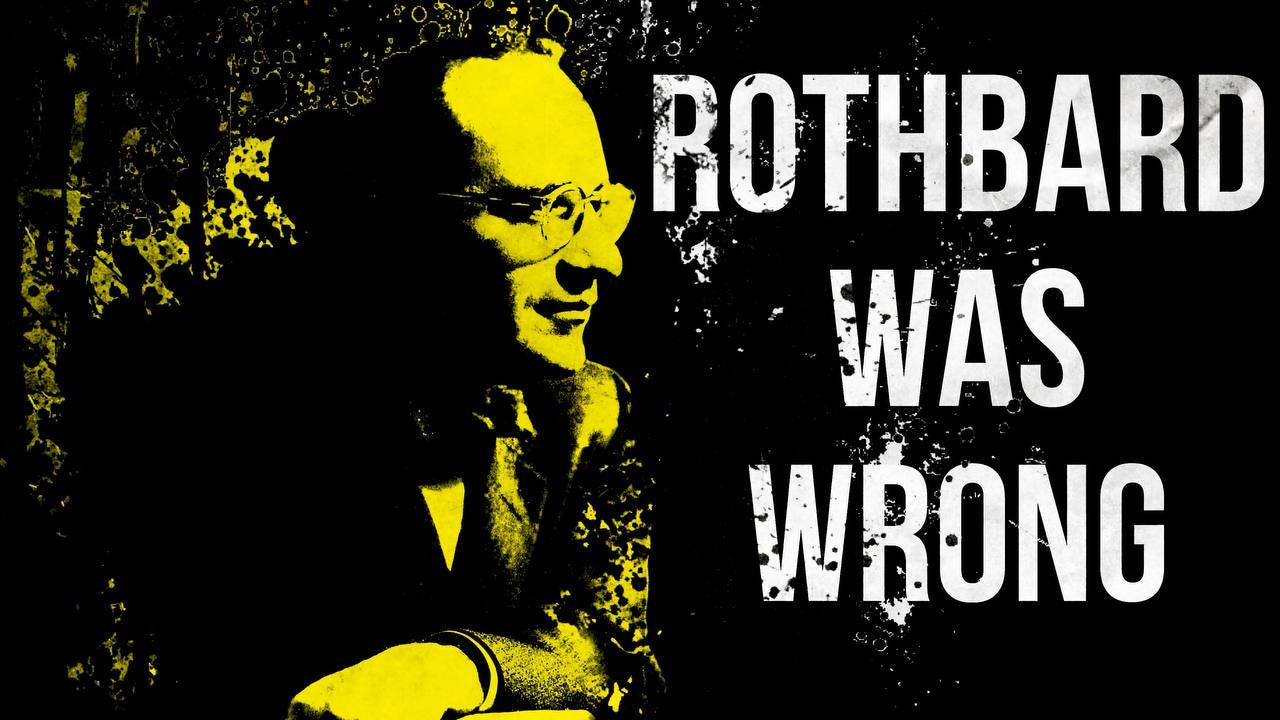
This article smashes Murray Rothbard’s libertarian house of cards — self-ownership, homesteading, the Non-Aggression Principle (NAP), universal rights, and negative liberty. Rothbard, a radical economist and anarcho-capitalist guru, hawked these as a moral silver bullet to torch governments, collective duties, and big institutions, dangling a vision of pure freedom too slick to trust. Spoiler: it’s a mirage. His system’s a mess of circular reasoning, word games, and fantasies that would gut civilization if unleashed. Each piece sparkles until you see it’s a sham — too brittle for real ethics, a working society, or a life worth living. I’m tearing it apart, crack by crack, then building back with Natural Law: a hard-edged, practical frame rooted in survival, merit, order, and give-and-take — not some relic, but a lifeline. This isn’t just a takedown; it’s a blueprint for something that holds up.
Rothbard (1926–1995) was a Bronx-born brainiac, son of Jewish immigrants, with a BA in math and a PhD in economics from Columbia. Mentored by Austrian School titan Ludwig von Mises, he taught at Brooklyn Poly and UNLV, co-founded the Mises Institute, and churned out heavyweights like Man, Economy, and State, The Ethics of Liberty, and For a New Liberty. His pitch: privatize everything — courts, cops, all of it — and let self-ownership rule. But his shine dims with racist undertones — praising The Bell Curve’s racialist science, cozying up to David Duke in the ’90s, and musing about “voluntary” segregation.
On Self-Ownership
He starts with this:
“Each man owns his own person. This is the starting point for all libertarian thought.”
— Murray Rothbard, The Ethics of Liberty
Rothbard’s whole deal rests on one big claim: you own yourself, like your body’s your personal turf. He calls this a “natural axiom” and says it’s the root of everything — property rights, not hitting people, living without a government. It’s not just one idea; it’s the bedrock. But when you scratch it, it’s not bedrock — it’s a scam. I’m going to rip it apart five ways: how it’s just words, how the logic loops, how it’s in the wrong category, how it’s not universal, and how it flops in real life.
First, “self-ownership” sounds heavy, but it’s a trick. Ownership means you control something separate — like a car or a plot of land. Saying “I own myself” is like saying “I am me” — it’s a loop that doesn’t tell you anything new. Ownership only works when it’s about something outside you, backed by laws or people agreeing it’s yours. Think about it: a contract can’t sign itself, a law can’t enforce itself — same deal here. Rothbard’s “axiom” is a slick sentence pretending to be profound, but it’s empty. It’s like calling a shadow a building — it’s got no substance to hold anything up.
Next, the logic’s a mess. Rothbard says you can’t hurt people because it violates their self-ownership, and self-ownership matters because you can’t hurt people. That’s a circle, it just spins back on itself without proving why it’s true. He builds property rights and the NAP on this, but it’s like a house of cards: why does self-ownership give you exclusive rights? Why should it override someone else’s needs or claims? He doesn’t say — just keeps pointing to the same shaky start. A real axiom should lead somewhere, like a map with a destination. This one’s a hamster wheel — no exit, no proof, just motion.
Then there’s the category mix-up. Ownership isn’t some natural fact about people — it’s a human-made rule, tied to society. Rothbard acts like it’s baked into us, but that’s bunk. Historically, ownership’s about control over something else — land, goods, even slaves — recognized by laws or deals. You can possess yourself, sure, or someone can possess you, but saying you “own” yourself needs a whole system behind it — courts, norms, enforcement. Can you sell yourself into slavery? If not, it’s not ownership — there’s no transfer. If you can, that’s a dark twist that unravels his whole “freedom” pitch. He’s smuggling a legal idea into your skin and calling it nature, but it’s a mismatch that collapses under its own weight.
Plus, self-ownership isn’t universal — it’s a Western quirk. It popped up during the Enlightenment, when folks got obsessed with individual rights and property, a pushback against kings and feudal lords. But go to older cultures — tribes, religions, indigenous groups — and your body’s not just “yours.” It’s part of family, rituals, the group, or gods. Even in the West, it’s not some eternal truth — it’s a late bloomer, tied to specific fights. Science agrees: we’re not born owning ourselves. Babies don’t call shots, crazy folks don’t steer straight, and trauma can strip control. Rothbard’s acting like his idea fits everyone, everywhere, but it’s a slice of history he’s stretched into a lie. He’s ignoring how humans actually grow and live.
And in real life? It’s a trainwreck. If self-ownership’s real, you can’t stop a kid from running into traffic — that’s “aggression.” You can’t help a suicidal person or treat someone insane — that’s messing with their rights. Rothbard’s rule is brutal: leave them alone or you’re wrong. But life’s not that cut-and-dry. Kids need protection, sick people need help — sometimes you’ve got to step in. His idea can’t handle that — no room for nuance, no way to weigh tough calls. What if a kid’s too young to know better? What if someone’s delusion is temporary? It’s silent. It’s a catchy tagline, not a tool for living.
“The individual is not a self-sufficient whole, but part of a larger order.”
— Aristotle, Politics
Natural Law steps up with something real. It starts with conatus — the basic drive to keep going that every living thing has — and says freedom isn’t a freebie. You earn it by growing, pitching in, and fitting into a bigger picture. It’s not some “I own me” sticker you slap on; it’s a reward for discipline, helping out, and being part of a moral setup. Rothbard’s version leaves you floating, a lone island with no ties. Natural Law says autonomy’s not a possession — it’s something you build through hard work and recognition, protected because it’s useful, not untouchable. It’s liberty with roots, not a ghost wandering free.
“Law is a rule and measure of acts, whereby man is induced to act or is restrained from acting.”
— St. Thomas Aquinas, Summa Theologica
So, self-ownership’s a dud. It’s a word trick posing as truth, a logic loop with no way out, a legal idea stuck in the wrong spot, a narrow belief pushed as universal, and a disaster when you try it. It doesn’t kick off ethics — it buries them in quicksand. Natural Law starts with what’s actually there — how people form, what society demands — and builds a frame that holds.
The “First Come, First Served” Fantasy of Homesteading
Rothbard’s next piece is how you get property: homesteading. You take something from nature — like land — work on it a little, and it’s yours forever. No one else gets a vote, no need to keep it useful or share — just be first and it’s locked in. He says this is the root of property rights, transfers, and his whole legal vision, a clean way to sort out who owns what without a government. It sounds fair, like a pioneer story, but it’s a fairy tale that falls apart when you push on it.
He borrows this from John Locke, who said you can claim land by working it — but only if you leave “enough, and as good” for others. That was Locke’s safety net, keeping it moral so no one gets screwed. Rothbard rips that out. To him, if you’re first, you win — doesn’t matter who’s left with nothing. One quick move — like fencing a field or digging a hole — makes it yours for good, no questions. Locke wanted a trust; Rothbard turns it into a heist, calling it justice when it’s really just taking. He’s not tweaking Locke — he’s flipping him upside down, swapping fairness for first dibs.
Then there’s this “mixing labor” line. He says you mix your work with nature — like soil or trees — and that makes it yours. Sounds poetic, but it’s nonsense. Work isn’t some magic sauce you pour in — it’s just effort. How much is enough? One swing of an axe? One seed? He doesn’t say. Does it have to be big, like farming a field, or small, like kicking a rock? No clue. And once you’ve got it, you can let it rot — useless, empty, hoarded — and it’s still yours. No need to make it productive or care for it. Property’s supposed to help people live, not just be a trophy for touching it first. It’s a pretty phrase, not a real rule — it explains nothing and sets no limits.
Rothbard also mixes up possession and ownership. He thinks if you grab something, it’s morally yours — forever, no debate. But that’s not how it works. Possession’s just holding stuff; ownership’s a deal with rules, recognized by others, sorting out fights and duties. Without that, it’s whoever’s toughest or sneakiest — might makes right. His idea can’t tell a legit claim from a bandit snatching loot — it’s all about who got there first, not what’s fair. Imagine two guys fighting over a field: one planted it, the other just walked by first. Rothbard picks the walker because “first.” That’s not ethics; it’s a squatter’s excuse.
History laughs at this. No society ever built property like Rothbard imagines. Look at Rome’s laws, Hammurabi’s codes, Anglo-Saxon customs — property came from groups, not lone rangers. It was about legal setups like Roman dominium, shared habits like tribal grazing, or rituals tying land to gods or ancestors. Even in early days, your claim leaned on family, tribe, or a ruler — not just you saying “mine.” Rothbard’s version is a fantasy about solo guys in a timeless wild, staking claims with no past or rules. It’s never happened because it can’t — people don’t live like that. Property’s always been a group project, not a one-man show.
And it’s got no brakes. If I plant one seed, do I own the whole valley? Dig one hole — own the airspace, minerals, everything? He doesn’t cap it. Plus, once it’s yours, you can pass it down or hoard it forever — no one can touch it, even if you do nothing with it. That’s a recipe for a few people to lock up everything — big estates, absentee landlords, speculators — while others get shut out. There’s no way to take it back if it’s wasted, no fix for the mess. Imagine one guy claiming a river because he dipped a toe in — everyone downstream starves, and Rothbard shrugs. It’s not freedom; it’s a rigged game that freezes power in place.
Natural Law does it right. Property isn’t about who touched it first — it’s about who makes it work. It’s a reward for doing something valuable — growing food, building homes — and you keep it by taking care of it. It’s not a solo prize; it’s a deal with the group: earn it through real work, maintain it with responsibility, or it goes back to the pool. Courts and customs back it up, not just your say-so. If you let it rot or hoard it, someone else can step in — it’s alive, not a fossil. This lets unused land revert, ties inheritance to effort, watches over big resources, and protects people who actually contribute. It’s property as a team effort, not a lone wolf’s loot.
So, homesteading’s a bust. It’s a fake story that twists Locke, a vague slogan pretending to be a rule, a grab dressed as fairness, and a plan that’s never matched reality. It doesn’t free people — it hands the world to the fastest hands. Natural Law ties property to work and order, not just showing up first.
The Non-Aggression Principle Does Nothing
Of all Rothbard’s ideas, the NAP — is the one his fans scream loudest about. It’s simple: no one can start a fight or scam someone’s body or property. That’s it. From there, he says governments are evil, taxes are theft, and laws should only come from deals you sign up for. People love it — it’s short, feels moral, and sounds like common sense. But when you peel it back, it’s a flimsy cover for his other shaky ideas, not a real fix.
The NAP’s first problem is it’s glued to Rothbard’s property rules. Aggression’s only bad if it hits someone or their stuff — but what counts as “their stuff” comes from homesteading. If that’s junk (and it is), the NAP collapses too. It’s not its own thing; it’s a prop for a busted setup. If my property claim’s fake, defending it’s aggression; if yours is, fighting back’s fine. The whole rule hangs on deciding what’s legit ownership, but Rothbard’s version — first guy wins — is a mess. Without a solid base, the NAP’s just a loud noise with no weight. It’s not protecting anything real — it’s shielding a cracked foundation.
It’s also way too simple for the real world. The NAP says: start force, you’re wrong; don’t, you’re good. That’s the whole game. But life’s not that neat. If I bump you by accident, is that the same as punching you on purpose? If the government taxes me for a war, is that a stickup? If a parent spanks a kid, is that abuse? The NAP doesn’t care about why stuff happens, how big it is, or what’s driving it — it’s all “aggression” or nothing. A tax for defense might save lives; a robber just takes. The NAP sees no difference. It’s a blunt hammer when you need a fine tool — real problems need judgment, not a flip switch. It flattens everything into a cartoon.
Then there’s the kicker: it needs stuff Rothbard hates. To make the NAP work, you need courts to sort out who’s wrong, cops to stop fights, laws to define what’s fair, and habits to keep people in line. But he says all that’s coercion — evil government garbage. He wants private guards and handshake deals instead. Thing is, those only work if there’s already a society with trust, rules, and muscle — stuff he wants to burn down. Imagine a fight over a field: who decides? Private cops? What if they disagree? No shared court, no dice. The NAP’s a leech, living off the order it claims to replace — it’s got no legs of its own.
Worse, it’s all “no” with no “yes.” The NAP says: don’t hit, don’t steal. Cool — but then what? Should you help people? Build something? Be a good neighbor? It’s got no answers — no goals, no push to do right. You can hoard stuff, trick folks without “force,” or ignore everyone, and the NAP’s fine with it as long as you don’t swing first. It’s got no vision for a good life, no way to grow character or solve big fights. A guy could sit on a pile of food while others starve — no aggression, no problem. That’s not ethics; it’s a blank check for doing squat. Real morals point you somewhere, not just away.
Rothbard acts like all force is bad, but that’s dead wrong. Sometimes force is good — a mom grabs her kid from traffic, a judge jails a killer, a leader taxes for bridges. Natural Law gets this: force isn’t the issue — it’s about why it’s used, how much, and who’s in charge. Is it fair to the crime? Does it balance give-and-take? Is it from someone legit? A parent’s smack might teach; a tyrant’s whip just breaks. Rothbard’s “no force ever” dodge skips the hard calls — Natural Law steps up. Refusing force when it’s needed isn’t noble; it’s weak.
Natural Law doesn’t dodge force — it aims it right. It starts with what people are (flawed, striving), what they’re for (living well together), and how they do it (rules and roles). Aggression’s fine if it’s got a good reason, follows a plan, and keeps things steady — not wild or random. It’s not about banning force; it’s about using it for justice. The NAP just yells “stop” and hopes for the best; Natural Law says “make it work” and builds a world worth having. Force isn’t evil — it’s a tool when it’s got law, virtue, and legit power behind it.
So, the NAP’s a flop. It’s stuck to a broken property scam, too simple for real messes, leans on systems it hates, and gives you no purpose. It doesn’t free you — it traps you in a hollow catchphrase. Natural Law gives you justice with muscle, not just a “keep out” sign.
Universal Rights and Moral Egalitarianism
Rothbard brags about rejecting equality — hates redistribution, outcome leveling, all that stuff. But then he sneaks it in through the back door with universal rights. He says everyone — kids, adults, crooks, saints — gets the same deal: self-ownership, homesteading rights, NAP protection. These aren’t earned or tied to anything — they’re automatic, pre-set, equal for all. That’s not dodging equality; it’s embracing it hard, just in a sneaky way. He swaps equal stuff for equal rights, and it’s a bigger mess than he admits.
He treats rights like magic gifts — everyone’s got them, no proof needed, no questions asked. But rights aren’t fairy dust. They need a source (who gives them?), a point (what’s the goal?), and a way to back them up (who enforces?). Rothbard’s got none of that — no issuer, no purpose, no muscle. He just says they’re “natural” and expects everyone to nod. It’s like handing out blank checks with no bank — looks nice, but they bounce. Rights without a backbone aren’t rights; they’re wishes.
And who gets these rights? Everyone, no matter what. The kid who can’t talk, the crook who robs, the wise guy who builds, the leech who takes — they’re all equal in Rothbard’s book. That’s nuts. A kid doesn’t get what rights mean — can’t use them. A crook spits on them but keeps them anyway. A fool can’t handle them, and a parasite twists them. Why should they all get the same shot? Rights should match what you can do, how you act, where you stand — not a one-size-fits-all handout. Rothbard’s blind to that — it’s fairness gone stupid.
Try using these rights, and it gets worse. If you can’t understand them — like a baby or a nutcase — how do you claim them? If you can’t act on them — like someone too wrecked to function — what good are they? Rights are for doing stuff, not just having a pulse. And they’re not solo — they need give-and-take. You get rights by playing ball with others, not just sitting there. Rothbard hands them out like candy, no strings attached — no responsibility, no contribution. It’s a ghost town of rights — nobody’s home to use them right.
He also ignores how different people are. We’re not all the same — some are sharper, kinder, tougher, wiser; others aren’t. That’s not a bug; it’s a feature. Every society that’s lasted plays to that — elders lead, good folks get trust, slackers get less. Rothbard flattens it all — everyone’s a king in their own head, equal no matter what. That kills the setup that makes rights work. If a lazy jerk gets the same as a hard worker, why bother? It’s not freedom; it’s a free-for-all where nothing grows.
This equal-rights thing isn’t just dumb — it’s dangerous. If everyone’s the same morally, no matter what they do, you can’t have leaders, rewards, or growth. Telling a boss from a bully? Nope — both “aggress.” Honoring the wise over the dumb? Nope — equal. It’s a flatline — no up, no down, just mush. Rothbard’s not fighting tyranny here; he’s setting it up by trashing the differences that keep order alive.
Natural Law fixes this. Rights aren’t a birth bonus — they’re earned. You get them by showing you can handle them, helping out, taking on duties. It’s not equal — it’s layered. A kid doesn’t get what a grown-up does; a crook loses what a worker keeps. It’s not cruel — it’s fair by merit. You rise by proving it, fall by blowing it. That’s order, not chaos — rights tied to what you bring, not what you breathe.
Rothbard’s universal rights are a sham. He says he hates equality but builds on it, hands out rights with no basis, ignores who people are, and makes them useless. Justice isn’t flat — it’s built, earned, stacked. Natural Law sees that and gives you liberty that fits, not a fairy tale for all.
Equality and Its Semantic Bankruptcy
Rothbard’s crew loves to bash equality — hates forced sameness, loves “equal rights.” But the way they use “equality” is a mess — it’s a word that flips meaning whenever it suits them. They say it’s just about fair rules, but it sneaks into their morals and muddies everything. I’m going to unpack how this word’s a con in their hands.
Equality’s a slippery thing — means different stuff to different folks. Fair laws? Same worth? Equal stuff? Same shot? Same skills? Rothbard says he’s only about equal rules — no handouts. But his system leans on everyone having the same moral rights and abilities, no matter what. That’s not just fair play — it’s a hidden belief that we’re all equal deep down. He trashes equality out loud but clings to it quietly — a contradiction he can’t dodge.
Take “equal rights.” Sounds noble — until you ask: equal how? Same number of rights? Same reach? Same impact? Same root? None of it holds up. If I’ve got rights but can’t use them — like a kid or a wreck — what’s “equal” about that? If they don’t hit the same — like a rich guy versus a broke one — where’s the fairness? He assumes we’re all on the same moral page, but we’re not. It’s a slogan, not a rule — it falls apart when you push it.
His language flattens everything too. Everyone’s a “self-owner,” “sovereign,” “entitled” — no difference between the good, the bad, the young, the old. Words should split the wise from the dumb, the crook from the honest — but Rothbard’s don’t. It’s like calling every car a Ferrari — sounds nice, but it’s blind to reality. He’s scared to rank people, so his words turn to mush — equal but meaningless.
It’s a game too. They use “equality” to guard their rights—“I’m as good as you, so hands off.” But if you ask them to chip in — taxes, duties — they say, “Nah, equality stops there.” It’s a shield when they want it, a ghost when they don’t. That’s not reasoning; it’s a hustle — equality for me, not for thee. It’s a one-way street pretending to be fair.
When a word gets twisted like that, it dies. “Equality” in Rothbard’s world isn’t a clear idea — it’s a cheer, a flag to wave. It doesn’t mean anything solid — just signals “I’m right.” That kills the system — rights float, duties vanish, justice fades. It’s a word so hollow it drags everything down with it.
Natural Law cuts through this. Equality’s not a starting line — it’s a tool. Laws match order, not sameness; worth comes from actions, not birth; chances tie to effort, not handouts. Rights aren’t equal — they’re scaled to what you prove. Words here match reality — wise beats foolish, good beats bad, leader beats follower. It’s not harsh — it’s true, built to hold up.
Rothbard’s “equality” is a wreck. He uses it to prop up rights, ditches it for duties, flattens words until they’re useless. It’s not liberty — it’s a word salad that hides the truth. Natural Law gives you language that fits life — clear, tough, real.
The Slide to Chaos
Rothbard puts liberty front and center — freedom’s the top prize, and it means no one can force you. No rules, no bosses, unless you say yes. It’s not just a goal; it’s his holy grail. But this liberty’s a loner — cut off from history, rules, or morals. It’s a dream that turns sour fast, and here’s why.
He assumes we’re all born free — rational, in charge, complete. Kids, adults, nuts, geniuses — all ready to run their lives. But that’s a lie. Babies don’t decide; the mad don’t steer; most of us start raw and need shaping. Freedom’s not a gift — it’s a grind, built through discipline, learning, fitting in. Rothbard puts the finish line at the start — calls it natural when it’s fiction.
His liberty’s just “leave me alone” — no force, no scams. Nice, but it’s empty. It doesn’t tell you what to do — help, build, grow? Nope. It’s a blank slate — no direction, no glue for people. A guy can hoard while others sink, and it’s “free.” That’s not liberty; it’s a void where nothing matters but staying untouched. It’s freedom from, not for — and that’s a dead end.
Without rules, it’s not liberty — it’s wild. The guy who grabs and the guy who gives? Same rights. The crook and the worker? Equal shield. No force means no judgment — everything’s okay if it’s “voluntary.” That’s not a society; it’s a free-for-all where wants rule and good’s just noise. Rothbard’s liberty doesn’t lift you — it cuts you loose ’til you’re just appetite.
And it trashes what liberty needs — courts, laws, leaders. He says they’re coercion — out they go. Private deals and guards instead? Fine, but those need trust, shared rules, some backbone — stuff he axes. No common law, no justice — just hired guns and contracts. That’s not freedom; it’s a breakup party for order, dressed as rights.
Liberty’s not a starting point — it’s a prize. You get it by learning, joining, giving back — not by dodging. Rothbard flips that — starts with freedom, skips the work. That’s not liberty; it’s a kid’s tantrum, wanting all without earning it. True freedom comes after order, not instead of it.
Natural Law nails this. Liberty’s not a given — it’s a reward for proving you can handle it, keeping duties, bowing to legit rules, building stability. It’s not flat — it grows with you, tied to responsibility. Rothbard rips order for liberty; Natural Law grows liberty from order. Freedom without walls isn’t free — it’s lost.
Rothbard’s liberty’s a bust. It assumes we’re all set from birth, demands rights with no duties, kills order for “justice,” and blesses chaos as freedom. It’s not philosophy — it’s a wrecking crew. Natural Law gives you liberty that lasts — built, not wished.
Rothbardian Ethics Is Civilizational Suicide
Rothbard doesn’t pitch this as a side gig — he says it’s the full deal, a moral system to run societies, ditch states, ban force, and go all-voluntary. He’s got self-ownership as the spark, homesteading as the property key, NAP as the rule, equal rights for all — a complete package to replace laws, culture, governance. He thinks it’s the peak of moral evolution. It’s not — it’s a blueprint to crash civilization.
Look at his pieces: self-ownership’s a word scam, homesteading’s a grab myth, NAP’s a hollow shield, equal rights a fake fairness, liberty a rule-free mess. Each one’s weak — together, they’re a sandcastle. They don’t hold up ethics or society — they’re scraps of old ideas, puffed up and glued into a dream that can’t stand.
His system’s all about “no” — no harm, no force, no nothing. But it’s got no “yes” — no good, no duty, no glue. That’s not stability; it’s a slow rot. A world with no shared goals, no ranks, no lasting setups, no push to be better? That’s not a society; it’s a jungle with property lines and guns. Rothbard’s not saving civilization — he’s gutting it for purity’s sake.
Society needs stuff he hates: laws above wants, ranks for fairness, traditions for memory, setups for teamwork, duties for ties. He calls laws force, ranks tyranny, traditions nonsense, setups monopolies, duties chains. What’s left? Deals, not laws; likes, not morals; threats, not authority; private fists, not shared peace. That’s not freedom’s peak — it’s a step back to caves, just with fancier toys.
He flips how morals work too. Normal order goes: what are we, what’s our point, what do we do? Rothbard starts with “don’t hit,” skips the point, assumes “I own me” with no proof. It’s backwards — rules without roots, no aim, no grip on life. It can’t build a good world because it doesn’t know what “good” is or what humans need. It’s a teardown, not a build-up.
Natural Law starts right: humans need shaping, liberty’s earned, rights fit your role, property’s work, laws are must-haves, ranks make sense. It grows people first, then ethics, then society — liberty’s tied to rules, justice has teeth, morals match reality. It’s not a free-for-all — it’s a frame that works.
Rothbard’s ethics don’t free — they break. Laws turn to deals, society to contracts, morals to “no,” civilization to ego islands. It’s not human — it’s a market with no soul. Natural Law rebuilds with duty, order, and a point — stuff worth fighting for.
Concisions
After smashing Rothbard’s system — its axioms, logic, words, morals — we’re not just at a flop. It’s worse: it’s an anti-ethic, a fake moral shell that kills real reasoning. It’s not a bad try — it’s a dodge, built to sound good while trashing what ethics needs.
It’s all about “me” — I own myself, I grab first, I do what I want. No need to give, prove, or grow — just guard your turf. Ethics should push good, aim for fair, tame wants, guide with rules. Rothbard swaps that for deals, defense, “leave me be” — and calls it moral. It’s not — it’s entitlement with a halo.
The endgame? Ego rules. Kid, tyrant, worker, leech — all get the same pass. It’s not about becoming better — just doing what you can. That’s not ethics; it’s a blank where the soul should be. He skips the big question — what should we be? — for “what can I get away with?”
It’s all “no” — no good, no ranks, no nature’s gaps, no legit force, no liberty’s roots. Instead of growing, it insulates — lets you rot as long as you’re “free.” That’s not a society — it’s a scatter of wills, no harmony, no give, no whole.
Civilization needs the opposite: laws to check greed, authority to guide, traditions to hold wisdom, ranks to lift the best, duties to link rights, virtue to aim high. These aren’t extras — they’re the bones of life together. Rothbard snaps them for a ghost town.
Strip it bare, and it’s nihilism with a moral mask — no shared good, no real force, no soul’s path, just “mine” and “don’t.” It’s not liberty — it’s a dodge. It’s not justice — it’s a sidestep. It’s not society — it’s a stall.
Natural Law pulls us back — rights you earn, liberty you shape, force for order, ranks that fit, civilization from restraint. It’s not a fairy tale — it’s what works. Rothbard begs for freedom first; Natural Law demands you’re fit for it. He splits us apart; it ties us to duty. He skips the end; it starts there.
Rothbard’s world is a mirage — order without power, peace without force, life without growth. It’s a spell to break. We don’t need more loose rights — we need tight duties. Not “freedom from” — but freedom for something big. Not ego — but a frame that lasts. What’s man for? Natural Law’s got the answer; Rothbard never asked.


I agree with most of the criticism here, however regarding the point on ownership, I have heard the Austrians say that they distinguish between possession and ownership (people like Liquid Zulu for instance). The main points which could be used as counter here is:
1.) Ownership refers to an exclusive legal and ethical right to utilise scarce resources, rather than physically owning something.
2.) Posession refers to physical ownership, whereby, you would actually assert a physical claim to the good itself. According to Zulu, Possession appears in contradiction to Ownership by the sheer fact that Possession violates the NAP, and allows people to forcefully take possession over a prior owners homesteaders property.
TLDR: As per Ancap theory, Ownership is the bed rock of property rights and claims rather than possession, or “might makes right” principle. (Read this: Source: LiquidZulu | Philosophy Distilledhttps://share.google/duqyQ6wIT4eteADGX)
I think, my criticism of this theory is that it is too Brutish, and often time could end up enacting the opposite purpose, by justifying aggression. For instance, if we take their arbitrary idea of the ‘degree of appropriation’, would that mean that the Zionist state is justified in taking over Palestine, and expelling its inhabitants. As after all as per ancap theory (especially that of Hans Hermann Hoppe), since there is no sufficient (arbitrary subjective measure) for the degree of appropriation, then it is justified to kick out the Palestinians, as they are not a owner of the land, by virtue of not really homesteading the land. Of course, I think that this leads to a paradoxical situation for Libertarians who rightly call out the disgusting Zionist state for its crime against the Palestinian people, somehow by virtue of this theory of property ownership actually abett Zionism (as shown by Hoppe’s now nemesis Walter Block).