Advertisement
Advertisement

World

Hostilities flare again in Iran war, talks at a stalemate

Iranian missile attacks on Bahrain, Kuwait and other regional targets were either thwarted or failed, says the US military.

Hostilities flare again in Iran war, talks at a stalemate

Smoke billows from southern Lebanon, following Israeli strikes, as seen from Nabatieh, Lebanon, on Jun 2, 2026. (Photo: Reuters/Stringer)

03 Jun 2026 08:37AM (Updated: 03 Jun 2026 08:42AM)
Read a summary of this article on FAST.
FAST

DUBAI: Gulf hostilities flared anew on Wednesday (Jun 3), with the US military saying Iranian missile attacks on Bahrain, Kuwait and other regional targets were either thwarted or failed as diplomacy between Washington and Tehran showed little progress.

Two Iranian missiles shot at Kuwait fell short or broke apart in flight, several ballistic missiles aimed at regional targets failed, and three missiles heading for Bahrain were intercepted, US Central Command said.

Since the conflict began in late February, Iran has repeatedly attacked targets in Bahrain and Kuwait, where US military bases are located.

Central Command said US forces also downed Iranian drones targeting civilian shipping in regional waters and carried out strikes on Qeshm Island near the Strait of Hormuz in response to the attempted attacks by Iran.

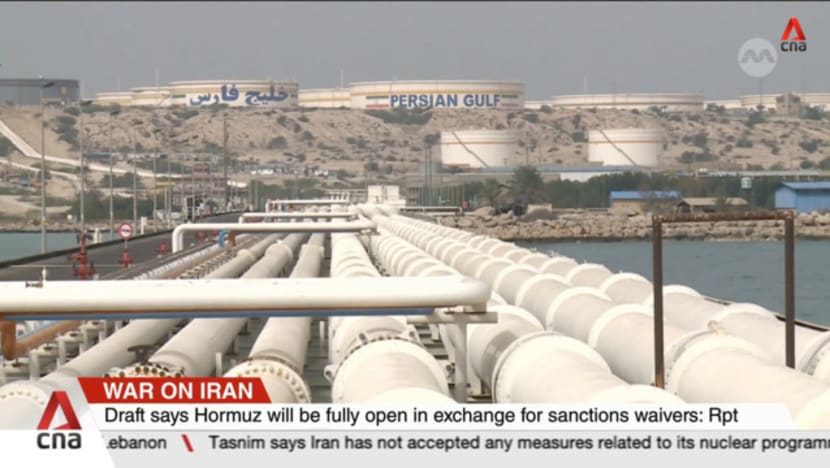
This was the latest of several such flare-ups. More than three months after the US and Israel launched strikes against Iran, the conflict is stuck in a stalemate, with a shaky ceasefire in place while the Strait of Hormuz remains largely shut to maritime traffic.

Iran and the United States said last week that they had reached a tentative initial agreement to halt the war. But the two sides have yet to sign off on the deal.

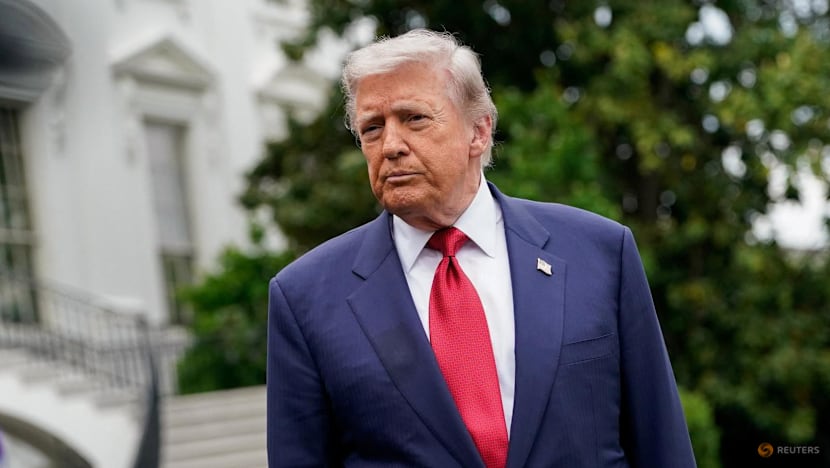
Iranian media reported that Tehran has not communicated with Washington for several days, but US President Donald Trump said negotiations have not stopped.

"The conversations between us have been going on continuously, including four days ago, three days ago, two days ago, one day ago, and today," he said in a social media post.

DISCUSSIONS ON NUCLEAR PROGRAMME

Since mid-March, Trump has repeatedly said he is close to a deal that would end the fighting and allow negotiators to tackle thorny issues, including the future of Iran's nuclear programme.

Trump has said stopping Iran from acquiring nuclear weapons is his top priority. Iran denies it is developing a nuclear bomb and says its atomic programme is for peaceful purposes.

Tehran is seeking access to billions of dollars in oil revenues, waivers on crude exports, a lifting of a US blockade on its ports and continued leverage over the strait.

US Secretary of State Marco Rubio told lawmakers on Tuesday that the US would agree to sanctions relief only if Iran agrees to give up its nuclear activity.

Rubio declared, "The war is over," during a sharp exchange with Democratic Senator Cory Booker of New Jersey, who disagreed.

ISRAEL KEEPS UP STRIKES IN LEBANON

The war that began on Feb 28 has killed thousands of people, mainly in Iran and Lebanon. It ​has caused ​global pain ⁠by pushing up energy prices since Iran effectively closed the Strait of Hormuz, which previously carried about a fifth of global supplies of oil and liquefied natural gas.

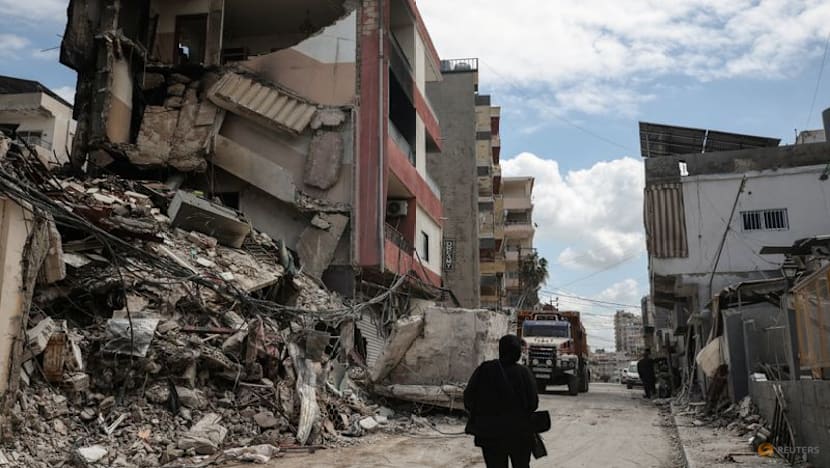
It also triggered the latest round of conflict between Israel and Lebanese militant group Hezbollah, with Israel pursuing its deepest incursion into Lebanon in 25 years.

On Tuesday, Israel kept up strikes on a string of towns in southern Lebanon, Lebanese security sources said, despite a US-mediated partial ceasefire announced on Monday.

The announcement failed to reassure many Lebanese, 1.2 million of whom have been displaced, and an Israeli drone over Beirut kept residents on edge on Tuesday.

"Every time we return to our homes, there is a warning for us to be displaced again," said Faten Al Chehime, who fled to a displacement camp from her home in Beirut's southern suburbs on Monday, only two weeks after returning there.

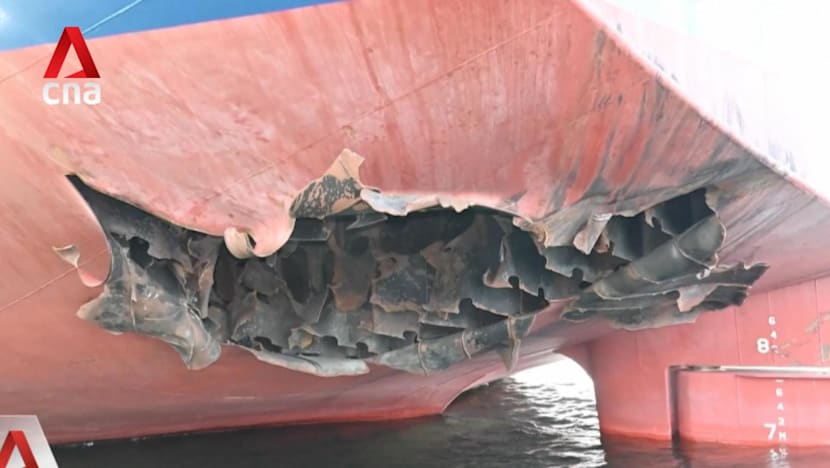
At sea, the world's largest shipping group MSC said on Tuesday that one of its vessels was struck by two projectiles while in Iraq's Umm Qasr port the previous day.

Iran's Revolutionary Guards said they carried out the attack in retaliation for a US attack on an Iranian vessel in the Gulf of Oman.

The wide-reaching impact of the crisis was laid bare by UN children's agency UNICEF, which said surging transport costs and supply chain disruptions were hindering life-saving aid for Gaza, Lebanon, Democratic Republic of Congo, Mali, Somalia, South Sudan, Nigeria and elsewhere.

Source: Reuters/rk

Sign up for our newsletters

Get our pick of top stories and thought-provoking articles in your inbox

Subscribe here
Inbox
FAST
Advertisement

World

US fires Hellfire missile at tanker heading towards Iran

The Botswana-flagged M/T Lexie is the sixth ship that the US military has disabled since it started its blockade of Iran on Apr 13.

US fires Hellfire missile at tanker heading towards Iran

A screengrab from a video showing a Hellfire missile striking the M/T Lexie's engine room on Jun 2, 2026. (Image: X/United States Central Command)

03 Jun 2026 07:04AM (Updated: 03 Jun 2026 07:27AM)
Read a summary of this article on FAST.
FAST

The US military fired a Hellfire missile at a tanker heading towards Iran on Tuesday (Jun 2) as part of a blockade being imposed by President Donald Trump, who is pressing Tehran to negotiate a peace agreement on his terms.

The US military's Central Command posted a video showing the missile strike the tanker and said it targeted the Botswana-flagged M/T Lexie's engine room, disabling it.

"The ship's crew ignored repeated warnings, failing to comply with directions from US forces multiple times over a 24-hour period," Central Command said in a statement.

"A US aircraft ultimately disabled the vessel by firing a Hellfire missile into the ship’s engine room, preventing the tanker from reaching Iran."

The Lexie is the sixth ship that the US military has disabled since it started its blockade of Iran on Apr 13. The US military says it has also redirected 122 vessels that were seeking to enter or exit Iranian ports so far.

Source: Reuters/rk

Sign up for our newsletters

Get our pick of top stories and thought-provoking articles in your inbox

Subscribe here
Inbox
FAST
Advertisement

Commentary

Commentary: The biggest losers from Trump's tariffs? Americans

In addition to raising prices, companies also reined in labour costs to cover the expense of tariffs, says Robert Burgess for Bloomberg Opinion.

Commentary: The biggest losers from Trump's tariffs? Americans

FILE - President Donald Trump speaks during an event to announce new tariffs in the Rose Garden at the White House on April 2, 2025, in Washington. (AP Photo/Mark Schiefelbein, File)

03 Jun 2026 05:59AM
Read a summary of this article on FAST.
FAST

NEW YORK: It’s widely understood that the Trump administration’s ill-conceived decision back in April 2025 to impose broad “reciprocal” tariffs on US imports from around the world, even on an island inhabited only by penguins, has made the goods that Americans buy more costly. 

Need new dishes? Those prices were up 15.4 per cent in April from a year earlier. A men’s shirt? Up 7.7 per cent. Some jewellery for a significant other? Up 16.1 per cent. Accessories for your personal computer? Up 13.9 per cent.

Now that we have a year’s worth of data to analyse, we’re finding that the levies have had the opposite effect on the wages of US workers, suppressing earnings growth and helping to explain why, more than ever, Americans say this economy isn’t working for them. It’s also why President Donald Trump’s approval rating has steadily fallen to below 40 per cent from 52 per cent at the start of his second term as measured by Real Clear Politics’ average of polls.

It’s hard to conclude anything other than Americans are the number 1 and number 2 biggest losers from a trade policy that few say makes sense.

NO COHERENT PLAN

CNA Games
Show More
Show Less

Trump’s “Liberation Day” tariffs were never based on a coherent plan. 

You may recall that he put forward three primary objectives of the levies. The first was raising tax revenue to help close the federal budget deficit and pay for an extension of the Tax Cuts and Jobs Act of 2017 that was due to expire at the end of last year. The second was to bring back to the US manufacturing that had migrated overseas, igniting a new “Golden Age” of America. The third was to achieve foreign policy goals.

Each of those objectives would be hard enough to achieve on their own, but collectively, they’ve proven to be an impossible trinity. 

The bipartisan Congressional Budget Office is projecting 6 per cent deficits on average for the coming decade. Industrial production has expanded just 0.13 per cent per month on average since the start of 2025, no different than in the decade prior to the COVID-19 pandemic.

As for foreign policy goals, the Iran quagmire shows the US is scoreless as the rest of the world diversifies away from America, whose share of global trade continues to shrink.

THE EFFECT OF TARRIFS

The most noticeable effect of tariffs, at least for consumers, has been on the prices of goods. 

Despite Trump’s insistence that tariffs are paid by other countries or non-US companies, taxes on imports are paid either by the importer or by an intermediary such as a customs broker acting on the importer’s behalf. Those companies must then decide whether to absorb the cost of the tariffs or pass some or most of it on to their customers, which adds to inflationary pressures. A measure of inflation favoured by the Federal Reserve and which zeroes in on the cost of goods by stripping out food and energy has surged since the start of 2025 after stabilising the prior two years.

But that’s only part of the story. Evidence is mounting that in addition to raising prices, companies also reined in labour costs to cover the expense of tariffs. Morgan Stanley calculates that unit labour costs at non-financial companies were flat in the year since Liberation Day. In the four quarters ending Mar 31, “firms covered higher tariff expenses by controlling labour costs and by pushing output prices higher”, economists including Michael Gapen wrote in a research note dated May 28.

The data confirm their conclusion. The consumer price index rose 3.81 per cent in April from a year earlier, exceeding the 3.4 per cent increase in the Employment Cost Index over the first three months of the year for the first time since early 2023. In simple terms, earnings growth is no longer outpacing inflation.

This is not some esoteric economic theory but something Americans say they know all too well. The Conference Board’s measure of consumer confidence has slipped to levels seen during the depths of the global pandemic, when the worldwide economy was virtually shut. A Gallup poll released May 22 found that just 16 per cent of Americans rate economic conditions as good or excellent.

The White House counters that things can’t be all that bad with the stock market at record highs. A big reason for the stock rally is profit margins have never been wider, due largely to companies’ ability to pass much of the cost of tariffs through to customers as higher prices while paying for the rest by suppressing wages. 

As The Wall Street Journal points out, labour’s share of gross domestic income has sunk to 51 per cent, the lowest in records going back to 1947, while profits’ share climbed to 12.1 per cent, the highest since 1950.

The federal government took in roughly US$175 billion from tariffs instituted under the International Emergency Economic Policy Powers Act before the Supreme court ruled in February that the statute doesn’t allow the executive branch to unilaterally impose tariffs. The money collected is now being refunded.

Undeterred, the White House imposed temporary tariffs under a different statute while it explores other avenues to keep the levies in place - unless Congress finally demands a say in how trade policy is conducted, as is its right.

As Canadian Prime Minister Mark Carney suggested at the Economic Club of New York last week, only by working closer with his allies - rather than treating them as foes - will Trump succeed in “making America great again”. “Examples of where that’s true are legion, where we should work together and compete with the world together,” Carney said.

The debate around what companies would do about tariffs has largely centered on two options: Either companies would pass on the tariffs in the form of higher prices, or they would “eat” the tariffs, essentially absorbing them as a cost of doing business.

Now we know that there was a third option: Pass on some of the costs and pay for the remainder by suppressing wages and benefits paid to workers. Americans may not be conversant with the intricacies of tariff policy, but they sure do know who is paying for them. And those currently running the government and this misguided trade policy may be the next to pay.

Source: Bloomberg/zw(sk)

Sign up for our newsletters

Get our pick of top stories and thought-provoking articles in your inbox

Subscribe here
Inbox
FAST
Advertisement

World

US top diplomat Rubio hopeful for Iran deal, insists on nuclear curbs

US Secretary of State Marco Rubio insisted that Tehran must reopen the shipping channel for any peace agreement to take hold.

US top diplomat Rubio hopeful for Iran deal, insists on nuclear curbs

US Secretary of State Marco Rubio testifies before a House Appropriations Subcommittee hearing on President Donald Trump's FY2027 budget request for the Department of State, on Capitol Hill in Washington, DC, US, on Jun 2, 2026. (File photo: Reuters/Kylie Cooper)

03 Jun 2026 05:53AM (Updated: 03 Jun 2026 06:29AM)
Read a summary of this article on FAST.
FAST

WASHINGTON: Secretary of State Marco Rubio on Tuesday (Jun 2) expressed hope that a deal to end the war in Iran was in the cards, stressing that Tehran must severely curtail its nuclear programme before any sanctions are lifted.

"There is the prospect before us, which could happen today, it could happen tomorrow, it could happen next week," Rubio told a Congressional panel.

Rubio was testifying in front of the Senate Foreign Relations Committee, as the three-month US-Israeli war on Iran appears to have reached an impasse, with the closure of the strategic Strait of Hormuz continuing to disrupt global energy markets.

Rubio insisted that Tehran must reopen the shipping channel for any peace agreement to take hold, while also agreeing to curb its nuclear activities in order to see sanctions lifted.

"Iran is being sanctioned because they've highly enriched uranium, Iran is being sanctioned because of their nuclear activities," Rubio said. "If they agree to give up those things, there will be sanctions relief."

US President Donald Trump has repeatedly expressed confidence that a deal with Iran was near, but talks have stalled. And although a ceasefire has largely held since early April, Iranian and US forces have traded strikes in recent days.

Rubio sought to downplay the hostilities, saying the conflict had effectively ended. "Well, the war is over," he said.

While acknowledging that the Iranians "still have a lot of drones", Rubio defended the decision to go to war, saying it has significantly reduced the Islamic republic's ability to do harm.

"Iran has no navy left, they've lost a substantial percentage of their defence industrial base, that Iran has lost a substantial percentage of their missile launchers," Rubio said. 

He added: "And their economy is far worse today, and I mean, far worse today than it was six to nine months ago."

Rubio also stated that Iran's supreme leader Mojtaba Khamenei, who was wounded in US-Israeli attacks and has not been seen in public since assuming office, is alive and increasingly active.

"I think there are indications out there that he is increasingly engaging at some level," Rubio told the panel.

Mojtaba Khamenei, 56, succeeded his father Ali Khamenei, who was killed in the first wave of US-Israeli strikes that launched the war on Feb 28.

Source: AFP/fs

Sign up for our newsletters

Get our pick of top stories and thought-provoking articles in your inbox

Subscribe here
Inbox
Advertisement

World

Trump names inexperienced ally as intelligence director

Trump names inexperienced ally as intelligence director

Bill Pulte, director of the Federal Housing Finance Agency, speaks to reporters outside the West Wing of the White House in Washington, DC, on Jan 9, 2026. (File photo: AFP/Brendan Smialowski)

03 Jun 2026 04:27AM (Updated: 03 Jun 2026 06:49AM)
Read a summary of this article on FAST.
FAST

WASHINGTON: President Donald Trump appointed a loyalist with no national security experience as head of US intelligence on Tuesday (Jun 2) - and said he would also retain his existing jobs overseeing federal housing and mortgage policies.

Federal Housing Finance Agency chief Bill Pulte - who is known for publicly attacking Trump's political enemies - was named as the acting director of national intelligence (DNI), replacing Tulsi Gabbard. 

Gabbard, herself a controversial pick for the job, resigned in late May, ending a tenure that saw her appear to be at odds with Trump over his war on Iran.

The DNI - who heads the US intelligence community and serves as the president's main advisor on intelligence issues - is legally required to have "extensive national security expertise", which Pulte lacks.

Trump hailed Pulte in a social media post announcing the appointment, saying he "has deep experience managing the most sensitive matters in America, the safety and soundness of the Markets".

The president added that Pulte, who also leads mortgage giants Fannie Mae and Freddie Mac, will continue to serve in his housing-related roles.

Pulte, 38, has been described by some US media as the president's "attack dog".

Pulte has accused Democratic Senator Adam Schiff and New York Attorney General Letitia James of falsifying documents on mortgage applications.

The Wall Street Journal reported that, according to an internal complaint at Fannie Mae, Pulte had improperly accessed the mortgage records of James and other Democratic officials. 

A federal grand jury indicted James in October, but the case was dismissed without prejudice - which leaves open the possibility of the charges being filed again - a month later by a federal judge.

"POLITICAL RETRIBUTION"

Pulte has also championed a mortgage fraud case against US Federal Reserve Governor Lisa Cook, based on which Trump attempted to fire the monetary policy maker. That case is pending before the Supreme Court.

The heir to a home-building fortune, Pulte has polarised many, even within Trump's circle, with his aggressive and public political actions.

US Democratic lawmakers took aim at Pulte's lack of experience and history of targeting Trump's opponents.

Mark Warner, the vice chair of the Senate Intelligence Committee, said Pulte appears to have been chosen "because the White House believes he will provide the narrative it wants, not the intelligence we need".

"The president has chosen an official who has demonstrated not just willingness but eagerness to use the authorities of government to pursue political retribution," Warner said in a statement.

And top Democrat Chuck Schumer said on the Senate floor that someone who would file "baseless, political, and outrageous charges against political office holders he doesn't like can't be entrusted to protect our national security".

Vice President JD Vance meanwhile came to Pulte's defence, describing him in a social media post as a "great guy who recognises that the bureaucracy of the intel community must respond to the elected leadership (rather than the other way around)".

Mehmet Oz, the administrator of the Centers for Medicare and Medicaid Services, declined to comment on Pulte's qualifications during a briefing at the White House on Tuesday.

Pulte has fired internal ethics watchdogs who were investigating his own allies, characterising those moves as a way to end diversity, equity and inclusion (DEI) policies - which Trump has sought to purge from the US government - at Fannie Mae.

On housing finance, he has championed the introduction of a 50-year mortgage in the United States, a proposal that has enraged many in the MAGA movement.

Pulte has fallen out with his family over the future of their PulteGroup company and left its board in 2020.

US media report that he has fallen out with those in Trump's inner circle, too. 

In 2025, Treasury Secretary Scott Bessent threatened to punch Pulte at a dinner at a private club, according to the Wall Street Journal and Politico.

Source: AFP/fs

Sign up for our newsletters

Get our pick of top stories and thought-provoking articles in your inbox

Subscribe here
Inbox
Advertisement

World

At least 23 killed in Russian attack, Ukrainian president says new assault possible

At least 23 killed in Russian attack, Ukrainian president says new assault possible

A resident clears debris from his damaged balcony after overnight Russian missile and drone attacks, amid Russia's attack on Ukraine, in Kyiv, Ukraine, June 2, 2026. REUTERS/Thomas Peter

03 Jun 2026 01:38AM (Updated: 03 Jun 2026 06:45AM)
Read a summary of this article on FAST.
FAST

KYIV: Russia pounded Ukraine with hundreds of drones and dozens of missiles early on Tuesday (Jun 2),killing 23 people and wounding 130, and President Volodymyr Zelenskyy said Moscow could launch a new assault for the second night in a row.

The strikes on cities including Kyiv and Dnipro followed Russian warnings of "systematic" attacks on the capital after a drone attack on a dormitory in Ukraine's Russian-held region of Luhansk last month. Kyiv denies targeting the dormitory.

It was the third heavy assault on Kyiv in under a month, but Russia has been relentlessly attacking Ukrainian cities, including Kyiv, since it invaded its smaller neighbour in 2022.

US-brokered talks on the war in Ukraine have stalled with Washington focusing on Iran, while Russian advances on the battlefield have slowed this year and Kyiv has stepped up strikes on Russian oil refineries.

CNA Games
Show More
Show Less

ZELENSKYY CALLS FOR AIR DEFENCE SUPPLIES 

Zelenskyy said there was evidence Russian forces could strike again on Tuesday night.

"According to our intelligence, another large-scale attack may occur tonight," he said in his nightly video address.

"Please, I strongly urge you to pay attention to air raid alerts."

Zelenskyy repeated that Ukraine was short of weapons to counter incoming Russian missiles. "Unfortunately, the current level of supplies for our air defence does not enable us to intercept a significant portion of the missiles," he said.

He said more than 70 missiles and 650 drones had been deployed overnight, and Russian forces had deployed 100 more drones throughout the day on Tuesday.

Earlier, the Ukrainian president urged Washington to send additional Patriot missile interceptors.

"If Ukraine is not protected from ballistic and other missile strikes, these attacks will continue," Zelenskyy said on Telegram.

The Kremlin said the war had entered "a new paradigm" after what it called "inhumane acts of terror" by Ukraine's military against civilians, echoing accusations Kyiv has made against Russian forces. Moscow warned last week of systematic strikes and urged foreigners to leave Kyiv.

Zelenskiy sent a letter last week to US President Donald Trump and Congress, asking for air defence systems. As of Monday, officials said he had not received a response.

Foreign Minister Andrii Sybiha urged partners to impose tougher sanctions on Moscow and provide more military support.

"Moscow is losing on the battlefield. No number of missiles can change this. What we can change is Russia's ability to continue terror," he said on X.

The US has been Ukraine's main foreign supplier of weapons but Kyiv has also been purchasing Patriot missiles through a NATO initiative, financed by its European allies.

A child sits at the site of Russian missile and drone strikes, amid Russia's attack on Ukraine, in Kyiv, Ukraine June 2, 2026. REUTERS/Valentyn Ogirenko

"SOME KIND OF APOCALYPSE" 

Moscow's war in Ukraine has killed tens of thousands, forced much of the population out of their homes and devastated cities, towns and villages. Russia controls about one-fifth of Ukraine.

Ukraine has also hit civilian targets during attacks on Russia or Russian-occupied areas, though on a much smaller scale. Both sides deny targeting civilians.

In New York, UN spokesperson Stephane Dujarric said Secretary-General Antonio Guterres "strongly condemned" the Russian attacks. He repeated Guterres' appeal for "immediate de-escalation, leading to a full, immediate, and unconditional ceasefire in this conflict".

Photographs on Tuesday showed explosions and smoke billowing over high-rise buildings in Kyiv, where officials said seven people were killed, including one person Mayor Vitali Klitschko said had died while being treated in hospital. At least 90 were wounded.

"We couldn't understand what was happening - some kind of apocalypse?" Olha Mudra, her face and clothes covered in dust, said at the site of one strike, accompanied by her six-year-old daughter Natalia.

Sixteen people were killed overnight, including two young boys, in the southeastern city of Dnipro, local officials said. New attacks later on Tuesday injured at least two more people.

In Kyiv, at least nine high-rise buildings, a kindergarten, a clinic, offices and administrative buildings were damaged. The attack cut power to 140,000 residents, power company DTEK said.

More than 40,000 took shelter in the Kyiv subway system - the biggest number in recent years. Some carried pets, belongings and mattresses.

The Russia-installed head of parts of the Donetsk Region held by Moscow said one person died in a Ukrainian drone attack.

Resident Olha Mudra and her daughter Natalia, 6, look at their damaged apartment after a nearby building got struck during overnight Russian missile and drone attacks, amid Russia's attack on Ukraine, in Kyiv, Ukraine, June 2, 2026. REUTERS/Thomas Peter

HYPERSONIC MISSILES

Ukraine's Air Force said the attack included 33 hard-to-shoot-down ballistic missiles and eight Zircon hypersonic missiles, which appeared to be the largest number of such missiles used at once during the war. 

The Zircon has a range of 1,000 km and travels at nine times the speed of sound, Moscow says. Ukrainian Air Force units shot down or neutralised 40 missiles and 602 drones, but no Zircon was listed among them. 

Russia's defence ministry said it had carried out a "massive strike" on defence industry facilities using high-precision long-range weapons, and that its strikes had hit 10 military production facilities in Kyiv.

Russian regions also came under attack. The Ilsky oil refinery, in the southern Krasnodar region, caught fire after a drone attack, local authorities said on Telegram. Ukraine's military confirmed the strike.

Moscow Mayor Sergei Sobyanin said air defence units had destroyed eight Ukrainian drones headed for the capital in the hours leading up to midnight on Tuesday.

Russia downed 148 Ukrainian drones overnight, Russian news agencies said, citing the defence ministry.

Reuters could not independently verify all the reports.

Source: Reuters/fs

Sign up for our newsletters

Get our pick of top stories and thought-provoking articles in your inbox

Subscribe here
Inbox
Advertisement

World

UK police under pressure after dying student was handcuffed

UK police under pressure after dying student was handcuffed

This screen grab from bodycam video taken on Dec 3, 2025, and released by Hampshire & Isle of Wight Constabulary to AFP on June 2, 2026, shows 18-year-old student Henry Nowak being handcuffed by police before his death, following a false claim of racial abuse, in Southampton, south England. (Image: Hampshire & Isle of Wight Constabulary via AFP)

02 Jun 2026 11:19PM (Updated: 02 Jun 2026 11:26PM)
Read a summary of this article on FAST.
FAST

LONDON: British police faced a national backlash on Tuesday (Jun 2) over the inflammatory case of an 18-year-old student who was handcuffed as he lay dying from stab wounds after his killer falsely alleged a racist attack.

Henry Nowak died after the knife attack in the southern England city of Southampton in December last year.

His murderer Vickrum Digwa, a 23-year-old Sikh man, was sentenced to life in prison on Monday, having lied to police at the time that Nowak had assaulted him.

In police bodycam footage, Nowak is seen lying on the street saying "I've been stabbed" and "I can't breathe" while an officer responds "I don't think you have mate".

Nigel Farage, whose anti-immigration Reform party leads opinion polls, said it was an example of the rights of ethnic minorities trumping those of white British people.

"The fear of being called racist was greater than dealing with Henry Nowak’s murder," he said in a statement.

"We should respond to this with pure cold rage."

Judge William Mousley acknowledged in court on Monday that the case had stirred racial tension across Britain.

A protest was expected in Southampton on Tuesday evening, with anti-immigrant activist Stephen Yaxley-Lennon - known as Tommy Robinson - rallying supporters to attend.

Others have been advertised for this week.

Digwa stabbed Nowak with a knife he said he was permitted to carry due to exemptions for Sikhs to have ceremonial daggers.

When the police arrived, Digwa said his turban had been knocked off and he had an injury to his eye.

Nick Thomas-Symonds, Cabinet Office minister, told BBC Radio that "the conduct of the police when you look at it at the scene is shocking".

Vickrum Digwa, a 23-year-old British Sikh man, who was jailed by a UK court on Jun 1, 2026, for life for killing 18-year-old student Henry Nowak. (Photo: Hampshire & Isle of Wight Constabulary via AFP)

"INHUMANE AND DEGRADING" TREATMENT

Nowak's family called his treatment by police "inhumane and degrading" but in a statement outside court, his father said his death should not be "used to create further division, hatred or tension".

That was echoed by Britain's interior minister, Shabana Mahmood, who told parliament on Tuesday that everyone was equal before the law and urged calm during an investigation.

Mahmood acknowledged that the footage released was "disturbing and tragic" but said the case had brought unacceptable threats against police officers and that inflammatory commentary was making a dreadful situation worse.

"We must condemn those who seek personal political profit from tragedy," she said.

Mahmood added that for public services, the only consideration they should weigh is the risk a person poses, not race or religion.

Referencing previous efforts to tackle racism in policing, she said, "Whatever changes are made, it is important that nobody over-corrects or course-corrects such that all of us as citizens are no longer equal before the law."

Reform leader Farage sought to draw parallels with the 2020 killing of George Floyd in the US, which sparked the Black Lives Matter movement. Floyd had said "I can't breathe" as a police officer kneeled on his neck for several minutes.

Nowak died shortly after being handcuffed by police. Once they realised he was injured, they uncuffed him and started CPR.

The police force, Hampshire Police, has apologised.

A spokesperson for the Attorney General's Office said it had received multiple requests to consider raising Digwa's 21-year minimum sentence, adding that law officers have 28 days from sentencing to make a decision on any changes.

Source: Reuters/rl

Sign up for our newsletters

Get our pick of top stories and thought-provoking articles in your inbox

Subscribe here
Inbox
Advertisement

World

Israel, Hezbollah trade blows as diplomats meet in Washington

US President Donald Trump had announced an agreement to halt attacks, but neither side has publicly accepted it.

Israel, Hezbollah trade blows as diplomats meet in Washington

First responders gather at the site of an Israeli strike that hit near a hospital in the southern Lebanese city of Tyre on Jun 1, 2026. (File photo: AFP/Kawnat Haju)

02 Jun 2026 09:19PM (Updated: 03 Jun 2026 07:18AM)
Read a summary of this article on FAST.
FAST

BEIRUT: Israel and Hezbollah exchanged fire on Tuesday (Jun 2) while Lebanese and Israeli diplomats met in Washington for direct talks, with US Secretary of State Marco Rubio saying the militant group was the only impediment to a peace deal.

The fighting came after US President Donald Trump declared on Monday that he had brokered a deal which the Lebanese embassy in Washington later said would at first only cover Israeli attacks on Beirut and Hezbollah attacks on Israeli territory, before expanding in scope.

Israel has been fighting Hezbollah since the group dragged Lebanon into the wider Middle East war by attacking Israel on Mar 2 in support of Iran.

Neither side has publicly accepted Trump's deal, with senior Hezbollah official Mahmud Qomati telling AFP in a written statement the group "will not accept a partial ceasefire".

CNA Games
Show More
Show Less

Lebanon's state-run National News Agency reported Israeli strikes, some of them deadly, on around 30 locations across the south on Tuesday.

Hezbollah meanwhile said it had attacked Israeli troops in southern Lebanese lands they occupy, but had not claimed attacks in Israel.

The Israeli military said it intercepted two projectiles from Lebanon, without reporting any injuries.

The fighting took place with Israeli and Lebanese diplomats in Washington for a fourth round of direct talks since the start of the current war.

"Israel and Lebanon can do a peace deal tomorrow," Rubio told a hearing of the US Senate's Foreign Relations Committee.

He added: "Israel has no territorial claims in Lebanon. Hezbollah is the impediment."

State Department spokesman Tommy Pigott said on X that "progress continues on the political and security tracks" after the first day of talks ended. Another round is scheduled for Wednesday.

Lebanese Prime Minister Nawaf Salam called the talks, which are strongly opposed by Hezbollah, "the least costly choice for Lebanon".

"CRAZY"

Rubio said Washington wanted the talks to remain independent of those with Iran to end the wider Middle East war launched by the US and Israel against Tehran on Feb 28.

Tehran has repeatedly linked the two conflicts and on Monday said that Israel's expanding campaign in Lebanon risked ending the US-Iran ceasefire in place since Apr 8.

Recent days have seen a dramatic escalation in fighting and bombardment as Israeli troops staged their deepest ground offensive into Lebanon in two decades.

Citing what he called Hezbollah's "repeated violations" of a ceasefire officially in place since Apr 17 but never respected by either side, Israel's Prime Minister Benjamin Netanyahu ordered strikes on Beirut's southern suburbs, a densely populated Hezbollah stronghold.

According to US site Axios, however, Trump pressured Netanyahu to back down, calling him "crazy" in a phone call and accusing him of putting peace talks with Iran at risk.

Israeli Defence Minister Israel Katz subsequently said that Israel had established "a new equation" backed by Washington that his country would hit the Beirut suburbs if Hezbollah continued firing at Israel.

In the southern suburbs, which many residents had fled the day before, many shops were closed on Tuesday, while a military drone flew over the area at low altitude, according to an AFP journalist.

Resident Layla Shehab, 35, said she had decided to return as "we found the situation has calmed down a bit".

Citing Israel's actions in Lebanon, Iran's Tasnim news agency reported on Monday that Iran was suspending peace talks with the US.

Trump on Tuesday denied the report, however, insisting that the US and Iran were speaking "continuously" including "one day ago and today".

SHELTERS FULL

Near Sidon, in southern Lebanon, rescuers recovered the bodies of six members of the same family following an Israeli strike.

Further south in the historic city of Tyre, the Jabal Amel hospital resumed operations after being severely damaged on Monday.

Lebanon's health ministry said Israeli strikes in the south killed five people on Tuesday and wounded 48, including a doctor and five employees of Tebnine Governmental Hospital, which sustained damage.

The Israeli military, meanwhile, released a statement alleging Hezbollah members were operating in Tyre's Christian quarter - so far spared from evacuation warnings and strikes - saying it would order people to leave should the group remain there.

A few thousand people remain in Tyre's small old city, where the Christian quarter is located.

With shelters full, displaced residents were sleeping in cars or tents.

An AFP correspondent said some people started leaving the area after the Israeli military's statement.

Lebanon's health ministry said on Tuesday that Israeli attacks had killed more than 3,465 people since Mar 2.

At least 26 Israeli soldiers and one civilian contractor have been killed in the same period.

Source: AFP/rl/fs

Sign up for our newsletters

Get our pick of top stories and thought-provoking articles in your inbox

Subscribe here
Inbox
Advertisement

World

WHO says suspected Ebola cases drop to 116 after hundreds ruled out

The figure marks a dramatic drop from 906 late last week.

WHO says suspected Ebola cases drop to 116 after hundreds ruled out

A general view of the Kigonze camp for internally displaced persons in Bunia, in the eastern Democratic Republic of the Congo, on May 28, 2026. (File photo: AFP/Glody Murhabazi)

02 Jun 2026 08:13PM (Updated: 02 Jun 2026 08:24PM)
Read a summary of this article on FAST.
FAST

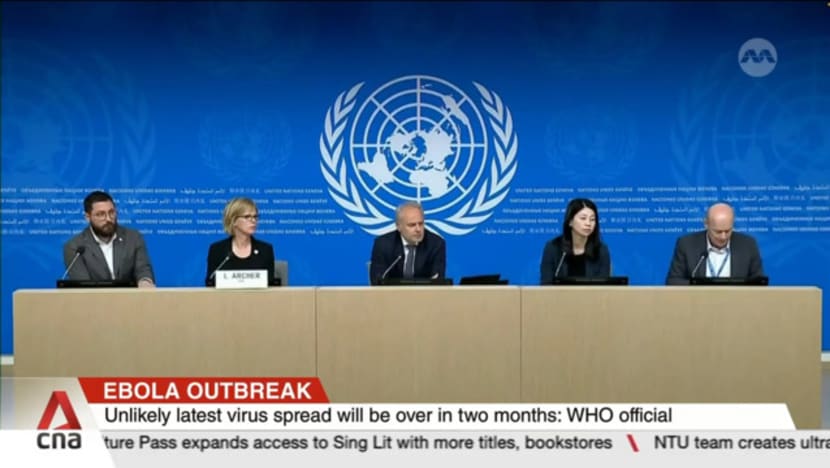
GENEVA: The WHO on Tuesday (Jun 2) dramatically scaled back the number of suspected Ebola cases in central Africa to 116, down from more than 900 previously, with 330 cases now confirmed.

As of May 31, the World Health Organization said 116 suspected cases of the deadly virus had been registered in the Democratic Republic of Congo - down from 906 late last week.

Some 321 cases have now been confirmed in the DR Congo, including 48 deaths, while nine confirmed cases have been registered in neighbouring Uganda, including one fatality.

While some suspected cases have been confirmed, many more "have been cleared out" from the data after having been shown to have other diseases with similar early symptoms or an unlinked fever, said WHO spokesman Christian Lindmeier.

CNA Games
Show More
Show Less

He stressed that "anybody who gets picked up by surveillance or presents themselves in a health facility with any symptoms that could be Ebola-like" is counted as a suspected case in the outbreak, pending testing.

The outbreak was declared on May 15 in conflict-hit Ituri province in northeastern DRC, a central African country which is home to more than 100 million people and is one of the poorest in the world.

But the virus, which spreads through close contact and bodily fluids and can cause a fatal haemorrhagic fever, is believed to have been spreading under the radar for weeks before that.

One reason is that people infected with Bundibugyo, the strain of Ebola behind the outbreak, initially show symptoms similar to flu, malaria or typhoid, which can delay detection.

Lindmeier told reporters that once those suspected of having Ebola were tested, they were "ruled out, in many cases".

For example, he said there had been "a couple of cases with malaria or meningitis case or others".

"So they then of course drop off the suspected cases list and don't appear in that statistic any more," he said.

"If you're confirmed, you've been added then to the confirmed cases," he said.

It was therefore normal that the registered number of confirmed cases would continue to climb, while the suspected cases would fluctuate, he said.

WHO's previous figures had also listed 223 deaths suspected of being due to Ebola virus but its new figures no longer include that category.

Asked about that, Lindmeier suggested the number had been very uncertain, since it included "people who died a while ago" and whose remains in many cases could not be exhumed to be tested.

Six people confirmed to have had Ebola in the outbreak have meanwhile been registered as having recovered, according to the WHO.

No vaccine or approved treatment is available against the Bundibugyo strain of the virus and efforts to contain its spread rely mainly on preventative measures.

Source: AFP/fh

Sign up for our newsletters

Get our pick of top stories and thought-provoking articles in your inbox

Subscribe here
Inbox
Advertisement

World

Iran studying deal to halt war as stalemate persists

Iran is taking a "stern" approach given what it sees as a history of US non-compliance and longstanding mistrust, reports the country’s media.

Iran studying deal to halt war as stalemate persists

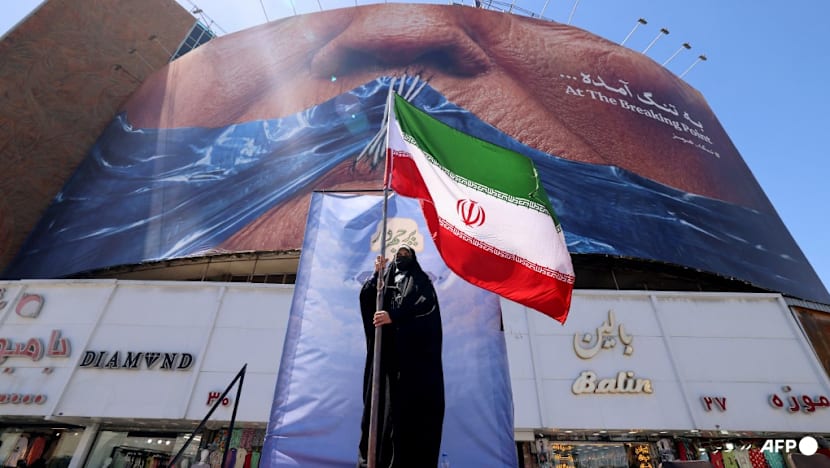
People walk on a street near a mural featuring an image of the late Supreme Leader of Iran, Ayatollah Ali Khamenei, in Tehran, Iran, on Jun 1, 2026. (File photo: West Asia News Agency via Reuters)

02 Jun 2026 07:47PM (Updated: 02 Jun 2026 10:46PM)
Read a summary of this article on FAST.
FAST

DUBAI: Iran is reviewing a proposed agreement with the United States to halt the war between the two countries, Iran's Mehr news reported on Tuesday (Jun 2), after US President Donald Trump said talks to reach a deal were continuing.  

More than three months after the US and Israel launched strikes against Iran, the conflict has hardened into a stalemate, while efforts to negotiate an interim deal have proved inconclusive, leaving the Strait of Hormuz largely shut.  

Iran has not yet responded to a proposed final text of the temporary deal, and was taking a "stern" approach given what it sees as a history of US non-compliance and longstanding mistrust, Mehr cited a source as saying.  

The semi-official Fars agency, also citing a source, added that messages on the possible deal, or memorandum of understanding, had stopped a few days ago, with the last one being Tehran's "clear message" over Lebanon, where Iran is seeking a stop to Israel's incursion against its ally Hezbollah.

Trump said on Monday that negotiations were continuing and there would be a deal to extend the ceasefire and reopen the Strait of Hormuz over the next week.

Since mid-March, he has repeatedly said he is close to a deal, which would postpone thorny issues including the future of Iran's nuclear programme. 

A ceasefire has largely held since early April, but Iran and the US have exchanged strikes several times over the past week.

Oil prices fell more than 1 per cent on Tuesday. A senior International Energy Agency official warned that oil inventories could hit historically low levels.

ISRAEL KEEPS UP STRIKES IN LEBANON

The war that began on Feb 28 has killed thousands of people, mainly in Iran and Lebanon. 

It ​has caused ​global economic pain ⁠by pushing up energy prices since Iran effectively closed the Strait of Hormuz, which previously carried about a fifth of global supplies of oil and liquefied natural gas.

It also triggered the latest round of conflict between Israel and Lebanese militant group Hezbollah, with Israel pursuing its deepest incursion into Lebanon in over 20 years.

On Tuesday, Israel kept up strikes on a string of towns in southern Lebanon, Lebanese security sources said, despite a US-mediated partial ceasefire announced on Monday.

That would entail Israel refraining from strikes on Beirut and Hezbollah-controlled southern suburbs of the Lebanese capital, while the Iran-aligned group would halt attacks on Israel.

But the announcement failed to reassure many Lebanese, 1.2 million of whom have been displaced, and the din of an Israeli drone over Beirut kept residents on edge on Tuesday.

"Every time we return to our homes, there is a warning for us to be displaced again," said Faten Al Chehime, who fled to a displacement camp from her home in Beirut's southern suburbs on Monday, only two weeks after returning there.

Lebanon said it would seek to expand the ceasefire in talks with Israel in Washington on Wednesday.

Israeli Prime Minister Benjamin Netanyahu is facing criticism domestically over any agreement to hold back from further attacks on Beirut, ahead of an election later this year that he is projected to lose.    

IRAN PUSHES FOR LIMITED DEAL

In the wider war, Iran is pushing for a limited interim agreement as it tries to ease mounting economic pressure while avoiding major concessions on its nuclear programme, according to Iranian sources.

Tehran is seeking an end to hostilities across all fronts, including Lebanon, access to billions of dollars in oil revenues, waivers on crude exports, a lifting of a US blockade on its ports, and continued leverage over the Strait of Hormuz.

Trump is under pressure to reopen the strait and curb US fuel prices while not making concessions to Iran.  

John Bolton, who served as Trump’s national security adviser in his first term and has since become a critic, said the president faced few good options.

"I think he wants to have a deal that opens the Strait of Hormuz, and he can declare victory and get the price of gasoline down," Bolton told Reuters. 

"But he knows if he makes a bad deal, he'll be justifiably criticised for it, so he's between a rock and a hard place, and he doesn't know what to do."

Iran's elite Islamic Revolutionary Guards said on Tuesday that 24 vessels had transited the strait in the past 24 hours after obtaining permission from the Guards' navy.  

Iran threatened on Monday to expand its blockade to the Bab El Mandeb Strait, another chokepoint at the mouth of the Red Sea, if Israel resumed strikes on Beirut.

Highlighting the risk at sea, the world's largest shipping group MSC said on Tuesday that one of its vessels was struck by two projectiles while in Iraq's Umm Qasr port the previous day.

Iran's Revolutionary Guards claimed responsibility for the attack, saying it was carried out in retaliation for a US attack on an Iranian vessel in the Gulf of Oman.

The wide-reaching impact of the crisis was laid bare by United Nations children's agency UNICEF, which said surging transport costs and supply chain disruptions were hindering life-saving aid for Gaza, Lebanon, the Democratic Republic of Congo, Mali, Somalia, South Sudan, Nigeria and elsewhere.

Source: Reuters/rl

Sign up for our newsletters

Get our pick of top stories and thought-provoking articles in your inbox

Subscribe here
Inbox
Advertisement

World

Astronomers discover exoplanets with magnetic fields

Astronomers discover exoplanets with magnetic fields

This illustration shows magnetic activity in an exoplanet that is a gas giant like Jupiter but orbits very close to its host star and is tidally locked. (Image: Reuters/ESO/M Kornmesser, L Calcada)

02 Jun 2026 05:04PM (Updated: 02 Jun 2026 05:38PM)
Read a summary of this article on FAST.
FAST

WASHINGTON: Based on the behaviour of winds on seven large and hot gas exoplanets, astronomers have obtained the strongest evidence to date that planets beyond our solar system possess magnetic fields, like Earth and five other planets in our solar system.

The finding, based on observations by telescopes in Chile and Hawaii, deepens the understanding of exoplanets by showing that at least some share an important characteristic present in all but two of the solar system's eight planets. 

A magnetic field is an invisible force field generated by the movement of electrically conducting material deep inside a planet - a molten metal core - combined with the planet's rotation.

While none of the gaseous exoplanets in this study are candidates for hosting life, a magnetic field could be one of the factors that helps make a rocky planet like Earth habitable.

CNA Games
Show More
Show Less

These exoplanets each orbit very close to a large and hot star, with one side permanently facing the star and the other side perpetually facing away, as the moon does with Earth.

This type of planet is called a "hot Jupiter" because of a comparable size and composition to our solar system's largest planet, though with a much higher temperature. The seven planets ranged in mass from roughly the same as Jupiter to more than three times as massive.

Strong winds blow from the hot "dayside" to the cold "nightside" on these planets. The orbital proximity of the planets to their host stars leaves them with scorching atmospheric temperatures on the dayside. All are closer to their host star than the solar system's innermost planet, Mercury, is to the sun.

"What you would expect is that the planets with hotter temperatures would have stronger winds. The more energy you put into the system, the more violent the winds become. But we see the opposite," said astronomer Julia Seidel of the Observatoire de la Côte d'Azur's Lagrange Laboratory in Nice, France, lead author of the study published on Tuesday in the journal Nature Astronomy.

"It's the hottest planets that have the least strong winds mixing the atmosphere. And that's really strange from what we know of how atmospheres behave," Seidel said. 

"That means all that energy that the star puts into the planet's atmosphere has to be dissipated in a different way. And the only possibility to brake the atmosphere that much that fast is via the magnetic field and its interaction with the moving charged particles of the atmosphere."

Wind speeds on the seven exoplanets ranged up to 25,000kmh, stronger than on Jupiter.

Considering that most of our solar system's planets have magnetic fields, the researchers said it is not surprising that exoplanets do too. But they said that scientists until now had struggled to come up with convincing evidence.

"We do not look at a singular exoplanet, but we look at a population of them and see a trend emerge," Seidel said.

Jupiter's magnetic field is the largest and most powerful one in our solar system. The seven exoplanets generated magnetic fields smaller than that of Jupiter but comparable to solar system planets in general.

Mercury, Saturn, Uranus and Neptune join Earth and Jupiter as the solar system's planets generating a global magnetic field. Venus and Mars are the two planets lacking a magnetic field, though Ganymede, a large moon of Jupiter, generates its own magnetic field. Earth's moon long ago also generated its own magnetic field.

A magnetic field is one of the factors behind whether a planet is able to maintain its atmosphere over long periods of time. For instance, Mars once had a magnetic field, but lost it billions of years ago after its interior cooled, and now has only a tenuous atmosphere and an inhospitable landscape.

"Although it's a common misconception that magnetic fields directly determine whether a planet is habitable, they can play an important role in how a planet evolves over time," said astronomer and study co-author Bibiana Prinoth of the European Southern Observatory in Germany.

"Life as we know it relies on having an atmosphere. An atmosphere helps maintain surface pressure, regulate temperature and, on Earth, allows liquid water to exist at the surface."

Source: Reuters/nh

Sign up for our newsletters

Get our pick of top stories and thought-provoking articles in your inbox

Subscribe here
Inbox
Advertisement

Sustainability

UN warns possibly strong El Nino could push global temperatures higher

UN warns possibly strong El Nino could push global temperatures higher

People seek relief from the heat along the Seine River in Paris, France on May 25, 2026. (File photo: AP/Michel Euler)

02 Jun 2026 04:25PM (Updated: 02 Jun 2026 04:46PM)
Read a summary of this article on FAST.
FAST

GENEVA: The United Nations weather agency on Tuesday (Jun 2) forecast a moderate or possibly strong El Nino that could drive up global temperatures and increase the risk of extreme weather over the coming months. 

El Nino is a periodic warming of sea surface temperatures in the central and eastern Pacific Ocean, ​which typically lasts between nine and 12 months, according ​to the World Meteorological Organization (WMO).

The WMO said warm ocean waters were fueling El Nino’s development and predicted above-average temperatures in most parts of the world from June to August. The WMO said it is likely El Nino will continue until November.    

“We need to prepare for a potentially strong El Nino event – which will exacerbate drought and heavy rainfall and increase the risk of heatwaves both on land and in the ocean," said WMO's Secretary-General Celeste Saulo.

CNA Games
Show More
Show Less

The most recent El Nino, in 2023 to 2024, contributed to 2024 being the hottest year on record, Saulo added. 

A shift has been observed ⁠in the Equatorial Pacific, with sea surface temperatures rising rapidly from late April to mid-May, ​suggesting El Nino conditions were developing, the WMO said. 

The agency also said that it has observed unusually warm subsurface conditions across the tropical Pacific with temperatures exceeding 6°C above average, creating a reservoir of heat that is driving surface warming. 

The weather pattern is ​known to disrupt regional climates, potentially bringing increased ​rainfall ⁠to southern South America, the southern United States, parts of the Horn of Africa and central Asia, while causing drought ⁠in ​Australia, central America, Indonesia and sections of southern ​Asia. 

It can also have a warming effect on the global climate and fuel hurricanes in the central and eastern Pacific Ocean, the ​WMO said. 

“The world must treat it as the urgent climate warning it is. El Nino conditions will pour fuel on the fire of a warming world,” said UN Secretary-General António Guterres, urging a shift away from fossil fuels towards renewable energy.

While there is no evidence that climate change increases the frequency or intensity of El Nino events, it can make associated impacts such as extreme heatwaves and heavy rainfall worse, according to the WMO.

Source: Reuters/rl

Sign up for our newsletters

Get our pick of top stories and thought-provoking articles in your inbox

Subscribe here
Inbox
Advertisement

World

Not a Brexit reversal: UK seeks closer EU ties to cut trade barriers

The government says the move is about easing the economic friction that followed Brexit by improving trade with the UK's largest collective trading partner.

One proposal focuses on plant and animal health. If the UK aligns its rules more closely with EU standards in this area, officials hope to reduce costly inspections and paperwork for British food exporters to the bloc.

New: You can now listen to articles.

This audio is generated by an AI tool.

02 Jun 2026 03:01PM
Read a summary of this article on FAST.
FAST

LONDON: Britain is seeking closer alignment with the European Union in a bid to reduce post-Brexit trade barriers, lower costs for businesses and consumers, and revive economic growth nearly a decade after leaving the bloc.

The government has said the move is not about reversing Brexit, but about easing the economic friction that followed by improving trade with the United Kingdom's largest collective trading partner. 

The policy has reignited a long-running debate over how much regulatory independence Britain is willing to sacrifice for easier access to European markets.

Critics say that closer alignment could force the UK to comply with EU rules that it no longer has a say in shaping.

CNA Games
Show More
Show Less

The issue comes nearly a decade after the Brexit referendum on Jun 23, 2016, when the UK voted to leave the EU. 

THE BREXIT TRADE-OFF

Economists estimate Brexit has cost the British economy between US$200 billion and US$300 billion in lost growth.

Now, Westminster believes closer cooperation with the EU in key industries could help recover some of that lost economic activity.

One proposal focuses on plant and animal health. If the UK aligns its rules more closely with EU standards in this area, officials hope to reduce costly inspections and paperwork for British food exporters to the bloc.

Britain and the EU still maintain broadly similar standards in the sector.

But since 2020, the two sides have gradually diverged on issues ranging from listeria testing requirements to pesticide limits.

Industry groups warn that a sudden shift to EU rules could create serious challenges for farmers.

CropLife UK, a trade association representing the plant science and crop protection industry, said any transition must be carefully managed.

Its CEO Dave Bench said: “If you do that immediately with no chance for growers to plan, to think about alternatives, to think about how they might grow different crops or grow crops in different ways, then potentially you make it impossible for them to grow the crops that they’d intended to do so.”

If the UK regains access to the EU’s automated electricity market, power could once again flow across borders in real time based on supply and demand, replacing the slower trading arrangements introduced after Brexit.

UNCERTAINTIES REMAIN

Another key area under negotiation is electricity trading.

If the UK regains access to the EU’s automated electricity market, power could flow across borders in real time according to supply and demand, replacing slower trading arrangements introduced after Brexit.

“Anything that can be done to harmonise the commercial or regulatory environments within and between the two markets, will help to remove non-physical barriers to trade and therefore reduce costs,” said Richard Woolley, energy and climate change policy adviser at the Chemical Industries Association, which represents chemical and pharmaceutical firms across the UK.

“That will keep prices down for everyone on both sides of the channel.”

Some businesses are also pushing for closer cooperation on carbon pricing.

But industry groups caution that negotiations are moving ahead while key details remain uncertain.

“The EU is set to kick off a major review of their emissions trading scheme,” said Woolley. “So we won’t know what we’re linking to for another nine months.”

BEYOND FINANCIAL COSTS

The government argues that deeper cooperation with the EU is in Britain’s national interest.

But the proposals have drawn criticism from some Eurosceptic lawmakers – particularly over the only major non-trade measure under discussion: rejoining the Erasmus+ exchange programme.

Erasmus+ enables students and other learners from participating countries to study, train or undertake placements abroad.

The UK withdrew from the programme following Brexit and launched the Turing Scheme as its replacement in 2021.

Unlike Erasmus+, which is primarily focused on European mobility, the Turing Scheme supports placements around the world.

Critics argue that rejoining Erasmus+ – which is expected to cost the UK around £570 million (US$760 million) in the 2027/28 academic year – would be significantly more expensive than the Turing Scheme and represents an unnecessary concession to Brussels.

Supporters, however, say the benefits go far beyond the financial costs.

Jude Waites, regional coordinator of the Erasmus Student Network, said: “Erasmus+ and the idea of EU students coming to study in UK universities has been proven to provide massive economic benefits (and) also benefits to home students in the UK who, whilst they might not choose to study abroad, are able to experience a diverse range of different views.”

Source: CNA/ca(dn)

Sign up for our newsletters

Get our pick of top stories and thought-provoking articles in your inbox

Subscribe here
Advertisement

World

Pay workers 'as much as possible': Nvidia's Jensen Huang

"I pay my employees as much as I can," said Nvidia CEO Jensen Huang, head of the US artificial intelligence hardware giant that is the world's most valuable company.

Nvidia CEO Jensen Huang speaks during a press conference at Computex in Taipei on Jun 2, 2026. (Photo: AFP/I-Hwa Cheng)

02 Jun 2026 02:10PM (Updated: 02 Jun 2026 02:22PM)
Read a summary of this article on FAST.
FAST

TAIPEI: Companies should pay workers "as much as possible", Nvidia boss Jensen Huang said on Tuesday (Jun 2) ahead of a trip to South Korea, where Samsung Electronics recently averted a strike by making an agreement on bonuses with its union.

Huang, head of the US artificial intelligence hardware giant that is the world's most valuable company, was asked about the Samsung dispute at a news conference in Taipei, where a major tech show is taking place this week.

"I'm not an expert in that area," he said. "I think people should be paid as much as possible. Ask my employees - literally, I do that."

"I pay my employees as much as I can," he added. "But that's just what I do. It doesn't make this right."

CNA Games
Show More
Show Less

The AI boom has driven Nvidia's stock price up more than 1,170 per cent over the past five years, making many employees holding stock options millionaires practically overnight.

Samsung, which makes memory chips essential for AI data centres, has also seen its value and profits soar as global demand skyrockets.

That has fuelled frustration among staff, and under the union deal, around 60 per cent of Samsung's domestic workforce is eligible to receive a bonus of roughly US$330,000 this year, based on a market estimate of operating profit.

Huang is due to arrive in South Korea on Friday and will reportedly meet with companies including SK Group and Hyundai to discuss robotics and so-called "physical AI".

He will also appear on one of the country's most popular TV talk shows, "You Quiz on the Block", and is expected to feast on Korean barbecue with the leaders of the country's top tech firms.

On Monday, before the start of Taiwan's Computex expo, Nvidia unveiled a powerful laptop chip for Windows machines, staking its claim in the market for next-generation PCs integrated with AI tech.

The move challenges the likes of Apple, AMD and Intel - whose CEO Lip-Bu Tan is due to speak Tuesday at Computex - in the consumer PC domain.

Huang said Tuesday that Nvidia is "supply constrained" although "we have enough supply for very robust growth", referring to the gamut of materials used to make computer chips, from silicon wafers to advanced memory components.

Taiwan is home to hardware production giants TSMC and Foxconn, and last week Huang said Nvidia would increase investment there to US$150 billion a year, up from US$100 billion, to "fuel an incredible ecosystem here".

Source: AFP/rk

Sign up for our newsletters

Get our pick of top stories and thought-provoking articles in your inbox

Subscribe here
Advertisement

Also worth reading

Advertisement