

Why I Am No Longer a Christian
ᚺᚨᛁᛚᚨᛉ ᚹᛟᛞᚨᚾᚨᛉ

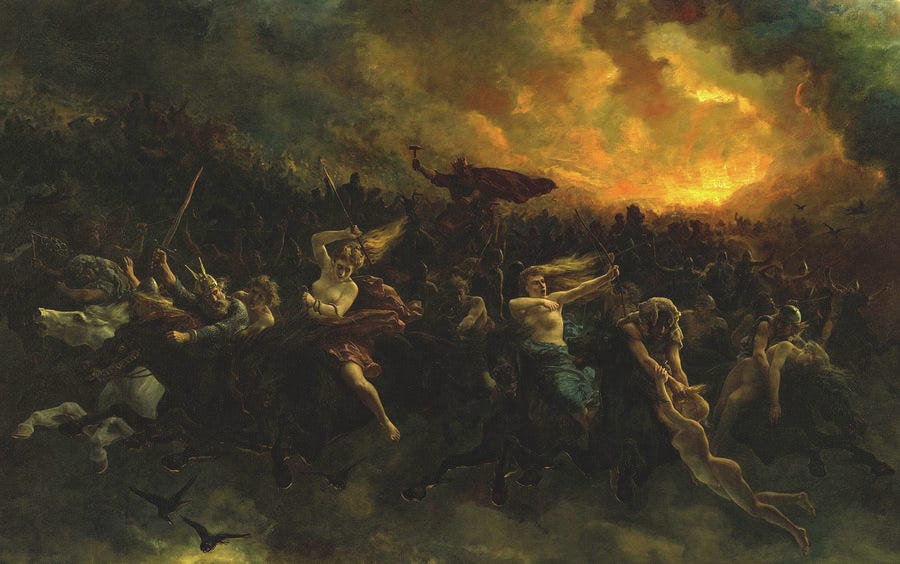
The emergence of Christianity in the ancient world was one of the most decisive revolutions of spirituality in the moral history of our folk. Where the folkish traditions of our race celebrated strength, honor, and excellence (a heroic ideal), this new faith from the Near East brought ethics that were centered upon humility, meekness, mercy, and universal salvation.
Our pagan forebears, whether they be Roman, Baltic, or Germanic did not understand morality as a doctrine that was designed to protect the weak or restrain the strong. Religions do not merely instruct a folk, they shape how a civilization perceives the structure of reality itself.
At the center of this universe stands Yggdrasil, connecting the various realms of existence. But yet this cosmic axis does not promise us eternal stability, the cosmos move inevitably towards the final battle of Ragnarök. Fate is woven by the Norns, and even the Gods and cosmos are bound by our fate, we can only meet this with courage and honor.
Betōr wisan izwis þan frōdō wisan; sa lītwaz kunnan skula mikils þolōną.
“Better to be wise than to be renowned; he who knows little must suffer much.” - Havamal 18

This is where Christianity now introduced a very different cosmic vision onto our folk. Instead of a theology defined by heroic struggle it preached to us a moral universe governed by a type of divine compassion and redemption.
The teachings of Jesus are quite clear in the New Testament.
“Blessed are the gentle, because they will inherit the earth.” - Matthew 5:5, AST
“You heard what it was said, ‘An eye for an eye, and a tooth for a tooth.’ But I say to you, Do not resist the evil, but who strikes you on your right cheek, turn the other to him also.” - Matthew 5:38-39, AST
This is Christian theological teaching that encourages humility and a blind trust in God’s justice. The virtues celebrated in European traditions of our folk, such as strength, pride, and physical excellence, are replaced as meekness and humility.
To a Christian, spiritual merit arises from renouncing pride and embracing humility. Only a simple reading of the mythology of ancient Europe shows us that the heroes of our race sought and seek glory through deeds that demonstrate courage and their own personal power. Christianity is a perverted Middle Eastern reversal of this.

The societies shaped by the heroic ethos of our mythology understood honor differently. In such European cultures, failing to respond to an insult to your character or personal injury could threaten one’s standing within the community. Reputation, courage, and power were inseparable.
Jesus’ command to “turn the other” cheek represents a profound break from the European worldview.
In one story from the Egils Saga, Egill is insulted by Eirik Bloodae. Rather than meekly accepting the humiliation and turning the other cheek, Egill responds with cleverness, courage and ultimately violence to reclaim his honor. Virtues that Christianity recast as sinful or dangerous.
The message of faith was intended for all of humanity, as proudly declared by the Jew who wrote most of the New Testament, Paul the Apostle / Saul of Taurus.
“There is neither Judean nor Greek; neither slave nor freeman; neither male or female; for you are all one in Anointed Jesus.” - Galatians 3:28, AST
This statement alone expresses the universal vision at the heart of the New Covenant Christian theology. Spiritual identity in Jesus Anointed transcents culture, heritage, and ethnicity.
Non-Abrahamic religions, especially those of our Aryan European ancestors functioned very differently. Our Aryan Gods are bound to our mythic blood and the beautiful landscapes of our soil. Blots and festivals reinforced communal identity and connection with our Indo-European ancestors.
Christianity is not a religion of the folk. Christianity proclaimed a faith meant equally for humanity. The traditions of our Indo-European people were meant for us, we are a folkish people.
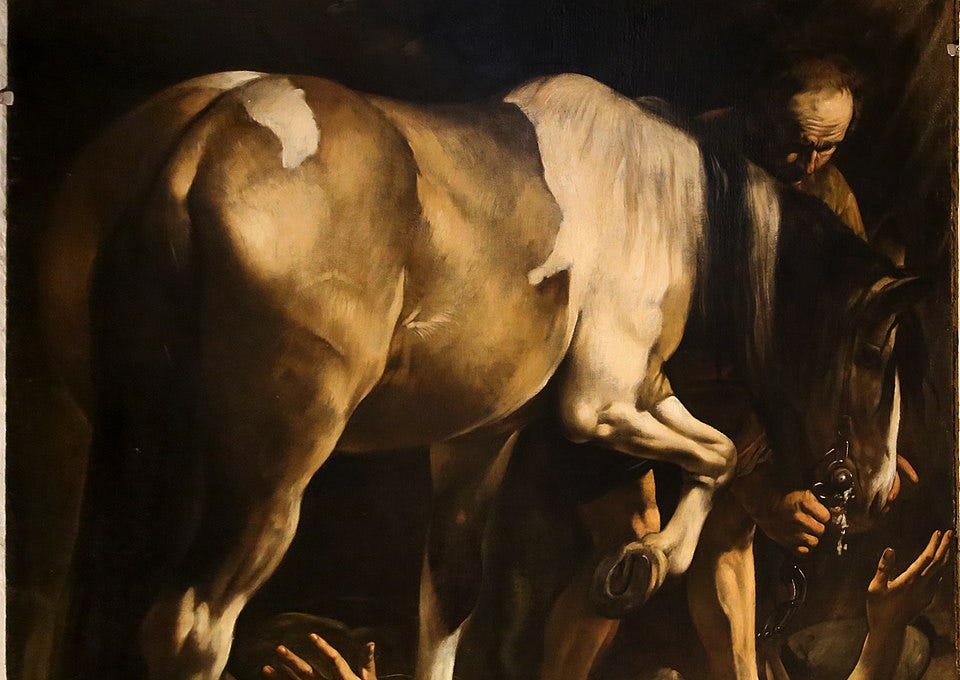
But…who was Saul of Taurus? Also known as Paul, originally named Saul, was born in Tarsus in Roman Asia Minor. He was 100% a Jewish Pharisee, well-educated under the Rabbis and was also a citizen of the Roman Empire. He was fluent in Koine Greek (like most people at that time, including ethnic Jews who translated the Torah in the Septuagint) and was well versed in the wider non-Jewish world.
Saul studied under Gamaliel, a prominent Pharisee theologian. There was no doubt that he was very well versed in Jewish laws and traditions. He saw non-Jews as goyim, which are non-Jewish people to be dominated by Jews in Jewish thought.
Paul, or Saul, being a diaspora Jew from Tarsus reinterpreted Jesus’ messages so it could appeal to the goyim, removing the ethnic and national specificity of the Septuagint that Jesus preached from.
This can be seen with the works of Saul preaching a slave morality to the goyim with faith over deeds, spiritual salvation over worldly honor, and spiritualized morality over natural law and heroism. This blend ended up suppressing both the ethos of his own Judaism within Christianity and the Indo-Europeans traditions with a new ideology of spiritual submission and racial universality.
With Saul of Taurus, Christianity became a tool for spreading Judaic influence across Gentile Europe, rather than remaining a spiritual sect of religious thought for the Jewish people.
“Saul…was already a ‘ghetto’ Jew, possessing…an understanding of the world of the ‘Goyim’—the non-Jews—which later on became of great value for him…He thought…that the ‘Goy’ is only to be dominated and exploited by the ‘chosen people.’ But he knew their world infinitely better than the Jews of Palestine…from which he was destined to form Christianity such as we see it.” - Savitri Devi
This section of the article is posted as a stand-alone essay here.
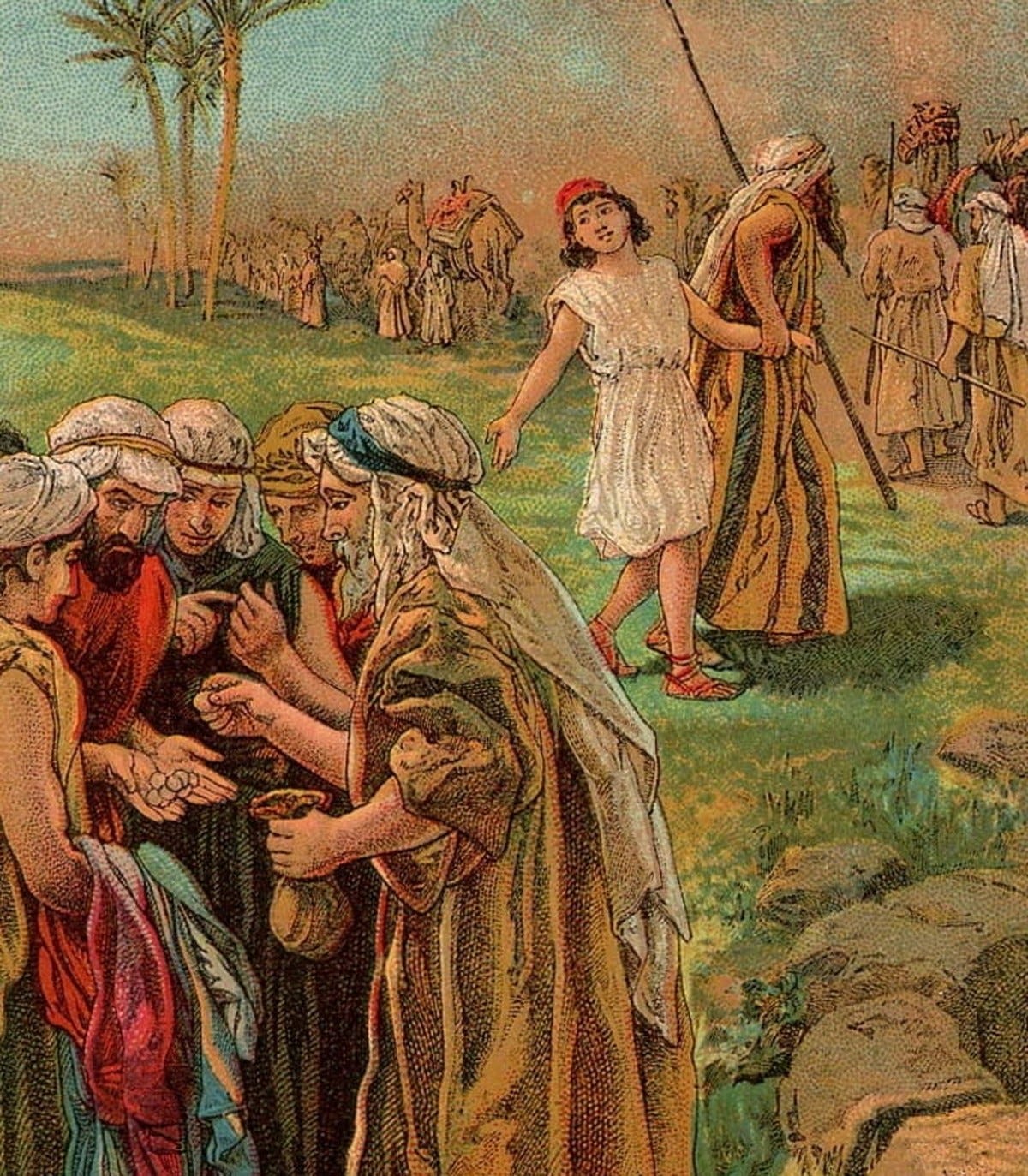
One of my favorite quotes from Jesus is when how when he is arrested in the Garden of Gethsemane, he throws his arms up and says “have you come out with swords and clubs against a lēstēs?”
In the new Anointed Standard Translation, we can read it translated as “robber” in Mark 14:48.
And answering, Jesus said to them, “Have you come out with swords and clubs to take Me, as against a robber?” - Mark 14:48, AST
Let’s now look into the Greek word lēstēs. It can be translated as bandit / robber / trafficker. The only people given that term in those times were child slave traffickers. If we look at the events surrounding this circumstance we can see that while Jesus was hanging out in the Garden of Gethsemane with his disciples there was a naked boy there.
It is very fishy on why exactly, at 2AM the guards arrive to arrest Jesus and there is is, with a naked boy and his disciples posted up to keep watch. This is made extremely clear in Mark 14:51-52.
“And a certain young man was following Him, having thrown a linen cloth around his naked body. And they caught him. But he, leaving behind the linen cloth, fled naked.” - Mark 14:51-52, AST
Other translations of the Bibles are much more explicit. What scene the Bible is describing here is that at 2AM, Jesus had his guys posted up while he had a naked young boy, and as the guards are arriving they tried to cover him up with a cloth but he fled too fast and he ran off naked to avoid capture.
Let’s actually see what the more mainstream Christians read about this:
“And there followed him a certain young man, having a linen cloth cast about his naked body; and the young men laid hold on him: And he left the linen cloth, and fled from them naked.” - Mark 14:51-52, KJV
Let’s get back to the word lēstēs. The Koine Greek word for robber / bandit / trafficker. In Mark 14:48 Jesus looks at the guards and says “Have you come with swords and clubs against a trafficker / bandit / robber?” and then shortly after a naked young boy runs off.
It is looking pretty fishy there, Jesus.
The Bible, in the “Good” Message of Mark tells a story of a naked young boy being quickly covered up, and having the garment being ripped off as he flees naked into the night, shortly after Jesus looks at the guards and says “have you come at me like some kind of lēstēs / trafficker?”
And what about the other two the cross next to Jesus? What were their charges?
“Then two lēstai / robbers were crucified with Him, one off the right and one off the left.” - Matthew 27:38, AST
Jesus was crucified between two lēstai which are people convicted of lēstēs. The same ideas also appear in Matthew 26:55 and Luke 22:52. Let us be reminded that Jesus was executed along side people who were charged with lēstēs = child trafficking.
So now, let us ask the question. What * actually * was Jesus’ charge? Do you really think it was just that “King of Jews” non-sense? No. It was;
Lēstēs.


