Advertisement
Advertisement

Singapore

Circle Line to show clockwise, anticlockwise directions when full loop completed in July

Keppel, Cantonment and Prince Edward Road stations will open for a public preview on Jul 4, with passenger service starting Jul 12. 

Circle Line to show clockwise, anticlockwise directions when full loop completed in July

A platform display screen indicating a train arriving in a clockwise direction for the Circle Line on May 29, 2026. (Photo: CNA/Raydza Rahman)

Listen
2 min
New: You can now listen to articles.

This audio is generated by an AI tool.

29 May 2026 10:00AM (Updated: 29 May 2026 12:59PM)
Read a summary of this article on FAST.
FAST

SINGAPORE: When the Circle Line (CCL) is completed in July, trains will display their direction as "clockwise" or "anticlockwise" loops rather than by terminal station.

Currently, as the CCL does not operate as a complete loop, trains display their direction by indicating the final station, such as Harbourfront or Dhoby Ghaut.

To help commuters get used to the new system ahead of the opening, the updated wayfinding signs will appear at Promenade, Esplanade, Buona Vista and Paya Lebar stations from Friday (May 29).

Keppel, Cantonment and Prince Edward Road stations will open for a public preview on Jul 4, with passenger service starting Jul 12. Their opening completes the loop, allowing trains to travel the entire circle without a designated terminal.

The Land Transport Authority (LTA) said it had consulted commuters and station staff to understand the challenges they faced navigating the CCL, and conducted a public survey in March 2025 that drew over 3,000 responses.

“The completion of the CCL introduces unique operating features that require tailored wayfinding solutions to help commuters navigate the full loop more easily,” it said. 

Respondents preferred "clockwise" and "anticlockwise" over alternative labels such as "inner loop" and "outer loop". LTA said the feedback was used to refine the wayfinding strategy.

CNA Games
Show More
Show Less

When CNA visited Promenade station on Friday, the updated displays were visible at the above-ground entrance, above the fare gates and on the platforms.

Anticlockwise and clockwise directions displayed at the entrance of Promenade station for the Circle line on May 29, 2026. (Photo: CNA/Raydza Rahman)

Once the loop is completed, platform displays will indicate each train's direction, showing either "clockwise loop" or "anticlockwise loop". 

However, the CCL will also retain a "spur" – a branch that deviates from the main loop – with Esplanade, Bras Basah and Dhoby Ghaut stations. Trains on the spur will not complete the full circle and will carry an additional label, such as "clockwise – ends at Dhoby Ghaut", to indicate where they terminate.

LTA said it will continue to gather feedback and conduct ground observations to improve information clarity on the line.

Source: CNA/cy

Sign up for our newsletters

Get our pick of top stories and thought-provoking articles in your inbox

Subscribe here
Inbox
FAST
Advertisement

Entertainment

Annette Lee says she'll refund moviegoers if her new film Dream Stall 'wasted their time'

The creator and director-writer insists her refund promise is “not a joke” and wants honest feedback from moviegoers.

Annette Lee says she'll refund moviegoers if her new film Dream Stall 'wasted their time'

Annette Lee is personally offering refunds for moviegoers who felt that her new film, Dream Stall, "wasted their time". (Photo: Instagram/annettelee)

Listen
4 min
New: You can now listen to articles.

This audio is generated by an AI tool.

29 May 2026 01:18PM
Read a summary of this article on FAST.
FAST

Local influencer, actress and content creator Annette Lee makes a bold promise for her new film: she will personally refund unhappy viewers.

The multi-hyphenate recently announced on Instagram that anyone who watches her new film Dream Stall during its opening week, and genuinely feels it “wasted their time”, can approach her directly for a refund.

Yes, really.

"This is not a joke, everybody!" she insisted.

CNA Games
Show More
Show Less

Dream Stall revolves around top university graduate Enya (played by Lee), who decides to modernise their traditional family hawker business selling bak kut teh after her father (played by Mark Lee) decides to shut it down.

The film also stars Xixi Lim, Jaspers Lai, Ya Hui and Xander Pang.

Though some might assume the stunt is simply clever marketing, she said the decision is coming from a very honest place.

“So over the years, I noticed that there are a lot of Singaporeans who write off local films before they even give it a shot,” reasoning that she probably doesn’t blame them.

“Because it is possible they gave it a shot once, felt disappointed, and felt they didn’t want to waste the time and money again,” she said.

In an interview with 8days.sg, Annette Lee added on that she doesn't think Singaporeans support local just for the sake of it.

"I think they should support local if they think it’s good," she explained.

Sounds genuine enough. Let’s be honest: how long has it been since you last genuinely enjoyed a movie in the theatres?

“Because I feel that cinemas are still the best way to experience films. I’m going to be offering a money-back guarantee to anyone who watches my movie Dream Stall in its first week of opening, and feels that it wasted their time,” she said.

Moviegoers who felt negatively about her film can simply bring their ticket stub on Jun 5 at *Scape Gallery level five.

“I’m doing this because I know how much effort my team and I put in to try and create something we really think people will enjoy, and it’s my way of trying to earn back your trust that you probably have lost in the local cinema scene, since I don’t know when,” she explained.

Annette Lee also told 8days.sg that she has not set aside an amount should there be moviegoers who demand a refund from her.

She also tells us no one has reached out to her personally to meet her on Jun 5.

Netizens praised her confidence and willingness to stand behind her work publicly.

“If I really enjoy the movie, can I also find you to pay you double for the ticket?” joked a fan.

To which Annette Lee hilariously replied, “Can is can, but I’ll probably ask you to use the money to buy someone else a ticket.”

One helpful netizen also highlighted that Singaporeans could use the SG Cultural Pass to catch the film. The SG Cultural Pass allows you to redeem a S$16 Movie e-Voucher.

However, Annette Lee clarified to 8days.sg that moviegoers who use the SG Cultural Pass to redeem free tickets would not be eligible for refunds.

According to her, allowing refunds for SG Cultural Pass redemptions could potentially create a loophole where people attempt to “cash out” the voucher system instead, creating legal consequences.

One fan also warned her that publicly offering refunds could easily spiral out of control, advising her not to hand out refunds too casually without proper justification.

But Lee seemed completely unbothered.

“If they genuinely hated their time, any reason is 100 per cent valid. The fact that they even gave it a chance is something I’m already grateful for.”

This story was originally published in 8Days.

For more 8Days stories, visit https://www.8days.sg/ 

Source: 8 Days/ba

Sign up for our newsletters

Get our pick of top stories and thought-provoking articles in your inbox

Subscribe here
Inbox
FAST
Advertisement

Entertainment

Singer Frances Tan swapped law for music, now represents Singapore in Commonwealth Song Contest finals

Public voting for the Commonwealth Song Contest 2026 ends on May 31. On the same day, Tan will host a free concert to launch her debut album, I Am Frances.

Singer Frances Tan swapped law for music, now represents Singapore in Commonwealth Song Contest finals

Singer-songwriter Frances Tan represents Singapore at the Commonwealth Song Contest 2026 with her original song Just Me. Public voting is ongoing until May 31. (Photo: Frances Tan Si Min)

Listen
4 min
New: You can now listen to articles.

This audio is generated by an AI tool.

29 May 2026 11:59AM
Read a summary of this article on FAST.
FAST

At 25, Frances Tan Si Min has already lived two very different lives. The Singaporean singer-songwriter graduated with a law degree from the London School of Economics and Political Science, interned at top local firms, then walked away from it all to pursue her dream of making music.

Now, her original song Just Me is one of seven finalists at the ongoing Commonwealth Song Contest 2026, up against entries from Australia, India, Nigeria, United Kingdom, Saint Lucia and South Africa. Public voting closes on Sunday (May 31).

Singer-songwriter Frances Tan represents Singapore as one of seven grand finalists at the Commonwealth Song Contest 2026. (Photo: Frances Tan Si Min)

The pivot to music wasn’t random. Tan wrote her first song at 13, too afraid to tell anyone about her secret love for the craft. "Growing up, I always loved music and dreamed of pursuing it one day," Tan told CNA Lifestyle.

Awestruck from her first-ever concert at 11 – Justin Bieber’s My World 2.0 concert at the Singapore Indoor Stadium – Tan told her parents she wanted to pursue music, only to be laughed at as they said, “music should only ever be a hobby”. Embarrassed, she silenced her dream, vowed to "never bring this up to anyone ever again" and went on to law school.

"In my last year of law school, as I reflected on what I wanted to do after graduation, I realised that the little voice inside me, which I had ignored for 10 years, never went away," she said. "For the first time, I wondered: what if it is not a figment of my imagination, but actually a part of me?"

The realisation led her to New York University (NYU) where she completed a master’s in songwriting last year. The beginning of this journey led to the birth of Just Me. "I was so excited at the thought of living alone in [New York City] in my early twenties, finally pursuing music, which I had dreamed about my whole life, that a melody and lyric popped into my head while daydreaming," Tan says. "I ended up writing this song in one sitting."

CNA Games
Show More
Show Less

It went on to win the UK Songwriting Contest's singer-songwriter category in 2024, before landing her a spot in the Commonwealth Song Contest finals.

The contest was open to 2.5 billion people across 56 Commonwealth nations. “To be chosen as one of the seven Grand Finalists this year, representing Singapore against six other countries on the global stage, is truly such an honour,” Tan said.

After public voting ends, another round of judging by 10,000 music industry professionals will follow.

Tan also found popularity with Ride Into The Sun, a tribute song she wrote last year for the 10th anniversary of the passing of the late Lee Kuan Yew as part of the SG60 celebrations. She performed it at over 30 shows locally and overseas in Taiwan and San Francisco. The song’s music video was screened at schools, Shaw Theatres, Our Tampines Hub and played on local radio stations including 987FM. It also earned her the SG100 Foundation's BOLD Award and a role as its youth ambassador.

More recently, Tan has been visiting primary schools across Singapore to speak at Character and Citizenship Education programmes. She also wrote her first book Discover Your Passion, which details her own career journey, stories behind her music and reflection prompts.

Coinciding with the final day of voting on May 31, Tan will be holding a free launch concert at the Jubilee Garden Restaurant at Toa Payoh SAFRA, where she will debut her first-ever album I Am Frances.

Complete with a live band, string quartet and Chinese buffet dinner, Tan wrote in her Instagram post that she will share her album live before its official release on Jun 1 at midnight on all streaming platforms. 

Doors open at 6pm and the show begins at 6.30pm. Copies of Discover Your Passion, physical CDs and merchandise will be available for purchase for the first time.

Voting for Singapore’s Frances Tan can be done on the Commonwealth Song Contest website. Voting closes on May 31.

Source: CNA/ba

Sign up for our newsletters

Get our pick of top stories and thought-provoking articles in your inbox

Subscribe here
Inbox
Advertisement

Singapore

Jail, caning for ex-police officer who posed as woman to molest teen boy and film others

A forensic examination of the man's mobile phone uncovered numerous obscene voyeuristic videos.

Jail, caning for ex-police officer who posed as woman to molest teen boy and film others

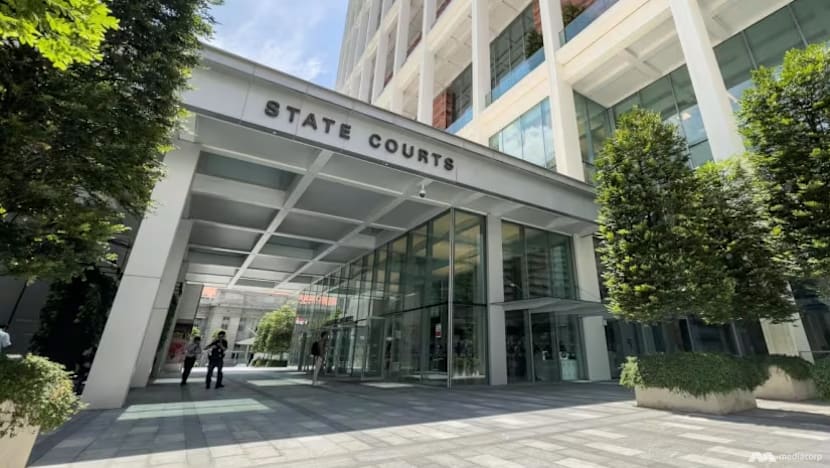
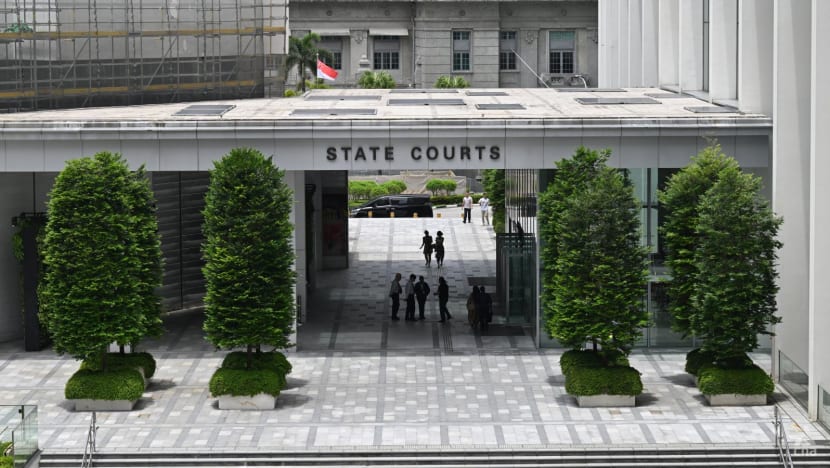
Sharizal Shafi'ee arrives at the State Courts on May 29, 2026. (Photo: CNA/Wallace Woon)

Listen
5 min
New: You can now listen to articles.

This audio is generated by an AI tool.

29 May 2026 11:12AM
Read a summary of this article on FAST.
FAST

SINGAPORE: An ex-police officer who disguised himself as a woman to sexually prey on teenage boys was sentenced on Friday (May 29) to three years' jail and four strokes of the cane.

While dressed in a dress and headscarf, Sharizal Shafi'ee, 40, approached three boys, asking them to help adjust his bra.

The first two declined. The third agreed, believing Sharizal was genuinely a woman in need of assistance, but was later molested by him.

Sharizal was a police officer at the time of the offences but has since lost his job.

He earlier pleaded guilty to five charges, all involving sexual offences against three teen boys, then aged 15 years old. These are for procuring the commission of obscene acts, molest and producing child abuse material by recording two of the teens in sexual acts.

Another ten charges of a similar nature were taken into consideration for sentencing. These include one amalgamated charge of voyeurism, as he had recorded videos of 32 men engaged in sexual acts for around six months.

His victims cannot be named due to a gag order protecting their identities. 

APPROACHED VICTIM AS A WOMAN

On Apr 18, 2024, Sharizal left his flat wearing a long blue dress, a brown headscarf and makeup. He went to the back gate of a secondary school, where he approached a 14-year-old boy.

Claiming that he needed help adjusting his bra, he asked the boy to follow him. When the boy declined, Sharizal approached another youth, then aged 18. This boy also declined to help him. 

About 10 minutes later, Sharizal approached a third teen — a 15-year-old boy who agreed to help, believing Sharizal was a woman in need of assistance. The boy followed Sharizal to a nearby staircase landing, where Sharizal gave him instructions on how to help.

As the teen stood behind Sharizal and tried to follow his instructions, the man molested him. 

The teen filed a police report later that day, and Sharizal was tracked down and arrested on Apr 28, 2024.

A forensic examination of Sharizal's mobile phone uncovered numerous obscene voyeuristic videos.

One video, more than 12 minutes long, captured a then 15-year-old boy in a sexual act with his face clearly shown. 

ENGAGED IN VIDEO CALLS WITH VICTIMS AS A WOMAN

Sharizal admitted that he had recorded this video without the victim's consent on Jul 31, 2023. He had met the teen on a social media application and pretended to be a woman called Lisa. 

While disguised as a woman, he tricked the teen into committing sexual acts in a video call, while pretending to be engaged in a sexual act himself. He then used the screen-recording function on his device to record the victim, who remained unaware that he was being filmed.

Sharizal kept the video for his own viewing and did not circulate it. 

The police found three other videos, between two and six minutes long, of another victim on Apr 18, 2024.

This victim, then 15, was also engaged in a sexual act and clearly identifiable. Sharizal had used the same modus operandi to trick this teen.

The prosecution urged the court to sentence Sharizal to between 36 and 39 months' jail and six to eight strokes of the cane.

Deputy Public Prosecutor Sheldon Lim said in his submissions that there was an "extremely high" degree of sexual exploitation.

"The victim, who was vulnerable by virtue of his young age, naively believed the lies and falsehoods peddled to him by the accused," said Mr Lim. He noted that Sharizal had posed as a woman in need of help to lure the boy to a secluded staircase landing.

"The offence was clearly premeditated. From the statement of facts, it is clear that the accused, who had left his house in disguise, had targeted young male individuals with a pre-planned routine," added Mr Lim.

Sharizal's lawyer Sanjiv Vaswani sought a jail term of between 22 and 28 months and argued that caning was not warranted.

Mr Vaswani said his client's case lacked the aggravating factors that would typically justify caning, including that Sharizal had not distributed the obscene material and was not involved in organised crime.

The lawyer also cited Sharizal's guilty plea and cooperation with the authorities as significant mitigating factors.

"The accused’s personal history strongly supports the conclusion that the present offences are an aberration," Mr Vaswani said.

"Prior to these offences, he had led a law-abiding life and has no antecedents whatsoever, which indicates that he is not a recalcitrant offender."

Mr Vaswani added that Sharizal had served in the Singapore Police Force for 17 years and received several awards and commendations, including an award from the Ministry of Home Affairs for his assistance during the Little India riot.

In sentencing, Deputy Principal District Judge Kessler Soh said deterrence should be a key consideration, adding that a substantial jail term and caning were needed to deter like-minded offenders.

The judge found the sentencing range proposed by the prosecution to be appropriate.

Source: CNA/wt(rj)

Sign up for our newsletters

Get our pick of top stories and thought-provoking articles in your inbox

Subscribe here
Inbox
Advertisement

Singapore

El Nino likely to bring warmer, drier weather to Singapore in second half of year, raising risk of haze

The dry season this year could be more intense and prolonged compared with recent years, says the Meteorological Service Singapore.

El Nino likely to bring warmer, drier weather to Singapore in second half of year, raising risk of haze

Two people shield themselves from the sun under an umbrella in Clementi. (File photo: CNA/Gaya Chandramohan)

Listen
4 min
New: You can now listen to articles.

This audio is generated by an AI tool.

29 May 2026 10:45AM (Updated: 29 May 2026 10:55AM)
Read a summary of this article on FAST.
FAST

SINGAPORE: El Nino conditions are expected to develop between June and July, bringing warmer and drier weather to Singapore and the surrounding region in the second half of the year, with a higher risk of transboundary haze, the Meteorological Service Singapore (MSS) said on Friday (May 29).

There is a more than 80 per cent chance of an El Nino event occurring in 2026, supported by key indicators such as warmer sub-surface ocean temperatures in the eastern tropical Pacific, MSS said in a media advisory.

"El Nino events tend to have the greatest influence on Singapore’s rainfall during the Southwest Monsoon season from June to September, increasing the chance of dry conditions," it added.

El Nino is a naturally occurring climate pattern marked by unusually warm ocean surface temperatures in the central and eastern Pacific Ocean. It typically occurs every three to five years and can last up to a year, disrupting global weather patterns, often bringing hotter and drier conditions to Southeast Asia.

CNA Games
Show More
Show Less

The most recent El Nino event occurred between 2023 and early 2024, before conditions shifted to La Nina, which contributed to wetter weather in the region through much of 2024 and into early 2026.

DRIER, WARMER MONTHS AHEAD

El Nino is expected to influence Singapore’s weather from June to October, particularly during the southwest monsoon season from June to September, when dry conditions are more likely.

During the last strong El Nino in 2015, Singapore's total rainfall between June and September was about 35 per cent below the long-term average. 

El Nino events are also associated with higher temperatures. In 2016, when the previous event weakened, average temperatures from March to May reached 29.2°C - 1°C above the long-term average for that period - making it Singapore’s second warmest period for those months on record.

While the upcoming El Nino is expected to start at a moderate strength, it could intensify towards the later part of the southwest monsoon season, around August to September, MSS said.

In addition to El Nino, a positive Indian Ocean Dipole (IOD) is also predicted to develop between July and August. The phenomenon is similar to El Nino but occurs in the equatorial Indian Ocean.

"Singapore and our surrounding regions tend to experience drier conditions as sea surface temperatures in the eastern Indian Ocean are cooler, resulting in less cloud formation," said MSS, noting that Singapore’s driest year on record occurred in 1997 when both El Nino and positive IOD events occurred.

HIGHER RISK OF HAZE

The combination of El Nino and a possible positive IOD is expected to intensify and prolong the dry season, potentially extending it into October.

Drier and warmer conditions increase the likelihood of peatland and vegetation fires in the region. If these fires occur near Singapore and prevailing winds blow smoke towards the island, transboundary haze could affect air quality, said MSS.

"The hotspot and smoke haze situation in the surrounding region could escalate from June," it added.

Authorities also said that the 28 government agencies under the Haze Task Force, chaired by the National Environment Agency (NEA), are prepared to activate response plans if air quality deteriorates.

Members of the public are advised to monitor the 1-hour PM2.5 readings for real-time air quality and refer to the 24-hour Pollutant Standards Index (PSI) for accompanying health advisories. 

They are also encouraged to check that air purifiers are in working condition and to follow official advisories via NEA’s website, the myENV app and social media channels.

Source: CNA/fh(gs)

Sign up for our newsletters

Get our pick of top stories and thought-provoking articles in your inbox

Subscribe here
Inbox
Advertisement

Living

Pokemon Center Singapore to reopen on Jul 1 with refreshed interior and special-edition merchandise

Located at Jewel Changi Airport, Pokemon Center Singapore temporarily closed from Apr 1 as part of renewal works.

Pokemon Center Singapore to reopen on Jul 1 with refreshed interior and special-edition merchandise

The entrance to the refreshed Pokemon Center Singapore. (Photo: Pokemon Center Singapore)

Listen
2 min
New: You can now listen to articles.

This audio is generated by an AI tool.

29 May 2026 10:04AM
Read a summary of this article on FAST.
FAST

Following its temporary closure in April, the popular Pokemon Center Singapore will finally reopen on Jul 1 with a refreshed interior reflecting Singapore's heritage as well as special-edition merchandise.

The Legendary Pokemon Solgaleo has been chosen as the new symbol of the place, appearing on the store's refreshed logo and facade. 

Fans visiting the store will also be greeted by a massive Solgaleo statue at the entrance. In addition, the revamped store now features a dedicated event space equipped with a large-format monitor, allowing it to host many events centred on the likes of video games, trading cards and more.

The new logo featuring Solgaleo and Pikachu. (Photo: Pokemon Center Singapore)

To commemorate the opening, Pokemon Center Singapore will have a slew of special-edition merchandise featuring artwork of Pokemon living in a Singapore-inspired cityscape.

CNA Games
Show More
Show Less

The first wave of merchandise comprises 12 items and will go on sale at the reopening itself. These include a logo pin (S$10), a plush of Pikachu with durian (S$34), a metal plate (S$198) and more.

The second wave of products will be launched in August, which includes a bag charm depicting the beloved Pikachu and a cup of coffee.

Some of the items available at the reopening of Pokemon Center Singapore. (Photo: Pokemon Center Singapore)

During the first five days of the reopening, from Jul 1 to 5, admission  will be managed through a combination of advance reservations and same-day queue entry tickets.

Visitors planning to enter the store between 10am and 1pm must secure an advance reservation. Details on the application process will be announced progressively on Pokemon Center Singapore’s official Instagram page.

For entry after 1pm, same-day queue tickets will be distributed on-site from 8.30am on a first-come, first-served basis.

Pokemon Center Singapore is located at 78 Airport Boulevard, #04-201/202/203, Jewel Changi Airport, Singapore 819666. 

Source: CNA/hq

Sign up for our newsletters

Get our pick of top stories and thought-provoking articles in your inbox

Subscribe here
Inbox
Advertisement

Dining

'People think cooking is easy?' Wah Kee prawn mee hawker responds to 'rude' claims before June reopening

The famously curt (or misunderstood?) aunty behind the Pek Kio stall closed shop for three months. Why? 8days speaks with Tham Lay Mon before Wah Kee’s upcoming reopening.

'People think cooking is easy?' Wah Kee prawn mee hawker responds to 'rude' claims before June reopening

From left: Wah Kee Big Prawn Noodles' second-generation owners Tham Lay Mon, 81, and Lau Fook Wah, 84. (Photos: 8days, Google Maps)

Listen
9 min
New: You can now listen to articles.

This audio is generated by an AI tool.

29 May 2026 08:17AM
Read a summary of this article on FAST.
FAST

Whether you know Wah Kee Big Prawn Noodles for its giant, wild-caught prawns and rich soup or its notoriously sharp-tongued hawker auntie, regulars of the longtime Pek Kio Market And Food Centre stall might have noticed something unusual – its shutters have remained down since February.

But after a three-month closure that sparked speculation about whether the elderly hawkers have retired for good, second-generation owners Lau Fook Wah, 84, and Tham Lay Mon, 81, told 8days that their Michelin-recognised stall is expected to reopen in June.

Set up in 1951 by Lau’s parents, Wah Kee has spent over seven decades building a loyal following for its rich, umami broth topped with fragrant prawn oil and wild-caught sea prawns. The family once expanded the business to outlets at Esplanade and Beach Road, though only the original Cambridge Road stall remains today.

The famed stall has also become almost equally well-known for Tham’s blunt manner, with reviews over the years describing the veteran hawker as “fierce”, “grumpy” and “rude”, especially towards customers ordering the cheaper bowls.

CNA Games
Show More
Show Less

Yet, during 8days’ interview with Tham over the phone, the hawker aunty many netizens fear getting scolded by turned out to be surprisingly warm and chatty. Perhaps the break did her good.

HAWKER UNDERWENT CATARACT SURGERY

Tham told 8days that the stall’s closure became longer than expected after she underwent cataract surgery. Doctors had advised her to avoid steam for at least a month while recovering.

“After the surgery, I cannot be near hot water or steam due to cooking the noodles, so we had to wait,” she explained.

Her husband and main cook Lau, 84, also recently underwent medical check-ups. “It also depends on my husband’s health,” she added. “We will see how he feels.”

The elderly couple run the stall on their own with Lau serving as the main cook, while Tham assists with both cooking and ordering duties.

(Photo: Google Maps/Ronny Tan Yong Hui)

According to Tham, the stall had initially stopped operations before Chinese New Year due to disruptions involving their seafood suppliers during the festive season, especially since Chinese New Year and Hari Raya fell unusually close together this year. Suppliers typically allow their workers to return to their home countries during the festive period, resulting in manpower shortages and supply disruptions.

The stall had initially hoped to reopen around Apr 6 but Tham’s lengthy surgery recovery pushed the reopening back further.

“YOU THINK HAWKER [WORK IS] SO EASY TO DO?”

During the three-month closure, the couple relied on their savings to get by – something Tham said was only possible because they had spent decades carefully setting money aside from the business.

“You think hawker [work is] so easy to do? Must earn a bit, save a bit. Cannot spend a lot,” Tham told 8days candidly.

The couple have three children, though none are currently involved in the trade. While one of their sons used to help out back when their business was in expansion mode, Tham shared that he now has his own career, and only occasionally helps them communicate with suppliers.

(Photo: Google Maps/Serena Tiong)

“Even if we have children, [it’s] not to say they won’t support you but they also have responsibilities and their own families. Nowadays, life is very hard,” she said, with a hint of resignation.

When asked what led to Wah Kee’s initial ambitious expansion plan eventually scaling back to a single stall, Tham said it was her son’s friend who initiated the expansion years ago but declined to elaborate and brushed off further questions.

TINY S$5 BOWL VS S$25 BOWL WITH GIANT PRAWNS

Wah Kee’s menu consists solely of prawn noodles priced from S$5 to S$25. Tham said all the stall’s prawns are premium, wild-caught sea prawns, including those served in the cheaper bowls.

However, for the S$5 and S$10 portions, smaller prawns are typically halved and de-shelled, with the heads reserved for the broth. From S$15 onwards, customers get progressively larger whole prawns with the flavourful heads intact. Some regulars are also known to order off-menu bowls costing over S$30, even up to a whopping S$45.

The stall’s soup is also different from pork bone-heavy prawn broths commonly found elsewhere. Instead, Wah Kee serves a lighter soup topped with a layer of orange-red prawn oil. Fans praise its clean seafood sweetness and concentrated crustacean flavour, while some detractors have criticised it for tasting too oily or diluted.

(Photo: Google Maps/Javier Lee)

KNOWN TO SNAP AT THOSE WHO ORDER THE CHEAPEST S$5 BOWL

Wah Kee’s pricing and service style have also become frequent talking points. One Google reviewer complained that the S$5 portion was “tiny” and alleged that Tham became annoyed when she asked for change for a S$10 note after ordering the cheapest bowl. 

Other reviews have similarly claimed that customers ordering lower-priced bowls were treated more curtly than those splurging on the stall’s pricier prawn noodles.

But some diners have defended the hawkers online, arguing that Wah Kee offers an increasingly rare style of old-school prawn noodles that prioritises premium seafood over heavier pork-based broths. One reviewer described the soup as “pure unadulterated prawn flavour”.

(Photo: Google Maps/Flo Yeow)

WILD SEA-CAUGHT PRAWNS INSTEAD OF CHEAPER FARMED ONES

Even with rising costs, Tham said they have no plans to compromise on quality by switching to cheaper farmed prawns. Instead, they intend to continue using imported wild sea prawns from Indonesia and Malaysia. 

“In Singapore, I can confidently tell you, most people cannot find this type of prawn noodle anymore,” she said. “Mostly they use farmed prawns, not sea prawns like mine. The farmed ones are not as sweet.”

Tham acknowledged that using premium seafood has made Wah Kee’s noodles pricier than most other prawn mee stalls, which she believes may partly explain why business has slowed in recent years.

“Actually our prawn noodles are already quite expensive,” she admitted.

Still, she hoped that upcoming BTO developments around the Cambridge Road area may eventually bring more customers to the stall when it reopens.

“YOU CANNOT RETIRE!”

Though Wah Kee has long been a polarising hawker institution, Tham said loyal regulars have continued calling her throughout its closure to ask when her stall will reopen.

“All my regulars keep calling me, ‘You got open or not, auntie?’” she laughed. “Some even tell me, ‘Aunty, you cannot retire!’”

(Photo: Google Maps/Flo Yeow)

In 2024, radio DJ Chen Ning visited Wah Kee for a TikTok review with 8days, where she ended up ordering an off-menu S$35 bowl after asking for the same bowl as a regular customer nearby.

“There isn’t even a S$35 option on the menu!” she remarked in the video before Tham replied that the oversized portion was a “special” for regulars. Chen Ning later joked that the hawker auntie “smiled the brightest” after receiving payment for the pricey bowl. While she found the broth “nice though not overly flavourful”, she praised the giant prawns, calling them “really good”.

Tham acknowledged that the stall has developed a divisive reputation online over the years.

“On the internet, people say my stall [is] not very good because maybe I’m rude. But they don’t understand what we go through. I give you the food to eat, I tell you the price and I don’t cheat you. That is enough for me,” she said unapologetically. 

She elaborated that customers often underestimate how physically demanding hawker work can be, especially at their age.

“People think cooking is easy? Sometimes [it is] hot, sometimes we are sick. All the customers want us to be fast but how can we be fast when we are old?” she lamented.

The veteran hawker appeared emotional when reflecting on the future of traditional prawn noodles in Singapore.

“We are so old already. We can still sell it now but in future, where are you going to find this type of noodles? No more already,” Tham reflected wistfully.

When asked if the couple’s children might eventually take over the business, Tham replied quietly: “I don’t know whether they want to take over the business. It depends on them".

Wah Kee Big Prawn Noodles is located at #01-15 Pek Kio Market And Food Centre, 41A Cambridge Rd. The stall is expected in June. Tel: 9688 3633.

This story was originally published in 8Days.

For more 8Days stories, visit https://www.8days.sg/  

Source: CNA/bk

Sign up for our newsletters

Get our pick of top stories and thought-provoking articles in your inbox

Subscribe here
Inbox
Advertisement

Women

After early miscarriage, some parents turn to cremation for closure: 'It made the pregnancy loss feel real'

When miscarriage happens in the first trimester and there may be little to see or recover, some parents turn to cremation to grieve a loss that can otherwise feel invisible.

After early miscarriage, some parents turn to cremation for closure: 'It made the pregnancy loss feel real'

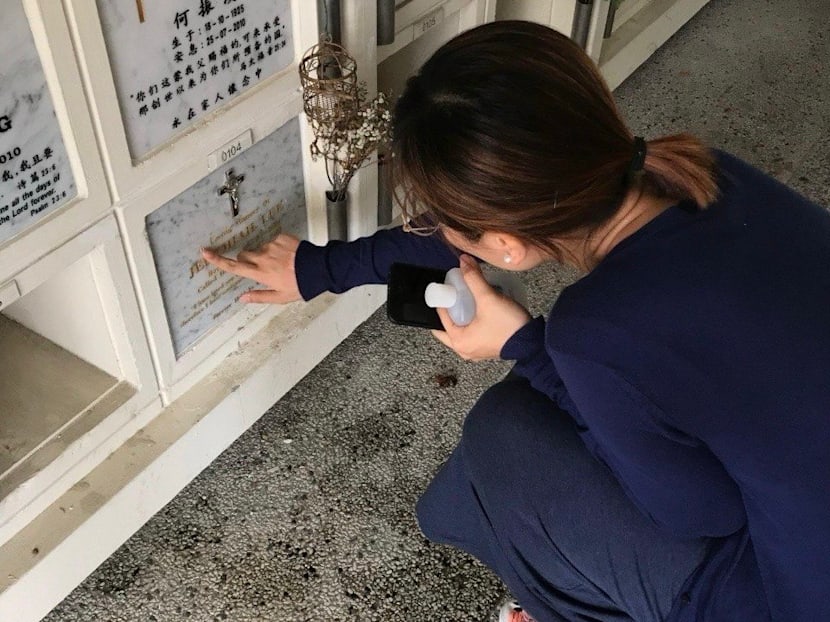
Estelle Goh at the niche in Mandai Columbarium where her baby’s ashes are kept, after losing the pregnancy at nine weeks. (Photo: Estelle Goh)

Listen
11 min
New: You can now listen to articles.

This audio is generated by an AI tool.

29 May 2026 07:16AM (Updated: 29 May 2026 09:25AM)
Read a summary of this article on FAST.
FAST

Unlike most mothers, Estelle Goh’s pregnancy journey did not begin with a giddy search for cots and strollers. Instead, she found herself up in the wee hours desperately searching for a funeral service provider.

In 2018, at around nine weeks of pregnancy, Goh miscarried. Her dilation and curettage (D&C) procedure to remove the foetal remains was scheduled for the next day.

Devastated, she wanted to give her unborn baby a proper cremation. But the five or six funeral providers she contacted turned her down. They only arranged cremations for stillborn babies at or after 24 weeks’ gestation.

At 2am, Goh finally found a funeral provider willing to take the job – Harmony Funeral Care.

CNA Games
Show More
Show Less

The next day, she underwent the D&C. After that, she was handed a plastic bottle containing her foetal remains and other pregnancy tissue.

She placed the bottle in a tiny coffin, along with her pregnancy test kit, ultrasound scan and baby clothes, and watched as the coffin was pushed into the cremation chamber.

Estelle Goh with her husband holding the ultrasound scan of their baby when they found out about the pregnancy in 2018. (Photo: Estelle Goh)

This process helped her grieve better. “It made the pregnancy loss feel real – the foetus was not just an unnamed thing in my body that was purged and thrown away along with other things. It was a life, a child that my husband and I were blessed with,” said the 32-year-old.

AFTER EARLY PREGNANCY LOSS

One reason Goh struggled to find a funeral provider was because such rites are relatively uncommon for first trimester miscarriage – especially in 2018.

In Singapore, stillbirths – pregnancy loss at or after 24 weeks’ gestation – are registered at the Immigration and Checkpoints Authority. Parents may also choose to register the baby’s name and are issued a digital stillbirth certificate for funeral arrangements.

But when it comes to miscarriages, practices surrounding the claiming of foetal remains are less standardised.

Dr Seet Meei Jiun, head and senior consultant, Department of Obstetrics and Gynaecology at KK Women’s and Children’s Hospital (KKH), said that it is standard protocol to inform patients that they may request the release of foetal remains following both first and second trimester miscarriages.

This has been a longstanding practice at the hospital, added Jocelyn Chng, assistant director of nursing at KKH.

At Singapore General Hospital (SGH), its head of Obstetrics and Gynaecology, Dr Jason Lim Shau Khng, said that patients are explicitly informed of their right to request the release of foetal remains – also a hospital practice for many years.

However, “the ability to claim remains depends on the method of management used and the identifiability of the remains,” he said.

“For first trimester cases, remains can typically be claimed after a surgical procedure. For second trimester miscarriages, patients may claim remains following a medically induced labour,” Dr Lim explained.

However, “in some early first trimester losses, the pregnancy tissue may already have been completely expelled prior to medical or surgical treatment, resulting in minimal or no identifiable remains available for claiming. In such situations, claiming may not be possible,” Dr Seet said.

In other cases, “foetal tissue may not be clearly formed or identifiable from other pregnancy-related tissue. Hence, this can make the physical claiming of remains technically challenging, or in some cases, not possible,” said Dr Lim.

“Whereas, in the second trimester (miscarriages), the foetus is more developed and physically formed, making it generally more feasible to facilitate a request for private burial or cremation,” he added.

Goh’s ultrasound scan of the baby she lost at nine weeks of pregnancy. (Photo: Estelle Goh)

At National University Hospital (NUH), it is standard practice to inform patients of the option to claim foetal remains in mid-trimester pregnancy loss and stillbirths. But for early miscarriage before 12 weeks’ gestation, “providing information to patients on the option to claim foetal remains is not a routine practice,” said Adjunct Associate Professor Arundhati Gosavi from the Department of Obstetrics and Gynaecology.

“Requests to claim foetal remains following a first trimester miscarriage are relatively uncommon, and we would facilitate them on a case-by-case basis,” she added.

Under the Healthcare Services Act, the Ministry of Health (MOH) requires healthcare institutions to take effective measures to ensure the safe and proper disposal of foetal remains. But healthcare institutions are allowed to manage this according to their own protocols, said MOH.

At SGH, unclaimed foetal remains are mass cremated, said Dr Lim. At KKH, they are either buried or cremated, said Dr Seet. Burial arrangements are handled by a charity organisation, added KKH’s Chng.

HELPING PARENTS CLAIM REMAINS

Dr Douglas Ong, an obstetrician and gynaecologist at Mount Elizabeth Medical Centre, recalled the first time a patient who had suffered an early miscarriage asked: “What are you going to do with my baby?”

That was more than 10 years ago, and Dr Ong said there were no established protocols for claiming foetal remains for first trimester miscarriage at Mount Elizabeth Hospital and Mount Alvernia Hospital where he was delivering. The standard answer was that the hospital would dispose of the remains, he said.

In fact, when he conveyed her request to the hospital, they were unsure how to even give the foetal remains to her, since it was mixed with blood clots and tissue.

But Dr Ong believed it was important. About one in five pregnancies end up in miscarriage, and around 80 per cent of miscarriages occur in the first trimester, Dr Ong noted.

In such cases, parents often have to deal with the loss privately and move on, he added.

“You have surgery and a few hours later, you go home, no longer pregnant. The next week, you go back to work. It can feel so empty,” he reflected. “People may say, don’t worry, you’ll have another one, but it doesn’t cure the grief.”

Harmony Tee, funeral director at Harmony Funeral Care, collecting first trimester foetal remains at a hospital. (Photo: Harmony Funeral Care)

“As a parent myself, I want to give dignity and respect to that embryo who had no name, no face, but represented everything to the parents,” he said.

Dr Ong spent a year developing a process for his practice and now offers every parent who suffers an early miscarriage the option.

Should parents wish to claim foetal remains, it will be presented in a bottle, along with blood clots and tissue. The bottle is wrapped and placed in a small bereavement box.

Dr Ong also adapted existing hospital forms used in later-stage pregnancy losses to support parents who wished to arrange cremation and provides them with contacts of two bereavement companies who cremate early-miscarriage foetal remains – Harmony Funeral Care and Holy Spirit Bereavement.

Tee transporting foetal remains from a hospital in a coffin. (Photo: Harmony Funeral Care)

Some families arrange for religious rites, such as prayers by a monk or priest, before cremation.

Because ashes from foetal remains are far smaller in volume than for adults, Dr Ong approached Pearl Yang, a potter from LimeLite Studio, to create baby-sized urns, which he provides to grieving patients without charge.

Some choose to keep the urn in a niche. Others scatter the ashes at designated sites or take them out to sea for burial.

WHY SOME PARENTS CHOOSE CREMATION

Grace (not her real name) suffered two miscarriages in 2019 – a spontaneous miscarriage and an ectopic pregnancy, where a fertilised egg implants outside the uterus.

In both cases, there was no option to claim foetal remains. And in hindsight, even though they were painful losses, the 33-year-old said they felt “very unreal”.

“It was like it didn’t happen, it didn’t matter, it’s forgotten,” she told CNA Women.

In 2021, Grace gave birth to a healthy baby, but in 2023, she experienced a third miscarriage at 11 weeks’ gestation. Dr Ong, her gynaecologist, offered her the option to claim foetal remains after the D&C.

She agreed, and for the first time, she was able to see her foetus. “There was other tissue, but I could see tiny hands and legs,” she shared.

The couple kept the cremation ceremony small – inviting only a friend and a Catholic priest to pray for the baby. Grace said the process made things a lot more real and gave her a lot of closure.

Goh, who described her miscarriage as “earth shattering” also said that being able to cremate the foetal remains helped her and her husband “grieve a bit more tangibly”.

A RISE IN CREMATION REQUESTS

Harmony Tee, founder and funeral director of Harmony Funeral Care, told CNA Women that cremation for first trimester miscarriage is becoming more common. Her company started offering the service five to eight years ago and now handles at least one such case every month.

These cremations typically take 30 minutes. Some, like Grace and Goh, opt for smaller and simpler ceremonies than adult cremations. However, Tee said one first trimester cremation had 80 to 100 attendees.

Goh with her baby’s urn outside Mandai Crematorium. (Photo: Estelle Goh)

“A lot of people downplay the loss of a foetus. But in reality, the grief can be just as deep,” Tee reflected.

“Parents are not only grieving a life lost, but also (the loss of) the future they had envisioned – the milestones, memories, and moments that will never come to be,” she said.

She added that some parents may also have tried very hard to conceive, including undergoing multiple in vitro fertilisation (IVF) cycles.

Not all patients choose to claim or cremate remains.

“The frequency often depends on factors such as culture and religious beliefs. Specific burial or cremation rites may also be required for some religions,” said SGH’s Dr Lim.

Both Goh and Grace were influenced by their Catholic faith. “My faith believes that life begins at conception. Throwing away the foetal remains is the last thing we want,” said Goh.

“For some parents, claiming the remains is a vital step in acknowledging their child’s life and finding a sense of peace,” Dr Lim noted.

Goh, now a mother of two, takes her seven-year-old daughter to visit her unborn brother’s niche. (Photo: Estelle Goh)

Dr Ong, who has supported more than 100 patients to claim and cremate foetal remains from first trimester pregnancy loss, said that a few patients even come out of the process joyful, stronger and more ready to move on.

Grace, who is now the mother of two boys aged five and one, and pregnant with her third child, has since named the three babies she lost to miscarriages Hope, Faith and Peace. She places her baby’s urn in a small pouch bearing all their names and tells her eldest son about them.

“The whole experience gave us peace,” she said.

Goh and her husband named their unborn baby Jeremiah and placed his urn in Mandai Columbarium.

“That helped me in the days and months when I was recovering. Every time I missed him, I had a physical place where I could be with him,” she said.

Now the mother of two children aged seven and one, Goh takes her eldest daughter to visit Jeremiah on his death anniversary.

“I tell people I have three children, one in heaven, two on earth. It is not just some medical ailment I went through. It is a chapter of our lives, not one that has been forgotten or written off,” she said.

CNA Women is a section on CNA Lifestyle that seeks to inform, empower and inspire the modern woman. If you have women-related news, issues and ideas to share with us, email CNAWomen [at] mediacorp.com.sg.

Source: CNA/pc

Sign up for our newsletters

Get our pick of top stories and thought-provoking articles in your inbox

Subscribe here
Inbox
Advertisement

Commentary

Commentary: The value of Shangri-La Dialogue in a world increasingly shaped by hard power

Asian perspectives on security issues will be in the spotlight as defence officials gather in Singapore for the Shangri-La Dialogue, says Kevin Chen from the S Rajaratnam School of International Studies.

Commentary: The value of Shangri-La Dialogue in a world increasingly shaped by hard power
Defence officials will gather in Singapore for the annual Shangri-la Dialogue. (Photo: Ili Nadhirah Mansor/Today)
Listen
6 min
New: You can now listen to articles.

This audio is generated by an AI tool.

29 May 2026 06:00AM
Read a summary of this article on FAST.
FAST

SINGAPORE: This weekend, defence officials from around the world will gather in Singapore for the annual Shangri-La Dialogue (SLD), at a time when global affairs appear increasingly governed by raw power and direct bargaining.

Within the first few months of 2026, we have already seen a daring raid in Venezuela and a war in the Middle East. Meanwhile, United States President Donald Trump went to Beijing for what he called a “G2” summit with Chinese President Xi Jinping, reinforcing perceptions that consequential decisions are negotiated between major powers. Broader multilateral forums with smaller states can risk appearing secondary.

Indeed, White House Deputy Chief of Staff for Policy and Homeland Security Advisor Stephen Miller said in January that the “real world” is governed by “strength… force… [and] power,” dismissing international law and associated rules as “international niceties”. 

Yet, trying to enforce order in a rule-less vacuum is a challenge, even for superpowers. The presence of rules and norms makes it easier for countries to pursue their interests by creating a common baseline for conduct.

CNA Games
Show More
Show Less

The US Navy, for example, has been a strong proponent of the United Nations Convention on the Law of the Sea (UNCLOS) as a basis for freedom of navigation and other practices, even though the US is not a signatory.

Yet, for rules to be written and norms to endure requires persuasion, not coercion. In this light, the SLD’s role in facilitating conversations about Asian security issues with broader regional consultation is both timely and important.

VALUE OF THE SHANGRI-LA DIALOGUE

The SLD is an example of a “track 1.5” dialogue that involves participation from both defence officials and leading academics. It provides opportunities for them to converse and build trust between each other, and this matters in at least two ways for Asia.

First, regional leadership is often in the spotlight. While observers are still interested in whether the American and Chinese defence ministers show up, the SLD is a useful platform for Asian leaders to explain their views and receive constructive feedback. 

In 2024, Philippine President Ferdinand Marcos Jr spoke at length about his country’s stance on not just maritime security, but issues such as nuclear disarmament and climate change as well.

This year, Vietnamese President To Lam will be delivering the keynote address. While his specific focus remains to be seen, he is the first Vietnamese leader to open the dialogue and will offer his country’s view on pertinent security issues.

Second, the SLD allows for candid exchanges at all levels. This is not a minor accomplishment. Officials from small states can meet with foreign counterparts between sessions, or even over meals to discuss sensitive issues. 

Taken together, these can create the conditions to lay out new rules and norms. 

RULES AND NORMS STILL MATTER

Granted, rules and norms will not directly prevent a determined power from using force to achieve their goals. Nor do they grant small states the power to shape the global security environment alone. 

Rather, these structures give small states a fighting chance to pursue their interests and ensure their survival. 

In Singapore’s case, proactive support for UNCLOS not only defends the country’s interests such as keeping trade routes open but also enhances its relevance on the world stage. Notably, a new "high seas treaty" on managing biological diversity under UNCLOS was concluded in 2023 under the stewardship of Singapore’s Ambassador for the Oceans and Law of the Sea Issues, Mrs Rena Lee. 

This shows how smaller states can still shape international governance on problems that no country can tackle alone.

US Defense Secretary Pete Hegseth, Singapore's Minister of Defence Chan Chun Sing and EU High Representative for Foreign Affairs and Security Policy and Vice-President of the European Commission Kaja Kallas attend a ministerial lunch on the sidelines of IISS Shangri-La Dialogue security summit in Singapore, May 31, 2025. (Reuters/Edgar Su)

International rules and norms also encourage like-minded states to form broad networks to push back against challenges. The Future of Investment and Trade Partnership (FIT-P), for example, was established by Singapore and 13 other countries to support open and fair trade in the aftermath of trade disruptions from larger powers.

Crucially, international rules and norms give small states the option to not choose sides. In a rule-less world where “might makes right,” small states would be pressured to side with the dominant or rising power to ensure their own security. 

For many Southeast Asia states, strategic neutrality and working with willing partners are central to national security and prosperity. Being forced to choose sides would be counter to these interests.

DEEPER PARTNERSHIPS

Talk alone is insufficient for creating global stability. Practical solutions to security issues are required. In this respect, the SLD is an opportunity for countries to lay the foundation for issue-based partnerships through exchanges of expertise and innovation.

Critical undersea infrastructure (CUI) is one such challenge. In October 2025, Southeast Asian leaders developed a concept paper on the security of undersea communication cables, energy cables and fuel pipelines. But the physical vulnerability of these structures emphasises the need to accelerate its implementation. 

The SLD can not only facilitate deeper partnerships between Southeast Asian governments that are closer to home, but also spur new partnerships with Baltic states that have more experience in CUI issues specifically. More broadly, Singapore can also draw on longstanding, mutually beneficial relationships with key partners such as the US, China and others to confront shared security challenges.

Power and capabilities still matter deeply when it comes to ensuring a state’s security. But for small states such as Singapore, rules and norms in the international system are their first line of defence. And the SLD is just the kind of platform to uphold them.

Kevin Chen is an Associate Research Fellow with the US Programme at the S Rajaratnam School of International Studies (RSIS), Nanyang Technological University (NTU), Singapore

Source: CNA/zw(ch)

Sign up for our newsletters

Get our pick of top stories and thought-provoking articles in your inbox

Subscribe here
Inbox
Advertisement

Singapore

New PMA rules kick in Jun 1, but some users say they will not comply

New personal mobility aid rules take effect in June, more than two years after they were first announced. 

New PMA rules kick in Jun 1, but some users say they will not comply
A man on a personal mobility aid. (File photo: CNA/Gaya Chandramohan)
Listen
8 min
New: You can now listen to articles.

This audio is generated by an AI tool.

29 May 2026 06:00AM (Updated: 29 May 2026 07:57AM)
Read a summary of this article on FAST.
FAST

SINGAPORE: Some personal mobility aid (PMA) users have told CNA that they will continue riding devices that breach tightened rules taking effect on Jun 1, despite the risk of enforcement action.

Several have not obtained a certificate of medical need to prove their eligibility and have no plans to do so. Others appeared to be using devices larger than the new dimension limits set by the Land Transport Authority (LTA).

CNA observed both during interviews with PMA users outside Northpoint City in Yishun.

One couple in their 60s were riding a large PMA that appeared to exceed the allowable length of 1.2m. The woman said they were aware of the upcoming restrictions but felt they were doing "nothing wrong".

CNA Games
Show More
Show Less

“We aren’t going too fast, and we live around here,” she said. “Normally, what we are doing is okay.”

The Yishun resident uses the device to get around the neighbourhood and to accompany her husband to hospital appointments. Her husband has early-onset dementia, she said, and she does not trust him to ride alone on a compliant single-user device. 

"When he's alone, I'm also scared," she said.

The couple have not obtained a certificate of medical need and have no plans to do so, even though both are below 70, the age at which users are exempted from the requirement.

Under the new regulations, all PMAs used on public paths must be no more than 1.2m long, 0.7m wide and 1.5m high, with a total weight – including the user – not exceeding 300kg. 

Users of mobility scooters must also obtain a certificate of medical need from a Singapore-registered doctor or occupational therapist unless they qualify for an exemption, such as being aged 70 or older. 

The speed limit for all motorised PMAs on public paths will also be cut from 10kmh to 6kmh.

CNA also observed several PMAs travelling at what appeared to be well above the new 6kmh limit. The users did not stop when waved down.

Anyone caught driving a mobility vehicle above 6kmh on public paths faces fines of up to S$2,000 (US$1,560), up to six months' imprisonment, or both, with stiffer penalties for repeat offenders.

In February, Minister of State for Transport Baey Yam Keng said in parliament that the rules will take effect on Jun 1, more than two years after recommendations by the Active Mobility Advisory Panel were accepted by the government. 

My Baey said that enforcement officers would focus on visibly able-bodied individuals misusing mobility scooters.

To tackle errant riders, enforcement officers will patrol public paths and conduct checks on user and device compliance, he said. CCTV cameras that are focused on paths have also been deployed islandwide.

ENFORCEMENT NOT A DETERRENT TO SOME

Another elderly couple were seen along Yishun Central riding a large PMA – one that also appeared to exceed the 1.2m length limit – with their primary school-going granddaughter on board. 

The woman, 67, said she and her 72-year-old husband had grown used to using the device to ferry their granddaughter to and from school. Her husband also uses it to drop her off at work.

While her husband is above 70 and exempt from the certificate requirement, she will need one but has no plans to apply.

“I will see how first, because if we can’t even ride on a PMA with two people, then it would be a waste of our PMA anyway,” she said. Asked if she would consider buying a compliant device, she said money was tight.

Her husband said the 6kmh limit and single-rider rule were too strict. “I don’t agree. I want to fetch my wife, and I want to fetch my granddaughter. All along there has been no problem,” he said.

Those caught riding a mobility scooter without a valid certificate of medical need face fines of up to S$2,000, up to six months' jail, or both. Those caught on oversized devices face fines of up to S$10,000, up to six months' imprisonment, or both.

Video Player is loading.
Current Time 0:00
Duration 36:02
Loaded: 0.46%
Stream Type LIVE
Remaining Time 36:02
 
1x
    • Chapters
    • descriptions off, selected
    • captions off, selected
    • en (Main), selected
    Current Time 0:00
    Duration 0:00
    Loaded: 0%
    Stream Type LIVE
    Remaining Time 0:00
     
    1x
      36:02 Min

      Personal Mobility Aids are meant for people with mobility issues. So why are abled bodied people using them? And how is that these PMAs can go so fast? Steven Chia investigates.

      COMPLYING WITH THE NEW RULES

      Not all PMA users CNA met were resistant to the changes.

      One food delivery rider, who wanted to be known only as Joseph, bought a new PMA for S$1,300 in April because his previous device would have breached the new size limits. 

      The 48-year-old stroke survivor, who has difficulty walking, already holds a medical certificate documenting his condition and has confirmed with the authorities that he does not need a new one.

      His main concern is the lower speed limit. At 10kmh, he can make up to 25 food deliveries a day; at 6kmh, he estimates that will fall to about 16. 

      "I have to extend my working hours to maintain my earnings," he said.

      Another food delivery rider, who wanted to be known only as Mr Chua, said he had changed his phone wallpaper to display his certificate of medical need. The 41-year-old has degenerative disc disease, an invisible condition affecting the spine.

      Like Joseph, he fears the speed limit will hit his earnings and is exploring a home-based food business to supplement his income. 

      "Six kilometres per hour is really difficult for us to earn a living," he said.

      Earlier this year, platform operators warned that the tightened PMA rules could lead to longer delivery times. LTA told CNA it has been engaging groups including the National Delivery Champions Association and food delivery platforms on the new rules since 2024.

      LTA also said more than 1,000 users have already obtained their certificate of medical need. It has published a list of clinics offering assessments, produced outreach materials in the four official languages, and publicised the rules through walkway banners, MRT in-train advertisements and social media.

      PMAs on display at AGIS Medical's office. (Photo: CNA/Justin Ong)

      RETAILERS SAY COSTS RISING

      PMA retailers say they have incurred significant costs adapting to the new regulations and have had to raise prices.

      From Jun 1, retailers can only display, advertise or sell registered mobility scooters and equivalent devices. They must submit models to LTA for approval, and must verify a buyer's medical eligibility before completing a sale, with ownership transferred through LTA's OneMotoring portal.

      Mr Chew Boon Hur, manager of personal mobility device retailer MOBOT, said new mobility scooters now cost the firm about S$100 more per device after factoring in registration fees, inspection fees, and the logistics and manpower needed to prepare and transport stock. MOBOT has also hired a new staff member to manage ownership transfers.

      Mr George Lee, business development manager at AGIS Medical, said his firm faces a similar increase of about S$100 per device – accounting for roughly 15 per cent of operating costs. 

      Combined with higher shipment costs and factory price increases, the firm has raised product prices for the first time in three years. "Our shipment costs all rose by a lot, and our factories are also increasing their prices," he said.

      AGIS director James Lee said the firm had little choice but to comply. "We don't think of it as fair or unfair, but if it's good for the people, we must do it," he said.

      ELFIGO founder Warren Chew said registration requirements have pushed up costs by about S$150 per device. He began preparing in 2024, sourcing smaller PMAs that comply with the new limits, but felt the two-year lead time had hurt business by leaving buyers uncertain about what to purchase.

      “There was a lot of uncertainty, and buyers were not sure what to buy,” he said. “The longer the delay, the more it affected business.”

      LTA said it has engaged retailers and industry players to familiarise them with the requirements, and noted that retailers have had more than two years to adjust inventory since the rules were announced in March 2024. 

      "Based on our ground checks, many retailers have already stopped selling PMAs that do not comply with the upcoming requirements," its spokesperson said.

      Source: CNA/jx(cy)

      Sign up for our newsletters

      Get our pick of top stories and thought-provoking articles in your inbox

      Subscribe here
      Inbox