Advertisement
Advertisement

Singapore

Circle Line to show clockwise, anticlockwise directions when full loop completed in July

Keppel, Cantonment and Prince Edward Road stations will open for a public preview on Jul 4, with passenger service starting Jul 12. 

Circle Line to show clockwise, anticlockwise directions when full loop completed in July

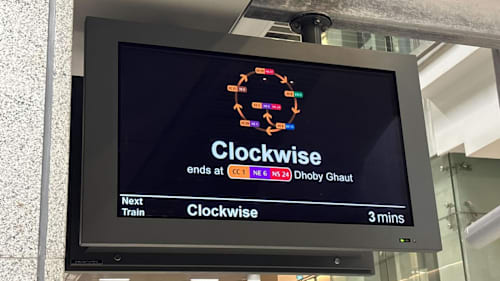
The Circle Line will use "clockwise" and "anti-clockwise" labels when the full loop opens on Jul 12. (Photo: CNA/Justin Ong)

Listen
2 min
New: You can now listen to articles.

This audio is generated by an AI tool.

29 May 2026 10:00AM (Updated: 29 May 2026 10:05AM)
Read a summary of this article on FAST.
FAST

SINGAPORE: When the Circle Line (CCL) is completed in July, trains will display their direction as "clockwise" or "anti-clockwise" rather than by terminal station.

Currently, as the CCL does not operate as a complete loop, trains display their direction by indicating the final station, such as Harbourfront or Dhoby Ghaut.

To help commuters get used to the new system ahead of the opening, the updated wayfinding signs will appear at Promenade, Esplanade, Buona Vista and Paya Lebar stations from Friday (May 29).

Keppel, Cantonment and Prince Edward Road stations will open for a public preview on Jul 4, with passenger service starting Jul 12. Their opening completes the loop, allowing trains to travel the entire circle without a designated terminal.

The Land Transport Authority (LTA) said it had consulted commuters and station staff to understand the challenges they faced navigating the CCL, and conducted a public survey in March 2025 that drew over 3,000 responses.

“The completion of the CCL introduces unique operating features that require tailored wayfinding solutions to help commuters navigate the full loop more easily,” it said. 

Respondents preferred "clockwise" and "anticlockwise" over alternative labels such as "inner loop" and "outer loop". LTA said the feedback was used to refine the wayfinding strategy.

CNA Games
Show More
Show Less

When CNA visited Promenade station on Friday, the updated displays were visible at the above-ground entrance, above the fare gates and on the platforms.

Once the loop is completed, platform displays will indicate each train's direction, showing either "clockwise loop" or "anticlockwise loop". 

However, the CCL will also retain a "spur" – a branch that deviates from the main loop – with Esplanade, Bras Basah and Dhoby Ghaut stations. Trains on the spur will not complete the full circle and will carry an additional label, such as "clockwise – ends at Dhoby Ghaut", to indicate where they terminate.

LTA said it will continue to gather feedback and conduct ground observations to improve information clarity on the line.

Source: CNA/cy

Sign up for our newsletters

Get our pick of top stories and thought-provoking articles in your inbox

Subscribe here
Inbox
FAST
Advertisement

Living

Pokemon Center Singapore to reopen on Jul 1 with refreshed interior and special-edition merchandise

Located at Jewel Changi Airport, Pokemon Center Singapore temporarily closed from Apr 1 as part of renewal works.

Pokemon Center Singapore to reopen on Jul 1 with refreshed interior and special-edition merchandise

The entrance to the refreshed Pokemon Center Singapore. (Photo: Pokemon Center Singapore)

Listen
2 min
New: You can now listen to articles.

This audio is generated by an AI tool.

29 May 2026 10:04AM
Read a summary of this article on FAST.
FAST

Following its temporary closure in April, the popular Pokemon Center Singapore will finally reopen on Jul 1 with a refreshed interior reflecting Singapore's heritage as well as special-edition merchandise.

The Legendary Pokemon Solgaleo has been chosen as the new symbol of the place, appearing on the store's refreshed logo and facade. 

Fans visiting the store will also be greeted by a massive Solgaleo statue at the entrance. In addition, the revamped store now features a dedicated event space equipped with a large-format monitor, allowing it to host many events centred on the likes of video games, trading cards and more.

The new logo featuring Solgaleo and Pikachu. (Photo: Pokemon Center Singapore)

To commemorate the opening, Pokemon Center Singapore will have a slew of special-edition merchandise featuring artwork of Pokemon living in a Singapore-inspired cityscape.

CNA Games
Show More
Show Less

The first wave of merchandise comprises 12 items and will go on sale at the reopening itself. These include a logo pin (S$10), a plush of Pikachu with durian (S$34), a metal plate (S$198) and more.

The second wave of products will be launched in August, which includes a bag charm depicting the beloved Pikachu and a cup of coffee.

Some of the items available at the reopening of Pokemon Center Singapore. (Photo: Pokemon Center Singapore)

During the first five days of the reopening, from Jul 1 to 5, admission  will be managed through a combination of advance reservations and same-day queue entry tickets.

Visitors planning to enter the store between 10am and 1pm must secure an advance reservation. Details on the application process will be announced progressively on Pokemon Center Singapore’s official Instagram page.

For entry after 1pm, same-day queue tickets will be distributed on-site from 8.30am on a first-come, first-served basis.

Pokemon Center Singapore is located at 78 Airport Boulevard, #04-201/202/203, Jewel Changi Airport, Singapore 819666. 

Source: CNA/hq

Sign up for our newsletters

Get our pick of top stories and thought-provoking articles in your inbox

Subscribe here
Inbox
FAST
Advertisement

Dining

'People think cooking is easy?' Wah Kee prawn mee hawker responds to 'rude' claims before June reopening

The famously curt (or misunderstood?) aunty behind the Pek Kio stall closed shop for three months. Why? 8days speaks with Tham Lay Mon before Wah Kee’s upcoming reopening.

'People think cooking is easy?' Wah Kee prawn mee hawker responds to 'rude' claims before June reopening

From left: Wah Kee Big Prawn Noodles' second-generation owners Tham Lay Mon, 81, and Lau Fook Wah, 84. (Photos: 8days, Google Maps)

Listen
9 min
New: You can now listen to articles.

This audio is generated by an AI tool.

29 May 2026 08:17AM
Read a summary of this article on FAST.
FAST

Whether you know Wah Kee Big Prawn Noodles for its giant, wild-caught prawns and rich soup or its notoriously sharp-tongued hawker auntie, regulars of the longtime Pek Kio Market And Food Centre stall might have noticed something unusual – its shutters have remained down since February.

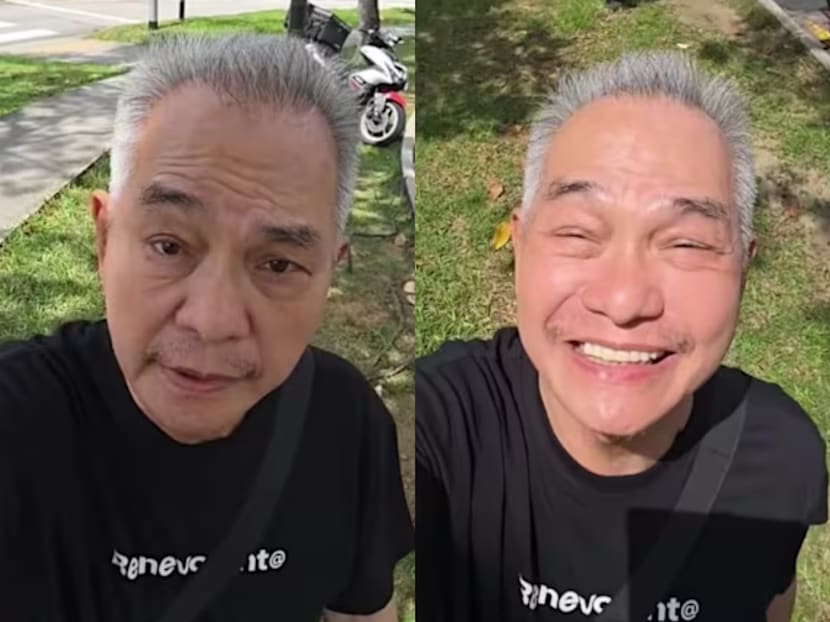
But after a three-month closure that sparked speculation about whether the elderly hawkers have retired for good, second-generation owners Lau Fook Wah, 84, and Tham Lay Mon, 81, told 8days that their Michelin-recognised stall is expected to reopen in June.

Set up in 1951 by Lau’s parents, Wah Kee has spent over seven decades building a loyal following for its rich, umami broth topped with fragrant prawn oil and wild-caught sea prawns. The family once expanded the business to outlets at Esplanade and Beach Road, though only the original Cambridge Road stall remains today.

The famed stall has also become almost equally well-known for Tham’s blunt manner, with reviews over the years describing the veteran hawker as “fierce”, “grumpy” and “rude”, especially towards customers ordering the cheaper bowls.

CNA Games
Show More
Show Less

Yet, during 8days’ interview with Tham over the phone, the hawker aunty many netizens fear getting scolded by turned out to be surprisingly warm and chatty. Perhaps the break did her good.

HAWKER UNDERWENT CATARACT SURGERY

Tham told 8days that the stall’s closure became longer than expected after she underwent cataract surgery. Doctors had advised her to avoid steam for at least a month while recovering.

“After the surgery, I cannot be near hot water or steam due to cooking the noodles, so we had to wait,” she explained.

Her husband and main cook Lau, 84, also recently underwent medical check-ups. “It also depends on my husband’s health,” she added. “We will see how he feels.”

The elderly couple run the stall on their own with Lau serving as the main cook, while Tham assists with both cooking and ordering duties.

(Photo: Google Maps/Ronny Tan Yong Hui)

According to Tham, the stall had initially stopped operations before Chinese New Year due to disruptions involving their seafood suppliers during the festive season, especially since Chinese New Year and Hari Raya fell unusually close together this year. Suppliers typically allow their workers to return to their home countries during the festive period, resulting in manpower shortages and supply disruptions.

The stall had initially hoped to reopen around Apr 6 but Tham’s lengthy surgery recovery pushed the reopening back further.

“YOU THINK HAWKER [WORK IS] SO EASY TO DO?”

During the three-month closure, the couple relied on their savings to get by – something Tham said was only possible because they had spent decades carefully setting money aside from the business.

“You think hawker [work is] so easy to do? Must earn a bit, save a bit. Cannot spend a lot,” Tham told 8days candidly.

The couple have three children, though none are currently involved in the trade. While one of their sons used to help out back when their business was in expansion mode, Tham shared that he now has his own career, and only occasionally helps them communicate with suppliers.

(Photo: Google Maps/Serena Tiong)

“Even if we have children, [it’s] not to say they won’t support you but they also have responsibilities and their own families. Nowadays, life is very hard,” she said, with a hint of resignation.

When asked what led to Wah Kee’s initial ambitious expansion plan eventually scaling back to a single stall, Tham said it was her son’s friend who initiated the expansion years ago but declined to elaborate and brushed off further questions.

TINY S$5 BOWL VS S$25 BOWL WITH GIANT PRAWNS

Wah Kee’s menu consists solely of prawn noodles priced from S$5 to S$25. Tham said all the stall’s prawns are premium, wild-caught sea prawns, including those served in the cheaper bowls.

However, for the S$5 and S$10 portions, smaller prawns are typically halved and de-shelled, with the heads reserved for the broth. From S$15 onwards, customers get progressively larger whole prawns with the flavourful heads intact. Some regulars are also known to order off-menu bowls costing over S$30, even up to a whopping S$45.

The stall’s soup is also different from pork bone-heavy prawn broths commonly found elsewhere. Instead, Wah Kee serves a lighter soup topped with a layer of orange-red prawn oil. Fans praise its clean seafood sweetness and concentrated crustacean flavour, while some detractors have criticised it for tasting too oily or diluted.

(Photo: Google Maps/Javier Lee)

KNOWN TO SNAP AT THOSE WHO ORDER THE CHEAPEST S$5 BOWL

Wah Kee’s pricing and service style have also become frequent talking points. One Google reviewer complained that the S$5 portion was “tiny” and alleged that Tham became annoyed when she asked for change for a S$10 note after ordering the cheapest bowl. 

Other reviews have similarly claimed that customers ordering lower-priced bowls were treated more curtly than those splurging on the stall’s pricier prawn noodles.

But some diners have defended the hawkers online, arguing that Wah Kee offers an increasingly rare style of old-school prawn noodles that prioritises premium seafood over heavier pork-based broths. One reviewer described the soup as “pure unadulterated prawn flavour”.

(Photo: Google Maps/Flo Yeow)

WILD SEA-CAUGHT PRAWNS INSTEAD OF CHEAPER FARMED ONES

Even with rising costs, Tham said they have no plans to compromise on quality by switching to cheaper farmed prawns. Instead, they intend to continue using imported wild sea prawns from Indonesia and Malaysia. 

“In Singapore, I can confidently tell you, most people cannot find this type of prawn noodle anymore,” she said. “Mostly they use farmed prawns, not sea prawns like mine. The farmed ones are not as sweet.”

Tham acknowledged that using premium seafood has made Wah Kee’s noodles pricier than most other prawn mee stalls, which she believes may partly explain why business has slowed in recent years.

“Actually our prawn noodles are already quite expensive,” she admitted.

Still, she hoped that upcoming BTO developments around the Cambridge Road area may eventually bring more customers to the stall when it reopens.

“YOU CANNOT RETIRE!”

Though Wah Kee has long been a polarising hawker institution, Tham said loyal regulars have continued calling her throughout its closure to ask when her stall will reopen.

“All my regulars keep calling me, ‘You got open or not, auntie?’” she laughed. “Some even tell me, ‘Aunty, you cannot retire!’”

(Photo: Google Maps/Flo Yeow)

In 2024, radio DJ Chen Ning visited Wah Kee for a TikTok review with 8days, where she ended up ordering an off-menu S$35 bowl after asking for the same bowl as a regular customer nearby.

“There isn’t even a S$35 option on the menu!” she remarked in the video before Tham replied that the oversized portion was a “special” for regulars. Chen Ning later joked that the hawker auntie “smiled the brightest” after receiving payment for the pricey bowl. While she found the broth “nice though not overly flavourful”, she praised the giant prawns, calling them “really good”.

Tham acknowledged that the stall has developed a divisive reputation online over the years.

“On the internet, people say my stall [is] not very good because maybe I’m rude. But they don’t understand what we go through. I give you the food to eat, I tell you the price and I don’t cheat you. That is enough for me,” she said unapologetically. 

She elaborated that customers often underestimate how physically demanding hawker work can be, especially at their age.

“People think cooking is easy? Sometimes [it is] hot, sometimes we are sick. All the customers want us to be fast but how can we be fast when we are old?” she lamented.

The veteran hawker appeared emotional when reflecting on the future of traditional prawn noodles in Singapore.

“We are so old already. We can still sell it now but in future, where are you going to find this type of noodles? No more already,” Tham reflected wistfully.

When asked if the couple’s children might eventually take over the business, Tham replied quietly: “I don’t know whether they want to take over the business. It depends on them".

Wah Kee Big Prawn Noodles is located at #01-15 Pek Kio Market And Food Centre, 41A Cambridge Rd. The stall is expected in June. Tel: 9688 3633.

This story was originally published in 8Days.

For more 8Days stories, visit https://www.8days.sg/  

Source: CNA/bk

Sign up for our newsletters

Get our pick of top stories and thought-provoking articles in your inbox

Subscribe here
Inbox
FAST
Advertisement

Women

After early miscarriage, some parents turn to cremation for closure: 'It made the pregnancy loss feel real'

When miscarriage happens in the first trimester and there may be little to see or recover, some parents turn to cremation to grieve a loss that can otherwise feel invisible.

After early miscarriage, some parents turn to cremation for closure: 'It made the pregnancy loss feel real'

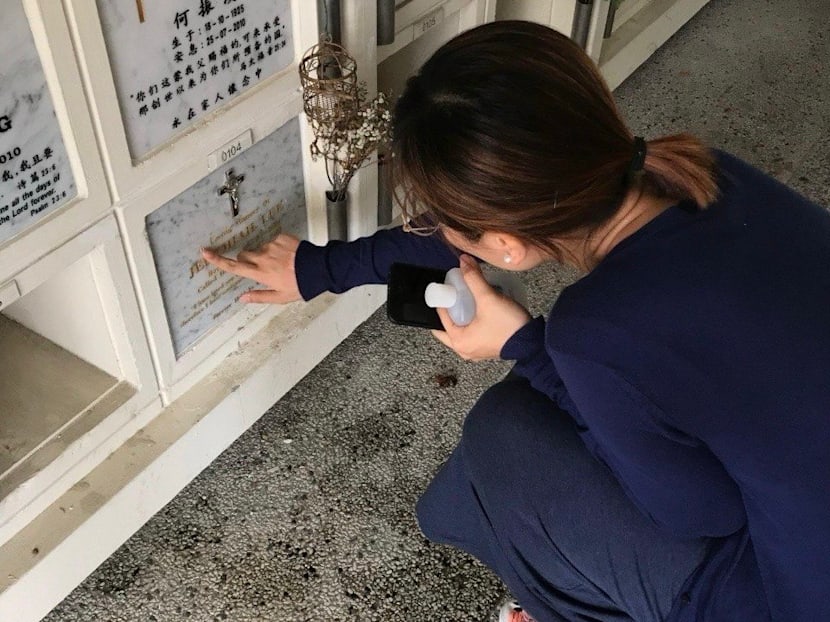
Estelle Goh at the niche in Mandai Columbarium where her baby’s ashes are kept, after losing the pregnancy at nine weeks. (Photo: Estelle Goh)

Listen
11 min
New: You can now listen to articles.

This audio is generated by an AI tool.

29 May 2026 07:16AM (Updated: 29 May 2026 09:25AM)
Read a summary of this article on FAST.
FAST

Unlike most mothers, Estelle Goh’s pregnancy journey did not begin with a giddy search for cots and strollers. Instead, she found herself up in the wee hours desperately searching for a funeral service provider.

In 2018, at around nine weeks of pregnancy, Goh miscarried. Her dilation and curettage (D&C) procedure to remove the foetal remains was scheduled for the next day.

Devastated, she wanted to give her unborn baby a proper cremation. But the five or six funeral providers she contacted turned her down. They only arranged cremations for stillborn babies at or after 24 weeks’ gestation.

At 2am, Goh finally found a funeral provider willing to take the job – Harmony Funeral Care.

CNA Games
Show More
Show Less

The next day, she underwent the D&C. After that, she was handed a plastic bottle containing her foetal remains and other pregnancy tissue.

She placed the bottle in a tiny coffin, along with her pregnancy test kit, ultrasound scan and baby clothes, and watched as the coffin was pushed into the cremation chamber.

Estelle Goh with her husband holding the ultrasound scan of their baby when they found out about the pregnancy in 2018. (Photo: Estelle Goh)

This process helped her grieve better. “It made the pregnancy loss feel real – the foetus was not just an unnamed thing in my body that was purged and thrown away along with other things. It was a life, a child that my husband and I were blessed with,” said the 32-year-old.

AFTER EARLY PREGNANCY LOSS

One reason Goh struggled to find a funeral provider was because such rites are relatively uncommon for first trimester miscarriage – especially in 2018.

In Singapore, stillbirths – pregnancy loss at or after 24 weeks’ gestation – are registered at the Immigration and Checkpoints Authority. Parents may also choose to register the baby’s name and are issued a digital stillbirth certificate for funeral arrangements.

But when it comes to miscarriages, practices surrounding the claiming of foetal remains are less standardised.

Dr Seet Meei Jiun, head and senior consultant, Department of Obstetrics and Gynaecology at KK Women’s and Children’s Hospital (KKH), said that it is standard protocol to inform patients that they may request the release of foetal remains following both first and second trimester miscarriages.

This has been a longstanding practice at the hospital, added Jocelyn Chng, assistant director of nursing at KKH.

At Singapore General Hospital (SGH), its head of Obstetrics and Gynaecology, Dr Jason Lim Shau Khng, said that patients are explicitly informed of their right to request the release of foetal remains – also a hospital practice for many years.

However, “the ability to claim remains depends on the method of management used and the identifiability of the remains,” he said.

“For first trimester cases, remains can typically be claimed after a surgical procedure. For second trimester miscarriages, patients may claim remains following a medically induced labour,” Dr Lim explained.

However, “in some early first trimester losses, the pregnancy tissue may already have been completely expelled prior to medical or surgical treatment, resulting in minimal or no identifiable remains available for claiming. In such situations, claiming may not be possible,” Dr Seet said.

In other cases, “foetal tissue may not be clearly formed or identifiable from other pregnancy-related tissue. Hence, this can make the physical claiming of remains technically challenging, or in some cases, not possible,” said Dr Lim.

“Whereas, in the second trimester (miscarriages), the foetus is more developed and physically formed, making it generally more feasible to facilitate a request for private burial or cremation,” he added.

Goh’s ultrasound scan of the baby she lost at nine weeks of pregnancy. (Photo: Estelle Goh)

At National University Hospital (NUH), it is standard practice to inform patients of the option to claim foetal remains in mid-trimester pregnancy loss and stillbirths. But for early miscarriage before 12 weeks’ gestation, “providing information to patients on the option to claim foetal remains is not a routine practice,” said Adjunct Associate Professor Arundhati Gosavi from the Department of Obstetrics and Gynaecology.

“Requests to claim foetal remains following a first trimester miscarriage are relatively uncommon, and we would facilitate them on a case-by-case basis,” she added.

Under the Healthcare Services Act, the Ministry of Health (MOH) requires healthcare institutions to take effective measures to ensure the safe and proper disposal of foetal remains. But healthcare institutions are allowed to manage this according to their own protocols, said MOH.

At SGH, unclaimed foetal remains are mass cremated, said Dr Lim. At KKH, they are either buried or cremated, said Dr Seet. Burial arrangements are handled by a charity organisation, added KKH’s Chng.

HELPING PARENTS CLAIM REMAINS

Dr Douglas Ong, an obstetrician and gynaecologist at Mount Elizabeth Medical Centre, recalled the first time a patient who had suffered an early miscarriage asked: “What are you going to do with my baby?”

That was more than 10 years ago, and Dr Ong said there were no established protocols for claiming foetal remains for first trimester miscarriage at Mount Elizabeth Hospital and Mount Alvernia Hospital where he was delivering. The standard answer was that the hospital would dispose of the remains, he said.

In fact, when he conveyed her request to the hospital, they were unsure how to even give the foetal remains to her, since it was mixed with blood clots and tissue.

But Dr Ong believed it was important. About one in five pregnancies end up in miscarriage, and around 80 per cent of miscarriages occur in the first trimester, Dr Ong noted.

In such cases, parents often have to deal with the loss privately and move on, he added.

“You have surgery and a few hours later, you go home, no longer pregnant. The next week, you go back to work. It can feel so empty,” he reflected. “People may say, don’t worry, you’ll have another one, but it doesn’t cure the grief.”

Harmony Tee, funeral director at Harmony Funeral Care, collecting first trimester foetal remains at a hospital. (Photo: Harmony Funeral Care)

“As a parent myself, I want to give dignity and respect to that embryo who had no name, no face, but represented everything to the parents,” he said.

Dr Ong spent a year developing a process for his practice and now offers every parent who suffers an early miscarriage the option.

Should parents wish to claim foetal remains, it will be presented in a bottle, along with blood clots and tissue. The bottle is wrapped and placed in a small bereavement box.

Dr Ong also adapted existing hospital forms used in later-stage pregnancy losses to support parents who wished to arrange cremation and provides them with contacts of two bereavement companies who cremate early-miscarriage foetal remains – Harmony Funeral Care and Holy Spirit Bereavement.

Tee transporting foetal remains from a hospital in a coffin. (Photo: Harmony Funeral Care)

Some families arrange for religious rites, such as prayers by a monk or priest, before cremation.

Because ashes from foetal remains are far smaller in volume than for adults, Dr Ong approached Pearl Yang, a potter from LimeLite Studio, to create baby-sized urns, which he provides to grieving patients without charge.

Some choose to keep the urn in a niche. Others scatter the ashes at designated sites or take them out to sea for burial.

WHY SOME PARENTS CHOOSE CREMATION

Grace (not her real name) suffered two miscarriages in 2019 – a spontaneous miscarriage and an ectopic pregnancy, where a fertilised egg implants outside the uterus.

In both cases, there was no option to claim foetal remains. And in hindsight, even though they were painful losses, the 33-year-old said they felt “very unreal”.

“It was like it didn’t happen, it didn’t matter, it’s forgotten,” she told CNA Women.

In 2021, Grace gave birth to a healthy baby, but in 2023, she experienced a third miscarriage at 11 weeks’ gestation. Dr Ong, her gynaecologist, offered her the option to claim foetal remains after the D&C.

She agreed, and for the first time, she was able to see her foetus. “There was other tissue, but I could see tiny hands and legs,” she shared.

The couple kept the cremation ceremony small – inviting only a friend and a Catholic priest to pray for the baby. Grace said the process made things a lot more real and gave her a lot of closure.

Goh, who described her miscarriage as “earth shattering” also said that being able to cremate the foetal remains helped her and her husband “grieve a bit more tangibly”.

A RISE IN CREMATION REQUESTS

Harmony Tee, founder and funeral director of Harmony Funeral Care, told CNA Women that cremation for first trimester miscarriage is becoming more common. Her company started offering the service five to eight years ago and now handles at least one such case every month.

These cremations typically take 30 minutes. Some, like Grace and Goh, opt for smaller and simpler ceremonies than adult cremations. However, Tee said one first trimester cremation had 80 to 100 attendees.

Goh with her baby’s urn outside Mandai Crematorium. (Photo: Estelle Goh)

“A lot of people downplay the loss of a foetus. But in reality, the grief can be just as deep,” Tee reflected.

“Parents are not only grieving a life lost, but also (the loss of) the future they had envisioned – the milestones, memories, and moments that will never come to be,” she said.

She added that some parents may also have tried very hard to conceive, including undergoing multiple in vitro fertilisation (IVF) cycles.

Not all patients choose to claim or cremate remains.

“The frequency often depends on factors such as culture and religious beliefs. Specific burial or cremation rites may also be required for some religions,” said SGH’s Dr Lim.

Both Goh and Grace were influenced by their Catholic faith. “My faith believes that life begins at conception. Throwing away the foetal remains is the last thing we want,” said Goh.

“For some parents, claiming the remains is a vital step in acknowledging their child’s life and finding a sense of peace,” Dr Lim noted.

Goh, now a mother of two, takes her seven-year-old daughter to visit her unborn brother’s niche. (Photo: Estelle Goh)

Dr Ong, who has supported more than 100 patients to claim and cremate foetal remains from first trimester pregnancy loss, said that a few patients even come out of the process joyful, stronger and more ready to move on.

Grace, who is now the mother of two boys aged five and one, and pregnant with her third child, has since named the three babies she lost to miscarriages Hope, Faith and Peace. She places her baby’s urn in a small pouch bearing all their names and tells her eldest son about them.

“The whole experience gave us peace,” she said.

Goh and her husband named their unborn baby Jeremiah and placed his urn in Mandai Columbarium.

“That helped me in the days and months when I was recovering. Every time I missed him, I had a physical place where I could be with him,” she said.

Now the mother of two children aged seven and one, Goh takes her eldest daughter to visit Jeremiah on his death anniversary.

“I tell people I have three children, one in heaven, two on earth. It is not just some medical ailment I went through. It is a chapter of our lives, not one that has been forgotten or written off,” she said.

CNA Women is a section on CNA Lifestyle that seeks to inform, empower and inspire the modern woman. If you have women-related news, issues and ideas to share with us, email CNAWomen [at] mediacorp.com.sg.

Source: CNA/pc

Sign up for our newsletters

Get our pick of top stories and thought-provoking articles in your inbox

Subscribe here
Inbox