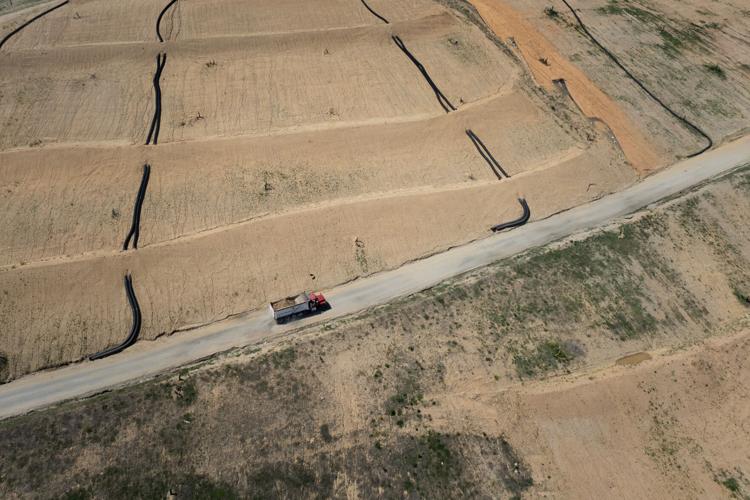
Every day, some 50,000 gallons of potentially toxic wastewater collect inside the Shoosmith Landfill, a deteriorating dump in Chesterfield County whose owner has gone bankrupt and whose cleanup could cost taxpayers $173 million.
Last year, state investigators found the brown wastewater, called leachate, spilling into Swift Creek, which feeds into the Appomattox River. Containing the wastewater is an ongoing, expensive task, and without urgent intervention, the landfill could become an "environmental catastrophe," said Lynn Tavenner, the bankruptcy's trustee.
“To be clear and to ensure there are no misconceptions, the landfill is in serious jeopardy,” Tavenner wrote in a recent filing.
The private company that runs the 335-acre dump, Shoosmith Bros. Inc., said in court that its revenue had depleted and its costs spiraled, leaving no money to pay for maintenance. The environmental problems, the company said, can be blamed on a third-party contractor.
People are also reading…
But Tavenner, a local lawyer, accused Shoosmith Bros. of financially neglecting the dump for years. Equipment was often broken or in need of repair, she said in court papers. All the while, the owners drained the business of money, took it for themselves and ignored the risk of pollution, she said.
Now state officials are racing to figure out how to contain the wastewater, manage the dump's dangerous temperature and close its pits with soil.
They must quickly answer the question: Who will pay the $173 million?
Owners neglected landfill for years, trustee said
The landfill at 11520 Iron Bridge Road in Chester opened in 1976. In 2008, a group of Texas-based investors called VWS Holdco Inc. purchased the property and its management company, Shoosmith Bros. Inc. VWS Holdco's leaders, Fred G. Nichols and Paul Lawrence McGee, did not respond to requests for comment. Neither did a lawyer who represents Nichols.
Like most landfills, Shoosmith regularly discharges contaminated wastewater. The leachate seeps through the ground, is caught by a synthetic liner and pumped into storage tanks. About 400,000 gallons collect each week, the state's Department of Environmental Quality said last year.
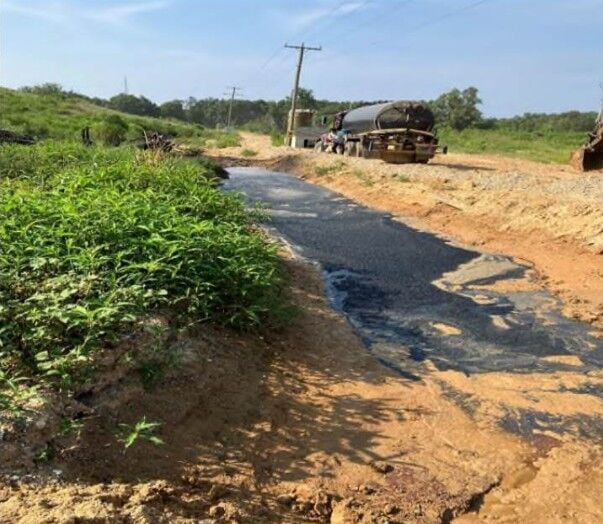
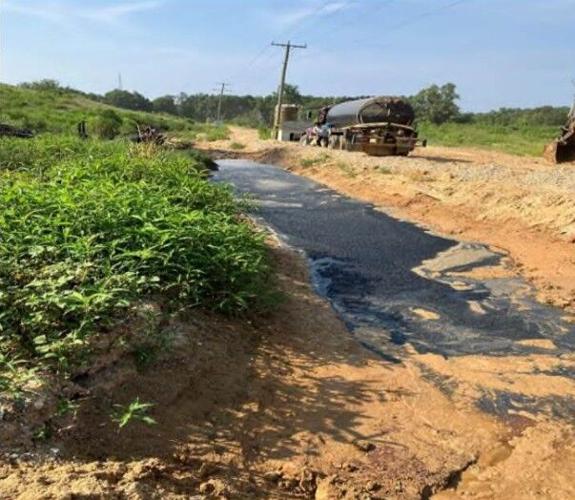
In 2024 and 2025, investigators from the Virginia Department of Environmental Quality found wastewater spilling into channels that feed Swift Creek. In one case, leachate pooled up after a pipe was damaged.
In 2024 and 2025, investigators found leachate had spilled into the stormwater channels that lead to Swift Creek, which separates the landfill from The Highlands neighborhood. Water had eroded the soil, exposing the litter underneath.
Investigators noticed there were only four or five employees to manage the expansive property, and they lacked the necessary heavy equipment to clean basins that were clogged with dirt.
The list of shortcomings goes on, Tavenner said. Power stations were broken, pumps needed replacement and service trucks were out of service. The entire site, she said, had devolved into a "muddy cesspool" that had been financially neglected for years.
The owners, McGee and Nichols, had the money to make repairs, said Jason Harbour, an attorney for Hunton Andrews Kurth who represents Chesterfield County. They previously sold two properties adjacent to the landfill for $40 million. But instead of using the money to improve the facility, they paid themselves, Harbour said.
Their actions could rise to criminal liability, Harbour added in a court filing. In Virginia, abandoning a landfill without closing it is a Class 4 felony, punishable by up to 10 years in jail. A spokesperson for Chesterfield County declined to comment.
Tavenner said she is "repulsed by certain individuals' cavalier attitudes, actions and inactions, and how some have recklessly and intentionally placed the residents of the commonwealth in peril."
Consultants: Dump is in poor health
Over the years, the condition of the landfill deteriorated, an outside firm called SCS Engineers determined. The temperature inside some garbage-holding pits has risen to roughly 165 degrees Fahrenheit, a rare event that impedes the normal decomposition of waste and causes other environmental problems.
The dump began emitting strange odors resembling soap, cinnamon and rotten fish, the engineering firm said in a report. The quality of the gas inside worsened, producing less methane and more carbon dioxide and carbon monoxide. The high temperatures led to more wastewater and a buildup of pressure under the ground that can cause the soil to splinter and crack. How a company manages its landfill can contribute to temperatures rising, the Environmental Protection Agency said.
In a legal filing, a representative for Shoosmith deflected blame, saying a third-party company incorrectly installed the landfill's liner, designed to block wastewater from contaminating the ground. The substandard installation, they said, caused the dangerous temperatures. An outside firm conducted a study last year and determined the landfill, despite the ecological risks, presented no serious health risk to employees or the surrounding community in 2024.
Still, if the landfill isn't managed, it will continue producing greenhouse gases and spilling wastewater. Its conditions could spiral into an "environmental disaster," Tavenner said.

The Shoosmith Landfill produces about 400,000 gallons of wastewater, called leachate, every week. Crews pump the liquid and haul it to treatment facilities off-site.
Owners 'looted' the landfill company, lawyer said
In June 2025, Shoosmith Bros. declared Chapter 11 bankruptcy, in which a company intends to restructure and remain in business. As the venue for the bankruptcy, company leaders chose Delaware, the same state where its parent company, VWS Holdco, is registered.
Shoosmith claimed a series of events sunk its earnings and raised its costs, forcing bankruptcy. In late 2022, the landfill stopped accepting waste, which eliminated most of its revenue. Shoosmith downsized its staff.
Then in 2024, the landfill stopped pouring wastewater into the Chesterfield sewer system and instead began pumping it into trucks and hauling it to off-site treatment plants. The new procedure cost significantly more money and put Shoosmith in an "impossible financial position," the company said.

But Chesterfield County petitioned the court to transfer the bankruptcy to Virginia, and a judge approved. At the same time, Shoosmith converted its case to a Chapter 7 bankruptcy, meaning the company intends to liquidate and go out of business.
There isn't much to liquidate, though. The company claimed it has just $200 in its checking account and about $7 million in assets — all in the landfill's real estate and the rights to sell methane gas to an outside company.
Meanwhile, Shoosmith says it owes $187 million to various creditors, with all but $4 million owed to one of its parent companies, the Texas-based Volunteer Enterprises LLC. Tavenner alleged that the owners, Nichols and McGee, used Volunteer Enterprises to strip the landfill company of its assets and keep the money for themselves. Nichols and McGee "looted" the landfill company of $56 million, said Thomas McKee, a lawyer for the trustee.
Now Tavenner is temporarily managing the landfill, and SCS Engineering is removing the wastewater. The engineers projected the dump will produce 24 million gallons of leachate this year, which must be pumped and hauled off-site until a local treatment facility is built. In addition to that work, the open pits need to be closed with soil, and the high temperatures need to be managed.
Altogether, the work will cost about $173 million over 30 years, the firm estimated.
"It is an understatement to say time is of the essence with the remediation," Tavenner said. The problems "literally keep me awake most nights."
There is some short-term money to manage the landfill. Shoosmith Bros. obtained a legally mandated surety bond to cover the cost of closing the landfill in the event that it could not do the work itself. But that bond is worth just $19 million and will pay for immediate needs only.

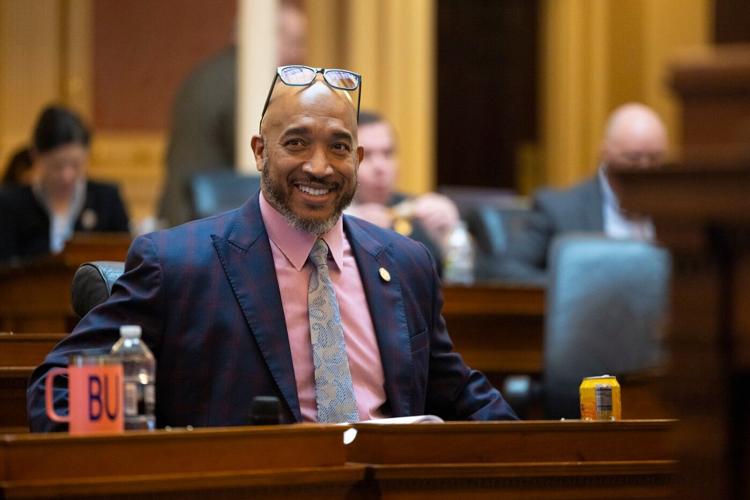
Sen. Mike Jones, D-Chesterfield, said he did not become fully aware of the problem at Shoosmith until this month.
Who will pay?
What Chesterfield and state leaders must determine is, who will pay the $173 million? Tavenner called it an "extremely daunting" figure. Many entities need to collaborate, she said.
The administration of Gov. Abigail Spanberger has asked state lawmakers to chip in about $50 million, said Sen. Mike Jones, D-Chesterfield. And they might seek help from the federal government. Jones and Del. Delores McQuinn, D-Henrico, said they were not fully aware of the problems at Shoosmith until this month.
But it's late in the budget process. Lawmakers have debated the state's next two-year budget since December, and they're in a crunch to get the work done. Gov. Abigail Spanberger must sign it before July 1 to prevent a shutdown.
"We’re just trying to scramble because we’re at the tail end of the budget process, and session is over," Jones said. "We’re finding out about this in the ninth hour."