ZME Science
No Result
View All Result
ZME Science
Australia plotted by every mapped stream and river… all 1.3 million of them
Share
Share this article
Facebook X LinkedIn Reddit WhatsApp Flipboard Bluesky Email Copy Link
  • Comments
  • Home → Other → Great Pics

    Australia plotted by every mapped stream and river… all 1.3 million of them

    Mihai AndreibyMihai Andrei
    April 21, 2016 - Updated on April 27, 2023
    in Great Pics
    A A
    Loading Audio Player By Instaread, Please Wait...

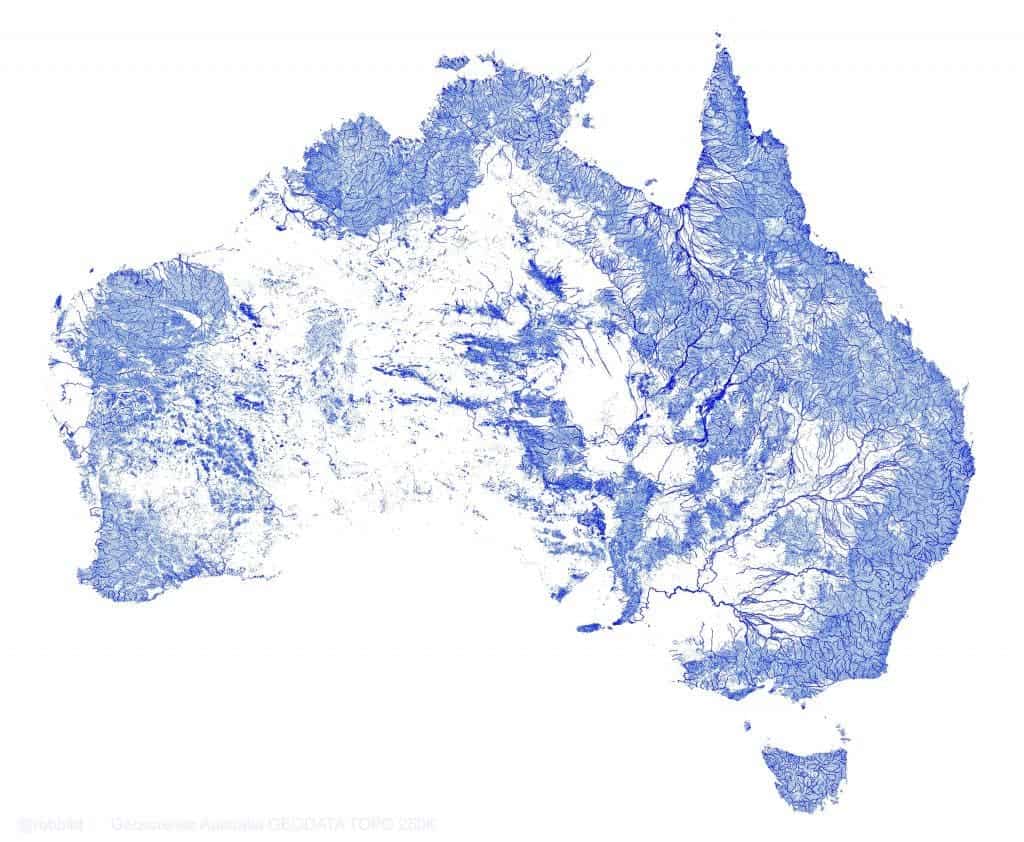
    They say Australia is the Dry Continent, but you wouldn’t guess that based on this image:

    1. River and watershed map of Australia with blue waterways.

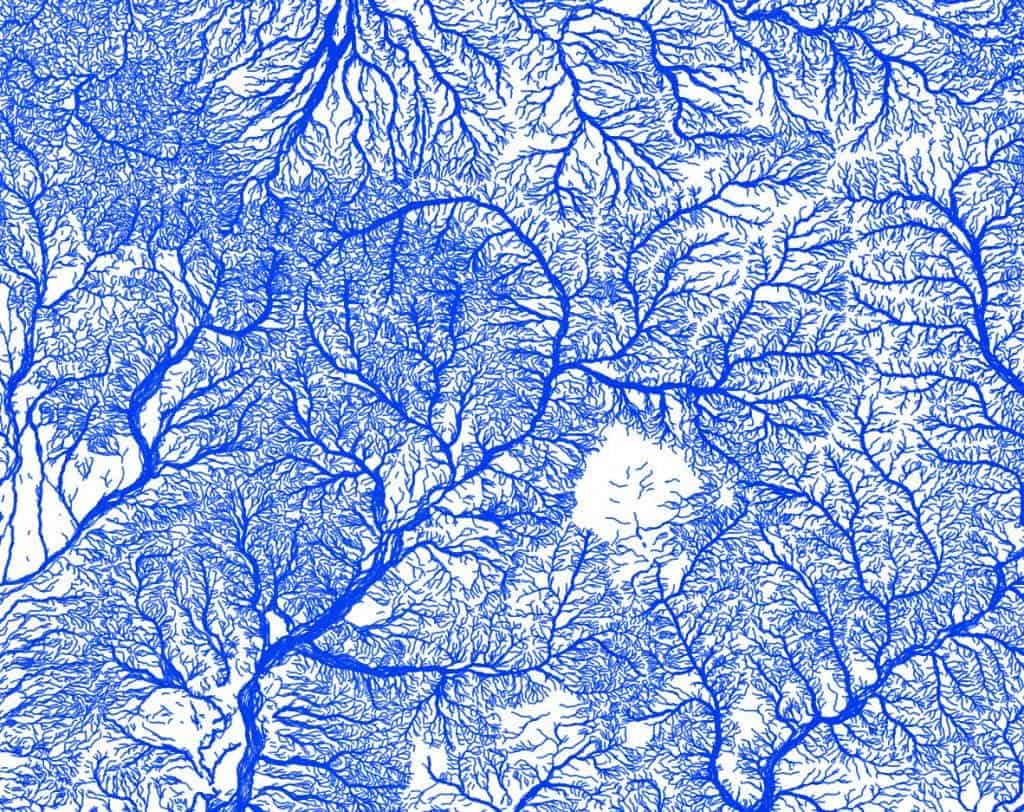
    The image was created with QGIS using data for 1.3 million streams from Geoscience Australia GEODATA TOPO 250K vector datasets [GitHub code]. This is North-west Queensland:

    … and the North-east Murray-Darling Basin:


    But there’s a catch: not all these rivers are permanent ones

    ×

    Get smarter every day...

    Stay ahead with ZME Science and subscribe.

    No spam, ever. Unsubscribe anytime. Review our Privacy Policy.

    Thank you! One more thing...

    Please check your inbox and confirm your subscription.

    “Many arid-zone rivers and streams in these maps are highly ephemeral, and may only flow once every few years or even decades. Streams are weighted by both ephemerality (perennial or non-perennial) and hierarchy (minor or major), with the highest weighting for major perennial rivers (i.e. Murray River),” the agency writes.

    The map without the ephemeral rivers does indeed look much more barren, and I’m almost wondering if there’s something missing from this map.

    RelatedPosts

    New Satellite Index Tracks Coastal Plastic Pollution with Pinpoint Precision
    NASA just developed a way of detecting underground fungi – from space
    From Farms to Lost Cities, Drones Are Quietly Revolutionizing Modern Science
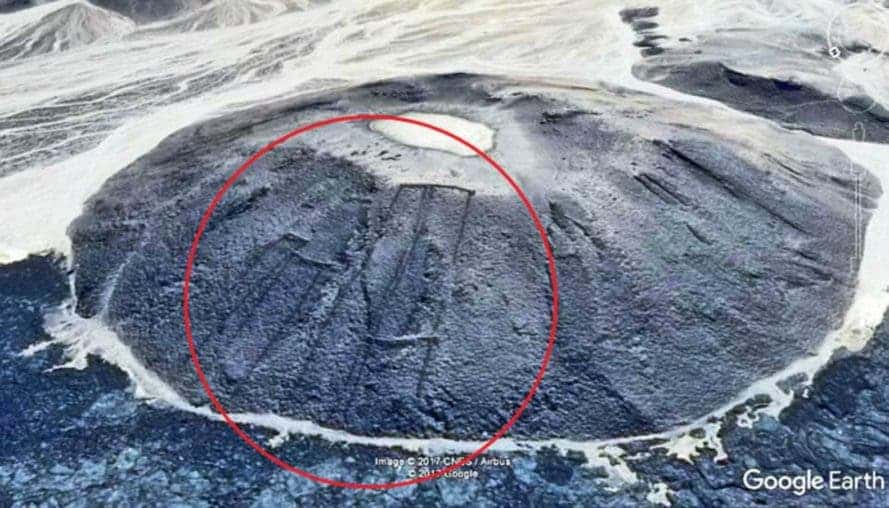
    Google Earth reveals hundreds of ancient structures in Saudi Arabia


    Add ZME Science as a preferred source on Google Search Follow ZME Science on Google News
    Tags: australiariversremote sensing

    Mihai Andrei

    Mihai Andrei

    Dr. Andrei Mihai is a geophysicist and founder of ZME Science. He has a Ph.D. in geophysics and archaeology and has completed courses from prestigious universities (with programs ranging from climate and astronomy to chemistry and geology). He is passionate about making research more accessible to everyone and communicating news and features to a broad audience.

    Related Posts

    Colorful lichen growing on bark, showcasing biodiversity and natural science research.
    Biology

    This Orange Lichen Is Helping Researchers Find Dinosaur Fossils

    byMihai Andrei
    7 months ago
    Melting glacier ice calving into brown water, climate change impact on glaciers, environmental preservation imagery.
    Inventions

    From Farms to Lost Cities, Drones Are Quietly Revolutionizing Modern Science

    byMihai Andrei
    1 year ago
    Untitled aerial view of river delta and coastline, vibrant colors, high-resolution satellite imagery.
    News

    New Satellite Index Tracks Coastal Plastic Pollution with Pinpoint Precision

    byMihai Andrei
    2 years ago
    Unidentified submerged object on ocean surface, mysterious sea anomaly at-sea discovery.
    Archaeology

    Google Earth reveals hundreds of ancient structures in Saudi Arabia

    byMihai Andrei
    9 years ago

    Recent news

    White dove soaring above dark ocean surface, symbolizing peace and freedom.

    People Were Fitted With Wings in VR and Their Brains Started Treating Them Almost Like Body Parts

    May 25, 2026
    Protester holding a sign that reads "No Data Center" at a public demonstration.

    Proposed World’s Largest AI Data Center in Utah May Dump 23 Atomic Bombs Worth of Heat Each Day

    May 25, 2026
    Gold bars and coins for investment and wealth.

    Gold Does Not Tarnish Like Other Metals And Scientists Finally Found a Major Reason Why

    May 25, 2026

    Home → Science → Biology

    NASA just developed a way of detecting underground fungi – from space

    Dragos MitricabyDragos Mitrica
    April 11, 2016
    in Biology, Environment, News, Remote sensing
    A A
    Loading Audio Player By Instaread, Please Wait...

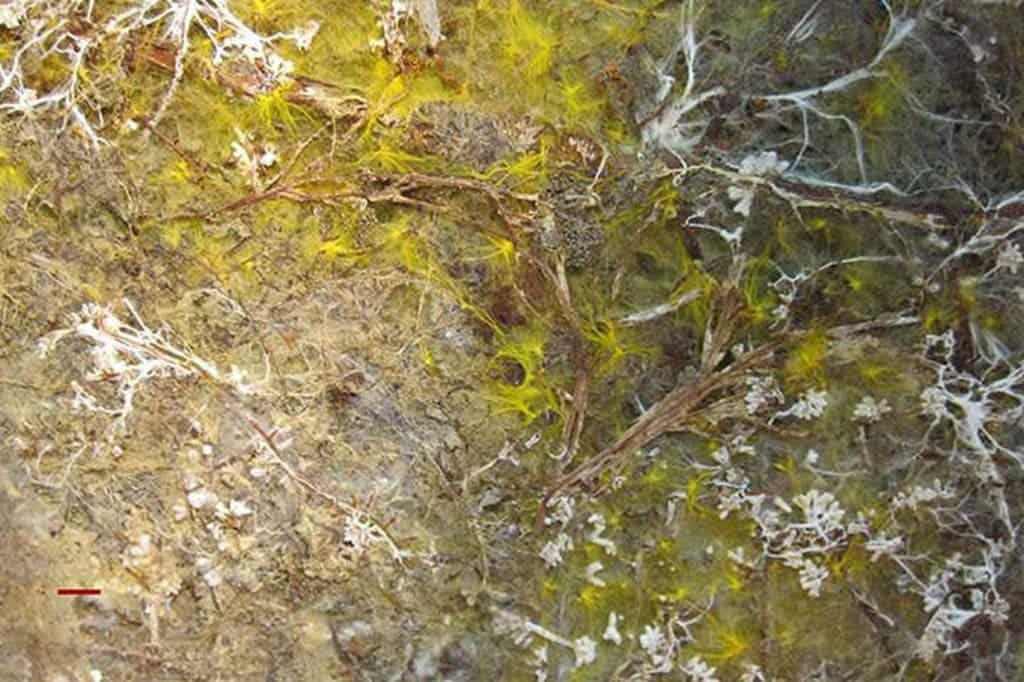
    A team of NASA researchers has developed the first ever method for identifying and studying underground forest fungi from outer space, providing information that will help us better understand how forests will develop.

    Mycorrhizal fungi (white/yellow) trading nutrients for carbon with tree roots (brown). Credits: Indiana University / NASA

    Mycorrhizal fungi (underground fungus) are more similar to a city network than to individual organisms. They are complex intertwined networks that can spread for miles and miles in the search for nutrients. You can find such a fungal network under most of the world’s forests, and there is a special type of relationship between it and trees. The fungus trades nutrients that trees need with the sugars that the trees make during photosynthesis, in an almost symbiotic fashion.

    “Nearly all tree species associate with only one of two types of mycorrhizal fungi,” explained coauthor Richard Phillips of Indiana University, Bloomington.

    The thing is, this type of relationship is extremely vulnerable in the face of climate change. Knowing which type of fungus is predominant will help researchers predict where forests will thrive and where they will falter. Creating this type of map is a difficult and time-consuming endeavor, and only works at small scales. With the technique NASA developed, it works much faster, cheaper, and on much larger scales. Joshua Fisher, who also authored the study, found a way to detect this hidden network using  satellite images.

    RelatedPosts

    The Number of Trees has Halved Since Human Civilization Emerged
    Scientists create bionic mushroom that generates electricity out of microbes
    Trees help keep cities cool and cozy — especially if there’s a lot of them
    How Poisonous Mushrooms Cook Up Toxins

    The method relies on a spectral analysis; every tree species has its own “spectral fingerprint”, it absorbs and reflects light in a specific way, across all wavelengths of the light spectrum. Using satellite images of forest canopies, Fisher’s group probed whether they could identify any patterns in the spectral signatures of tree species associated with one type of fungus that did not appear in species associated with the other type.

    “Individual tree species have unique spectral fingerprints, but we thought the underlying fungi could be controlling them as groups,” he said.

    They applied the technique to four U.S. forest research plots that are part of the Smithsonian Institution’s Forest Global Earth Observatory. The area includes 130,000 trees across 77 species, and the tree species associated with each type of fungus had already been mapped from the ground. The team then analyzed images of the forest canopies taken by the NASA/U.S. Geological Survey Landsat-5 satellite from 2008 to 2011 in many different ways, looking for similarities with the fungus pattern. They found different patterns in different times of the year establishing timing sequences related to each type of fungus, correctly predicting fungus evolution (and implicitly, forest evolution) in 77% of all cases. Fisher concludes:

    “That these below-ground agents manifest themselves in changes in the forest canopies is significant. This allows, for the first time, some light to be shed on their hidden processes.”

    Add ZME Science as a preferred source on Google Search Follow ZME Science on Google News
    Tags: mushroomremote sensingtree

    Dragos Mitrica

    Dragos Mitrica

    Dragos has been working in geology for six years, and loving every minute of it. Now, his more recent focus is on paleoclimate and climatic evolution, though in his spare time, he also dedicates a lot of time to chaos theory and complex systems.


    Related Posts

    Colorful lichen growing on bark, showcasing biodiversity and natural science research.
    Biology

    This Orange Lichen Is Helping Researchers Find Dinosaur Fossils

    byMihai Andrei
    7 months ago
    White flowering tree branch with green leaves, botanical nature, plant life, floral, outdoor, greenery, horticulture, natural environment, flora, botany, leaves, flowers, branch, garden, peaceful scenery.
    Plants and Fungi

    The forgotten history of the black locust tree: From vital to invasive to important once more

    byShiella Olimpos
    10 months ago
    1. Bright yellow mushrooms growing on tree bark in a lush forest setting.
    Science

    Golden Oyster Mushroom Are Invasive in the US. They’re Now Wreaking Havoc in Forests

    byAishwarya Veerabahu
    10 months ago
    Extinct insect fossil preserved in amber with detailed features.
    News

    Ancient ‘Zombie’ Fungus Trapped in Amber Shows Mind Control Began in the Age of the Dinosaurs

    byMihai Andrei
    11 months ago

    Recent news

    Scientists Map Most Cost-Effective Route to the Moon Out of 24 Million Possibilities

    May 23, 2026
    Close-up of a person’s legs and feet wearing orange and gray running shoes on concrete stairs.

    The 150-minute Exercise Rule Helps Your Heart. But If You’re Serious About It, Better Aim for 600 Minutes

    May 22, 2026
    Mars with clouds and surface features, showcasing its reddish terrain and atmospheric conditions.

    JWST Caught Dual Atmospheres on the Same Planet 600 Light-years from Earth

    May 22, 2026
    • About
    • Advertise
    • Editorial Policy
    • Privacy Policy and Terms of Use
    • How we review products
    • Contact

    © 2007-2025 ZME Science - Not exactly rocket science. All Rights Reserved.

    No Result
    View All Result
    • Science News
    • Environment
    • Health
    • Space
    • Future
    • Features
      • Natural Sciences
      • Physics
        • Matter and Energy
        • Quantum Mechanics
        • Thermodynamics
      • Chemistry
        • Periodic Table
        • Applied Chemistry
        • Materials
        • Physical Chemistry
      • Biology
        • Anatomy
        • Biochemistry
        • Ecology
        • Genetics
        • Microbiology
        • Plants and Fungi
      • Geology and Paleontology
        • Planet Earth
        • Earth Dynamics
        • Rocks and Minerals
        • Volcanoes
        • Dinosaurs
        • Fossils
      • Animals
        • Mammals
        • Birds
        • Fish
        • Amphibians
        • Reptiles
        • Invertebrates
        • Pets
        • Conservation
        • Animal facts
      • Climate and Weather
        • Climate change
        • Weather and atmosphere
      • Health
        • Drugs
        • Diseases and Conditions
        • Human Body
        • Mind and Brain
        • Food and Nutrition
        • Wellness
      • History and Humanities
        • Anthropology
        • Archaeology
        • History
        • Economics
        • People
        • Sociology
      • Space & Astronomy
        • The Solar System
        • Sun
        • The Moon
        • Planets
        • Asteroids, meteors & comets
        • Astronomy
        • Astrophysics
        • Cosmology
        • Exoplanets & Alien Life
        • Spaceflight and Exploration
      • Technology
        • Computer Science & IT
        • Engineering
        • Inventions
        • Sustainability
        • Renewable Energy
        • Green Living
      • Culture
      • Resources
    • Videos
    • Reviews
    • About Us
      • About
      • The Team
      • Advertise
      • Contribute
      • Editorial policy
      • Privacy Policy
      • Contact

    © 2007-2025 ZME Science - Not exactly rocket science. All Rights Reserved.