Colt Forum banner

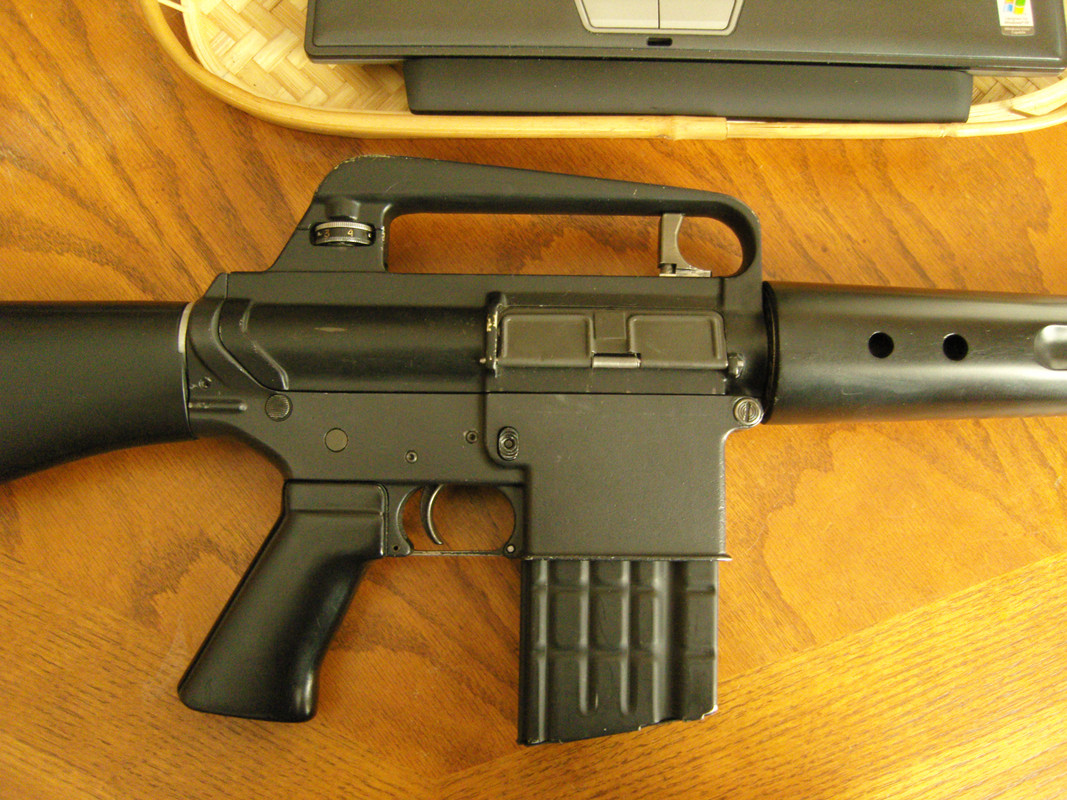
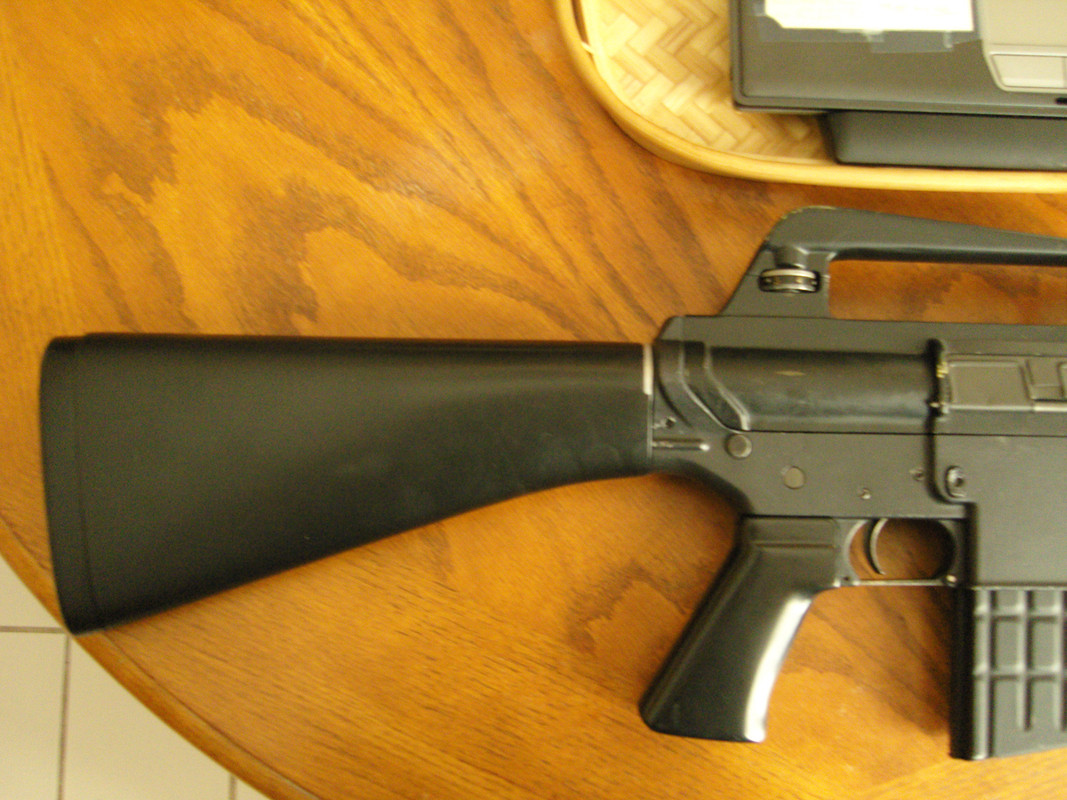
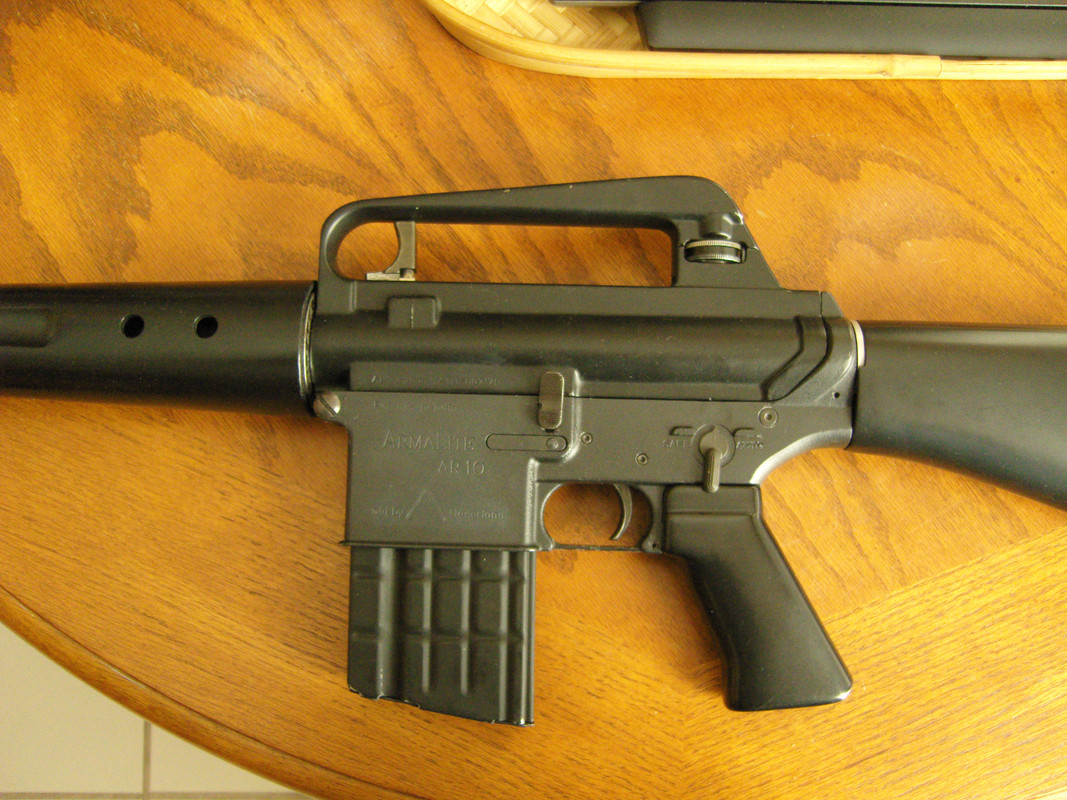
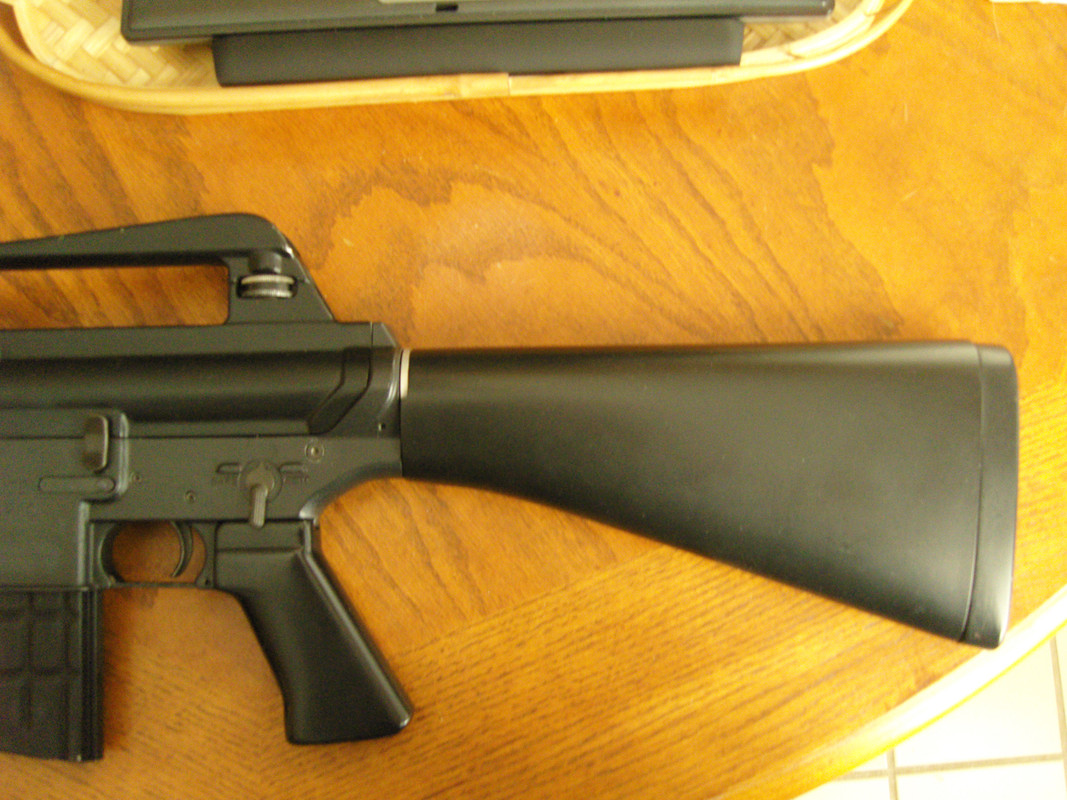
Original AR-10 rifles

1 reading
13K views 31 replies 9 participants last post by  MG34_Dan  
#1 ·
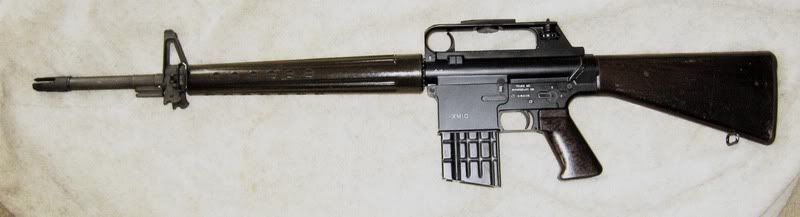
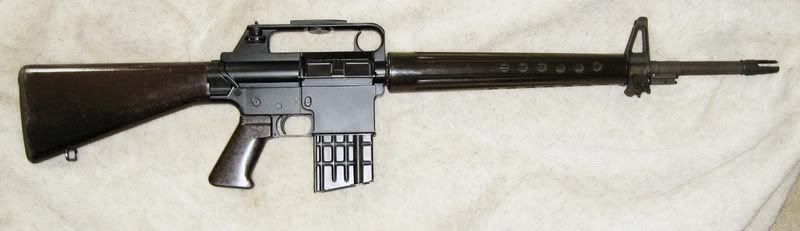
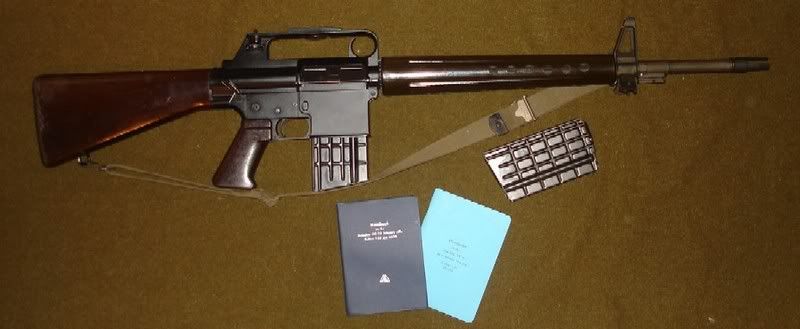
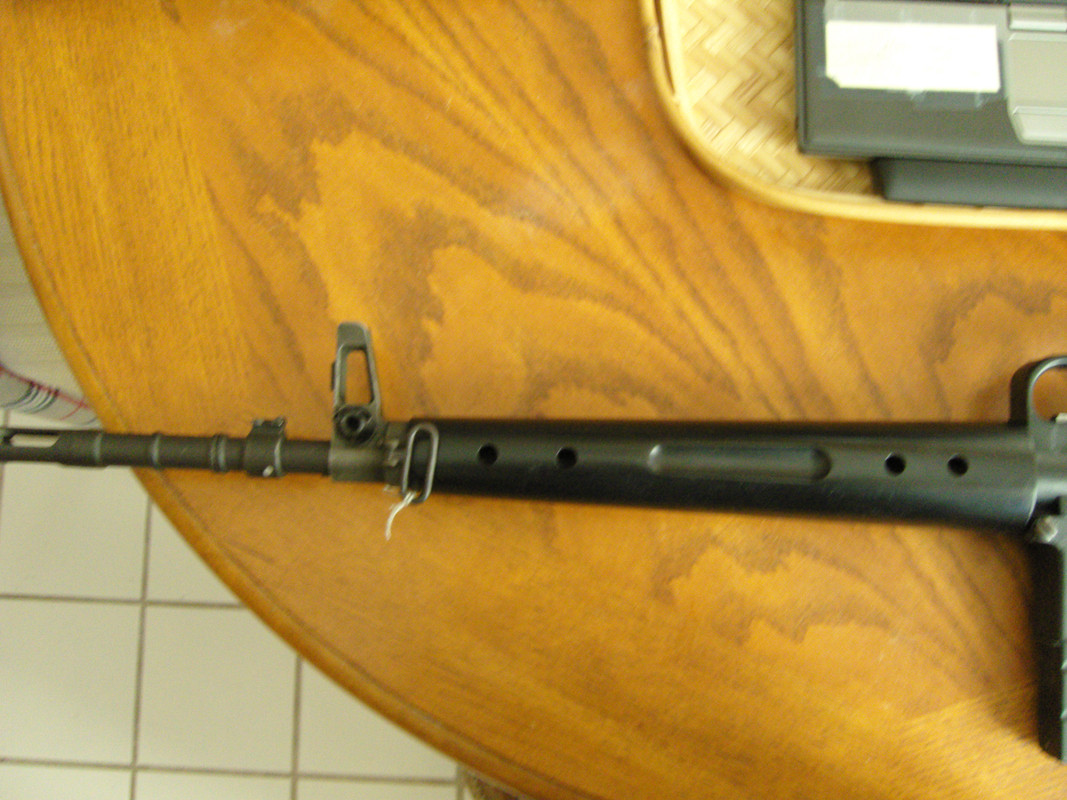
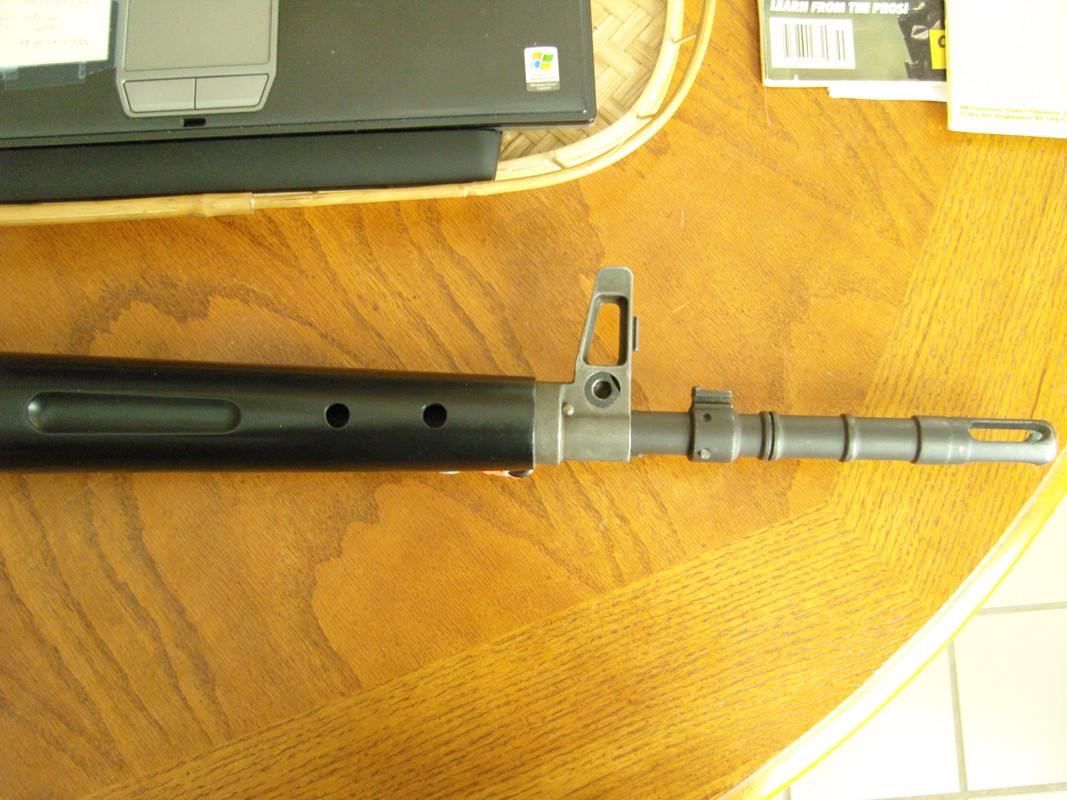
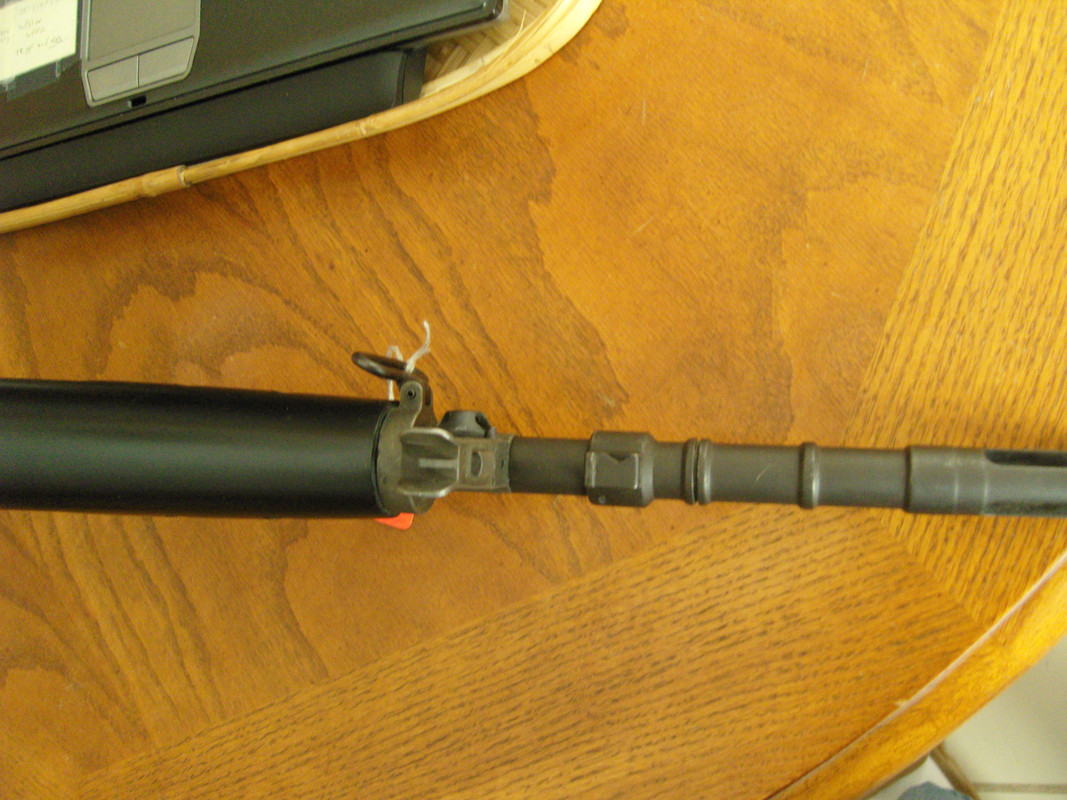
Sudanese pattern

Image


Image


Image


Sudanese bayonet

Image


Image


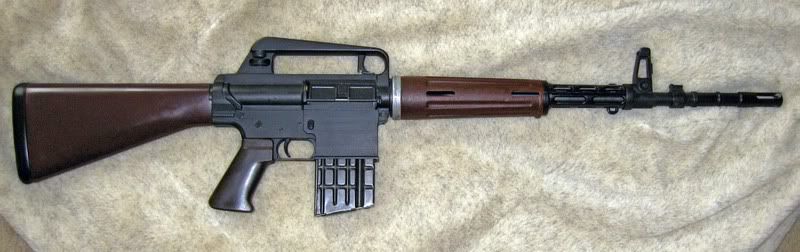
Portuguese pattern

Image


Image


Portuguese bayonet

Image


Image
 
#2 ·
I just saw one of those last week on a museum trip. Don't recall which pattern it was though. I do remember the brown furniture.
 
#3 ·
We should remember that Colt's bought the mfg. rights to the AR-10 and AR-15 rifles from ArmaLite around 1962.
Colt's originally decided to make both rifles but they wound up only making the AR-15, which became the M-16 :cool:
 
#4 ·
Malysh,

Outstanding rifles! Thanks for sharing. How many military style rifles do you have?
We always end up talking handguns but every now and then you post some really interesting rifles.
 
#5 ·
Thank you Erik.
Let's see.....
I have 6 or 7 AKs, 3 AR-10s (two original, one new ArmaLite Co. retro AR-10B), 6 or 7 M-16 replicas, and a SIG 551-2 SP replica that's been giving me fits lately.
If I think of any more I'll add them.
 
#7 · (Edited)
Thanks for your kind words. I don't have too much good to say about the new ArmaLite company. I had some bad experiences with them, as well as Adco. It's best not to go into that. The only thing I will say is that the original rifle parts kits with reverse engineered US made semi auto lower receivers have been 100% reliable whereas my modern ArmaLite AR-10B has been problematic. The Sudanese rifle has Telko lower receiver #6 and the Portuguese rifle has Sendra lower #1 -not that it's a big deal to most folks.

As you already know, Today's ArmaLite has no affinity with the original ArmaLite except that the owner Mark Westrom bought the name. The original company was a subsidiary of Fairchild Aviation. Fairchild was too cheap to set up a full size manufacturing plant in the US for ArmaLite. Because of this only about 50 very early rifles were made in a rented 1600 sq. ft. factory in Hollywood CA. They are referred to by AR-10 collectors as Hollywood ArmaLites (of course). A little under 10,000 AR-10s in two basic and a transitional pattern were made under license issued by ArmaLite by an old established artillery and canon company in Hembrug/Zaandam Holland called Artillerie Inrichtingen, usually called A.I. Eugene
Stoner, L. James Sullivan, and Art Sullivan spent plenty of time in Holland during the production start up and for tweaking the design. Blueprints had to be converted from the English system to the Metric system.
A.I. made a quality product. They had contracts with Sudan, Portugal, (the two biggest orders), Guatemala, the Italian frog men, a few smaller orders. It's reputed they sold some to Burma but I think this is fluff. It's notable that with only meager financing and only 4 to 5 years of development, this rifle came in second to the HK G-3 in the 1960 South African military rifle trials. It outpaced the FAL. Consider both HK and FN were giants in the field and that both of their designs had about 10 years in development and millions more behind their R&D compared to the A.I. made AR-10 rifle. The rifle did not even win the Dutch military rifle trials. There was some politics involved there but it's too long to go into. There were also trials in Germany and Austria.
There's no second place winner, but a lot of us AR-10 collectors find this to be significant information.
 
#8 ·
Those are sweet. May i ask how you came upon these two rifles?
As stated Armalite was the forerunner to the (original) Colt AR-15's.
All of these different AR makers owe Armalite a debt of gratitude.

Chuck
 
#11 · (Edited)
Chuck, I got it the way most of us obtain our collectable guns. I checked ads on various websites regularly; for a long time. It wasn't as easy as a friend had one and wanted to sell it. I wish it had been so ;)

I took a big risk with the Portuguese model because it came with aftermarket black stocks. I've attached a picture of what it looked like when I bought it. Except for completely original, transferable select fire rifles, most of the AR-10s imported in the US were actually kits. The rifles were not allowed to be imported to the US with lower receivers that were converted to semi auto from original select fire. Basic summation of ATFE/NFA US law - "once a full auto receiver, always a full auto receiver". The original rifles used the now common AR-15 auto sear trip as designed by Eugene Stoner. Conversions and weld-ups of the auto sear holes are illegal. Hence, the US made semi auto replacement lower receivers. The AR-10 kits were mated to aluminum (the original lower receivers were aluminum like the AR-15) US made reverse engineered semi auto lowers manufactured by maybe 5-6 different very small manufacturers like Telko in Ohio and Central Kentucky Arms (the only steel lower receivers) Many upper kits matched, but small components were not individually stamped with serial numbers or assembly numbers like Colt and S&W handguns were for years.
The original fiberglass furniture was somewhat delicate. Finding original replacement furniture is even more difficult than finding the rifles. Eventually I was able to find stocks for the Portuguese model. The Sudanese gun came with it's original furniture. I was also lucky that both rifles had new condition barrels. Many came with shot out bores.
One of the biggest importers of the kits to North America was Pete Wilke in Ontario, Canada. Since many of the kits had badly damaged furniture he had replacements made up from wood and plastic. In the early 80s a company called Paragon sold complete semi auto rifles, many using Telko receivers like the one on my Sudanese rifle. It should be mentioned that the earlier Sudanese version and the Portuguese version had different receivers, although they look the same at a glance.

Of these two basic versions, the earlier Sudanese pattern was a smaller contract than Portugal's and are rarer.

Paragon print ad

Image


My rifle when I first got it


Image
 
#9 ·
I should mention neither rifle looks exactly like this now. I replaced the Sudanese sniper upper receiver with a standard infantry upper because I looked for a correct Delft scope for it about 5 years and only saw one on auction and it sold for $3200. I also found one of the original brass discs that were on the left side of the Sudanese rifle butt stock with arab writing denoting the unit of the Sudanese army the rifle was issued to.

I refinished the rear hanguard retaining ring on the Portuguese model as it's supposed to be dark, not shiny and replaced the pistol grip with an original Portguese pattern pistol grip. It's shown with a Sudanese grip which is incorrect. I really need to take some new pictures of these rifles.
 
#10 ·
Does your Sudanese forend have a dark red paint finish, or is the fiberglass unpainted? (It looks shiny like bare fiberglass.) My Sudanese has a dark red paint on the forend. The unit disc on my Sudanese rifle has no markings (unissued?), but the rear sight elevation wheel has Arabic markings.

Is the Sudanese bayonet Interarmco-made as mine is? LOVE that tool carried in the bayonet handle. The blade with the two small projections on the end is for adjusting the gas regulator.

I have always assumed that the Sudanese rifles were probably shipped with the black magazines without the "ears" designed to limit the upward travel of the magazine when inserted in the magazine well, rather than the gray style with the "ears." Agree?

My Sudanese has Central Kentucky Arms lower receiver Number 1X.

If anyone cares, the correct spelling is "ArmaLite," not Armalite.
 
#14 ·
I missed a few things from your post because this is a near and dear subject and I'm so long winded. The Sudanese bayo does indeed have a spanner tool to adjust the gas valve. One improvement made to the later Portuguese rifle was a front sight/gas block and valve that can be adjusted with a cartridge instead of needing a dedicated tool.

No early AR-10 magazines had the tabs or ears. Only mid era and late ones did. Early gray, no tabs. Late gray and even later black, tabs are present.
 
#12 · (Edited)
Judge, there is no paint on my Sudanese furniture, it's semi-shiny with a color similar to burgundy. In bright sunlight you can see a subtle greenish under-tint to it. Except for the very pristine examples, the fiberglass weave can be seen to varying degrees. Visually, it jumps out with well worn furniture. Not being a very handy or technical guy I have no idea how they imbued color into the fiberglass, but if one finds a set of AR-10 furniture that they are sure has satin or matte paint on it, somebody's done it after it left the factory in Holland. There's quite a lot of AR-10 furniture that has been coated with paint after the fact. I'd have to see some pictures of yours to give an opinion. I may not understand this question right, so please amplify if my answer doesn't help.

Again, with the Sudanese unit disc, I'd have to see it. It could be an unissued disc (very unlikely but possible) or it could have been made up by some talented collector. I've never seen an original unit disc without the Arabic markings on it.

Yes, all the Sudanese pattern bayonets have the Interarmco logo stamped on one side of the blade. The German SG-42 bayonet was the pattern A.I. chose for the Sudanese AR-10 bayo. Here's a link to an original German bayonet as made by Carl Eickhorn. A.I. sub-contracted the bayonet to a German firm; I don't know if it was Eickhorn but it probably was.These bayos are almost identical to the original German SG-42 bayo. Original SG-42 bayonets have a military waffenampt code on them as all German military arms and accessories of the era did.

German Bayonets used 1914-1945

Here's a picture of mine
Image


The Portuguese bayonets did not have this logo. They had the triangular A.I. logo on them instead. All AR-10 rifles have the same triangular logo with the stamping ArmaLite AR-10 and mfg by A.I. Nederland on the left side of the lower receiver magazine well. It should be noted that Sudanese AR-10 rifles had the serial number stamped below the rest of the stampings. In the case of the one in the second picture below, this is a very early 3 digit Sudanese rifle. It's a dewat rifle that was being sold in the U.K. :(
When A.I. changed to the Portuguese rifle the receiver stamping remained the same except they moved the serial numbers to the upper receiver just below the area where the cam has to travel inside the upper.

Portuguese bayo stamping

Image


Factory A.I./AR-10 stampings, low Sudanese serial number.

Image


Sam Cummings of Interarmco (later Interarms) was one of the first distributors and sales reps for AR-10s. Some rifles he sold to Guatemala (a small contract sub variation with a perforated barrel jacket) wound up in Cuba and were found by Castro's troops after the Bay of Pigs fiasco.
There were only four distributors and they had specific global sales territories. He was in on the ground floor but was not really involved with the rifle's development or design. It's my belief that he may have provided the funding for the bayonet side of production and wanted his company logo on them. That's only a theory.


Aside from some early Hollywood waffle magazines, there are 3 basic types of AR-10 waffle magazines. The first type for the Sudanese rifles were finished only in gray, with no stabilizing tabs or ears on the opposing sides of the feed lips. The second variation were gray with the stabilizing tabs. They were used for the Sudanese version and for a transitional rifle I've not previously mentioned (too long to go into here, this is long enough :)). The third magazine version was black with the stabilizing tabs and were made for the Portugese rifle. The tabs may have been utilized to limit upward travel of the magazines but they were primarily used to stabilize the magazines against side to side wiggle. If you have any AR-10 magazines without the stabilizing tabs, put one in your Sudanese and gently move it right and left and you will see more movement than you would like to. That may not be fool proof since most of us have rifles with the US made replacement lower receivers which may have slightly differenct tolerances than the original select fire lowers.
Depending on which pattern magazine, the magazine floorplates have slightly different shaped contours and stamping fonts. Being the earlier rifle and a smaller contract, no Sudanese rifles were ever shipped with the black magazines. They weren't being made at that time.

Your CKA arms replacement steel lower receiver is the strongest replacement lower made for these rifles, even if they are not correct because they aren't aluminum. Your rifle should be as tough as a tank. The replacement aluminum receivers are a different grade of aluminum than the the original lowers. They also don't weld as well as the original factory aluminum receivers if a repair is needed. I forget which aluminum grades are which, and their numbers.

It should be noted that like all manufacturers, A.I. continued to improve and upgrade various small parts designs during production. Sudanese and Portuguese rifles have different charging handles, magazine release buttons, gas valves, and other differences. Most of these parts are not interchangeable between the two versions.

Re: spelling. Notice I always type ArmaLite, not Armalite? Not only is it the mark of a bright, observant jurist like you to spell it correctly, spelling the word wrong amongst AR-10 collectors is taboo! :cool:
 
#13 ·
Judge, when looking at the German SG-42 bayonet link, there is also some pictures of the post war AR-10 Sudanese version included. Note that the AR-10 version also have a corkscrew as one of the tools. Nothing like a good wine, eh? I take this as further proof the Dutch were not serious soldiers. ;).
You might interpret it as the Dutch army liked to be prepared for anything.
 
#15 ·
I bought two supposedly "factory new" Sudanese forends and each has the dark red paint on it. I do not remember where I bought them (maybe from a vendor in the "AR-10er" or maybe Wilke), but why would anyone paint them if they were not painted from A-I originally?

Likewise, when I bought my Sudanese, they were being sold as "shooters" and it seems doubtful that anyone would make a "reproduction" unit disc. The intense collector interest came later with the advent of the "AR-10er" newsletter. My red fiberglass butt stock (NOT painted) was purchased as a part to replace the green Portuguese butt stock on my Sudanese rifle when I got it, so perhaps it was always a "replacement part" and had never been installed on a rifle that was issued, thus its unit disc would never have been marked.

When I saw the pictures of the gray magazines with the "ears," I erroneously assumed that it must be the black ones that do not have the "ears," since I know I have gray and black magazines, and one has "ears" and the other does not. Obviously, without checking first, I reversed the colors. I had a 50-50 chance.... (Not really if there are three magazine variations.)
 
#16 · (Edited)
Judge, about paint or coating over the fiberglass of handguards, sorry to be dense. I thought you were talking about something like this
Image


You mention "why would anyone paint them if they were not painted from A-I originally?" The after factory paint shown on the rifle above is something I have seen often enough to know folks have done it.
The collector friend who sold me my Portuguese rifle bought two sets of horribly repainted Sudanese handguards at a western gun show a few years back. One set was orange red, the other a more intense green than the set above. My guess as to why anybody would repaint a set is to arrest further degradation of a handguard.
Here's some examples of Sudanese furniture in stages of degradation.
Image


Image


Image


Actually, with the Sudanese rifle we're dealing with a one piece handguard, a tube really, so I will try to refer to it as a handguard. You were wiser to use the term fore end instead;) The Portuguese rifle has two piece handguards so plural is appropriate.
You mention you have one red buttstock without paint yet you have a fore end with paint. This isn't consistant to me.
Every factory original Sudanese set of furniture I've seen have a buttstock, handguard, and pistol grip with identical finish. So they should have the same shade of coating, which of course has to be some type of paint, again sorry to have been dense. They might vary between semi matte and semi shiny but the pieces should be consistant to each other from the factory. The set on mine in the picture with 2 operator's manuals tends toward shiny. I'd rate the condition as a strong 90%
It's interesting to note that this is not the case with Portugese furniture. The Portugese handguards always have a different finish and color to them than the butt stocks, which are darker. Their pistol grips may match the buttstock or they may be mottled but similar dark color as the buttstocks, giving rifles "3 shade furniture".

Here's some examples of a two different Sudanese rifles. One of them is actually a near mint fully transferable one. Too bad I don't have 30K + to get one like it.
Image


Image


Image

This last example has a stock set very similar to my rifle's as far as shine but mine are a bit darker.

I appreciate your experiences with the Sudan Army unit discs.
Lets go with this for a bit. Sudan Army unit discs may be comparable to rack numbers on US infantry rifles. I think Sudan probably did request A.I. make the discs for them even though even poor Sudan could easily have made their own. A.I. would most decidedly not have engraved the Sudan/Arabic units on the discs. First of all Sudan would not have sent a list of their units to another country. They would engrave them at home, an easy thing to do, like a rack nunber, even though those are paint and not brass discs. We probably won't ever know whether the discs were made in Holland or Sudan. It's no good mentioning that A.I. made the rear sight adj. wheel with Arab characters. There are only 8 symbols required on the sight wheel, one is Arabic, one is a white dot, and 1-6 are numerals which I believe are common to Arabic and universal math. It was an easy task for A.I. to use only one Arabic symbol for production. Engraving Arabic symbols that vary from unit to unit is hardly something A.I. would have wanted to do, or perhaps could do unless they had an Arabic speaker in the plant (not impossible, though).

There would never have been an AR-10er magazine if there hadn't been enough interest on the front end. That monthly newsletter didn't boost a lot new collectors into the fold like an ad in Guns and Ammo or the internet would have. It merely kept a small number AR-10 collectors in touch. It is just as possible a disc was made by a collector as it was that it was made at A.I. as a blank replacement disc. We'll never know. Your observation is has merit. I've never encountered a disc with no unit engraving - I will give it more thought. Thanks for sharing that tid-bit.

I mis spoke yesterday when I said there are 3 versions of AR-10 magazines. There are 4 versions.
Here's a picture of 4 variations of AR-10 waffle magazines. From the left to right, Hollywood AR-10 magazine (no tabs), Gray 1st type Sudanese (no tabs), Gray 2nd Sudanese and transitional AR-10 (tabs), and Black Portugese (tabs).
Image


Picture of the 4 magazine variations floor plates. Notice the different fonts and stamping contours
Image


You probably have them, but if you don't have all the The AR-10er newsletters I have all of them on PDF and I'd be happy to make you a disk (or disc :)) and send them to you. Let me know if you want them.
 
#17 ·
Wasn't it YOU who scanned MY copies of the "AR-10er" to digitize them? Or did whoever it was who scanned my copies give you a copy on a CD or DVD? I will have to go to the vault room and see with whom I corresponded when I loaned out my copies of the "AR-10er" last year for digitizing.

Did you miss my statement that my painted forends are painted with DARK RED matte paint? The color closely matches the color of the unpainted buttstock, but not the texture. In my opinion, the above pictures of the Sudanese forend on the stool show a forend with remains of dark red paint. It seems unlikely that whoever sold me the forends I have after representing them as "original factory new" would first paint them before selling them IF the Sudanese forends were not painted originally from A-I. As I said, my red fiberglass buttstock was bought separately to replace the Portuguese buttstock. The pistol grip on my rifle was painted green to match the green paint on the forend and buttstock, so when I removed the green paint, I was left with bare fiberglass and will never know if it was originally painted dark red.

Where did you get all of the above pictures of rifles you do not own? Am I missing an original AR-10 website somewhere.
 
#18 ·
Judge, there's so much stuff in my head I not sure I can remember where I got my copies but you and I have never discussed AR-10s before. I haven't had a scanner in the 6 years I have this PC. My scanner was so old I couldn't even get new drivers for it to use with this computer :) I think you let another collector scan them, perhaps my friend Dan in Michigan? I'm pretty sure he sent me my copy.
So, heretofore unknown, let me say a belated thank you for providing me with the complete set of The AR-10er! :)

I am not disputing the pieces you have or the way you describe them. Sometimes I may miss the point. Those pictures of the furniture were not posted to refute you. They were intended for you to see them and see if the shade of red is compatible. :)

The pictures were found all over the internet, between collectors, from for sale ads, you name it. I had to catch up quick with old collectors like you that had a decade + head start. I have photo files for all the types of firearms I collect and I like to keep nice examples.

You are not missing an AR-10 website, per se.
Although, there is an interesting one from 3 guys in Holland. It's a static site. No forum but great examples to see. I sent one of the guys, an Eric, some photos I took he wanted to post but he and the others never got back to me. I think I sent them around the date on their website that says "last update March 11th, 2007. I was a bit disappointed.
I know for sure Mark Westrom was footing the bill for this website at one time. I don't know if that has changed or is still going on.

http://www.ar10.nl/Welcomepage2.htm


Now, I have to go back and edit the rear sight wheel info in my previous post. The sight wheel has 8 symbols. Only 1 is Arabic, 1 is a white dot, and there are numerals from 1-6. My point is still the same. A.I. only had one Arabic symbol to put on the Sudanese rifle sight. No big job, but engraving their discs is another story.

As I mentioned, I do think the most likely story is that the discs were made at A.I. and left there not engraved. So you may have an unissued one. I'm playing devil's advocate ;)
 
#23 · (Edited)
My Hahn re-welded receiver Portuguese AR10 with the wrong furniture, damn it.

Image


Image


Image


Image


Image


Image


Image


Image


And a little extra for those in the know:

Image
 
  • Like
Reactions: ei8ht
#24 ·
Dan, I figured you would show up sooner or later :D

Re: furniture - yup, it's a clear case of Wilke plastic ;)

You guys with the Portuguese models need to get the steel washer that goes around the grenade rings. It looks like a M-16 A1 shim washer but larger diameter. A FAL washer will fit perfectly and can be easily found.
 
#25 ·
Dan, I figured you would show up sooner or later :D
Re: furniture - yup, it's a clear case of Wilke plastic ;)
You guys with the Portuguese models need to get the steel washer that goes around the grenade rings. It looks like a M-16 A1 shim washer but larger diameter. A FAL washer will fit perfectly and can be easily found.
This is the curse of collecting all this stuff for 50 years. At the time everyone said I was nuts and the stuff was crap. I was laughed at for buying Colt pistols and not Winchester rifles.

Peter Wilke was a great contact. He introduced me to others who had some really nice pieces and parts (Turkish and South African Vickers stuff, MG08 parts, SIG 550/551 parts, and original WWII USGI 1917A1 stuff). Today, this stuff has all but dried up and their prices have skyrocketed.
 
#26 ·
Pete retired maybe 2-3 years ago. Last time I was in contact, it was with his daughter. I did not get the impression she intended to try to keep his business going.
 
#27 ·
The last time I found a nice, correct, Portuguese furniture set, it was priced higher than what I had in the weapon. Maybe someday I'll find a nice set and trade something for it.
 
#29 ·
MG34, is the rewelded receiver on the rifle pictured next? The area of the weld seems obvious on the receiver picture, but not on the rifle picture, so i am wondering if it is the same receiver.

I do not notice the pin hole above the selector. Was that welded up in the reweld?

Is the Pikula book worth having? I have been looking for a copy and have never found one. Am I missing much?
 
#30 · (Edited)
I bought two of these re-welds back in the day. The one shown is the one I traded for the parts kit I used with the second receiver. The receivers were cut and re-welded right behind the magazine wells and the selector pin hole areas were machined out and re-welded. A machinist/welder friend of mine "touched" up the obvious flaws in both receivers and I had them refinished. I chose to keep the second receiver because it had the best fit with the upper receiver. The first receiver looked better, in my opinion, but it didn't fit the upper very well. I actually had a third receiver, but traded it off for some SIG AMT parts. I'm still debating the wisdom of that transaction.

Sam's book is a great reference source. I just had to get it.
 
#31 ·
Sam Pikula's book is the only one ever written exclusively about the AR-10 rifle. I have a copy I bought for about $40. I turned down another copy a few years later for about the same cost.
He had it self published and printed in Lithuania. It is long out of print. I should have bought that 2nd copy because one sold on Ebay for over $400 two weeks ago.


We lost touch a few years back, but last time I corresponded with Sam, he was retired from Special Forces and was working private security in Iraq. He's a nice gentleman.
I have thought ocassionally of writing a book about the AR-10 myself. At least there aren't already a ton of books on the subject.
 
#32 ·
He had it self published and printed in Lithuania.
If I remember correctly, Sam was one of a group of senior US and UK semi-retired professional soldiers who were contracted with by Lithuania, Latvia, and Estonia when they regained their independence after the collapse of the USSR. They were tasked with forming the Baltic States' armed forces into professional organizations on the lines of those in NATO states. I am sure that Uncle Sugar actually paid for their services, either directly or indirectly.


Write your reply...