Commentary: What is still missing from Singapore's debate on falling birth rates
A nation that is serious about parenthood must be supportive of all parents, including the ones still trying to be one, says pregnancy loss coach Vernessa Chuah.


SINGAPORE: In conversations about marriage, parenthood and ways to raise fertility rates described as an “existential challenge” in Singapore, one aspect is often missing – pregnancy loss.
In Singapore, about 20 to 25 per cent of pregnancies end up in miscarriages. Pregnancy loss also encompasses stillbirth, infant loss, an in-vitro fertilisation-related (IVF) loss, as well as terminations for medical reasons. In every single one of them, there are two people whose worlds have been upended.
Yet, these are often swept aside as “dark secrets”, taboo subjects and uncomfortable conversations to be had.
NOT JUST A SINGLE MOMENT
Pregnancy loss is not a single moment. It is a process, as I learned from losing three pregnancies.


Physically, miscarriage can be prolonged and brutal, involving intense cramping, heavy bleeding and hormonal shifts that last for weeks. For women undergoing IVF, the contrast can be even sharper after weeks of injections. The body does not simply reset after a loss.
Emotionally, the impact is similarly complex. Many can experience depression, grief and anxiety but not everyone seeks support or have access to one.
When grief goes unprocessed, the body stays in a physiological state of unsafety. For couples hoping to conceive again, this can become another barrier. Research have showed bereaved mothers who receive specialised support experiencing a significant reduction in depression, anxiety and stress. Those who don't may carry the weight of it into their next pregnancy.
Layered onto this is often feelings of guilt - was it something I ate or did I exercise too much? This self-blame is almost always unfounded, yet without someone clearly and repeatedly saying “This is not your fault”, many women can carry that guilt for years.


LEARNING THE HARD WAY
For me, I learned to cope the hard way.
I stayed relentlessly busy, filling my days with back-to-back activities ranging from work, taking up new courses to social gatherings. From the outside, I looked like someone who had moved on. I had not. Being occupied became the only way I knew how to feel like myself, but when nobody was watching, there was a heaviness I could not name. I was scared to stop.
What I did not yet understand was that my body had been keeping score of everything I had refused to feel. The unprocessed grief did not disappear. It waited patiently and surfaced as anxiety, numbness, frustration and restlessness, even on my best days.
Grief cannot be wished away, as I found out. It lives in the body and needs to be felt gently and safely with those who understand. That was the support I could not find so in 2021, I started a support group for those grieving like me.
But I wish for more to be done.
WHAT WOULD MAKE A DIFFERENCE?
In February when authorities called for a “marriage and parenthood reset”, Member of Parliament Valerie Lee proposed more support for couples facing setbacks such as miscarriages. Citing examples from other countries, she suggested measures such as dedicated miscarriage recovery leave, automatic referrals for counselling and clear workplace guidelines on pregnancy loss.
The workplace is often one of the hardest places to navigate after a loss. It demands professional functioning when grief has no formal space.
Today, many rely on sick leave meant for minor illnesses such as a flu. Others may be back at work within days, while holding it together. Their grief has no name in our policy system. A dedicated pregnancy and infant loss recovery leave, extended to both partners, will be a meaningful first step.
But it is only that - a first step. Leave gives the body time to rest but it cannot heal the grief that two people are carrying.
What can make a bigger difference is for hospitals and fertility clinics to have dedicated pregnancy and infant loss support services run by trained practitioners. Frontline healthcare workers can also be trained to communicate pregnancy loss with compassion to would-be parents in the room.
I recall one instance when I was told that “There is no heartbeat”. The doctor and nurses seemed rushed, with little time to explain how the miscarriage happened or check in on how I was coping. I was then asked if I could wait until Monday for the procedure because weekend surgeries cost more.
The way loss is communicated can shape how couples process or fail to process their loss. It can leave those grieving feeling that their pain does not warrant care - a trauma that can linger long after the appointment ends.

A BETTER SOCIETY
As a society, we can be better too.
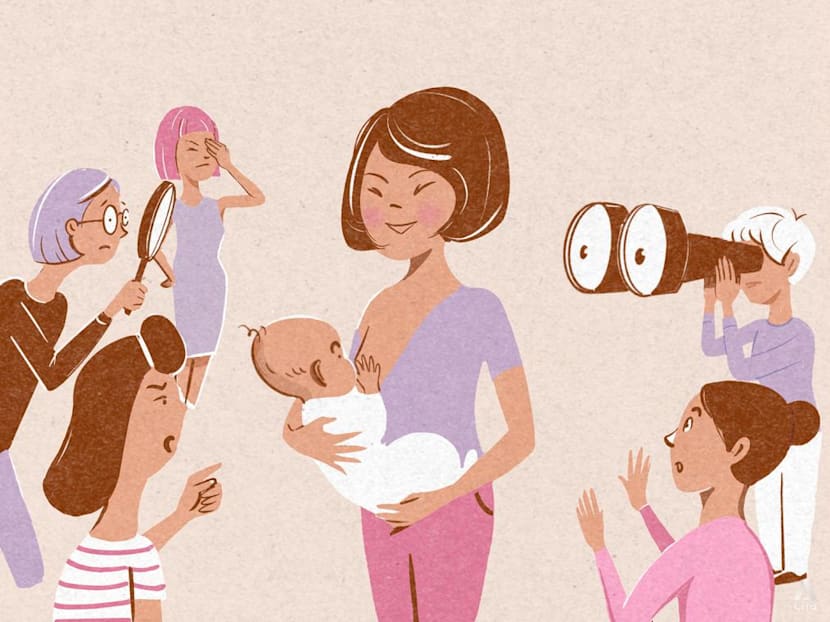
Most people are not unkind. They are simply unsure of what to say so they choose to say nothing. But silence can sometimes be the most painful response because many who have experienced pregnancy loss simply hope for their loss to be acknowledged.
For a start, avoid asking why it happened or using “at least” statements such as “At least it was in an early stage”. These can communicate that the grief doesn't fully count and for someone already doubting whether their pain is valid, that lands as a wound.
Also avoid offering hope too quickly with phrases like “You can try again”. Again, these attempts to shift the focus away from the present and do not help with the mourning.
Instead, simply say: “I'm so sorry. I'm here for you.” If someone opens up to you, listen and follow the parents’ language. If they say “my baby” or use the child's name, do the same.
Practical support can also go a long way. Gestures such as bringing food, running errands or quietly taking on tasks around the house or at work speak louder than carefully chosen words.
A nation that is serious about parenthood must be supportive of all parents, including the ones still trying to be one.
Vernessa Chuah is a pregnancy loss coach and certified grief recovery specialist. She also organises a complimentary bi-monthly pregnancy and infant loss circle, and the annual Wave of Light event in remembrance of babies lost too soon.


Also worth reading