

Para Alpine skiing
 International Paralympic Committee
About Para Alpine skiing
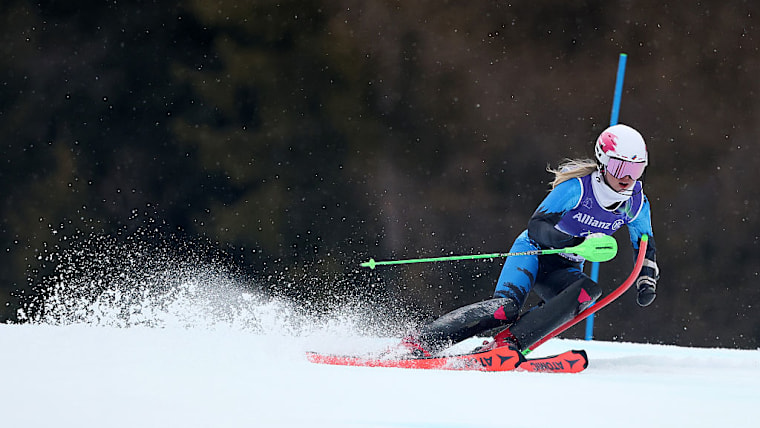
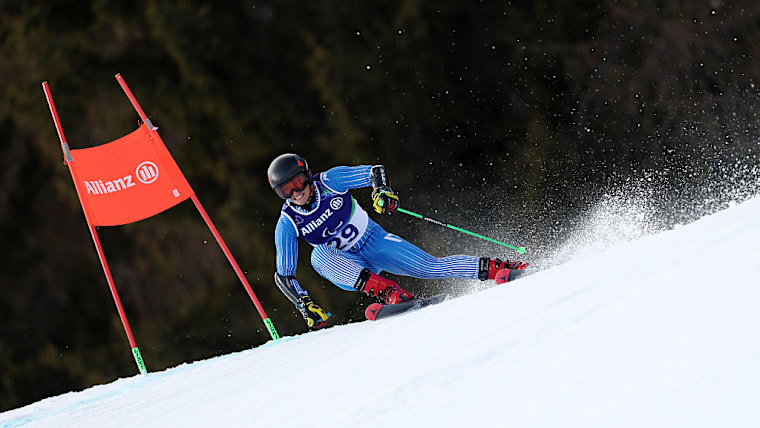
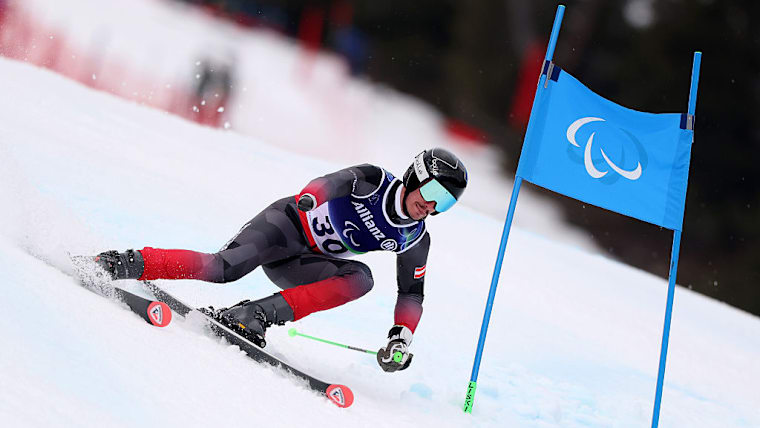
Para Alpine skiing was introduced at the Winter Paralympic Games in Örnsköldsvik, Sweden in 1976. It includes five different events: slalom, giant slalom, super-G, downhill and super combined. As we look forward to Milano Cortina 2026, here is everything you need to know about this sport.
Watch the Sport Explainer
Para Alpine Skiing | Paralympic Winter Games Milano Cortina 2026
Step into each and every sport with confidence at the Paralympic Winter Games Milano Cortina 2026.
Check out the schedule and results
Find out when your favorite event started and your favorite athletes competed

Competition disciplines
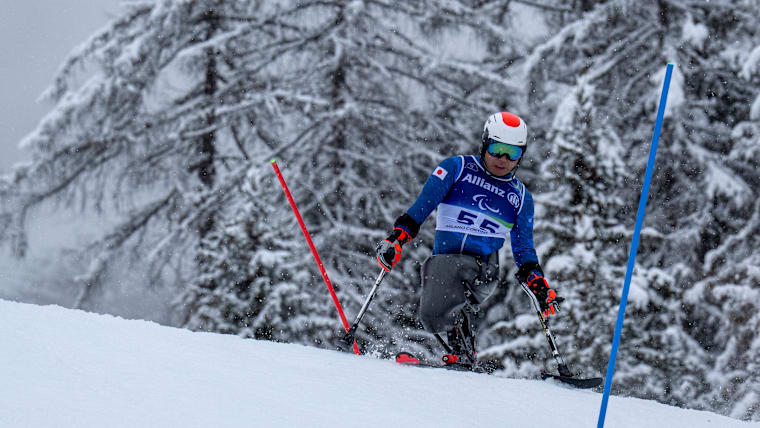
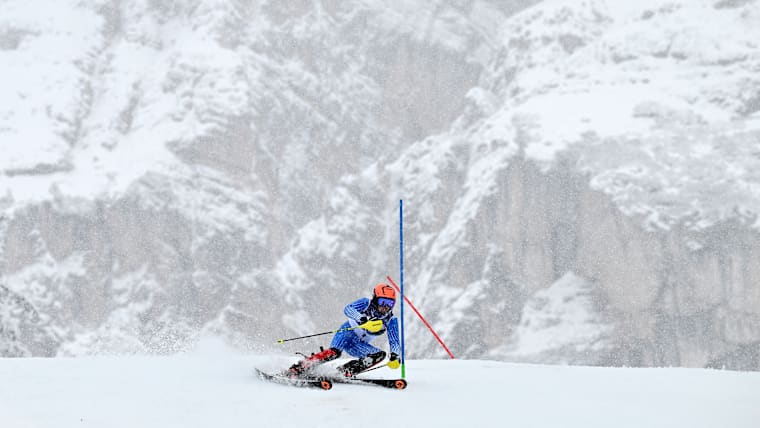
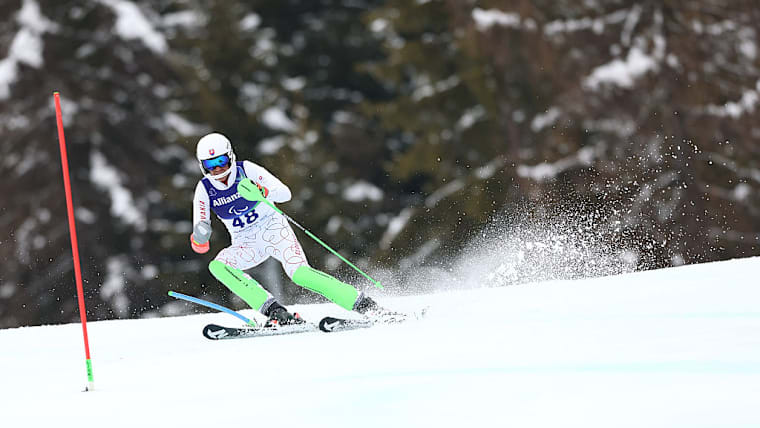
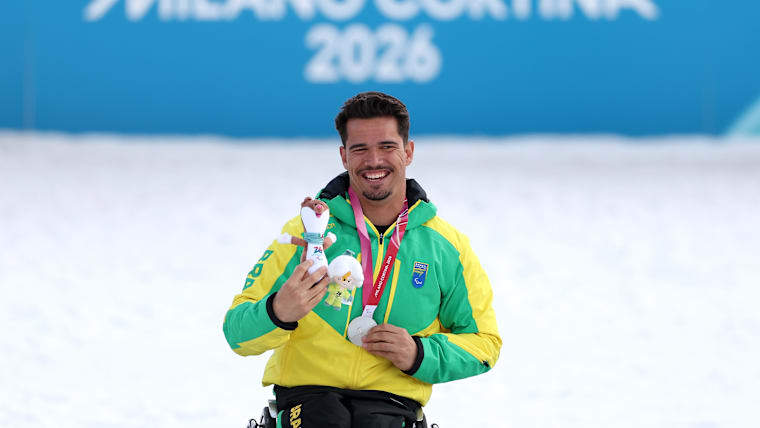
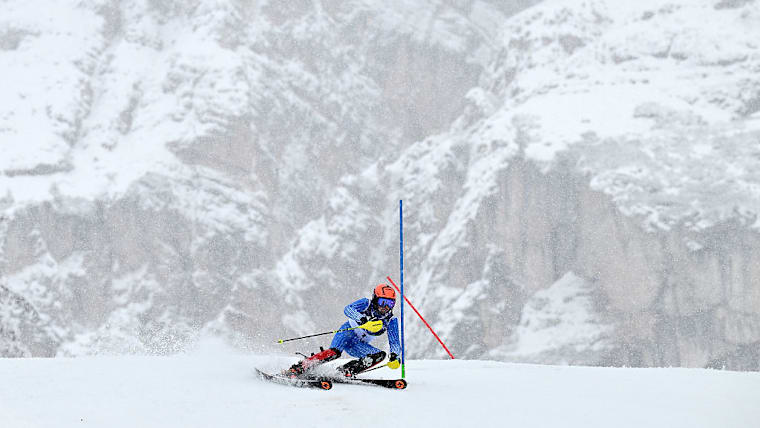
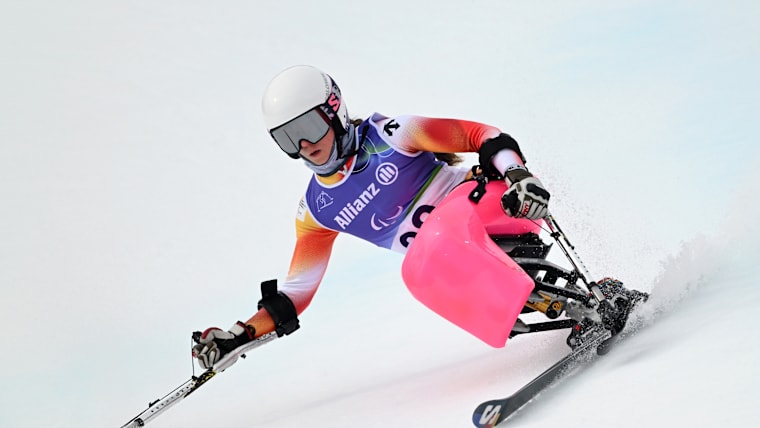
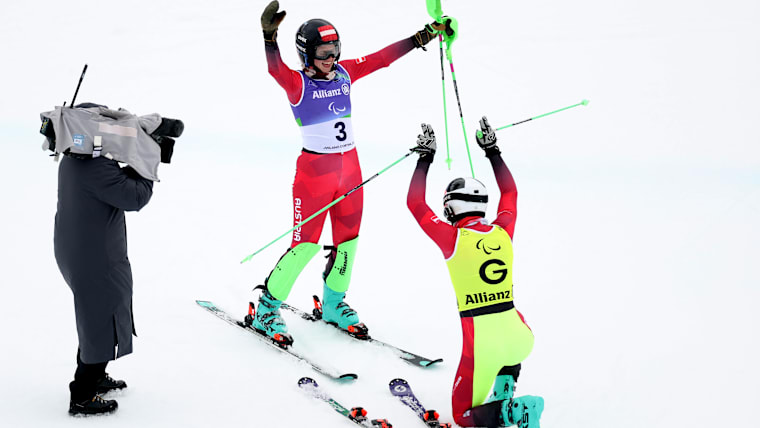
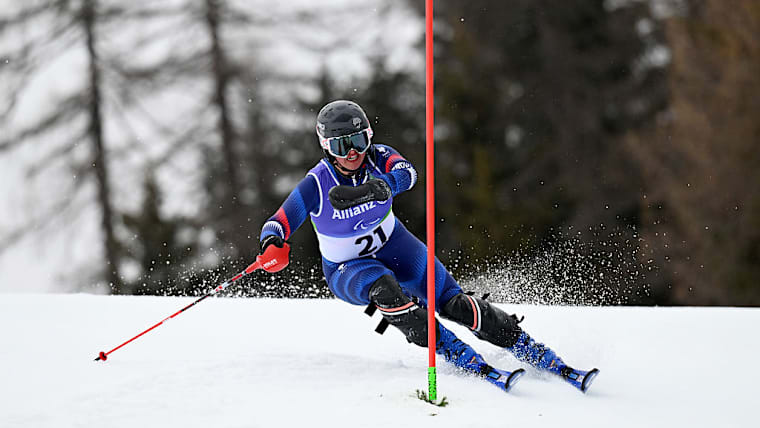
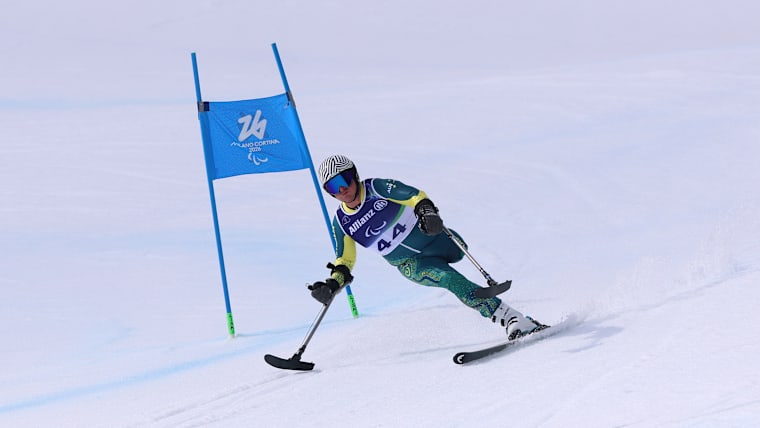
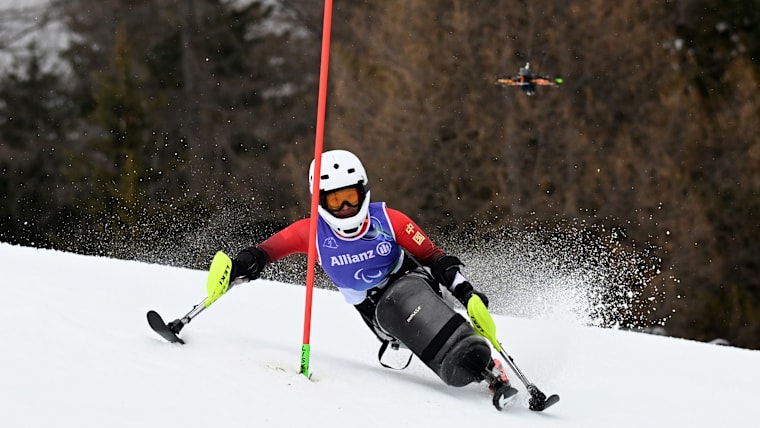
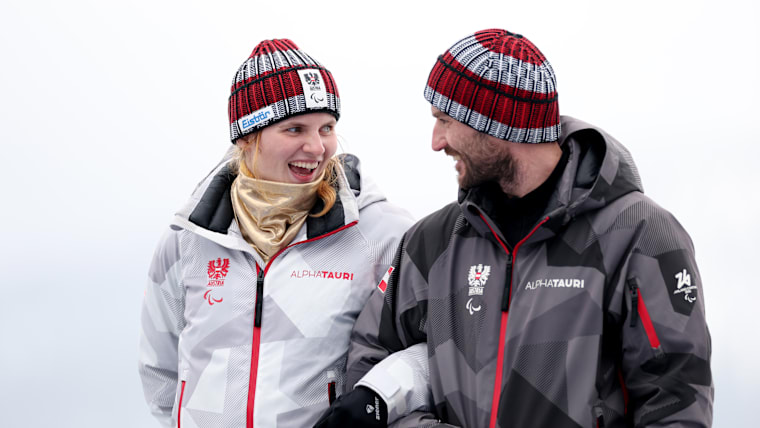
At the Milano Cortina 2026 Paralympic Winter Games, athletes will participate in five different events and three categories according to their type of disability: standing, sitting (on a sitski or monoski) or vision impaired (vision impaired and blind, who race following a guide connected via radio).
The men's and women's races will be held in Cortina d'Ampezzo, at the Tofane Alpine Skiing Centre.
Para Alpine Skiing venues


Cortina d’Ampezzo
Cortina d’Ampezzo is famed for its beauty, timeless charm, and sporting legacy.




Origins
Skiing as a sport for people with disabilities evolved from the efforts of disabled veterans during and after the Second World War.
An amputee in Germany attached crutches to short skis, inventing the first equipment for skiers with lower limb amputations. Several years later, an Austrian veteran who had lost both legs in combat founded a division of the Austrian Ski Association for disabled skiers, and annual competitions began to be held in Austria. Ludwig Guttmann, an important figure in developing Paralympic sports, helped organise skiing events.
For years, skiing for people with disabilities was limited to amputees. But in 1969 a visually impaired skier named Jean Eymere, a former ski instructor who had lost his sight, started a ski programme in Aspen, Colorado, for blind skiers. In 1974 the first international competition, the World Para Alpine Skiing Championships, was held in France.
Paralympic history
The first Winter Paralympic Games were held in Örnsköldsvik, Sweden in 1976, with two alpine events: slalom and giant slalom.
Downhill skiing was added to the Paralympic program in 1984 in Innsbruck, Austria, and the super-G was added in 1994 in Lillehammer, Norway.
Sit-skiing was introduced as a demonstration sport at the Innsbruck 1984 Paralympic Winter Games and became a medal event at the 1998 Games in Nagano.
Equipment
The main equipment includes monoskis, outriggers and audio transmission systems. Monoskis—shells attached with a shock absorber to a ski and used in combination with two outriggers equipped with mini-skis—are employed by sit skiers to help them balance. Vision impaired athletes, on the other hand, do not use monoskis or outriggers; instead, they rely on Bluetooth headsets that connect them with their guides. In relation to the disability, a timing correction system allows athletes with different impairments to compete against each other.
Fun facts about Italian champions

Giacomo Bertagnolli and Rene de Silvestro
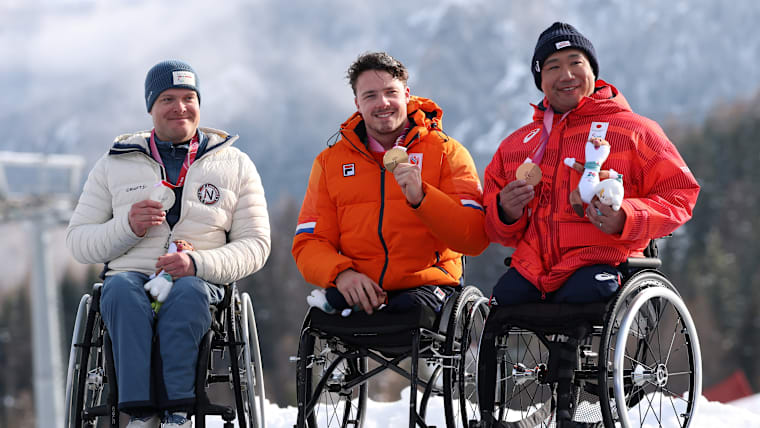
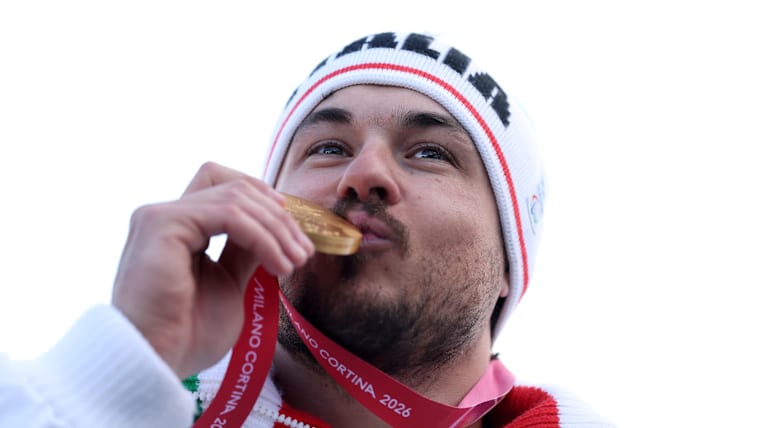
Italy has two exceptional Para Alpine skiing athletes: Giacomo Bertagnolli and Rene de Silvestro. At the Beijing 2022 Paralympic Winter Games, visually impaired athlete Bertagnolli made history by winning two gold medals (slalom and super combined) and two silver medals (super-G and giant slalom). De Silvestro, an athlete in the sitting category, also brought home a silver medal in giant slalom and a bronze in slalom at the Beijing 2022 Paralympic Winter Games.

Frequently asked questions
The most decorated Paralympic skier in history is Germany’s Gerd Schoenfelder, who won 22 medals (16 gold, 4 silver, and 2 bronze) from 1992 to 2010.
German athlete Reinhild Moeller is the most decorated female Paralympic skier, with 19 medals (16 gold, 2 silver, and 1 bronze).
Austria is one of the top medal-winning countries in the world for Para Alpine skiing, with a total of 280 medals (94 gold, 93 silver, 93 bronze). The United States follows closely with 258 medals (91 gold, 97 silver, 70 bronze), and Germany is in third place with 137 medals (58 gold, 41 silver, 38 bronze).
At Milano Cortina 2026, the men's and women's races will take place in Cortina d'Ampezzo, at the Tofane Alpine Skiing Centre.


