C+

Boss: “Listen”

Boss: “Listen”

As you probably know by now, no episode of Boss would be complete without Kathleen Robertson baring some portion of her flesh. It's become an inevitability: just as the sun rises in the east, so too will Kathleen Robertson bare her nipples on Boss.

It was something of a relief that the requisite sex scene arrived early in “Listen” and, all things being considered, it was relatively tame (doggy style in a conference room—yawn).  In other good news, there are clues emerging which suggest that Kitty is an actual human being, rather than a bespectacled sex robot. At the commercial shoot, Zajac asks Kitty to meet up with him later—for some sex on home plate at Wrigley Field, I’m guessing—but she turns him down. Why doesn’t she meet up with him? Zajac’s wife seems nice, and he propositions Kitty while his kids are frolicking a few feet away, which is icky, so perhaps Kitty’s feeling guilty?

The more likely possibility is that Kitty doesn’t want any messy complications messing with her hot sex life. She’d prefer to keep her relationship with Zajac strictly professional, i.e. limited to perfunctory intercourse in public places. Later in the episode, Kitty meets with Alderman Solomou to tell him that Kane won’t support his re-election bid. Dejected, she takes a strange dude home (or, more likely, to the bathroom stall) after sizing up his package. It’s safe to say Kitty has some issues: she’s sexually impulsive, a little self-destructive. She’s still a bit of a cliché—the ball-busting professional woman who can handle anonymous sex but not emotional attachment—but that’s better than being a cartoon character.

Some commenters have jokingly suggested that there’s a nipple quota on Starz, but I’m beginning to think this might actually be the case. Since Kitty was only partially nude this week, but Boss made up for that nipple shortage elsewhere. In the least gratuitous scene, Emma and Darius share a post-coital conversation about the drugs she needs to procure illegally in order to keep the clinic open (Sounds like a great cost-saving measure to me! What could possibly go wrong?). Far more gratuitous were the two prostitutes fondling each other while Kane delivered a completely ridiculous monologue (about which more later). Then, when Mayor Rutledge’s nurse stripped down to the buff and seduced Kane pretty much out of nowhere, I had to laugh. For a show that purports to be gritty and realistic, Boss is about 50% pure male fantasy. Oh look, it’s a sweet, nurturing, and curvaceous nurse who’s also totally hot for paunchy middle-aged guys. If the point of the endless flesh parade is to show us the mayor has a lot of empty, unfulfilling sexual encounters, we got the message the last 5 times he had an empty, unfulfilling sexual encounter. The nips are not only gratuitous, they’re also a distraction from what should be the show’s main purpose: storytelling.

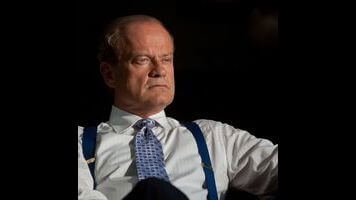
With that off my chest (so to speak), the other thing Boss just can’t seem to get enough of are the silly monologues. Kelsey Grammer has never met a wordy speech he didn’t like. The guy just loves squinting and staring off into the distance and giving people unsolicited history lessons like the following: “One of the greatest engineering feats of the 19th century. Men bold enough to believe they could do the impossible—change the river’s flow. And they did it.” Hoo boy, this is one guy you do not want to get stuck next to at a dinner party.

It’s at this point I ought to disclose something: I think Kelsey Grammer is a part of the problem. Yes, I know, he’s a “great actor,” but he’s also an incorrigible scenery chewer. So much of the writing in Boss is already totally overwrought, and Grammer’s theatrical style only exacerbates the problem. Take the scene with the prostitutes. While they’re going at it, Kane recites a ridiculous monologue comparing himself to an “old gray mare.”(Get it?) Disgusted, he leaves the room, but not before actually saying “My kingdom for a horse,” an extremely subtle reminder that Boss is a very serious show full of Shakespearean themes and dramatic irony. During the meeting with Cullen, Kane has another mental lapse but still manages to mumble a few lines about “bread and circuses,” an allusion to the fall of the Roman Empire (obvs). There’s a symbiotic relationship between the heavy-handed writing and Grammer’s performance: He clearly loves to ham it up, and the writers give him plenty of material to work with.

But the silliest part of this episode is Kane’s decision to force his doctor into hiding so that she doesn’t leak word of his medical condition. Kickbacks are one thing, but forced disappearances? Is Kane the mayor of Chicago or Augusto Pinochet? It’s wildly over-the-top, but even tactically it makes no sense. Kane’s medical condition seems to be declining pretty rapidly; he’s already experiencing tremors and mental lapses. What’s the point of sending his doctor away for years when he’s going to be drooling on himself by then anyway?

Despite my kvetching, there are some things that are working for me. I really like the storyline involving Sam and his investigation into the O’Hare construction site. It’s progressing at a deliberate pace, but the plot seems based in reality in a way that nothing else on Boss is. I also like Troy Garity’s unforced performance. He hasn’t gotten to do much yet, but that’s fine. This series desperately needs a few quiet workhorses and not so many show ponies (sorry, the equine metaphors are contagious.) I know this doesn’t exactly sound scientific, but I also just believe Garity as a reporter, though maybe it’s because he resembles Dustin Hoffman circa 1975.

I also think Connie Nielsen is doing a superb job as Kane’s wife, and I like that she’s the one person capable of making him nervous. Political wives are often depicted as Lady Macbeth types, but Nielsen reins in the melodrama by playing Meredith with icy rage rather than histrionics. I’m curious if her pet issue—education privatization—will come up in later episodes. (Next week on Boss, it’s Michelle Rhee!)

The Cullen stuff is also working for me. Again, it’s not the freshest material, but it feels somewhat authentic, and the stuff with the alleged gay lover brings some desperately needed laughs. Cullen’s aid tells him he’s up three points with Asian-Americans. “Apparently they approve of your taste in men,” he explains. I laughed! It felt good! More of this, please.

Stray observations:

  • Is it just me, or you want to call Zajac “Sajak” (as in “Pat”)?
  • Just wondering: how can Moco hear anything if his ears got chopped off and his head is covered in bandages?
  • Is Hannah Ware English? I’m noticing a lot of accent issues there, which are not doing much to help her listless performance.
  • Meredith’s a miserable bitch, but she has pretty great clothes.
  • In case you’re keeping track of the pretentious quotations on the show, so far we’ve got Upton Sinclair, Shakespeare (Richard III to be exact), and Juvenal. Let me know if I missed any.

 
Start the discussion...
Keep scrolling for more great stories.
B

Everyone drops wisdom bombs in a satisfying The Fall And Rise Of Reggie Dinkins

"I'm right about a lot of things. For 20 years I've been saying Gayle King's gonna go to space."

Everyone drops wisdom bombs in a satisfying The Fall And Rise Of Reggie Dinkins

Coziness is a virtue only very good sitcoms can thrive on. The Fall And Rise Of Reggie Dinkins, in its seventh episode, packs in a rap beef, several callbacks, genuinely hilarious physical comedy, meaningful character growth, and a final big twist with the ease only a seasoned team of comedy ringers can deliver. 

Written by Mamoudou N’Diaye and Evan Susser, “The World Is Full of Beaks” pecks away the remaining barrier between documentary maker and subject, as Reggie goes all in to help the lovesick Arthur, while Monica and Brina’s evolving friendship does the same. (Brina’s troubled relationship is with Chloe Troast’s OnlyFans rapper Jynnysyz over video-game royalties for their new collab.) All the while, C-team Rusty and Carmelo continue to deliver from the sidelines. 

There’s still narrative drive behind the typically packed comic shenanigans. Reggie takes Arthur on a tour of his childhood Brooklyn neighborhood for the kind of searching walk-and-talk interviews you need when the NFL still denies use of game footage. And Monica’s connection to her ex-husband’s business and personal life expands as she delves into Brina’s world of impossibly youthful internet fame. (Brina, marveling at Monica’s skill in teaching her to actually read contracts before signing, has formally appointed Monica her manager.) 

The fact that each of these stories spins out into its own comic cul de sac would be worrisome (especially with just three episodes to go in the season) if not for how effortlessly charming it all is. His blinkered privilege aside, Reggie is openhearted to the extent that Arthur’s practiced British artistic remove has no chance. The discovery that Arthur is still stammeringly smitten with Megan Thee Stallion’s postal worker Denise is Reggie’s starting gun. If Arthur can’t see that Denise’s distanced dapping denotes “casual thing” and a phone full of unreturned blue texts shrieks desperation, then Reggie Dinkins is going to leap into the breach.

The chemistry between oddest-of-couples Tracy Morgan and Daniel Radcliffe is the show’s heart. What feels like high concept on paper is irresistibly attractive to watch, their two differently damaged former stars’ vulnerabilities meshing with ease. Arthur might protest that their bonding is just part of the documentary process, but Arthur and Reggie’s “bro-ing out” is affectingly hilarious enough that professional decorum can go hang. 

Does the truncated season order rush this unlikely friendship along? Sure. Reggie, consoling the disconsolate Arthur after a grand romantic gesture goes predictably awry, might joke about the cliché of a wise older Black man advising a white guy over a shared meal of soul food, but Morgan’s way of couching utter sincerity in absurdity is unmatched. 

When he, stroking Arthur’s shoulder, punctures his self pity by noting, “Everyone dies alone—unless it’s a Pompeii situation,” Arthur rightly surmises that Reggie wiping fried fish grease on his shirt and Reggie reaching out in genuine concern aren’t mutually exclusive. As Reggie notes, sagely, “Two things can be true, Arthur Tobin.”

Two things are true about The Fall And Rise Of Reggie Dinkins. The series’ initial elevator pitch (disgraced football star tries to rehab his image) recedes a little more each week. And it doesn’t truly hamper the show’s success as a character-driven hangout comedy. If Reggie Dinkins occasionally feels about as immediate an experience as Reggie and Carmelo sitting down in Reggie’s mansion to watch the new episode of true-crime show Blonde, White, And Gone, well, it’s not a bad place to be.

Erika Alexander’s Monica seems a thankless role by design. With two variously silly men to corral each week, the level-headed Monica could come off as a real killjoy, but Alexander resolutely refuses. There’s a lot of pain lurking around the Monica-Reggie relationship that the show merely hints at as Monica breathes deep every time she has to swoop in to fix one of her childish ex’s messes. Tossing a neurotically self-impressed Brit onto the couple’s carefully rebuilt foundation only increases Monica’s will to keep the life she’s built from crumbling. At the same time, Alexander exudes such pragmatic decency that you buy that this woman who once gave up her meager earnings so that teenage Reggie could commute to a more promising football school would still be invested. 

The rap beef between Brina and Jynnysyz is broad stuff. (Jynnysyz’s vapid catchphrases hide the fact that she’s actually Jenny Sussman, daughter of Manhattan’s number one conjoined-twin-separating surgeon.) But Way and Alexander have sketched out a mutual respect that’s deeply refreshing in the annals of old-vs.-new-wife storytelling, and their adventure here prickles with tossed-off jokes that’d be the centerpiece of a lesser show. 

Ronnie Chieng’s sleazy sports agent Barry scales new heights as a capitalist douche-bro, his initial smugness in repping Jynnysyz to rip off Brina collapsing once Monica reveals how she’s monetized the ladies’ now-performative online feud into literally hundreds of dollars. “Monetize?” Chieng’s Barry snaps in beady-eyed avarice. “Like money? Money’s the best! What’s going on?” (Thwarted, Barry spitefully hires away Monica’s assistant Chad for $250,000, ensuring more wacky office turnover.) 

All three main characters bet big on themselves (Reggie literally) and lost. So when Arthur’s intermittent haunted looks when mentioning a past romantic partner pay off in the episode’s big cliff-hanger, it’s incumbent on the show to match Arthur’s disillusionment to Reggie and Monica’s. And here’s where I’m not totally sold.

Obviously, all Radcliffe’s askance glances whenever an unnamed mystery woman came up were going to pay off. And I am in no way suggesting I’m anything but happy to see Anna Camp show up (in flashbacks and then on Reggie’s doorstep) as Narcissa, the exquisitely named ex-lover Arthur claimed was his one true downfall. (Dr. Squeeze being a distant second, one imagines.) 

As seen in her role as Deirdre Robespierre in Unbreakable Kimmy Schmidt, Camp’s eyes sparkle with the sort of dangerous, manic mischief one can only imagine crippling a helpless Arthur Tobin’s health, Uber rating, and professional standing. When Arthur confides to Reggie that he’s genuinely unsure he’d still be alive if he hadn’t ghosted his three-year relationship, we believe him, and so Narcissa’s arrival just as Reggie’s counsel has seemingly set the romantically obsessive Arthur right is a suitably distressing twist. 

And yet, we’ve already had more than one hint at Arthur’s fall from arthouse grace in his MCU flameout and his implied drinking problem, so I’m not sure how much we need a third—especially when laying all Arthur’s issues off on one “crazy ex-girlfriend” feels suspiciously hackneyed. And yet (again), The Fall And Rise Of Reggie Dinkins has conditioned us to assume that there are steady hands guiding its zippy season arc. Radcliffe has been a revelation as Arthir Tobin, turning the uptight Brit stereotype inside out with expertly executed cutaways to his past forays into obsessive parkour and “the shuffling lifestyle” leveling Arthur’s craziness up to Reggie’s level. 

Stray observations

  • • “So you and Monica really had kind of a Romeo And Juliet thing going on.” “Yeah, including the part where the priest poisoned her. But he was poisoning everybody.”
  • • “She’s in her room listening to The Cure. I think she’s sad, but it might mean something different when you’re not a white teenager.”
  • • A “Page Six” story about Reggie’s post-divorce dating habits (“Don Juan De Park-o”) also features items about Pharrell’s hat and the sure-to-endure ice-bucket challenge.
  • • Radcliffe’s parkour (as Mr. Ricochet) was a nifty stunt swap, but damned if it didn’t look like he actually leapt over Reggie’s car hood in the callback. (He’s definitely doing his own Melbourne shuffling.) 
  • • The title refers to Reggie’s mom letting him learn about penguins the hard way. 

Dennis Perkins is a contributor to The A.V. Club.    

 
Show all 9 comments...
Keep scrolling for more great stories.
B

The world comes crashing down (again) in Paradise's bonkers season finale

"Exodus" delivers but still feels a bit rushed.

The world comes crashing down (again) in Paradise's bonkers season finale

We are gathered here today to mourn an important part of Paradise. And no, I don’t mean Sinatra, although it’s a bit of a bummer to see Julianne Nicholson‘s character go. I’m mourning the loss of the underground city that gave Paradise its distinctiveness. In season one, the unexpected reveal that the show took place in a Stars Hollow-esque bunker heightened the stakes of Cal’s murder and Xavier being blamed for it. There was an added layer of curiosity about how and why this so-called utopia was built and what disaster might have occurred above ground that caused people to move into it. This also raised interesting questions about how the community would function in a pressure-cooker environment with a billionaire megalomaniac in control. 

However, season two hasn’t prioritized the bunker as much to focus on the state of the outside world. And before the credits roll in “Exodus,” the Colorado mountain comes crashing down and turns the underground city (along with its biggest champion) into dust. RIP, bunker! I’ll always think of your Gilmore Girls-like gazebo and the mechanical ducks fondly. This is a mildly disappointing, if not entirely surprising, conclusion. But I’m cautiously optimistic about what it means for the future of Paradise. 

“Exodus” is quite satisfactory (albeit not as exciting) as far as season finales go. The hour provides necessary answers about the mysterious Alex (it’s an AI-controlled quantum computer that predicts the future in microseconds) and sets up the main plot of season three (Xavier trying to reach and access Alex to potentially fix “everything”). The episode also features sentimental reunions, deaths, and, in typical Paradise fashion, at least one absolutely bonkers twist. Through it all, co-writers John Hoberg and Seena Haddad stick to the formula that has worked well for season two, with “Exodus” emphasizing the post-apocalyptic drama’s deeply empathetic lens toward its characters. Even Sinatra gets an easy path to redemption. As for Jeremy, he doesn’t just abandon a badly injured Nicole, instead leaving her to get help so that he can carry her out before the radiation kills them. 

What’s more, Dylan and his crew set foot in the bunker only to realize that it’s crumbling due to a nuclear reactor issue. They let go of their mission to “kill” Alex so they can try to stop the meltdown. When it doesn’t work, they help evacuate folks. There’s no real fighting, ass-kicking, or punching, even when Dylan meets Xavier and Sinatra later (although he does threaten to shoot her). But Dylan also helps them rescue their respective daughters from the elevator they were trapped in. Paradise‘s go-to approach works with this subplot because it allows for these various characters to collide properly. It’s a big day for Dylan, who comes face to face with the man he’s been having visions of and learns that Sinatra is his mother, his lover Annie has died, and that he has a newborn. Oh, he also saved his younger sister’s life, even if he doesn’t know it. 

Sadly, the episode’s hurried pacing means we don’t get to watch him actually process any of this, except for the end when he’s hanging out with his daughter and decides to name her, yeah, Annie. Although a shout-out to Thomas Doherty, who makes Dylan’s paranoia and despair palpable in a very limited time. After some slow-moving detours in season two (in hindsight, the Gary arc did not need to drag on for three outings before this), “Exodus” has no choice but to move the action along. So it’s not entirely effective even when Teri enters the bunker with Xavier to save their kids. All she sees are missed opportunities. I do, too, because the bunker’s collapse would’ve felt more shattering for her if she had gotten a taste of what life was like inside. When she was stuck in a small post office in Atlanta, her kids were growing up in a town with a fake sun and a lake. When she was marking Bean’s height, she was missing James and Pressley growing up. Even her onscreen reunion with her son, sweet as it may be, feels a bit rushed. 

At least Torabi gets her moment to shine after seemingly killing Jane in her bathroom. When the power fails, she makes the executive decision to open the bunker doors to reduce the pressure of the nuclear meltdown. When that plan fails, she orders the evacuation of the entire city and guides people out. It’s during this chaos that Dylan, Teri, and Xavier find themselves inside, only to be forced to leave in no time. At least most of them manage to escape, but not Sinatra and Xavier, who still have work to do. Well, she does, and he tags along for a bit. And here’s where we can attempt to unpack Paradise‘s wild reveals. Let’s go back to the beginning of “Exodus” to do so. 

The episode opens with a flashback to nine years ago, when Dylan was auditing Professor Henry’s (Patrick Fischler) quantum-physics class at Caltech. Dylan revealed that he built an incredible supercomputer, and an impressed Henry immediately teamed up with him. I can’t say I loved that Henry decided to be the face of their project, but his reason—that Dylan was too young to be taken seriously by scientists and venture capitalists—did have some merit. Together, the two created “Alex,” named after Henry’s wife, who was suffering from Huntington’s disease. Later, Sinatra bought the device, and Henry kept working to improve it, only to realize that Alex had started manipulating time. What does that actually mean? Did Alex, who developed some sort of consciousness, independently send messages across time to stop certain events from occurring, like the note about Jane being a killer? Despite giving answers about this AI device, Paradise raises plenty more questions about its existence and abilities. 

At least we know where Alex is, and it’s not in the underground city. It is stored in a SECOND FREAKING BUNKER. The show is trying to defy all forms of logic, and what can I say except I’m along for the ride. Alex is safely monitored by Sinatra’s trusted “science expert,” Dr. Chase, about 100 miles away in Denver. Before she dies, Sinatra reveals all this information to Xavier. She tells him that Alex has essentially chosen him, User X, to be the one to access it so he can presumably reverse time or something. 

Speaking of Sinatra’s death, she sacrifices herself to save everyone else. She comes up with the plan to close the bunker’s hefty doors once everyone has evacuated, so that when the nuclear blast occurs, the radiation won’t be able to spread and will be contained. And once the explosion happens, Paradise chooses to bid its antagonist goodbye in a far nicer light than she deserves. I’m not saying Sinatra didn’t have redeeming qualities, but lest we forget, she was a selfish, powerful mastermind who used her wealth to damage and even kill a lot of people. Nicholson’s affecting performance is the only reason her death manages to feel so emotional, along with the choice to have her see a young Dylan in her dying moments. It was a delight to watch Nicholson play this morally ambiguous character, so I hope Paradise finds ways to bring her back in the same way that Cal pops in and out often. Actually, if the time-travelling stuff works out, even Annie and Billy might appear in a capacity that goes beyond flashbacks. 

Overall, I view season two as an essential bridge between the debut and the upcoming third round. The initial run made us fall for this unhinged world and these characters, and season two pulls the rug from underneath them (and all of us) yet again. So it looks like season three will now propel them toward proper time-travel shenanigans. And I have faith that Dan Fogelman & co. will find a way to keep Paradise just as emotional and corny while tackling the sci-fi of it all. 

Stray observations

  • • Did you really think Paradise would end season two without giving us the haunting “Another Day In Paradise” cover? Although I do wish the show had stuck more to the theme and given us more Elvis Presley needle drops. 
  • • I really liked the shot of Xavier running across the city to escape the bunker. (It parallels the series-premiere scene when Paradise revealed the bunker’s existence while he was, yes, running through the “town.”)  
  • • Here are a few burning questions: What was the message that could’ve stopped Jane from becoming a killer? Is she still alive because her body wasn’t in the bathroom where she was stabbed? What about the gang of kids whom Xavier met in episode two? Not counting the main characters, what will happen to the thousands of people who just lost the only home they’ve known for the past three years? Does Dr. Chase live in the second bunker with Alex? Is that place going to be the new “Paradise” for the survivors? How did Sinatra build it in secret, and who else knows about it? Does anyone care that Anders is dead? Will Dylan tell Hadley and Tim about being their family member? And is Dylan essentially just from an alternate dimension, and if so, how was he alive pre-apocalypse at Caltech?
  • • Sinatra calls Xavier the only “truly decent” person in the bunker. Um, what about her own husband and daughter, Cal, or even her close personal friend, Torabi? This is where I think Paradise went a bit overboard in trying to remind us that Sinatra has a heart. 
  • • Speaking of her spouse, Tim Redmond is the only one who, after being evacuated, stops to appreciate the fact that he’s back in the real world. I thought it was a nice touch. 
  • • The episode’s closing shot reveals that the bunker is right below Denver Airport’s horse statue. In case you didn’t know, this statue has quite an eerie history
  • • The show might’ve made me cry a bunch of times, but recapping it has been, dare I say, a blast. Thank you for following along. 

Saloni Gajjar is The A.V. Club‘s TV critic.  

 
Show all 59 comments...
Keep scrolling for more great stories.
A-

Valerie rises to power in an instant-classic episode of The Comeback

"It's like, wait a minute, the doctor is a spy and a zombie?"

Valerie rises to power in an instant-classic episode of The Comeback

Despite starring in two shows at the same time, Valerie Cherish never has much power on either. Humiliated by writers on her scripted shows and pushed into uncomfortable truths on her reality one, Valerie is always in a push-pull with the camera, balancing what she wants against how she’s perceived. Walking that line was never one of Valerie’s stronger skills, but her optimism carried her along well enough as she hoped that the finished product would be worth the dehumanization. 

That’s where she is when “Valerie Has A Secret” begins. Obviously, she wants to work in sitcoms again. But while heading to NuNet with Billy and Patience, Valerie reminds her followers that she stands union strong and remains uncomfortable with the AI of it all. Entering a cavernous conference room with Billy, she meets her new would-be boss, Brandon (Andrew Scott), on Zoom. In fact, Valerie and Billy are the only ones who returned to office for the meeting; the rest of NuNet is scattered around the globe and are Brady Bunching onto the screen. The echoey sound design of the room sells just how much Kudrow and Michael Patrick King, who directs this outing, despise this era of Hollywood. Packing in jokes about the power move of forcing a star to be in-person while the rest of the team is remote and the muted, obligatory jazz-hands celebrations from the marketing team to Valerie’s little jokes and Cher impressions drive home how insincere this type of deal making is. But at least, in person, the network would have the temerity to suck up to her face. 

But this is a new era, and the ad-wizards at NuNet have a fresh angle for Valerie and audiences burned out on hour-long dramas. NuNet has finally cracked free programming by breaking up the content with advertisements for products—or commercials, as Valerie acutely notes. A multi-camera, ad-supported sitcom made by the creators of Fetch? There’s just the elephant in the room that’s holding her back. 

When Valerie brings up How’s That’s AI writing staff, the pleasantries end and the Zoomers log off. Brandon walks in the door of the conference room, revealing that the man behind the curtain was down the hall the whole time, and assures Valerie that there are writers on the show, Josh (John Early) and Mary (Abbi Jacobson). They’ll be working with “Al Assist,” the AI script generator that the network wants to keep hush-hush for the time being. AI has bad branding, and they don’t want the public to know about it until the show is out and already picked up for more episodes. But because they need Valerie for the show—namely because AI generated the suggestion—she’s able to leverage an EP credit on the series. Hey, they’re in the Writers Guild agreement, so Valerie has no reason not to join the project. 

The EP credit immediately raises Valerie’s IMDb star meter and her reputation around town. That night at dinner, as Mark munches on his favorite flat crackers and shows off his new oversized, chunky glasses, she runs into her old casting director, Sharon (real casting director Marla Garlin). Tripping over her napkin to get a word with Valerie, even though she’s at dinner with the Jane Fonda, Sharon physically and verbally grovels at the feet of How’s That’s EP. But suddenly in a position of power, Valerie reminds Sharon of the time Sharon shrugged off Valerie’s Tom Selleck connection. Selleck said yes, so Sharon apologizes, and Valerie gets to meet Jane Fonda. It’s a win-win. 

Valerie may be on the upswing, but Mark’s night ended on a sour note. At dinner, he ran into an old colleague who fired him over an inappropriate joke. Unfortunately, Mark told a joke at a time when jokes were illegal, and he’s clearly still smarting from the embarrassment and betrayal by his work friend. So he goes to drown his sorrows in chocolate cake, and Valerie heads to Trader Joe’s to get those crackers that Mark likes. While checking out, Valerie runs into Jane, who’s now a cashier. After the 2025 wildfires, Jane gave up Hollywood and the idea of challenging art. She started working a job at TJ’s to pay off her debts and seems happy outside of documentary filmmaking. But when Valerie mentions she’s back on TV in an AI-generated sitcom, those old, Oscar-winning gears start churning in Jane’s head. 

And, finally, we return to the comeback already in-progress. Jane’s cameras are up, and Patience’s phone is recording for Valerie’s first meeting with the new showrunners. Only thanks to an ill-timed Billy bit—Valerie really needs to fire this guy—she gets off on the wrong foot with her showrunners. Echoing the good-cop-bad-cop dynamics of Room And Bored’s Tom and Paulie G., Josh and Mary are already at odds with Valerie in different ways. Josh appears more amenable to his star, while Mary stares daggers through her. She clearly already clocks Valerie as an impediment to her art, but unlike Tom and Paulie, these aren’t the Emmy-winning wunderkinds from The Simpsons. They wrote Fetch, you know, four ladies in a dog park that helped women of a certain age feel seen, maybe for the first time. But Mary responds to Valerie the same way Paulie did regardless.

These scenes, where the camera is bouncing from Patience’s phone to Jane’s camera, have that old Comeback feeling. Kudrow is so good at playing to these multiple audiences. All that time on a multi-cam like Friends prepared her for the multi-screen experience of modern television as Kudrow balances doing social media, starring in the documentary, and leading a table read with ease.

But Valerie Cherish can’t be Valerie Cherish without legendary sitcom director Jimmy Burrows. Arriving at his rented mansion to meet his rental family, Valerie begs Burrows to direct the pilot. Though he gives her words of encouragement, Burrows tells Valerie that there’s nothing new in the show for him to sink his teeth into. He’s 85, and though he returned to direct a few episodes of Paramount+’s Frasier revival, he’s not interested in How’s That. It goes back to something Burrows tried to instill in Valerie at the Emmys in 2014: Working is not the key to happiness. Nevertheless, Valerie tells Jane he’s in, tripping on her way out the door as if to mirror Sharon’s groveling minutes earlier. As they’re driving home, Valerie asserts that she’s open to working with AI, while refusing to take her GPS’s route. No machine controls her.

Valerie won’t be chained to AI just as The Comeback won’t be chained to its original format. This second episode melds the old with the new better, offering a clean expression of the messy world we’re living in. Surrounded by lenses, all controlled by different interests (whether it’s Mark’s security cameras or Patience’s phone), Valerie is under constant surveillance. But by taking a third, more omniscient camera, King and Kudrow break the character out of the panopticon so that she can hopefully find some of that James Burrows peace.

Stray observations

  • • Billy’s power skirts? Tres magnifique.
  • • “When Brandon left YouTube for NuNet, his very first call was to marketing. He was passionate.” 
  • • What’s it going to take for HBO to release all two episodes of Valerie Cherish’s Traitors run? 
  • • “Riddler, I hear ya.”
  • • “It’s like, wait a minute, the doctor is a spy and a zombie?” “That’s so Arbor.”
  • • Billy, such a coward, is so useless in this meeting.
  • • Jane’s house burning down because she didn’t pay the right firefighters is one of the show’s darkest and truest jokes.
  • • “The waiter comes over and hands me this doggy bag, and Greg looks at me like, ‘I don’t have the money to waste food.'” 

Matt Schimkowitz is a staff writer at The A.V. Club.   

 
Show all 9 comments...