Advertisement
Advertisement

World

Trump appears to extend Iran deadline in cryptic post

The new deadline, 12am GMT (8am, Singapore time) on Wednesday, would mean another day for Tehran to attempt to placate US President Donald Trump.

Trump appears to extend Iran deadline in cryptic post

President Donald Trump arrives from the Blue Room to speak about the Iran war from the Cross Hall of the White House on Apr 1, 2026, in Washington. (File photo: Reuters/Alex Brandon)

06 Apr 2026 07:41AM (Updated: 06 Apr 2026 08:15AM)
Read a summary of this article on FAST.
FAST

WASHINGTON: US President Donald Trump on Sunday (Apr 5) appeared to extend by 24 hours his deadline for Iran to make a deal to reopen the Strait of Hormuz or face devastating infrastructure attacks.

"Tuesday, 8pm Eastern Time!" he simply said on his Truth Social platform.

The new deadline, 12am GMT (8am, Singapore time) on Wednesday, would mean another day for Tehran to attempt to placate the mercurial US leader or risk him following through on a threat to destroy the country's power plants and bridges.

Iran has effectively blocked the Strait of Hormuz shipping lane, a vital route for the world's oil and gas, since the start of the US-Israeli bombing campaign on Feb 28.

Trump, who has held no public events since an address to the nation on Wednesday, seemed to confirm the new timing in an interview with The Wall Street Journal.

"We are in a position that's very strong, and that country will take 20 years to rebuild, if they're lucky, if they have a country," he told the Journal Sunday.

"And if they don't do something by Tuesday evening, they won't have any power plants and they won't have any bridges standing."

The US president did a string of short interviews with media outlets after he announced the dramatic rescue of a US airman - and issued an expletive-laden ultimatum to the Islamic Republic to free up the strategic waterway or risk a fierce US attack.

He told Fox News he believes there is a "good chance" of making a deal with Iran on Monday.

"I think there is a good chance tomorrow, they are negotiating now," the president said.

"If they don't make a deal and fast, I'm considering blowing everything up and taking over the oil," he added.

In the same interview, Trump said he had given Iranian negotiators "immunity from death" - and said they had conceded that Tehran would not move ahead with the development of nuclear weapons.

"The big thing is they're not going to have a nuclear weapon. They're not even negotiating that point, it's so easy," he said.

"That's already been conceded. Most of the points are conceded."

In an interview with ABC News, Trump said the conflict should end in "days, not weeks", but warned that without some kind of agreement with Tehran, there was "very little" that would be considered off-limits in terms of US action.

KURDS

Trump told Fox News that the United States had tried to send weapons to Iranian protesters opposing the cleric-run government by way of Kurdish intermediaries.

Demonstrations erupted in December in Iran over the high cost of living - a product of punishing sanctions on Tehran. Those rallies ultimately escalated into anti-government protests that were squashed with deadly force.

"We sent guns to the protesters, a lot of them," Trump said. "And I think the Kurds took the guns."

Late last month, a top official in Iraqi Kurdistan said in an interview with AFP that Washington had not armed Iranian Kurdish opposition groups exiled in the autonomous region.

"We have not seen any attempts by the United States, any branch of the United States, to arm Iranian opposition groups in Kurdistan," said the deputy prime minister of autonomous Iraqi Kurdistan, Qubad Talabani.

Source: AFP/rk

Sign up for our newsletters

Get our pick of top stories and thought-provoking articles in your inbox

Subscribe here
Inbox
FAST
Advertisement

Asia

Asia markets brace for Trump's promised assault on Iranian infrastructure

Asia markets brace for Trump's promised assault on Iranian infrastructure

An employee of the foreign exchange trading company Gaitame.com watches a TV screen broadcasting US President Donald Trump's speech about the Iran war next to monitors displaying the current Japanese Yen exchange rate against the US dollar in a dealing room in Tokyo, Japan on Apr 2, 2026. (File photo: Reuters/Kim Kyung-Hoon)

06 Apr 2026 09:53AM (Updated: 06 Apr 2026 09:56AM)

SINGAPORE: Oil prices rose, bonds fell and stocks were mixed at the start of trading in Asia on Monday (Apr 6) as US President Donald Trump vowed "hell" if Tehran does not meet his deadline to reopen the Strait of Hormuz.

Trump's repeated threats to destroy civilian infrastructure - including power plants and bridges - if the vital waterway is not open by Tuesday have put traders on edge for reciprocal attacks by Iran on targets in the Gulf states.

With liquidity thin as many countries around the region observed holidays on Monday, S&P 500 e-mini futures sank 0.2 per cent, while MSCI's broadest index of Asia-Pacific shares outside Japan was up 0.5 per cent. The Nikkei 225 rose 1.2 per cent, as South Korea's Kospi advanced 2 per cent.

Brent crude futures opened higher, rising 1.4 per cent to US$110.58 a barrel after members of the OPEC+ agreed on Sunday to raise its oil output quotas by 206,000 barrels per day for May. 

However, the increase will exist only on paper for several major producing countries behind the Strait of Hormuz that have sustained damage to oil production facilities and transport infrastructure since the war started.

"This week will continue to be dominated by developments in the Middle East, though a heavy slate of data releases - including the FOMC March minutes, February personal income, and March CPI - will compete for attention," said Yardeni Research president and chief investment strategist Ed Yardeni, referring to the Federal Open Market Committee which sets US monetary policy.

"Trump warned Iran that unless the Strait is opened immediately, Monday will be Obliteration Day, when the US will bomb Iran's electric power plants," he wrote in a research report.

On Friday, the S&P 500 closed up 0.1 per cent after the US jobs report showed employment growth rebounded more than expected in March, with a 178,000 increase in nonfarm payrolls representing the biggest increase in more than a year. 

The unemployment rate fell to 4.3 per cent from 4.4 per cent, as people dropped out of the workforce. 

The data complicates the picture for the Federal Reserve, which will next decide on monetary policy at a two-day meeting ending on Apr 29. 

However, swap pricing indicates the market is expecting no moves at all from the US central bank until September 2027, according to the CME Group's Fedwatch tool.

The US dollar index, which measures the greenback's strength against a basket of six currencies, was steady at 100.23. The yield on the US 10-year Treasury bond was up 4.7 basis points at 4.3584 per cent.    

In Japan, the yield on the Japanese government bond set a fresh record for the 21st century on concerns about rising inflation. The yield on the notes was up 2.0 basis points at 2.4 per cent, the highest since February 1999. 

Against the yen, the US dollar was flat at 159.635 yen.    

Gold slid 0.8 per cent to US$4,638.54. In cryptocurrencies, bitcoin was up 1.9 per cent at US$68,915.85, while ether gained 2.4 per cent to US$2,117.61.

Source: Reuters/dy

Sign up for our newsletters

Get our pick of top stories and thought-provoking articles in your inbox

Subscribe here
Inbox
FAST
Advertisement

World

Hamas armed wing says disarmament calls are unacceptable

The issue of Hamas relinquishing its weapons is a major obstacle in talks to implement US President Donald Trump’s proposed "Board of Peace" plan for Gaza.

Hamas armed wing says disarmament calls are unacceptable

Children search for salvage in a trash yard at the Bureij camp for Palestinian refugees in the central Gaza Strip on Apr 4, 2026. (File photo: AFP/Eyad Baba)

06 Apr 2026 09:00AM
Read a summary of this article on FAST.
FAST

Hamas' armed wing said on Sunday (Apr 5) that discussing the group's disarmament before Israel fully implements the first phase of the US-brokered Gaza ceasefire was an attempt to continue what it called a genocide against the Palestinian people.

In a televised statement, Hamas' armed wing spokesperson Abu Ubaida said raising the issue of weapons “in a crude manner” would not be accepted.

The issue of Hamas relinquishing its weapons is a major obstacle in talks to implement US President Donald Trump’s proposed "Board of Peace" plan for Gaza, aimed at cementing a ceasefire that halted two years of full-scale fighting last October.

Hamas has told mediators it will not discuss disarmament without guarantees that Israel will completely quit Gaza, three sources told Reuters last week.

"What the enemy is trying to push through today against the Palestinian resistance, via our brotherly mediators, is extremely dangerous," he said.

He said the disarmament demands were "nothing but an overt attempt to continue the genocide against our people, something we will not accept under any circumstances."

It was not immediately clear whether the comments amounted to a formal rejection of the US-backed disarmament plan, and Hamas political officials did not immediately respond to requests for comment.

The Hamas-Israel war in Gaza erupted after Hamas-led fighters carried out cross-border attacks on southern Israel, prompting a devastating Israeli offensive that displaced much of Gaza's population and left the enclave largely in ruins.

Since the ceasefire took effect, Hamas and Israel have repeatedly accused each other of violating its terms.

Abu Ubaida urged mediators to pressure Israel to fulfil its commitments under the first phase of the Trump plan before any discussion of the second phase can take place.

"The enemy is the one who undermines the agreement," he said.

There was no immediate comment from Israel on his remarks.

Source: Reuters

Sign up for our newsletters

Get our pick of top stories and thought-provoking articles in your inbox

Subscribe here
Inbox
FAST
Advertisement

World

How a perilous US rescue mission in Iran nearly went off course

Two MC-130 aircraft that had ferried some of the roughly 100 special operations forces into rugged terrain south of Tehran suffered a mechanical failure and could not take off, said a US official.

How a perilous US rescue mission in Iran nearly went off course

An image released on Apr 5, 2026, and obtained from social media appears to show wreckage of an American aircraft and a helicopter rotor in Isfahan, Iran, which forensic imagery analyst William Goodhind said is consistent with a US MC‑130J or HC‑130J, amid the US-Israeli conflict with Iran. (File photo: Reuters/Social Media)

06 Apr 2026 08:42AM (Updated: 06 Apr 2026 10:42AM)
Read a summary of this article on FAST.
FAST

WASHINGTON: The rescue had unfolded with near‑perfect precision. Under the cover of darkness, US commandos slipped deep into Iran, undetected, scaled a 2,000m ridge and pulled a stranded American weapons specialist to safety, moving him toward a secret rendezvous point before dawn on Sunday (Apr 5).

Then everything stopped.

Two MC-130 aircraft that had ferried some of the roughly 100 special operations forces into rugged terrain south of Tehran suffered a mechanical failure and could not take off, a US official told Reuters, speaking on condition of anonymity.

Suddenly, elite commandos risked being stuck behind enemy lines.

Their commanders made a high-risk decision, ordering additional aircraft to fly into Iran to extract the group in waves - a decision that left the elite commandos waiting for a couple of tense hours.

"If there was a 'holy s***' moment, that was it," said the official, who credited quick decision-making with saving the day. The official, along with others who spoke to Reuters for this story, was granted anonymity in order to speak candidly about the operation.

The gamble worked. The rescue force was pulled out in stages, and US troops destroyed the disabled MC‑130s and four additional helicopters inside Iran rather than risk leaving sensitive equipment behind.

The Pentagon did not immediately respond to a request for comment.

The successful extraction ended one of the most perilous episodes of the five-week-old conflict, averting what could have been a catastrophic loss of American lives and easing a mounting crisis for President Donald Trump as he weighs whether to escalate a war that has already killed thousands.

DOWNED PILOT HID, MADE CONTACT

The rescued US weapons specialist was the second of two crew members on an F-15E Strike Eagle fighter jet that Iran said ​on Friday had been hit by its air defences. The US official said the plane was flying over Isfahan province when it was brought down, and the two airmen ejected separately. The pilot was rescued while the second airman remained in Iran.

US air crews are trained in Survival, Evasion, Resistance and Escape (SERE) techniques if downed behind enemy lines, but few are fluent in Persian and face a challenge in staying undetected while seeking rescue.

A US source familiar with some of the operational details said the American officer, whom Trump said held the rank of colonel, sprained his ankle and hid in a crevice on a hilltop.

The official said the airman later established contact with the US military and authenticated himself - a critical step to ensure rescue forces were not walking into a trap.

The CIA had run a deception campaign earlier, hoping to confuse Tehran by planting information inside Iran that US forces had already located the missing airman and were moving him before the operation took place, a senior Trump administration official said.

But the US military took additional steps, jamming electronics and bombing key roads around the location to prevent people from getting close, the US source familiar with the planning said.

The source told Reuters that the aircraft eventually sent to extract the airman and rescue forces were much smaller turboprop aircraft, capable of landing on small airfields and relatively light.

Throughout the operation, the White House, the Pentagon and the US military's Central Command were uncharacteristically silent. Trump was so relatively quiet that a local reporter went to check if he was at Walter Reed Hospital.

Once the mission was complete, Trump was triumphant.

"Over the past several hours, the United States Military pulled off one of the most daring Search and Rescue Operations in US History," Trump said in a statement, adding that the airman was injured, but "he will be just fine".

An image released on Apr 5, 2026, and obtained from social media appears to show wreckage of an American aircraft and a helicopter rotor in Isfahan, Iran, which forensic imagery analyst William Goodhind said is consistent with a US MC‑130J or HC‑130J, amid the US-Israeli conflict with Iran. (File photo: Reuters/Social Media)

US AIRCRAFT HIT

The initial search effort encountered fierce resistance from Iran when it began on Friday, after the F-15 pilot was initially rescued.

Reuters reported on Friday that two Black Hawk helicopters involved in the search were hit by Iranian fire but escaped from Iranian airspace.

In a separate incident, a pilot ejected from an A-10 Warthog fighter aircraft after it was hit over Kuwait and crashed, the officials said, though the extent of crew injuries was unclear.

The conflict has killed 13 US military service members, with more than 300 wounded, the US Central Command says. No US troops have been taken prisoner by Iran.

While Trump has repeatedly sought to portray the Iranian military as being in tatters, its ability to repeatedly hit US aircraft is significant, military experts say.

​Iran's Khatam ​al-Anbiya joint military command said ​on ​Saturday that the military used a ​new air ‌defence system on Friday ​to ​target a US ⁠fighter jet.

Reuters first reported on US intelligence showing that Iran retains large amounts of missile and drone capability.

Until just over a week ago, the US could only determine with certainty that it had destroyed about one-third of Iran's missile arsenal.

The status of about another third was less clear, but bombings probably damaged, destroyed or buried those missiles in underground tunnels and bunkers, Reuters sources said.

Appearing unburdened after the successful rescue, Trump used harsh language on Sunday to threaten Tehran ​if it did not reopen the Strait of Hormuz for oil flows vital to the world economy.

“SIGNS OF OPERATIONAL PANIC”: ANALYST

Allan Behm, senior advisor at the Australia Institute’s International and Security Affairs Program, said the operation demonstrated that the US remains capable of executing highly complex military missions.

However, he also questioned the broader purpose behind the rescue, describing it as “a mopping up operation with very little purpose other than to rescue the weapons officer” and adding there were “signs of operational panic” in how it unfolded.

Behm told CNA's Asia First that Washington is unlikely to pursue a ground war in Iran, warning such a move would be “extremely dangerous”.

But he noted the US would likely continue targeted special operations while taking greater precautions to avoid further aircraft losses.

He added that the episode was “not a good sign of a well-conducted war” and that “the United States, for all its military force, is left looking powerless".

Behm warned the war on Iran may not be winnable through military means alone and called for a negotiated outcome.

He also highlighted uncertainties over whether the US might risk deploying ground forces, including in areas like Kharg Island - Iran’s primary oil export hub - and whether Iran retains sufficient drone and missile capabilities to continue targeting Gulf states and Israel.

“My own feeling … is that we are entering into quite an unpredictable phase,” he said, adding the situation remains “uncharted territory” and “a moment of significant global danger”.

Source: Reuters/rk/mp

Sign up for our newsletters

Get our pick of top stories and thought-provoking articles in your inbox

Subscribe here
Inbox
Advertisement

World

Israel allows up to 100 worshippers at Western Wall amid war restrictions

Israel allows up to 100 worshippers at Western Wall amid war restrictions
An ultra-Orthodox Jewish man prays ahead of the Jewish new year at the Western Wall, the holiest site where Jews can pray in Jerusalem's old city, Wednesday, Sept. 16, 2020. (Photo: AP/Sebastian Scheiner, File)
06 Apr 2026 05:18AM (Updated: 06 Apr 2026 07:02AM)
Read a summary of this article on FAST.
FAST

JERUSALEM: Israel’s Supreme Court on Sunday (Apr 5) authorised an increase in the number of worshippers allowed at the Western Wall to 100, up from 50 imposed under wartime restrictions.

The ruling came in response to a petition by a non-governmental organisation, with the court saying the revised limit would take effect immediately.

The judges also gave the state until Apr 7 to justify its broader “protection policy regarding holy sites” amid ongoing security measures.

RESTRICTIONS TIED TO IRAN CONFLICT

Access to major religious sites in Jerusalem has been tightly restricted since the start of US-Israeli strikes on Iran on Feb 28, which triggered heightened security across the Old City.

CNA Games
Show More
Show Less

Authorities had imposed limits on gatherings citing the risk posed by ongoing missile and rocket fire from Iran and Hezbollah in Lebanon.

Under wartime guidelines, gatherings of more than 50 people have been banned across Israel.

HOLY SITES UNDER SECURITY MEASURES

The restrictions have affected some of the world’s most significant religious sites, including the Western Wall, the Al-Aqsa Mosque and the Church of the Holy Sepulchre.

The Old City, located in annexed east Jerusalem, is a focal point for Jews, Christians and Muslims, and has been under increased security since the escalation of the conflict.

Source: AFP/fs

Sign up for our newsletters

Get our pick of top stories and thought-provoking articles in your inbox

Subscribe here
Inbox
Advertisement

World

Ukraine drones blamed for cargo ship sinking as Russian oil exports disrupted

Ukraine drones blamed for cargo ship sinking as Russian oil exports disrupted
Vladimir Saldo, Moscow-installed leader of the Russian-controlled parts of the Kherson region, attends a meeting with Russian President Vladimir Putin, in Moscow, Russia August 26, 2025. (Photo: Reuters/Sputnik/Vyacheslav Prokofyev/Pool)
06 Apr 2026 05:11AM (Updated: 06 Apr 2026 07:08AM)
Read a summary of this article on FAST.
FAST

MOSCOW: A cargo vessel carrying wheat sank in the Sea of Azov after coming under attack from Ukrainian drones, a Russia-installed official said on Sunday (Apr 5), as separate reports pointed to continued disruption of Russia’s oil export infrastructure.

Vladimir Saldo, the Moscow-appointed head of the Russian-controlled part of Ukraine’s Kherson region, said the incident occurred on Friday but only became known on Sunday after survivors reached shore.

He accused Ukraine of carrying out a “terrorist attack” on the vessel, though Kyiv has not commented and Reuters could not independently verify the claim.

CREW CASUALTIES AFTER SHIP SINKS

Saldo said the ship, identified as the Volgo-Balt, sank after the attack, forcing the crew to abandon it.

CNA Games
Show More
Show Less

Nine crew members, all Russian nationals, were later found alive near the village of Strilkove in the Kherson region, he said.

An aide to the captain was killed and two others were missing, while the captain was recovering in hospital. An investigation into the incident was under way, according to the official.

“This is not the first instance of Ukraine attacking a merchant ship in neutral waters. There will be a response to this crime,” Saldo said.

DRONE STRIKES DISRUPT RUSSIAN OIL EXPORTS

Separately, Russia’s key Baltic port of Ust-Luga has resumed crude loading after days of disruption caused by Ukrainian drone attacks, Bloomberg News reported.

An Aframax-class tanker, the Jewel, began loading cargo on Saturday, according to shipping data cited in the report. Reuters could not immediately verify the information, and Russian pipeline operator Transneft did not respond to requests for comment.

Ukrainian drones have struck Ust-Luga multiple times in recent weeks, targeting crude oil loading facilities, according to industry sources.

ENERGY INFRASTRUCTURE UNDER PRESSURE

Drone attacks, along with other disruptions including a disputed pipeline strike and tanker seizures, have affected a significant portion of Russia’s oil export capacity.

Reuters reported last month that up to 40 per cent of Russia’s oil export infrastructure had been impacted, based on market data calculations.

The developments come as both Russia and Ukraine continue to target energy and logistical assets, as the war enters its fourth year with no clear resolution in sight.

Source: Reuters/fs

Sign up for our newsletters

Get our pick of top stories and thought-provoking articles in your inbox

Subscribe here
Inbox
Advertisement

World

Major sponsors drop Kanye West-headlined London festival as PM voices concern

Major sponsors drop Kanye West-headlined London festival as PM voices concern
Kanye West, left, and Bianca Censori arrive at the 67th annual Grammy Awards on Sunday, Feb 2, 2025, in Los Angeles. (Photo: Jordan Strauss/Invision/AP)
06 Apr 2026 04:52AM (Updated: 06 Apr 2026 07:20AM)
Read a summary of this article on FAST.
FAST

LONDON: Drinks giants Pepsi and Diageo on Sunday (Apr 5) pulled out of sponsoring a music festival in London headlined by US rapper Kanye West, who has a history of antisemitic outbursts.

The disgraced 48-year-old hip-hop star - now known as Ye - is due to play three nights at the Wireless Festival in London in July as part of a European comeback tour.

A spokesperson for Pepsi, the festival's top sponsor, told AFP on Sunday that the brand "has decided to withdraw its sponsorship of Wireless Festival", without giving a reason.

British Prime Minister Keir Starmer expressed concern about West's appearances, while campaigners against antisemitism urged the government to stop the rapper entering the UK.

CNA Games
Show More
Show Less

Starmer told The Sun newspaper it was "deeply concerning Kanye West has been booked to perform at Wireless despite his previous antisemitic remarks and celebration of Nazism".

He added that "antisemitism in any form is abhorrent and must be confronted firmly".

Diageo, whose labels Johnnie Walker and Captain Morgan were slated to be partner brands, also dropped out.

"We have informed the organisers of our concerns and as it stands, Diageo will not sponsor the 2026 Wireless Festival," a spokesman told AFP.

The festival's operating company, Live Nation, has not so far responded to a request for comment from AFP.

Festival organisers announced West's appearance on social media last month, prompting criticism from Jewish organisations and London Mayor Sadiq Khan.

Campaign Against Antisemitism, a British charity, on Sunday urged Starmer not to be a "bystander" and to ban West from entering the country.

"Surely this is a clear case," the charity said on X, suggesting West could be banned as a non-citizen whose presence is not "conducive to the public good".

West's European tour has already provoked controversy. In France, the mayor of Marseille said the rapper was "not welcome" for a concert there in June.

West has expressed regret over his antisemitic rants, which he blamed on his bipolar disorder.

In May 2025, he released a song called "Heil Hitler" to mark the 80th anniversary of the defeat of Nazi Germany in World War II.

The song was banned by major streaming platforms.

Source: AFP/fs

Sign up for our newsletters

Get our pick of top stories and thought-provoking articles in your inbox

Subscribe here
Inbox
Advertisement

World

OPEC+ agrees to boost oil output when Strait of Hormuz reopens

OPEC+ agrees to boost oil output when Strait of Hormuz reopens

The logo of the Organisation of the Petroleum Exporting Countries (OPEC) is seen at OPEC's headquarters in Vienna, Austria December 5, 2018. (Photo: Reuters/Leonhard Foeger)

06 Apr 2026 02:21AM (Updated: 06 Apr 2026 09:55AM)
Read a summary of this article on FAST.
FAST

MOSCOW: OPEC+ agreed on Sunday (Apr 5) to raise its oil output quotas by 206,000 barrels per day for May, a modest rise that will largely exist on paper as key members are unable to increase production due to the US-Israeli war with Iran.

The war has effectively shut the Strait of Hormuz, the world's most important oil route, since the end of February, cutting exports from OPEC+ members Saudi Arabia, the UAE, Kuwait and Iraq. Crude prices have surged to a four-year high close to US$120 a barrel, pushing up transport fuel costs and pressuring consumers and businesses globally.

The quota increase represents less than 2 per cent of the supply disrupted by the Hormuz closure, but signals readiness to raise output once the waterway reopens. Consultancy Energy Aspects called the increase "academic" as long as disruptions persist.

"When the Strait of Hormuz is closed, additional barrels from OPEC+ become largely irrelevant," said Jorge Leon, a former OPEC official and head of geopolitical analysis at Rystad Energy.

OPEC+ CONCERNED ABOUT ATTACKS ON ENERGY ASSETS

CNA Games
Show More
Show Less

Eight members of OPEC+ agreed to the increase in May quotas at a virtual meeting on Sunday, OPEC+ said in a statement.

Besides the disruptions affecting Gulf members, others such as Russia are unable to increase output - in Moscow's case due to Western sanctions and damage to infrastructure inflicted during the war with Ukraine.

Inside the Gulf, damage to infrastructure from missile and drone attacks has also been severe. Several Gulf officials have said it would take months to resume normal operations and reach production targets even if the war stopped and Hormuz reopened immediately.

A separate OPEC+ panel that also met on Sunday, called the Joint Ministerial Monitoring Committee, expressed concern about attacks on energy assets, saying they were expensive and time-consuming to repair and so have an impact on supply, OPEC+ said in a statement.

Iran said on Saturday that Iraq was exempt from any restrictions on transit through Hormuz, and shipping data on Sunday showed a tanker loaded with Iraqi crude passing through the strait. Still, it remains to be seen if more vessels will take the risk involved, a source close to the issue said.

WAR CAUSES WORLD'S WORST OIL SUPPLY DISRUPTION

May's OPEC+ increase is the same as the eight members had agreed for April at their last meeting held on Mar 1, just as the war began to disrupt oil flows.

A month later, the largest oil supply disruption on record is estimated to have removed as many as 12 to 15 million barrels per day or up to 15 per cent of global supply.

Oil prices could spike above US$150 - an all-time high - if flows via Hormuz remain disrupted into mid-May, JPMorgan said on Thursday.

OPEC+ groups 22 members including Iran. In recent years, only the eight countries meeting on Sunday have been involved in monthly production decisions, and they started in 2025 to unwind previously agreed output cuts to regain market share.

The eight raised production quotas by about 2.9 million barrels per day from April 2025 through December 2025, before pausing increases for January to March 2026.

The eight hold their next meeting on May 3.

Listen:

Source: Reuters/fs

Sign up for our newsletters

Get our pick of top stories and thought-provoking articles in your inbox

Subscribe here
Inbox
Advertisement

World

Zelenskyy meets Syrian president in Damascus

Zelenskyy meets Syrian president in Damascus
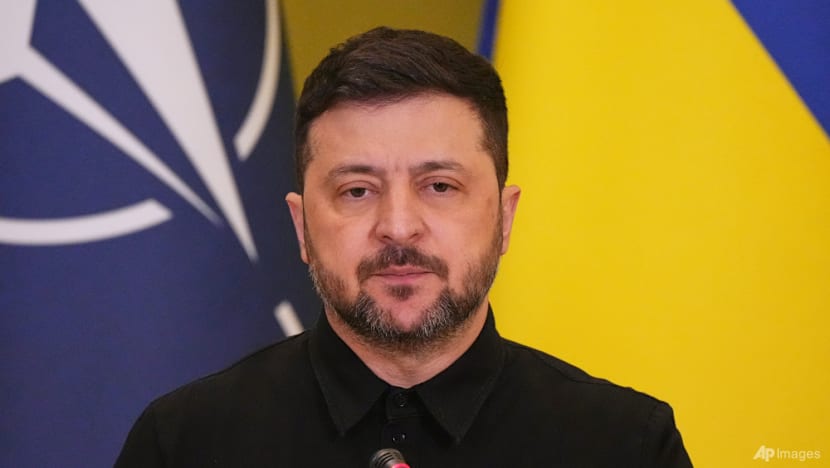
Ukraine's President Volodymyr Zelenskyy speaks during an interview with The Associated Press, in Istanbul, Turkey, Saturday, April 4, 2026. (Photo: AP/Khalil Hamra)
06 Apr 2026 01:51AM (Updated: 06 Apr 2026 07:05AM)
Read a summary of this article on FAST.
FAST

DAMASCUS: Ukrainian President Volodymyr Zelenskyy met with Syrian leader Ahmed al-Sharaa on Sunday (Apr 5), after arriving in Damascus alongside Turkish Foreign Minister Hakan Fidan.

The visit follows Zelenskyy's trip to Turkey on Saturday and a Gulf tour last week, against the backdrop of the war in the Middle East, where he sought to clinch security deals and exchange Ukrainian drone expertise for air defence missiles.

Zelenskyy said in an X post that the two leaders "went over the circumstances of Russia's war against Ukraine - I am grateful for the support. There is strong interest in exchanging military and security experience."

"We also touched on Ukraine's role as a reliable supplier of food products and discussed joint opportunities to strengthen food security across the region," he added.

CNA Games
Show More
Show Less

Ukraine, which is battling relentless Russian drone and missile barrages daily, urgently needs US Patriot air defence ammunition and fears supplies may sink due to the Middle East war. 

Kyiv has therefore sought to leverage its expertise in countering Russian drones, similar to those Iran has used in retaliatory attacks across Gulf nations.

Last week, Zelenskyy visited several Middle Eastern countries and signed defence agreements with Qatar and Saudi Arabia.

Russia was a key ally of Sharaa's predecessor Bashar al‑Assad, now exiled in Moscow, during Syria's 14‑year civil war, supporting him with airstrikes.

But the new Syrian leader, who once commanded rebels against Assad, has appeared to maintain balanced relations with Moscow.

In January, he met President Vladimir Putin and so far has not asked Russia to withdraw from its military bases on Syrian soil.

Source: AFP/fs

Sign up for our newsletters

Get our pick of top stories and thought-provoking articles in your inbox

Subscribe here
Inbox
Advertisement

World

China ready to cooperate with Russia to ease Middle East tension, foreign minister says

Chinese Foreign Minister Wang Yi said the fundamental way to resolve navigation issues in the Strait of Hormuz was to achieve a ceasefire as soon as possible.

China ready to cooperate with Russia to ease Middle East tension, foreign minister says
Russia's Foreign Minister Sergei Lavrov and China's Foreign Minister Wang Yi attend a meeting of the BRICS Plus Ministerial Council in the city of Nizhny Novgorod, Russia June 11, 2024. (Photo: Reuters/Maxim Shemetov/File Photo)
06 Apr 2026 01:43AM (Updated: 06 Apr 2026 08:28AM)
Read a summary of this article on FAST.
FAST

BEIJING: China is willing to continue cooperating with Russia at the UN Security Council and make efforts to cool down the Middle East situation, Foreign Minister Wang Yi told his Russian counterpart Sergei Lavrov in a phone call on Sunday (Apr 5).

Wang said the fundamental way to resolve navigation issues in the Strait of Hormuz was to achieve a ceasefire as soon as possible, adding that China has always advocated political settlement of hotspot issues through dialogue and negotiation.

The foreign ministers' call came ahead of a UN Security Council vote next week on a Bahraini resolution to protect commercial shipping in and around the Strait of Hormuz.

As permanent UNSC members, China and Russia should "adopt an objective and balanced approach and seek to win greater understanding and support from the international community", Wang told Lavrov, according to a statement from his ministry.

A Russian Foreign Ministry statement said the ministers discussed ways to achieve a rapid ceasefire and "launch a political-diplomatic dialogue".

"Satisfaction was expressed at the coincidence in Russia's and China's approaches on most issues on the global agenda, including the situation around Iran, related to the unprovoked aggression of the US and Israel against that country," it said.

China has repeatedly called for a ceasefire in the Gulf region and the Middle East, urging an end to the fighting that has run for more than a month and largely closed the Strait of Hormuz, a critical shipping artery for oil and gas.

Source: Reuters/fs

Sign up for our newsletters

Get our pick of top stories and thought-provoking articles in your inbox

Subscribe here
Inbox
Advertisement

World

Israel renews strikes on Lebanon, forces Syria border crossing to close

Israel has launched attacks against Lebanon since Mar 2 when armed group Hezbollah entered the Middle East war on the side of its backer Iran.

Israel renews strikes on Lebanon, forces Syria border crossing to close

A man inspects the rubble of a building damaged in an Israeli strike, amid escalating hostilities between Israel and Hezbollah, as the US-Israeli conflict with Iran continues, in Tyre, Lebanon, on Apr 5, 2026. (Photo: Reuters/Adnan Abidi)

05 Apr 2026 09:40PM (Updated: 05 Apr 2026 09:52PM)
Read a summary of this article on FAST.
FAST

BEIRUT, Lebanon: Israeli strikes on south Beirut and its suburbs killed at least four people on Sunday (Apr 5), a day after Israel threatened to hit Lebanon's main border crossing with Syria, forcing it to close.

The Israeli military also carried out deadly attacks on Lebanon's south, one of which killed seven people including a family of six.

Israel has launched airstrikes across Lebanon as well as a ground invasion in the south since Mar 2, when armed group Hezbollah entered the war in the Middle East on the side of its backer Iran.

Hezbollah on Sunday claimed to have fired a cruise missile at an Israeli warship off the coast, but the Israeli military told AFP it was "not aware" of such an incident.

CNA Games
Show More
Show Less

One of Israel's strikes in Beirut on Sunday killed at least four people and wounded 39 in the Jnah neighbourhood, the Lebanese health ministry said.

It landed about 100m away from a public hospital, a medical source told AFP.

Another attack struck a building elsewhere in Jnah that the Israeli military had warned it would target.

An AFP photographer in the area saw a missile hit one building as Israeli warplanes flew at low altitude over the capital.

Israel also launched several strikes on the nearby southern suburbs, an area now largely evacuated but where Hezbollah holds sway.

In a statement, the military warned it had "begun striking Hezbollah infrastructure sites".

A man stands as rescuers work at the site of an Israeli strike, amid escalating hostilities between Israel and Hezbollah, as the US-Israeli conflict with Iran continues, in Kfar Hatta in southern Lebanon, on Apr 5, 2026. (Photo: Reuters/Stringer)

VITAL CROSSING

On Saturday, Israel had said it would target the Masnaa border crossing between Lebanon and Syria, the main gateway between the two countries.

"Due to Hezbollah's use of the Masnaa crossing for military purposes and smuggling of combat equipment, the (Israeli army) intends to carry out strikes on the crossing in the near future," said the military's Arabic-language spokesman Avichay Adraee, urging people to leave the area.

The border post was quickly evacuated on the Lebanese side and the site was virtually deserted early Sunday, with only a few guards still on duty, according to an AFP correspondent at the scene.

In Syria, borders and customs public relations director Mazen Aloush insisted that the crossing, known as Jdeidet Yabous on the Syrian side, was "exclusively for civilian use and is not used for any military purposes".

Aloush said traffic through the crossing would be temporarily suspended due to the Israeli threat.

Masnaa is a vital trade route for both countries and a key gateway to the rest of the region for Lebanese people.

Military expert Hassan Jouni told AFP that Israel's threat to strike the crossing "is not based on sound security considerations, but rather aims to pressure the Lebanese government ... to disarm Hezbollah".

Israel previously struck the facility in October 2024, during another war with the militant group.

The gateway then remained closed until Lebanese and Syrian authorities began repair work after a ceasefire the following month.

At another border crossing further north known as Jousieh, an AFP correspondent on Sunday saw a long line of cars and vans waiting to enter Syria as people sought an alternative route.

Rescuers work at the site of an Israeli strike, amid escalating hostilities between Israel and Hezbollah, as the US-Israel conflict with Iran continues, in the Jnah area in Beirut, Lebanon, on Apr 5, 2026. (Photo: Reuters/Stringer)

FAMILY KILLED

Israeli attacks on Lebanon since the start of the war have killed more than 1,400 people, including 126 children, and displaced over a million, according to Lebanese authorities.

In the southern Lebanese town of Kfar Hatta, far from the border with Israel, an Israeli strike killed seven people including a four-year-old girl, the health ministry said Sunday.

The Israeli army had issued an evacuation warning for the town on Saturday evening.

A source from Lebanon's civil defence told AFP that a family of six who had been displaced from a town further south were waiting for a relative to pick them up in a vehicle when they were killed. The relative also perished in the strike.

An AFP photographer saw at least eight homes destroyed by attacks in Kfar Hatta.

As Israeli troops push into border areas in southern Lebanon, destroying villages, Lebanese President Joseph Aoun reiterated his call for talks with Israel, saying he wanted to spare his country's south from destruction on the scale seen in Gaza.

"Why don't we negotiate ... until we can at least save the homes that have not yet been destroyed?" he said in a televised address on Sunday.

Source: AFP/co

Sign up for our newsletters

Get our pick of top stories and thought-provoking articles in your inbox

Subscribe here
Inbox
Advertisement

World

Iran attacks energy infrastructure across Gulf states

Iran's attacks on Gulf energy infrastructure as well as its effective closure of the Strait of Hormuz have convulsed the global economy.

Iran attacks energy infrastructure across Gulf states

The Al-Zour oil Refinery, in al-Zour, south of Kuwait City on May 29, 2024. (File photo: AFP/Al-Zour Refinery)

05 Apr 2026 08:51PM (Updated: 05 Apr 2026 08:55PM)
Read a summary of this article on FAST.
FAST

DUBAI: Critical infrastructure across the Gulf came under attack from Iran on Sunday (Apr 5), with damage reported at civilian facilities in the United Arab Emirates, Bahrain and Kuwait.

Gulf countries have faced repeated drone and missile salvos from Iran in response to US and Israeli strikes on the Islamic Republic that began at the end of February.

Iran has targeted energy and other industrial infrastructure in the oil-rich Gulf nations, accusing its neighbours of allowing US forces to carry out attacks from their territory.

The Gulf states have vehemently denied the accusations.

Attacks by Iranian drones on Sunday resulted in "severe" damage to Kuwaiti oil and petrochemical facilities, the state petroleum company said.

The Kuwait Petroleum Corporation said a number of facilities of its subsidiary Petrochemical Industries Company were targeted in the attack which "resulted in the outbreak of fires at several of these facilities and caused severe material damage".

Earlier, Kuwait's electricity and water ministry said two power and water desalination plants were damaged by a drone attack from Iran, causing "significant material damage and the shutdown of two electricity generating units".

In Kuwait City, the finance ministry said an Iranian drone attack caused "extensive" damage to a government building, but "no human casualties were recorded".

The war has spread across the Middle East, and Iran's attacks on Gulf energy infrastructure as well as its effective closure of the Strait of Hormuz, a critical global shipping lane, have convulsed the global economy.

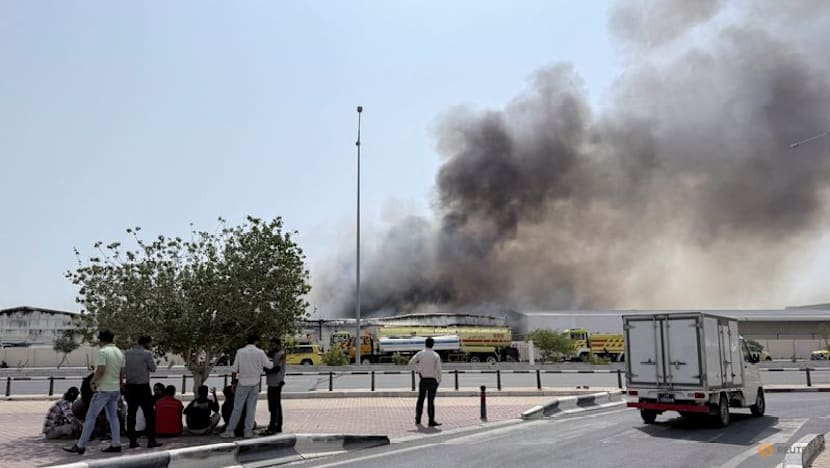
Earlier, authorities in Abu Dhabi said they were battling fires at a petrochemical plant in Ruwais Industrial City on the UAE's northwest coast.

"Authorities are responding to multiple fires in Borouge petrochemicals plant, caused by falling debris following successful interceptions by air defence systems," the Gulf emirate's media office said.

"Operations at the facility have been immediately suspended while damage is assessed. No injuries have been reported," it added after the United Arab Emirates' defence ministry earlier said it was responding to missile and drone attacks.

Iran's military said it was targeting "aluminium industries" in the UAE and US military infrastructure in Kuwait, the official IRNA news agency reported on Saturday.

Iran has repeatedly threatened civilian infrastructure in the Gulf countries as US-Israeli attacks on Iran have also hit targets that are key to its economy.

On Saturday, a strike on a petrochemical hub in southwest Iran killed five people, the deputy governor of Khuzestan province said.

In Bahrain on Sunday, the state energy company said an Iranian drone attack sparked a fire at a storage tank that was later extinguished.

"Bapco Energies confirms an incident occurred at one of its storage facilities earlier today resulting in a tank fire, as a result of a hostile Iranian drone attack," the company said, without specifying the location of the blaze.

It added that the damage was being assessed and no injuries were reported.

Iran's escalating threats have also extended to desalination plants on which the desert Gulf states rely heavily for their water supplies.

Source: AFP/co

Sign up for our newsletters

Get our pick of top stories and thought-provoking articles in your inbox

Subscribe here
Inbox
Advertisement

World

Trump threatens Iranian power plants, bridges in expletive-laden social media post

“You’ll be living in hell – just watch!” US President Donald Trump said on Truth Social as the clock ticks down on his 48-hour ultimatum for Iran to reopen the Strait of Hormuz.

Trump threatens Iranian power plants, bridges in expletive-laden social media post

Commuters make their way past a billboard with a sentence reading "The Strait of Hormuz remains closed" at the Enqelab Square in Tehran, on Apr 5, 2026. (Photo: AFP)

05 Apr 2026 08:48PM (Updated: 06 Apr 2026 07:31AM)
Read a summary of this article on FAST.
FAST

WASHINGTON: US President Donald Trump threatened in an expletive-laden social media post on Sunday (Apr 5) to strike Iran's power plants and bridges if it does not reopen the vital Strait of Hormuz, after announcing the rescue of an airman in a "miraculous" operation.

Trump revealed on his Truth Social platform that the "seriously wounded" airman had been rescued "from deep inside the mountains of Iran".

He called it "one of the most daring Search and Rescue Operations in US history".

Iran said it had "foiled" the operation, and distributed images appearing to show the wreckage of several aircraft, but did not deny that US forces had extracted him.

The war, which erupted on Feb 28 with US-Israeli strikes on Iran, has engulfed the Middle East and convulsed the global economy.

Following a 48-hour ultimatum he issued on Saturday, Trump again warned Iran to stop choking traffic through Hormuz. 

"Open the F*****' Strait, you crazy b*******, or you'll be living in Hell - JUST WATCH!" Trump said.

"Tuesday will be Power Plant Day, and Bridge Day, all wrapped up in one, in Iran. There will be nothing like it!!!" he declared. Later, Trump told Fox News that he believed there was a "good chance" that Iran would agree to a deal on Monday.

A still image purporting to show US aircraft destroyed during the US mission to find a stranded airman in Iran, the Revolutionary Guards said, according to Iranian media, amid the US-Israeli conflict with Iran, in Isfahan, Iran, released on Apr 5, 2026. (Image: Reuters/Social media)

Trump's deadline of 9pm EDT Monday (0100 GMT Tuesday) centres on growing alarm over Iran's grip on the Strait of Hormuz.

He on Sunday appeared to extend his deadline for Iran to make a deal to reopen the strait or face devastating bombardment, posting a message stating simply: "Tuesday, 8:00 P.M. Eastern Time!"
The new deadline (0000 GMT Wednesday) would push back his ultimatum on Tehran by one day, after which he has vowed to destroy the country's power plants and bridges.

Omani and Iranian deputy foreign ministers earlier reportedly held talks on easing passage through the strait.

In Iran, many residents of Tehran seemed indifferent to Trump's threats.

In a large park in the west of the city, a group of young Iranians were having a picnic. Nearby, two friends were playing with a Frisbee as techno music blared from a portable speaker.

One man was making the most of a windy day by flying his kite in front of the Milad Tower, an iconic landmark of Tehran.

ABANDONED AIRPORT

US media reported on details of the rescue operation of the US airman, a weapons systems officer.

The New York Times said he was equipped with a pistol, a beacon and a secure communications device to coordinate with rescuers.

Two of the planes meant to transport him and his rescuers to safety were stuck in a remote base in Iran and had to be destroyed to prevent them from falling into Iranian hands, the New York Times and CBS reported.

US forces then used three other transport planes to carry the airman and his rescuers out of Iran, the reports said.

Iran's military said it had destroyed four US aircraft involved in the operation, which it said had made use of an abandoned airport in southern Isfahan province.

Iranian media reported five people were killed in strikes during the operation.

Footage released by Iran's Islamic Revolutionary Guard Corps was presented as showing charred wreckage of an American aircraft scattered across a desert area, with smoke still rising.

Trump hailed a "miraculous Search and Rescue Operation" and said it came "in addition to a successful rescue of another brave Pilot, yesterday, which we did not confirm, because we did not want to jeopardise our second rescue operation".

Iran has said its forces downed the fighter jet from which the crew ejected, while US media reported only that the plane had been shot down.

The US administration has not said publicly if it was downed or not.

"CHOOSE PEACE"

Critical infrastructure across the Gulf came under attack from Iran again on Sunday, with damage reported at civilian facilities in the United Arab Emirates, Bahrain and Kuwait.

Pro-Iran armed groups also carried out two attacks on US diplomatic sites in Iraq overnight, the US embassy in Baghdad said.

On another front, Lebanon has increasingly been drawn into the conflict since the Iran-backed Hezbollah group began targeting Israel.

Israel has struck back and pushed its ground forces into southern Lebanon.

A source from the Lebanese civil defence told AFP that an Israeli strike on southern Lebanon's Kfar Hatta killed a family of six waiting to evacuate and a relative who had come to pick them up.

Another Israeli strike on south Beirut killed at least four people, the Lebanese health ministry said.

The war has cast a pall over Easter Sunday celebrations for Christian minorities in Lebanon and across the region.

In the usually lively alleyways of Jerusalem's Old City, silence reigned on Sunday.

As a security precaution, Israeli authorities have restricted access to the Holy Sepulchre, where the faithful commemorate Christ's crucifixion and resurrection.

"It's very hard for all of us because it's our holiday ... It's really hard to want to pray but to come here and find nothing. Everything is closed," said Christina Toderas, 44, from Romania.

In his Easter blessing at the Vatican, Pope Leo XIV urged "those who have the power to unleash wars" to "choose peace" instead and criticised global indifference to "the deaths of thousands of people".

BUSHEHR NUCLEAR PLANT

In Iran, a strike near the Bushehr nuclear plant on Saturday killed a guard and led Russia, which partly constructed the facility and helps operate it, to announce it was evacuating 198 workers and to condemn the strike as "an evil deed".

Iranian Foreign Minister Abbas Araghchi warned that continued attacks on the plant on the southern coast could eventually lead to radioactive fallout that would "end life in GCC (Gulf Cooperation Council) capitals, not Tehran".

Bushehr is considerably closer to Kuwait, Bahrain and Qatar than it is to the Iranian capital.

Against the backdrop of war, Iran has kept up a crackdown weeks after it quelled a massive wave of anti-government protests, with the judiciary announcing the execution of two men convicted of acting on behalf of Israel and the United States.

On Sunday, communications monitor Netblocks said Iran's internet blackout was now the longest nationwide shutdown in history.

Source: AFP/zl

Sign up for our newsletters

Get our pick of top stories and thought-provoking articles in your inbox

Subscribe here
Inbox