

peshkov/iStock via Getty Images
Investment Thesis
I am changing my recommendation from sell to buy for the State Street Energy Select Sector SPDR ETF (NYSEARCA:XLE). My first article about the asset was published on October 21, 2024, and after so long, I decided to revisit the thesis, as the prolongation of the war in Iran could keep the price of oil higher for longer.
State Street Energy Select Sector SPDR ETF
In this article I will explain why I am confident in the oil companies' thesis, and for that, my preferred vehicle is the XLE ETF. XLE is State Street's energy ETF and has a very attractive expense ratio of 0.08%.
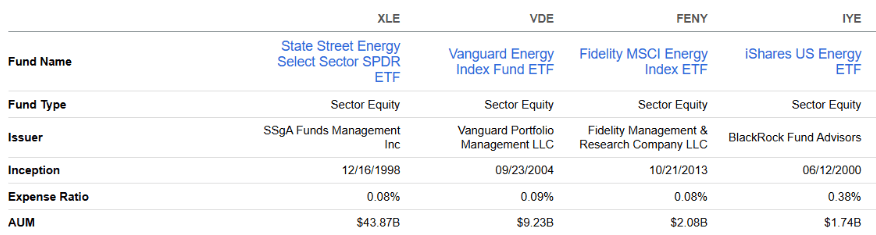
Comparison (SA)
Another positive point of this ETF is its high liquidity; after all, assets under management total $43 billion. There are 26 holdings in total, with the top 10 corresponding to 75% of the ETF and the top 3 corresponding to 47%.
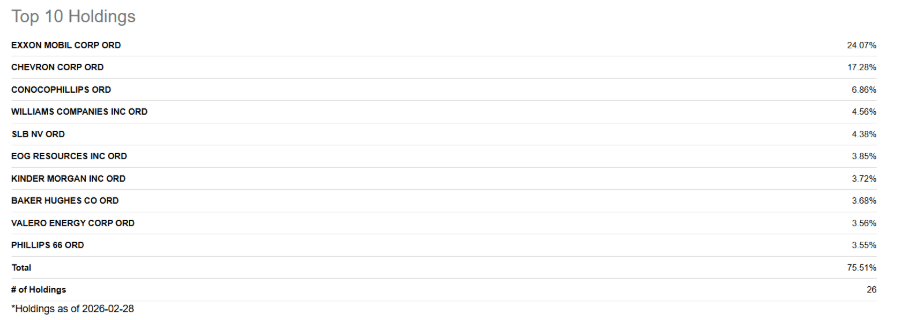
Holdings (SA)
Revisiting My Recommendations
On October 21, 2024, I recommended selling XLE, and at that time the arguments were that other assets would perform better than oil companies in an interest rate cut scenario. Additionally, the valuation was not attractive.
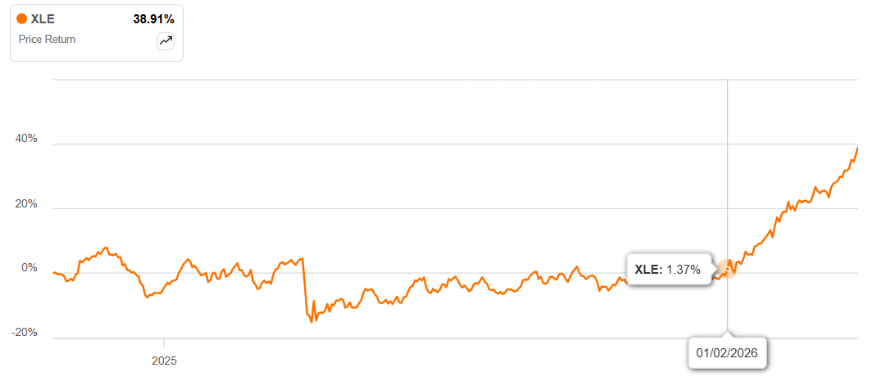
Performance (SA)
It is worth noting that I wrote about other assets besides XLE in the energy sector. On December 18, 2025, I published a recommendation to buy the UCO Leveraged Oil ETF. I ended the recommendation to buy the leveraged ETF on March 3, 2026, and maintained the recommendation to buy only the USO (non-leveraged).
After excellent performance from both recommendations, I ended the recommendations to buy oil ETFs on March 18 and only maintained the recommendation to buy the Brazilian oil company Petrobras (NYSE:PBR), my top pick for 2026. Now, I will start to develop the idea of the reason for changing the recommendation from selling to buying the ETF XLE.
The Iran War
The war in Iran has completed 1 month, and we already have enough data to understand the dimension of this event for the oil industry. Here I'll get straight to the point, as the study below shows that this may have been the biggest supply shock in history.
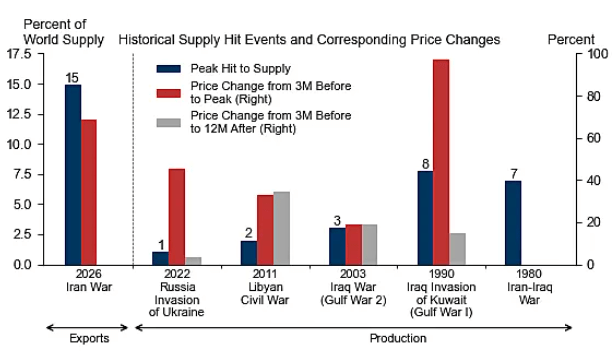
the biggest supply shock in history. (GS)
What To Expect?
As we can see below, oil soared 39% in the first days of the conflict.
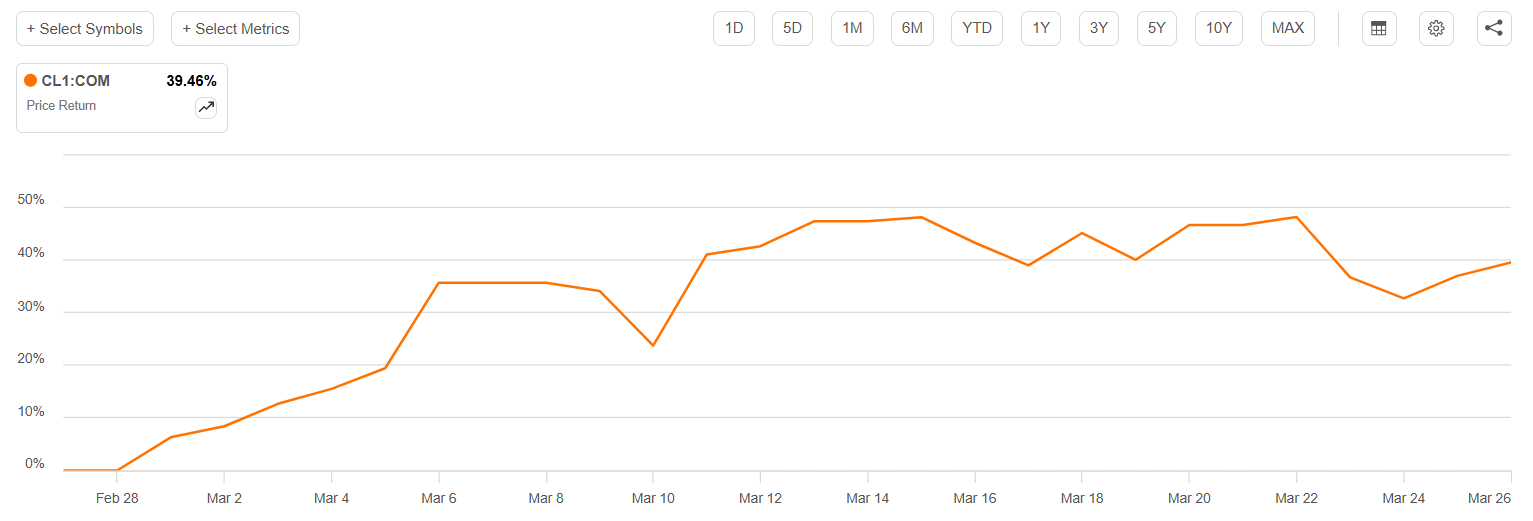
Price (SA)
Having seen the graph above, the graph below consolidates the performance of oil in the Gulf Wars and in geopolitical events that occurred in Russia, Venezuela, and Saudi Arabia.
As we can see, the price of oil is currently well above average, second only to the Gulf War. If it follows the historical average, I believe a retraction in oil prices is expected next month, possibly falling from a 40% increase to around 25% since the start of the conflict.
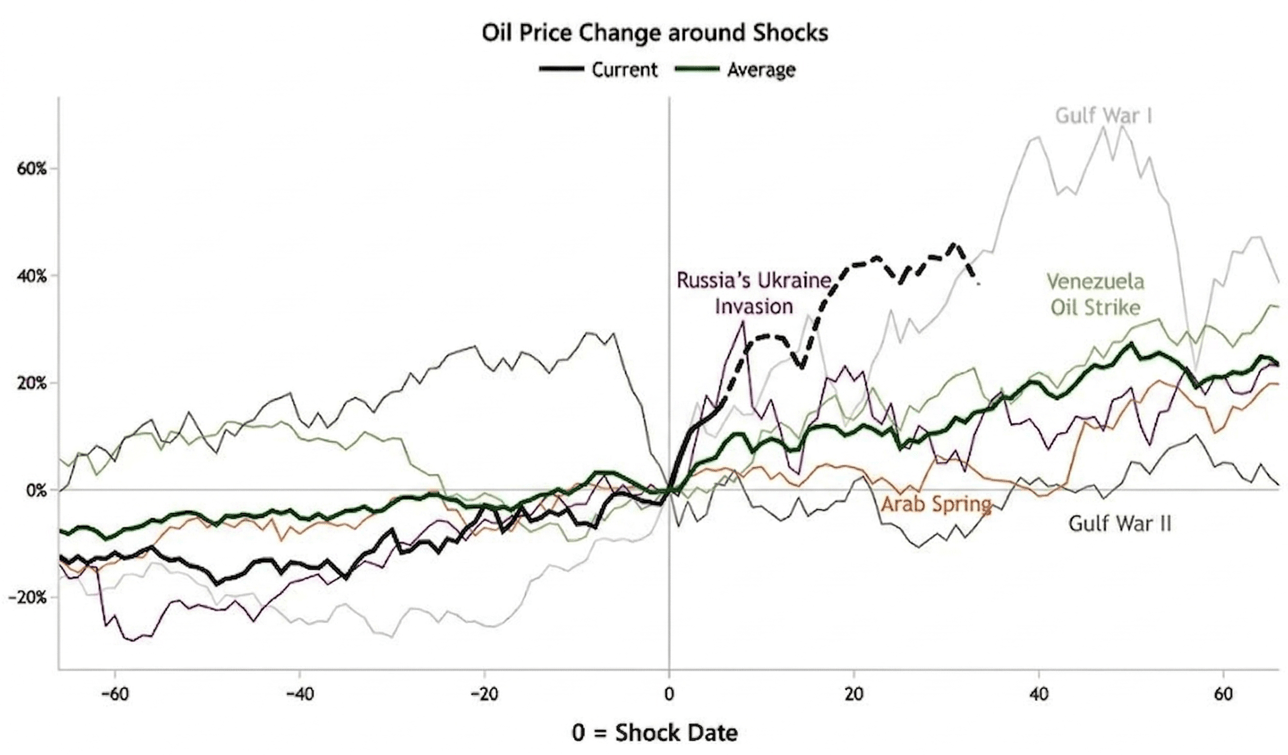
Oil Price Change Around Shocks (BNE Adopted By The Author)
Therefore, I would say that the margin of safety for investing in assets that track oil prices is no longer that attractive. Not to mention that President Trump extended the ceasefire from 5 days to 10 days, meaning there is more space for peace negotiations to take place and oil prices to fall. The scenario is propitious for oil to fall in April.
But there is a detail here! As we can see from the chart above, even if oil falls in April, prices will still be considerably higher than before the war. This perception, combined with historical experience, indicates that oil prices will remain higher for longer, and this could benefit the cash flow of oil companies, and consequently their shares could rise.
The XLE ETF As The Best Option
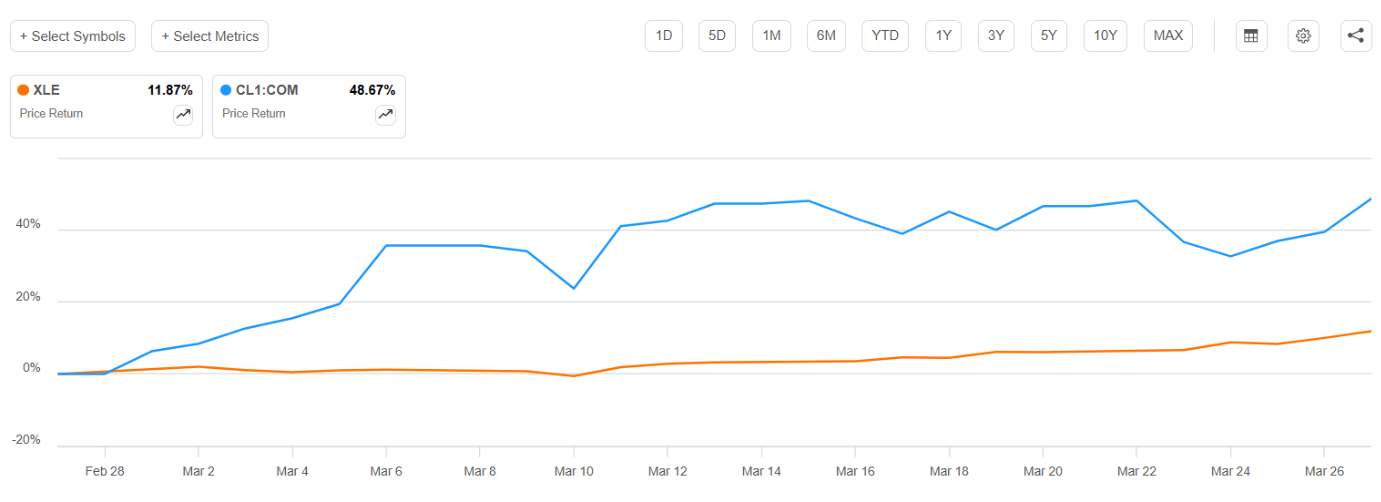
As I mentioned at the beginning of the article, the option in this article to capture the rise of oil companies is XLE. That said, it is clear when we analyze the performance of XLE against crude oil futures that there is a relevant gap in the performance of the two. The reasons for this are obvious; after all, it is common for the commodity to rise before the companies. It tends to take a while for high prices to positively impact the companies' cash flow and their shares to rise.
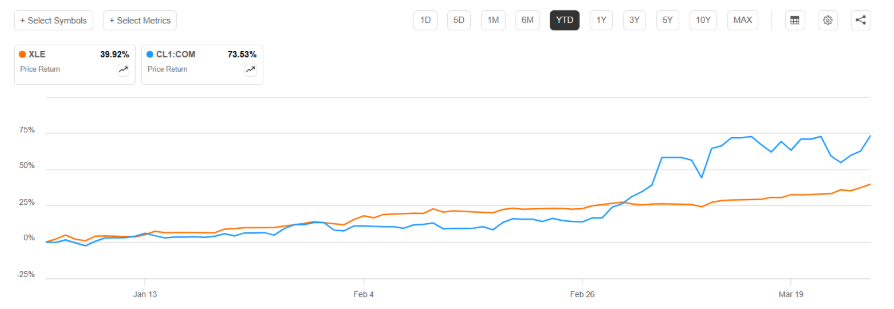
Comparison (SA)
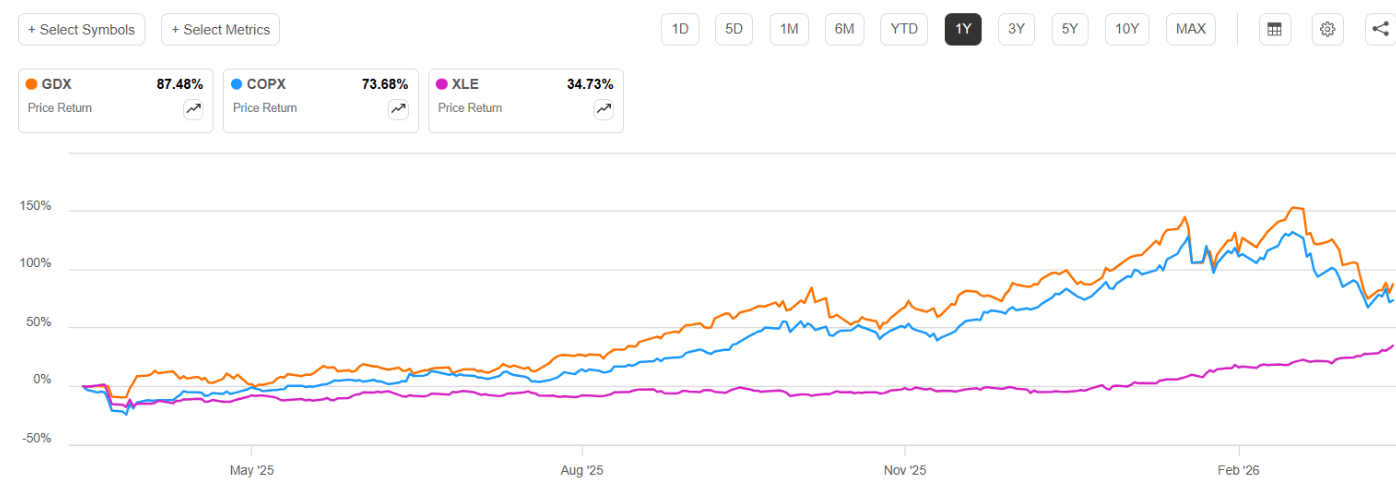
But this gap closes! On July 9, 2025, I wrote about GDX, the gold mining ETF. The thesis was crystal clear: after all, gold had soared, and the shares of gold miners had not nearly followed the performance. Since then, the recommendation has given great gains to the investor, and the gap between gold and the gold miners has closed.
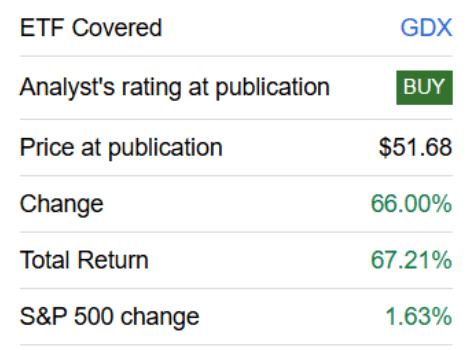
Recommendation (The Author)
This happened with the gold mining companies and with the copper mining companies, so why won't it happen with the oil companies? As we can see in the graph below, it is likely already happening.
Comparison (SA)
Based on this analysis, I am changing my recommendation from sell to buy XLE, and my target is closing the gap for the price of crude oil futures since the start of the conflict.
Comparison (SA)
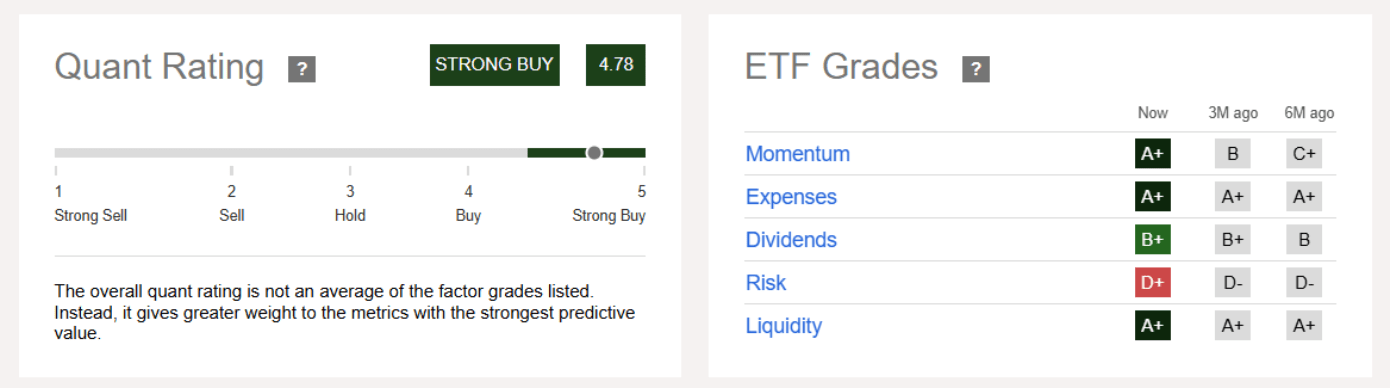
Additionally, I feel quite confident with the recommendation, as I see that SA's powerful Quant tools also recommend buying.
Quant Rating and ETF Grades (SA)
Potential Threats To The Thesis
There are several risks to the thesis. The first is that it may be dangerous to believe that oil companies will close the gap for crude oil futures just as gold miners closed the gap for gold prices. The investment theses are arguably completely different.
The second risk is that although crude oil futures have risen well beyond the XLE, the XLE is already up 39% this year alone; therefore, the safety margin for this investment has already reduced considerably.
Finally, we have the implicit risk of the ETF. After all, XLE is a relatively concentrated ETF, and investors who have greater knowledge about the individual theses of each oil company can eventually capture a greater return.
The Bottom Line
Unfortunately, the war in Iran is lasting longer than expected, and what's worse, there is still no concrete prospect that it will end. Statistics show that the current conflict could be the biggest supply shock ever seen, which has caused the price of oil to soar.
The point is that the rise in oil may have created an asymmetry that could make many investors profit, since there is a big gap between the rise in oil and the rise in oil company stocks, and the best way to capture this asymmetry is through XLE, in my opinion.
Based on this analysis, I am raising the recommendation from sell to buy for the XLE ETF. As I said, this phenomenon has already occurred with the shares of gold and copper mining companies after the surge in gold and copper, and there is a great possibility of this happening with oil companies in my opinion.


