The “magical” system for Singapore’s Downtown Line
Discover how the digital Rail Enterprise Asset Management System (REAMS) enables the monitoring of rail asset performance, costs, and risks – and helps maintain a great passenger experience on the Downtown Line.
Where technology meets nature: Singapore
On the way to becoming the world’s most sustainable megacity
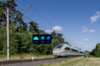
To mitigate climate change impacts, the government has defined clear goals to make the megacity a greener and more livable place. Among other things, the Singapore Green Plan 2030 defines the city’s goals for green commuting. One of them is to achieve a 75% mass public transportation peak-period modal share. Another is expanding Singapore’s rail network by 130 km. The Land Transport Master Plan 2040 includes plans for a convenient, well-connected, inclusive, and fast land transportation system. Singapore's Downtown Line, one of the world’s longest fully automated suburban metro lines, contributes to these goals. It enhances connectivity from the north-west and eastern parts of Singapore by offering a more direct route to the Central Business District (CBD).


Challenge: Enabling data-driven metro maintenance and performance optimization
Project scope for DTL asset management
To minimize downtime and improve operational efficiency, a consortium comprising Siemens Mobility and ST Engineering Electronics was awarded by the major customer in Singapore a project to design and deliver a comprehensive rail enterprise asset management system for selected DTL assets, including:
- integrating and managing the entire rapid transit network in a centralized digital rail asset management platform,
- limiting downtime for the maintenance of 92 trains and 34 stations,
- improving system and asset performance over the lifecycle.

DTL operator SBS Transit
This shift toward data-driven just-in-time predictive maintenance and asset renewal is key to bringing rail reliability to the next level and optimizing overall lifecycle costs.
Solution: A digital rail enterprise asset management system that turns data into value
Unlocking the power of data for optimized maintenance and performance
The software platform not only stores and analyzes data from DTL's maintenance management system, it also utilizes data for the core systems that are critical to DTL's efficient operation, including trains, signaling, and platform screen doors. The technical data that’s collected, in conjunction with financial metrics, creates decision-support tools for data-centric asset management.
REAMS’ core is equipped with data analytics capabilities and expertise based on Railigent®, Siemens Mobility's Data Analytics Application Suite for Rail. These features are key to monitoring asset performance and identifying potential issues before they occur. Assets can be repaired or renewed pre-emptively.


Asset data collection
REAMS uses data from:
- Rail assets like trains, signaling, platform screen doors, and power supply system as well as soon from tracks, communications, and the integrated supervisory control system
- The maintenance management system to support planning, scheduling, assignment, execution, and documentation of the maintenance operation
- Enterprise system financial reporting to determine the potential value of optimization measures, prioritize them, and model and compare different maintenance/renewal scenarios

Data analytics and management
The core functions of REAMS are:
- Data analytics – including predictive algorithms, engineering models, and mathematical and statistical models
- Maintenance management – including failure and decision support by means of analysis and optimization
- Resource management – including lifecycle costing models, finances, and budget
- Asset renewal management – including overhaul, replacement, life extension, and renewal
- Performance management – including transparency of key performance indicators, anomaly triggering, and reports

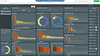
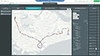
Examples of possible REAMS use cases
Use case: Improved rolling stock maintenance
► How can a high availability of DTL’s rolling stock be ensured to meet the service demand?
Challenges
A strong demand for fleet availability requires high reliability and a fast turnaround of defective rolling stock. That leaves just a short window for inspection and maintenance.
Operation & maintenance:
- No forward visibility of the health condition of the rolling stock fleet for service planning
- Long downtimes due to complex systems and interface
- Demand for high availability of the fleet for service operations and better customer service
REAMS solution
- Visualizes the fleet’s health status to support service planning
- Utilizes data analytics to forecast time to failure of critical rolling stock systems that could affect service
- Deploys smart diagnostic support to maintenance staff for troubleshooting
- Optimizes train utilization (mileage) across the entire fleet as part condition preservation
Benefits
- Easy identification of vehicles fit for service and those that need maintenance to become or remain fit for service
- Bundling of corrective and preventive maintenance tasks with indication of time to failure, which reduces shunting effort and frees up maintenance pits
- Reduced downtime thanks to smart diagnostic support
- Asset condition is preserved through optimized train usage
This leads to:
- High availability and reliability
- Reduced maintenance costs
- Increased asset life

Discover digital asset management for your rail systems
Maximizing the value of rail assets over their entire lifecycle is a concern for many operators. That’s why we took REAMS to the next level: Based on our extensive experience, we created a general digital asset management offering for improved decision-making.
See for yourself what our data-driven asset performance management and asset investment planning tools can do for you and your rail systems!
Benefits: Increased overall availability, improved operational efficiency, and optimized lifecycle costs thanks to REAMS
Asset management and performance for a sustainable future
The REAMS digital platform will combine rail domain expertise with data analytics to achieve the following objectives for Singapore’s metro line:
- Higher asset and passenger service availability
- Improved operational efficiency by limiting maintenance downtime
- Increased infrastructure reliability and optimized lifecycle costs of key assets


Optimized operation and maintenance activities

Predictive maintenance

Maximum asset reliability and minimized service disruptions

Optimized whole-life cost

The scope of Siemens Mobility’s project for Singapore’s DTL goes beyond REAMS
Discover the wide range of solutions from Siemens Mobility for the Downtown Line – from signaling and a simulation center for signaling to electrification and depot equipment. And learn about the challenges and benefits of this reference project.