Will vacuum insulation materials not become more popular?
Hello.
Thank you for watching today.
This is Minato from MX Engineering Co., Ltd.
Well, today I would like to write an article that will cheer up construction companies.
《《《Minato Yoichi's Blog No. 2021 on October 10, 17》
Is vacuum insulation the insulation of your dreams?
I mentioned this briefly in my recent blog below, but I recently had a chance to talk to the construction company that called me, so I'd like to write about it again in detail.
 /dannetsu_column/guide04/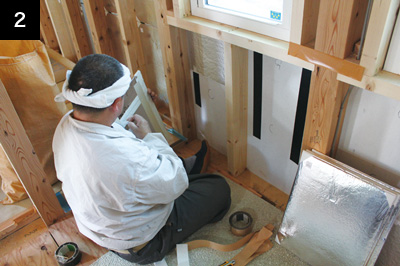
This is because I had a quick look at the NEDO website.
This article is about NEDO. NEDO is a government agency, and its official name is the New Energy and Industrial Technology Development Organization (NEDO).
Vacuum insulation materials also contribute to energy conservation in homes
https://www.nedo.go.jp/hyoukabu/articles/201003panasonic/index.html
This article contains an article about Panasonic from 2010, about 10 years ago.
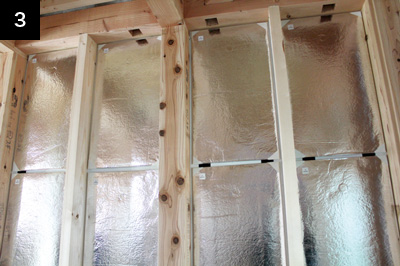
Currently, this Panasonic vacuum insulation material is used in Lixil's Coco Eco product.
And I think Achilles was the company that made the original boards.
In addition to LIXIL's Cocoeco, Asahi Fiber Glass also deals in vacuum insulation materials on a relatively large scale.
Our company also deals in this product, but recently suppliers have been offering high prices so we feel like there is no market at all.
Applications of vacuum insulation materials
The current manufacturers are as follows:
The main players are home appliance manufacturers such as Panasonic, Hitachi, Toshiba, and Mitsubishi.
Current applications of vacuum insulation materials include home refrigerators and eco-friendly water heaters.
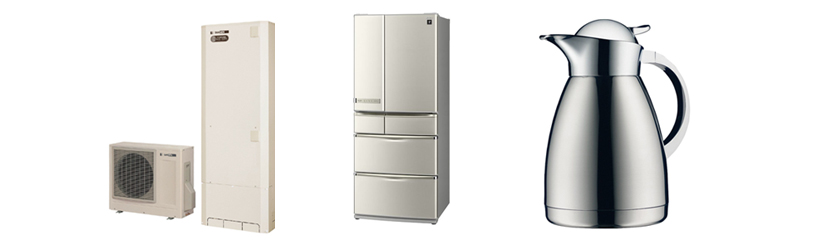
In fact, behind the increase in the interior space of home refrigerators and the compactness and lightness of EcoCute heaters is the improvement in the performance of vacuum insulation materials.
Since this is internal company data, it will never be made public, but according to the president of a former machinery manufacturer that produces vacuum insulation materials, they have completed prototypes with a thermal conductivity of over 0.001 w/mK.
What's different is that the higher the degree of vacuum, the higher the performance.
This data is 24 times the performance of 0.034k Glassur's 34w/mK.
This means that 1cm of vacuum insulation has the same performance as 34cm of 24K glazing.
Our company also has data from the Building Materials Testing Center that shows it is 0.0027w/mK.
It's a small thing, but it shows that the performance of vacuum insulation material is incredibly high.
Seven or eight years ago, I had the feeling that this had great potential for the future.
Weaknesses of vacuum insulation
But vacuum insulation materials do have weaknesses, three of which are fatal.
Weak points of vacuum insulation 1. Price
Since the vacuum process cannot be automated, the biggest drawback is the extremely high price.
There was a time when we were able to purchase it for 3000 yen per square meter. We were selling it for about 4200 yen. That meant that the factory couldn't make any profit, and our company only made about 1% of the profit. I think the general distribution price is around 1 yen per square meter.
The price hasn't fallen in the last 10 years. We had hoped that the price would fall as the product became more widely used, but the following weaknesses are thought to be the reason why the product never gained popularity in the first place.
Weakness of vacuum insulation material 2. Size
Most vacuum insulation materials have a core material called glazing, which also uses a powder called silica, but silica is expensive and has humidity issues, making it difficult to stabilize the quality.
Either way, the insulation performance is not good at all.
It is wrapped in film and sealed in a vacuum, which is why it exhibits such high performance.
That's why vacuum insulation materials must be made to specific dimensions.
As the degree of vacuum decreases, the performance drops to about 1/10 of that of a typical grausole.
This makes it completely useless on construction sites where there are many screws and nails.
Also, the size cannot be made exactly the way it is. We make the bags to the size we want, but the grouse may bend during the vacuum process. Because it is a soft material, there are some parts that cannot be controlled.
Weakness of vacuum insulation material 3. Lifespan
Furthermore, this degree of vacuum is causing fatal problems in areas where performance is affected.
This is a problem of performance degradation over time.
I don't have the data on hand right now, but there was a time when the Ministry of Land, Infrastructure, Transport and Tourism and the Ministry of Economy, Trade and Industry were actually working on standardizing the JIS, and at that time they said that over a 10-year period, the deterioration would be more than 3%. Some samples would be reduced to half their original value, and the fact that the lifespan is not stable is a major problem.
If you buy a refrigerant-filled balloon at Disneyland or somewhere similar, the refrigerant will escape after three days and the balloon will go from floating to falling steadily; this same phenomenon occurs inside vacuum insulation material.
Of course, the film and cost have been significantly improved in terms of barrier performance, but the degree of vacuum will still decrease after 10 years.
So, unlike household refrigerators and eco-cutes, which are replaced every 15 years or so, it's difficult to use appliances in a home unless there's a guarantee that they will maintain their performance for at least 50 years.
So, I think it might be a good idea to remodel.
For these reasons, I don't think it's particularly suitable for newly built homes.
I only became aware of this weakness, namely its lifespan, after the coronavirus pandemic began, but I hope that it will be used for renovation purposes in the future.
I am also working hard to write an e-mail newsletter every day. Please sign up for it below.