

A person “reasonably suspected of having committed an offence endangering national security” may be detained without charge for up to two weeks, after the initial 48-hours detention period expires, according to the draft homegrown security law bill.

If the Safeguarding National Security Bill passes the opposition-free legislature, a police officer ranked chief superintendent or above may appeal to a magistrate’s court – within the initial 48-hour detention period – for an extension of up to two weeks.
The magistrate can then extend the detention period for seven days after the first detention period expires, and a further seven days after that. However, they must be satisfied that “the investigation of the offence is being diligently and expeditiously conducted by the police” and cannot “reasonably be completed before the date of the application.”
Plus, they must be convinced that the extension is “necessary for securing or preserving the evidence of the offence or for obtaining the evidence by questioning the person,” according to the draft legislation.
Currently, anyone arrested in Hong Kong cannot be held for longer than 48 hours, after which the person must be released or charged.

Article 23 of the Basic Law stipulates that the government shall enact laws on its own to prohibit acts of treason, secession, sedition and subversion against Beijing. Its legislation failed in 2003 following mass protests and it remained taboo until after the onset of the separate, Beijing-imposed security law in 2020. Pro-democracy advocates fear it could have a negative effect on civil liberties but the authorities say there is a constitutional duty to ratify it.
Swift passage expected
The Legislative Council (LegCo) will convene a special meeting at 11 am on Friday for the first reading of the the bill according to its schedule. It comes just nine days after the end of a public consultation which prompted more than 13,000 submissions.

Around 97 per cent of of the submissions received had expressed their support for the law, according to the government.
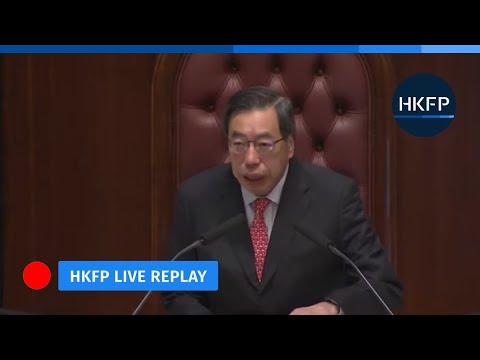
Chief Executive John Lee said in a statement on Thursday that he had notified LegCo President Andrew Leung that “both the government and the Legislative Council have the responsibility to, and must, make every endeavour to complete the enactment of the legislation at the earliest possible time.”
See also: Article 23 then and now: What changed between 2002 and 2024

According to local media reports, authorities hope to have the bill passed by National Security Education Day on April 15.
Article 23 security law bill in full:
- Hong Kong proposes dissolving organisations accused of ‘external interference’
- Threshold for early release may be raised for national security prisoners, draft bill says
- Hong Kong proposes life sentences for treason, insurrection, sabotage
- New powers mulled for police, courts to limit nat. security detainees’ access to lawyers
- Hong Kong proposes cancelling ‘absconders’ passports under new security law
- Public interest defence proposed for some ‘state secrets’ offences in draft security law
- Hong Kong proposes raising max. penalty for sedition to 10 years under new sec. law
- Courts could extend detention without charge for 2 weeks, draft nat. sec. bill suggests
- Hongkongers may face 7 years jail for ‘inciting disaffection’ of public officers
- Hong Kong’s business community expresses concern over proposed new security law
Support HKFP | Policies & Ethics | Error/typo? | Contact Us | Newsletter | Transparency & Annual Report | Apps
Help safeguard press freedom & keep HKFP free for all readers by supporting our team


















latest national security stories


