


Effects of magnesium supplementation on improving hyperglycemia, hypercholesterolemia, and hypertension in type 2 diabetes: A pooled analysis of 24 randomized controlled trials
- PMID: 36741996
- PMCID: PMC9889557
- DOI: 10.3389/fnut.2022.1020327
Effects of magnesium supplementation on improving hyperglycemia, hypercholesterolemia, and hypertension in type 2 diabetes: A pooled analysis of 24 randomized controlled trials
Abstract
Background: Previous studies have demonstrated that diabetes is often accompanied with lower magnesium status. However, practical details regarding the influences of magnesium intervention on hyperglycemia, hypercholesterolemia, and hypertension in type 2 diabetes (T2D) need to be further investigated.
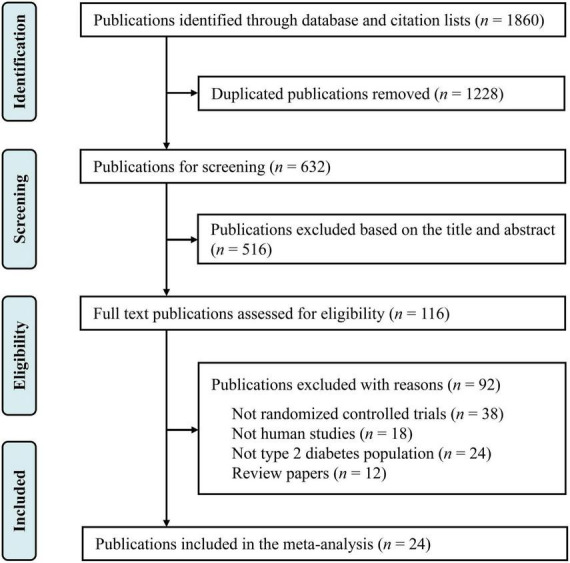
Methods: Web of Science, ScienceDirect, and PubMed were searched for relevant literatures published through April 30, 2022, and high-quality data were pooled to evaluate the effects of magnesium supplementation on glycemic, circulating lipids, and blood pressure control in T2D, and to explore the associated practical details.
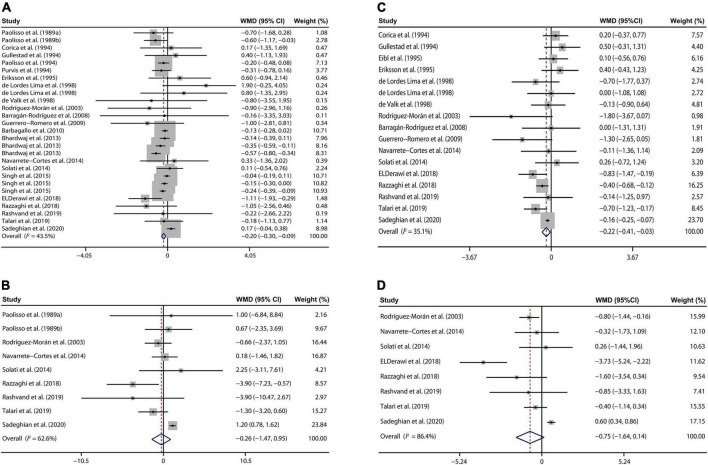
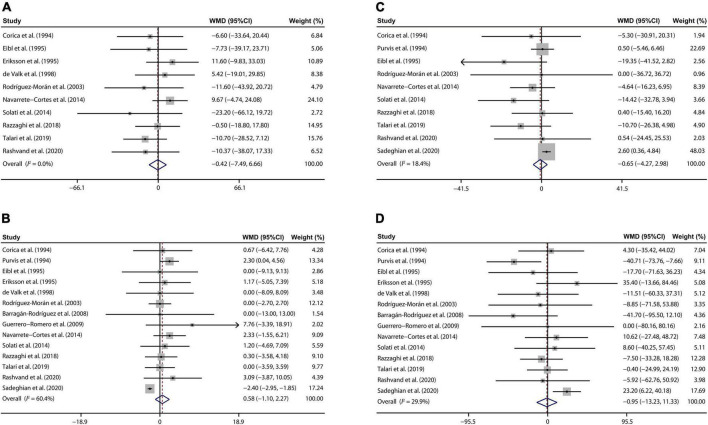
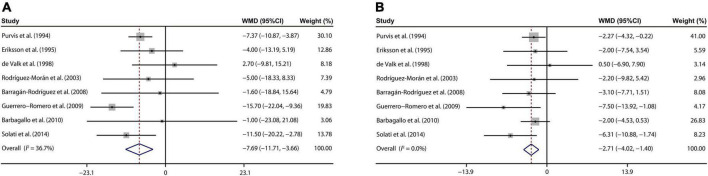
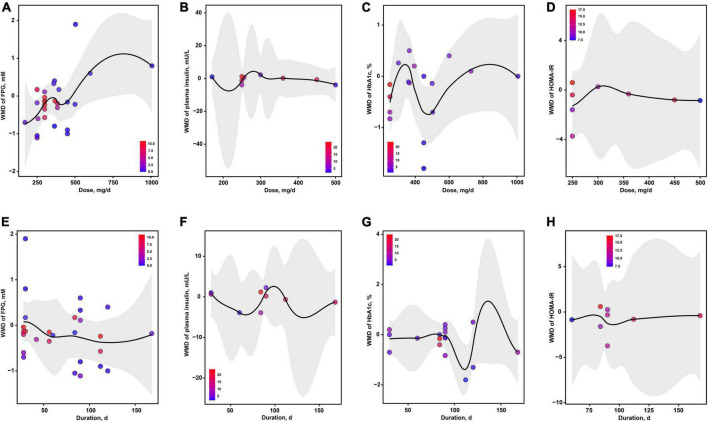
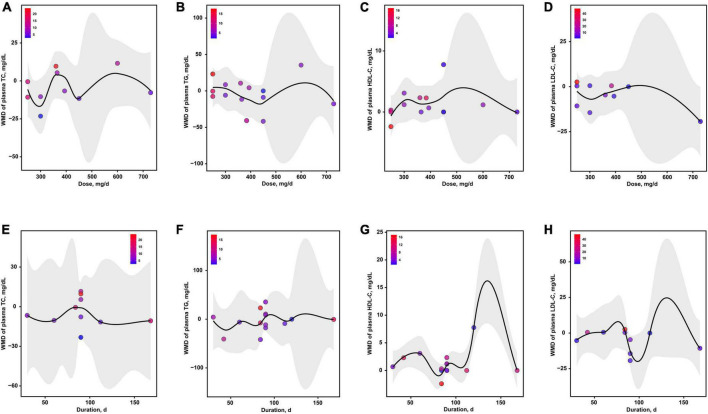
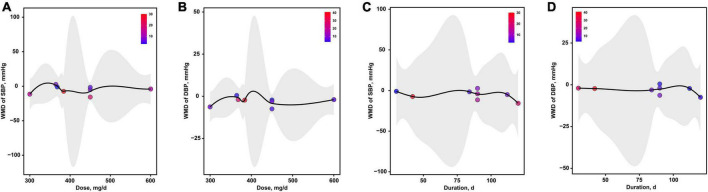
Results: Pooled analyses of 24 randomized controlled trials with 1,325 T2D individuals revealed that subjects who received magnesium supplementation had statistically significant reductions in fasting plasma glucose, glycated hemoglobin, systolic blood pressure and diastolic blood pressure, with WMD values of -0.20 mM (95% CI: -0.30, -0.09), -0.22% (95% CI: -0.41, -0.03), -7.69 mmHg (95% CI: -11.71, -3.66) and -2.71 mmHg (95% CI: -4.02, -1.40), respectively. Detailed subgroup analyses demonstrated that health status of participants including age, body mass index, country, duration of disease, baseline magnesium level and baseline glycemic control condition as well as magnesium formulation, dosage and duration of intervention influenced the effects of magnesium addition. Dose-effect analysis showed that 279 mg/d for 116 d, 429 mg/d for 88 d and 300 mg/d for 120 d are the average optimal dosages and durations for improving glycemic, circulating lipids, and blood pressure controls, respectively.
Conclusion: Our findings provide clinically relevant information on the adjuvant therapy of magnesium for improving hyperglycemia, hypercholesterolemia, and hypertension in T2D.
Keywords: blood pressure; glycemic control; magnesium supplementation; optimal details; serum lipids; type 2 diabetes.
Copyright © 2023 Xu, Li, Wang and Xu.
Conflict of interest statement
The authors declare that the research was conducted in the absence of any commercial or financial relationships that could be construed as a potential conflict of interest.
Figures
Similar articles
-
Probiotics supplementation improves hyperglycemia, hypercholesterolemia, and hypertension in type 2 diabetes mellitus: An update of meta-analysis.Crit Rev Food Sci Nutr. 2021;61(10):1670-1688. doi: 10.1080/10408398.2020.1764488. Epub 2020 May 21. Crit Rev Food Sci Nutr. 2021. PMID: 32436397
-
Folic acid supplementation and malaria susceptibility and severity among people taking antifolate antimalarial drugs in endemic areas.Cochrane Database Syst Rev. 2022 Feb 1;2(2022):CD014217. doi: 10.1002/14651858.CD014217. Cochrane Database Syst Rev. 2022. PMID: 36321557 Free PMC article.
-
The Effects of Magnesium Supplementation on Blood Pressure and Obesity Measure Among Type 2 Diabetes Patient: a Systematic Review and Meta-analysis of Randomized Controlled Trials.Biol Trace Elem Res. 2021 Feb;199(2):413-424. doi: 10.1007/s12011-020-02157-0. Epub 2020 May 8. Biol Trace Elem Res. 2021. PMID: 32385715 Review.
-
What is the impact of vitamin D supplementation on glycemic control in people with type-2 diabetes: a systematic review and meta-analysis of randomized controlled trails.BMC Endocr Disord. 2023 Jan 16;23(1):15. doi: 10.1186/s12902-022-01209-x. BMC Endocr Disord. 2023. PMID: 36647067 Free PMC article.
-
Effects of l-arginine supplementation on glycemic profile: Evidence from a systematic review and meta-analysis of clinical trials.J Integr Med. 2020 Jul;18(4):284-291. doi: 10.1016/j.joim.2020.05.001. Epub 2020 May 28. J Integr Med. 2020. PMID: 32561357 Review.
Cited by
-
Micronutrients in early life and offspring metabolic health programming: a promising target for preventing non-communicable diseases.Eur J Clin Nutr. 2023 Dec;77(12):1105-1112. doi: 10.1038/s41430-023-01333-4. Epub 2023 Aug 21. Eur J Clin Nutr. 2023. PMID: 37604969 Review.
-
Unraveling the Mechanisms of Magnesium Supplementation in Alleviating Chronic Kidney Disease Complications and Progression: Balancing Risks and Benefits.Biol Trace Elem Res. 2024 Sep 10. doi: 10.1007/s12011-024-04368-1. Online ahead of print. Biol Trace Elem Res. 2024. PMID: 39256329 Review.
-
Impact of Combined Aerobic Training and Magnesium Supplementation on Serum Biomarkers and microRNA-155 and microRNA-21 Expression in Adipose Tissue of Type 2 Diabetic Rats: An Eight-Week Interventional Study.Biol Trace Elem Res. 2024 Apr 24. doi: 10.1007/s12011-024-04186-5. Online ahead of print. Biol Trace Elem Res. 2024. PMID: 38658451
-
Trace element magnesium: a key player in hypertension management.Hypertens Res. 2023 Oct;46(10):2442-2444. doi: 10.1038/s41440-023-01404-w. Epub 2023 Aug 15. Hypertens Res. 2023. PMID: 37582848
References
-
- Saeedi P, Petersohn I, Salpea P, Malanda B, Karuranga S, Unwin N, et al. Global and regional diabetes prevalence estimates for 2019 and projections for 2030 and 2045: results from the international diabetes federation diabetes atlas, 9th edition. Diabetes Res Clin Pract. (2019) 157:107843. 10.1016/j.diabres.2019.107843 - DOI - PubMed
-
- Nie Q, Hu J, Gao H, Fan L, Chen H, Nie S. Polysaccharide from Plantago asiatica L attenuates hyperglycemia, hyperlipidemia and affects colon microbiota in type 2 diabetic rats. Food Hydrocolloid. (2017) 86:34–42. 10.1016/j.foodhyd.2017.12.026 - DOI
Publication types
Grants and funding
LinkOut - more resources
Full Text Sources
Miscellaneous
