
 Afrikaans
 Shqip
Shqip አማርኛ
አማርኛ العربية
 Հայերեն
 Azərbaycan dili
 Euskara
 Беларуская мова
 বাংলা
বাংলা Bosanski
 Български
 Català
 Cebuano
 Chichewa
 简体中文
简体中文 繁體中文
繁體中文 Corsu
Corsu Hrvatski
 Čeština
 Dansk
Dansk Nederlands
 English
 Esperanto
 Eesti
Eesti Filipino
 Suomi
Suomi Français
 Frysk
Frysk Galego
 ქართული
 Deutsch
 Ελληνικά
 ગુજરાતી
 Kreyol ayisyen
 Harshen Hausa
 Ōlelo Hawaiʻi
 עִבְרִית
 हिन्दी
 Hmong
Hmong Magyar
 Íslenska
 Igbo
Igbo Bahasa Indonesia
 Gaeilge
 Italiano
 日本語
日本語 Basa Jawa
 ಕನ್ನಡ
ಕನ್ನಡ Қазақ тілі
 ភាសាខ្មែរ
 한국어
한국어 كوردی
كوردی Кыргызча
 ພາສາລາວ
 Latin
Latin Latviešu valoda
 Lietuvių kalba
 Lëtzebuergesch
 Македонски јазик
 Malagasy
 Bahasa Melayu
 മലയാളം
 Maltese
 Te Reo Māori
 मराठी
मराठी Монгол
 ဗမာစာ
ဗမာစာ नेपाली
 Norsk bokmål
 پښتو
پښتو فارسی
فارسی Polski
 Português
 ਪੰਜਾਬੀ
 Română
 Русский
 Samoan
 Gàidhlig
 Српски језик
 Sesotho
 Shona
Shona سنڌي
سنڌي සිංහල
සිංහල Slovenčina
 Slovenščina
 Afsoomaali
 Español
 Basa Sunda
 Kiswahili
 Svenska
 Тоҷикӣ
 தமிழ்
தமிழ் తెలుగు
 ไทย
ไทย Türkçe
 Українська
 اردو
اردو O‘zbekcha
 Tiếng Việt
 Cymraeg
 isiXhosa
 יידיש
יידיש Yorùbá
 Zulu
Zulu

According to the JoongAng Ilbo...

A survey revealed that the number of foreigners who visited Japan between January and November this year has already surpassed the previous annual record.
According to the Japan National Tourism Organization (JNTO) on the 18th, the number of foreigners who visited Japan as of November this year was 33.38 million. This surpasses the previous record of 31.88 million in 2019, before the COVID-19 outbreak. Among foreigners visiting Japan, the largest number were visitors from South Korea at 7.95 million (23.8%). They were followed by visitors from China (6.38 million), Taiwan (5.55 million), the United States (2.49 million), and Hong Kong (2.4 million).
In 2019, there were twice as many Chinese visitors as South Koreans, but this year, South Koreans have surpassed Chinese visitors. In relation to this, the JNTO explained, "Due to China's economic slowdown, the number of flights to Japan is at 70% of pre-COVID levels, but South Korea's relationship with Japan is good, and as of November this year, the number of visitors has already reached an all-time high."
Meanwhile, the number of foreign visitors to Japan in November was 3.19 million, up 30.6% from the same month last year. In July, then Prime Minister Fumio Kishida predicted at the Ministerial Meeting on Promoting a Tourism Nation that "35 million foreign visitors will visit Japan this year, and the total spending by foreign visitors to Japan will be about 8 trillion yen, both of which will be record highs."
[See source for full text...]
- main
-
Twitter
-
Sports
-
Animal
-
Domestic
-
Politics
-
Overseas
-
Features
-
Economy
-
Entertainment
 I truly believe that agriculture is national defense, right?NEW
- Video [Saori Sato] "I believe that if we leave immigrants alone, Japan will perish like the Roman Empire" - about the (self-proclaimed) refugees coming to Japan by planeNEW
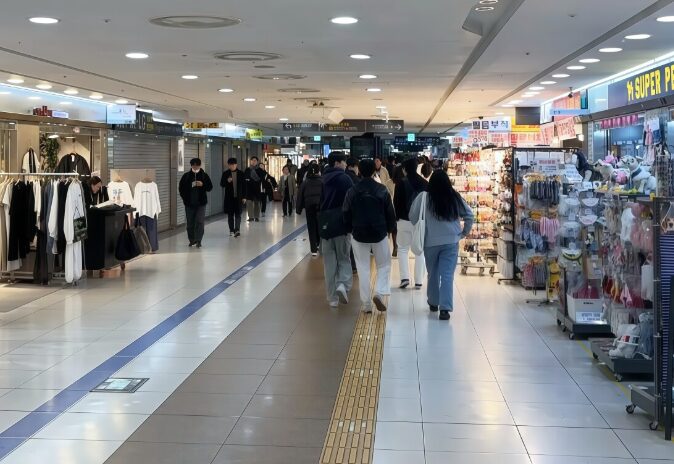
- [Korea] Japanese tourists ripped off at underground shopping center, Korean internet angry at store owner's attitudeNEW
- [Prime Minister Ishiba] Request for cooperation in passing on price hikes to ensure wage increases that do not fall behind inflationNEW
- [Regular] 6-year-old single mother arrested for seducing 23th grade boy and making him addicted to sexNotice
- When I asked the Ministry of Foreign Affairs why they haven't raised the level of the travel ban on China...Notice
- [Attorney Hiroko Kamitaki] "Kill any Japanese person, rape Japanese women, it is not discrimination. Whatever you do to a Japanese person, it is not discrimination" ← It turns out there is a dangerous lawyer in JapanNotice
- Video [Prime Minister Meloni] "From now on, anyone who enters Italy illegally will be immediately deported!" Do you agree with Meloni?Notice
- [Hummingbird Power] Shinjiro Koizumi's wife, Christel Takigawa, runs a solar power business as a foundation.Notice
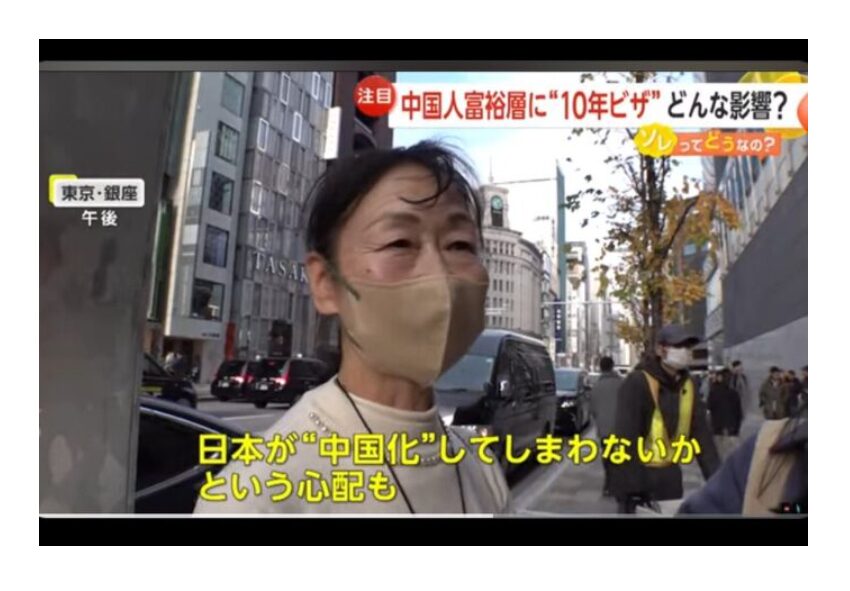
- [10-year visas for wealthy Chinese] Concerns that Japan will become "China-ized"...

 [Trump] Considering reducing aid to Ukraine, reversing it to deter China
- [Unlimited tax revenue?] Next fiscal year's budget proposal, the largest ever at 115.5 trillion yen, will be approved by the Cabinet on the 27th
- Foreign Minister Iwao has signed an agreement with Chinese Foreign Minister Wang Yi to promote school trips to China for Japanese elementary and junior high school students.
- [President Javier Milley's tax reform] Abolish 9% of taxes "to a maximum of six types"...Reduce number of ministries by half
- Am I the only one who thinks that Chinese laws are being changed little by little?
- [Video] Naoto Iwasaki: "China is our eternal neighbor... Chinese civilization is a great Asian civilization. We learned everything from Chinese characters, administrative systems, and religion from there to create the country of Japan."
- [Emperor] "I appreciate your hard work in the affairs of state day and night. Please take good care of yourself." Prime Minister Ishiba and other Cabinet members congratulated at luncheon held for the first time in five years
- Three men arrested on suspicion of attempted murder after dropping employee 9 metres with excavator; workplace bullying afoot
- [Tax revenues expected to reach new highs in fiscal 2025] Despite being at a record high for six consecutive years, the government is planning to increase taxes instead of lower them? Let's go to the next election.
- The tragic reality of Japanese-Korean couples, whose numbers are increasing every year: "Everyone looked down on Japanese women" - one woman was punched and had her nose broken...

 Ishiba's LDP to field pachinko group chairman in Upper House election
- [Breaking News] "Startup Visa" available nationwide for foreigners from January, for stays up to two years
- [Breaking News] 65 Diet members and others not indicted over LDP slush funds
- [Breaking News] Over 700 million yen to be donated to the LDP's "Red Feather" as a "political resolution" to the secret fund issue
- Trump: "I will aggressively pursue executions to protect my family and children from murderers and monsters" - Biden's decision to commute death row inmates' sentences
- [Minister of Foreign Affairs Iwao] Announces visa relaxation for Chinese people, making them very happy! New 10-year visa available for both single and family applications. People over 65 do not need a visa and can join the National Health Insurance during their 3-month stay [translation available]
- [Breaking News] Body of man found lying face up in middle school with blood coming from his head. No wallet or other items found. Investigation into both crime and accident - Nakatsugawa City, Gifu Prefecture
- Chief Cabinet Secretary Yoshimasa Hayashi: "There is no such thing as tax revenue that can be lost"... Discusses the 103 million yen barrier and the provisional gasoline tax rate
- Video [Shigeru Ishiba] "I will definitely protect the safety of the people! Shigeru Ishiba will do everything in his power to protect the people!"
- Breaking News [Prime Minister Ishiba] "Our stance with Ukraine remains unchanged" - Announcement of continued support / President Zelensky "Thanks for Japan's 4719 billion yen loan" - Agreement reached in telephone conversation [Video]
 [Former Ishin House of Representatives member, Tamotsu Shiiki] "I thought I could take advantage of her weakness of running away from home and have sex with her" Five-year prison sentence sought for sexual assault on a first-year junior high school girl (then 5) in Kabukicho, Tokyo
- [Sad news] High-income earners pay high insurance premiums, but are still burdened with high medical expenses when they become seriously ill. Low-income earners and life insurance companies offer reduced copayments and free treatment. The Ministry of Health, Labor and Welfare raises the upper limit of the high-cost medical care system, increasing the sense of unfairness.
- Man receives suspended death sentence after plows car into crowd in front of elementary school, injuring 30
- [Korean singer who criticizes treated water] Live concert to be held in Tokyo... "Isn't Japan hell?" Resentment on the Internet
- [Questions about the Governor's remarks ignoring criticism] Governor Yamashita of Nara Prefecture is also ignoring the voices of residents and prioritizing preferential treatment for foreigners. Why do we only listen to foreigners?
- [Mr. Tamogami] Has the LDP become so left-leaning? It has declined and become a "declining developing country." The prime minister and ministers must fight for the people even if it means they are covered in wounds, and create a system in which they can protect their own country.
- [Satoshi Taniguchi] Burial should be prosecuted for abandoning a body. Japan's clean groundwater will become undrinkable.
- [Sad News] It has been revealed that when the consumption tax was raised from 1997% to 3% in 5, the Ministry of Finance told a big lie: "The consumption tax is a tax for social security purposes, so there is no need to worry about the future and there will definitely be no economic downturn."
- [Osaka High Court ruling] Wearing a Hinomaru badge is deemed an expression of criticism of Korean residents in Japan / Banned in courtrooms, second trial also finds no illegality
- [Video] Takashi Kawamura, Assemblyman: "Don't assemblymen run elections without receiving bribes? Aren't they being asked by local assemblymen who have made it a business out of it?"

 Video [Scalpers rejoice?] The elimination of the 50 yen limit on the inbound tax exemption system is full of loopholes! Criticism focused on the LDP-Komeito preferential treatment system for Chinese people!
- [The 103 million yen barrier] The Democratic Party for the People: "We won't give in on 178 million"; Reiwa: "178 million is not enough! Raise it to 300 million"
- Video [Saori Sato] The Tokyo Shimbun newspaper is stating that Saori Sato never announced her candidacy. She answered an interview with the Tokyo Shimbun newspaper at the Chiyoda Ward Mayoral Election Pre-election Briefing, so isn't this a fabricated article?
- [Breaking News] New 10-year tourist visa for Chinese announced by Minister of Foreign Affairs Iwao in Beijing
- Video [Representative Kawamura Takashi] If they find out, some representatives will say, 'Oh, I'll just file an amended tax return,' but don't make fun of honest taxpayers!
- [Tanshingo-san] Finally lost it! "Hasn't Japan become an increasingly dangerous country since Ishiba became prime minister?"
- [The shadow of Chinese capital] Cremation fees in Tokyo are too high / Prices have skyrocketed since the operating companies of six funeral halls came under Chinese capital in the spring of 6 / Seven of the nine crematoriums in the 2 wards have been privatized and are managed by the same operating company
- Yuko Takegami of the Japanese Conservative Party: "The number of permanent foreign residents who are behind on their health insurance premiums is four times that of Japanese people, and in Toshima Ward, about 40% are behind on their premiums."
- Video [Chief priest of Kairyuoji Temple] furious at Nara Prefecture Governor: "It is a court ceremony that has been revived and inherited the tradition from the Nara period. If it is not carried out, it will be difficult to revive it." The canceled Tenpyo Festival was a valuable festival!
- Video [Good news] Subsidiary of JR Kyushu abandons plans to resume operations of high-speed ferry "Queen Beetle" due to cover-up of flooding issue / Officially announces withdrawal from Japan-Korea route after over 30 years!
 [Attorney Hiroko Kamitaki] "Kill any Japanese person, rape Japanese women, it is not discrimination. Whatever you do to a Japanese person, it is not discrimination" ← It turns out there is a dangerous lawyer in JapanNotice
- It seems that TV stations want to regulate SNS, but I'm glad that Elon Musk bought X. If it was a Japanese SNS, it would be over.
- TV Tokyo reporter warns: "I feel a strong sense of discomfort and contempt for using the occupational discriminatory term 'mass garbage' to refer to the people involved" → What else should we call them? 2000+ comments
- [Video] A large-scale "solar flare" occurred on Earth after midnight on the 10th. →The Ministry of Internal Affairs and Communications has stated that in the worst case scenario, a large-scale solar flare, which occurs less than once every 100 years, could cause mobile phones to be unusable for up to two weeks.
- [Korean TV Station] "Do you know that the pattern resembles the rising sun flag, a symbol of Japanese imperialism?" Protest against the pattern on a top Australian surfer's surfboard → Australia withdraws use
- [Illegal Kurdish Resident] "I'm in a hurry. I can't speak Japanese at all, and I'm not good at English either. I want to settle in Japan and work. Someone please help me!"
- [Saitama Prefectural Police] "In Kawaguchi City, a man (unknown characteristics) slashed a man with what appeared to be a bladed object and then fled the scene." → Hidden social media calls for reports that the man was a foreigner
- [Takashimaya] Repeated duty-free sales to foreigners living in Japan that are not normally permitted → 5 million yen in additional tax
- [Hashimoto Kotoe] The murder of the little boy was not the result of "individual intent" but "the result of more than half a century of education aimed at attacking Japanese people as a national policy." If we misjudge the cause, it will be done on a class-wide scale next.
- Video [Chinese people overseas] A post about trying a drink before buying it and then putting it back on the shelf is flooded with criticism ← Chinese people are currently the number one foreign visitors to Japan! Are crimes like this happening in Japan without us knowing?
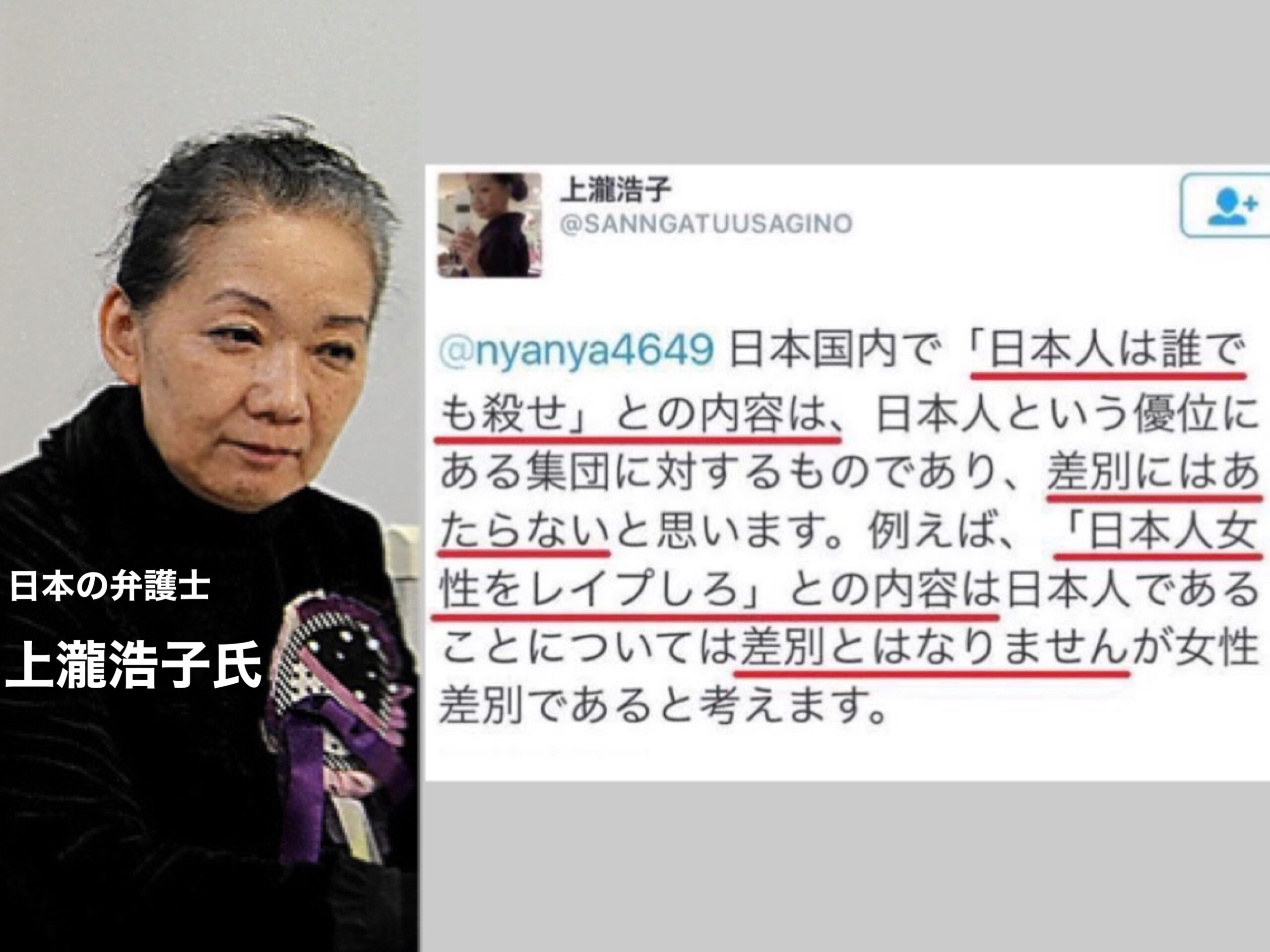
- [Attorney Hiroko Kamitaki] "Kill any Japanese person, rape Japanese women, it is not discrimination. Whatever you do to a Japanese person, it is not discrimination" ← It turns out there is a dangerous lawyer in JapanNotice
- Chinese person: "Why are Japanese people always hated? Why don't Japanese people reflect on their actions?" ← Comment after the murder of a Japanese boy in Shenzhen, China
- [Kotoe Hashimoto] The US has imposed a Level 3 travel ban on China (minors cannot walk around without an escort). The Kishida administration has imposed a Level 0 ban to deceive the public into thinking China is safe. This is the malice of a pro-China government.
- [Chinese influencer] "I hope this will happen in 100 years" → Posts a photo of Japan disappearing from the map (78 followers)
- Comparison video [Why are trees important?] We talk about global warming, but we cut down forests to build mega solar plants. Isn't that strange?
- [Is China having a bargain sale on Japanese land?] Japan is turning into a Chinatown
- [Koizumi Shinjiro] ← I ride the train. He claims to be on the side of the common people and took a selfie on the train to prove it, but he was flooded with criticism for his lack of common sense (putting his personal belongings on the seat and not covering other people's faces)!
- 17-year-old girl: "Ahhh, someone spied on me!" Man: "Oh, I'm transgender. I'm going to sue you for discriminating against me." Won the lawsuit...
- [Korean] "Korean people are brought up to believe that it is wrong to lie."
- [Sad news] The participation fee for the forum on gender equality is outrageous
 Elementary school student karate tournament: Athlete's association apologizes for dangerous behavior, announces punishment for second, suspends indefinitely, and covers medical expenses
- [Video] Ohtani stubbornly refuses to speak English when asked to do so in an interview, but speaks fluent English in his speech to all Dodgers fans at the victory parade
- [Video] Otani refuses to be interviewed by Fuji TV after his house was exposed lol
- Shohei Ohtani achieves his long-awaited first World Series victory! The Dodgers defeat the Yankees to become world champions for the 4th time in 8 years. In his first PS, he played in every game and hit 3 home runs.
- [Breaking News] Dodgers win, moving on to a dream showdown with the Yankees in the World Series!
- [Video] Chinese manager headbutts referee
- [Chinese soccer supporters] Shouting "Kill them! Kill them! Kill them!" during a match against Japan
- Video [Breaking News] Ohtani becomes the first player in history to hit 50 home runs and steal 50 bases with home runs in two consecutive at-bats -- Major League Baseball
- A Korean player elbows a Japanese player and breaks his front tooth. It is up to you to decide whether it was intentional or not.
- [Flooded with criticism!] Japan national team victim of laser pointer attack... Bahraini spectators' malicious disruption → "Disgusting behavior" and "Low level of civility" trend on X - World Cup Asian final qualifying round


 I truly believe that agriculture is national defense, right?NEW
- Video [Saori Sato] "I believe that if we leave immigrants alone, Japan will perish like the Roman Empire" - about the (self-proclaimed) refugees coming to Japan by planeNEW
- [Regular] 6-year-old single mother arrested for seducing 23th grade boy and making him addicted to sexNotice
- When I asked the Ministry of Foreign Affairs why they haven't raised the level of the travel ban on China...Notice
- [Hummingbird Power] Shinjiro Koizumi's wife, Christel Takigawa, runs a solar power business as a foundation.Notice
- [10-year visas for wealthy Chinese] Concerns that Japan will become "China-ized"...
- Am I the only one who thinks that Chinese laws are being changed little by little?
- [Emperor] "I appreciate your hard work in the affairs of state day and night. Please take good care of yourself." Prime Minister Ishiba and other Cabinet members congratulated at luncheon held for the first time in five years
- Three men arrested on suspicion of attempted murder after dropping employee 9 metres with excavator; workplace bullying afoot
- [Breaking News] "Startup Visa" available nationwide for foreigners from January, for stays up to two years
 [Minister of Foreign Affairs Iwao] Announces visa relaxation for Chinese people, making them very happy! New 10-year visa available for both single and family applications. People over 65 do not need a visa and can join the National Health Insurance during their 3-month stay [translation available]
- [Breaking News] Body of man found lying face up in middle school with blood coming from his head. No wallet or other items found. Investigation into both crime and accident - Nakatsugawa City, Gifu Prefecture
- Video [Shigeru Ishiba] "I will definitely protect the safety of the people! Shigeru Ishiba will do everything in his power to protect the people!"
- [Former Ishin House of Representatives member, Tamotsu Shiiki] "I thought I could take advantage of her weakness of running away from home and have sex with her" Five-year prison sentence sought for sexual assault on a first-year junior high school girl (then 5) in Kabukicho, Tokyo
- [Korean singer who criticizes treated water] Live concert to be held in Tokyo... "Isn't Japan hell?" Resentment on the Internet
- [Mr. Tamogami] Has the LDP become so left-leaning? It has declined and become a "declining developing country." The prime minister and ministers must fight for the people even if it means they are covered in wounds, and create a system in which they can protect their own country.
- [Satoshi Taniguchi] Burial should be prosecuted for abandoning a body. Japan's clean groundwater will become undrinkable.
- [Osaka High Court ruling] Wearing a Hinomaru badge is deemed an expression of criticism of Korean residents in Japan / Banned in courtrooms, second trial also finds no illegality
- Video [Scalpers rejoice?] The elimination of the 50 yen limit on the inbound tax exemption system is full of loopholes! Criticism focused on the LDP-Komeito preferential treatment system for Chinese people!
- [Tanshingo-san] Finally lost it! "Hasn't Japan become an increasingly dangerous country since Ishiba became prime minister?"
 [Hummingbird Power] Shinjiro Koizumi's wife, Christel Takigawa, runs a solar power business as a foundation.Notice
- [Unlimited tax revenue?] Next fiscal year's budget proposal, the largest ever at 115.5 trillion yen, will be approved by the Cabinet on the 27th
- Foreign Minister Iwao has signed an agreement with Chinese Foreign Minister Wang Yi to promote school trips to China for Japanese elementary and junior high school students.
- [Video] Naoto Iwasaki: "China is our eternal neighbor... Chinese civilization is a great Asian civilization. We learned everything from Chinese characters, administrative systems, and religion from there to create the country of Japan."
- [Tax revenues expected to reach new highs in fiscal 2025] Despite being at a record high for six consecutive years, the government is planning to increase taxes instead of lower them? Let's go to the next election.
- Ishiba's LDP to field pachinko group chairman in Upper House election
- [Breaking News] 65 Diet members and others not indicted over LDP slush funds
- [Breaking News] Over 700 million yen to be donated to the LDP's "Red Feather" as a "political resolution" to the secret fund issue
- Breaking News [Prime Minister Ishiba] "Our stance with Ukraine remains unchanged" - Announcement of continued support / President Zelensky "Thanks for Japan's 4719 billion yen loan" - Agreement reached in telephone conversation [Video]
- [Sad news] High-income earners pay high insurance premiums, but are still burdened with high medical expenses when they become seriously ill. Low-income earners and life insurance companies offer reduced copayments and free treatment. The Ministry of Health, Labor and Welfare raises the upper limit of the high-cost medical care system, increasing the sense of unfairness.
 [Questions about the Governor's remarks ignoring criticism] Governor Yamashita of Nara Prefecture is also ignoring the voices of residents and prioritizing preferential treatment for foreigners. Why do we only listen to foreigners?
- [Sad News] It has been revealed that when the consumption tax was raised from 1997% to 3% in 5, the Ministry of Finance told a big lie: "The consumption tax is a tax for social security purposes, so there is no need to worry about the future and there will definitely be no economic downturn."
- [Video] Takashi Kawamura, Assemblyman: "Don't assemblymen run elections without receiving bribes? Aren't they being asked by local assemblymen who have made it a business out of it?"
- [The 103 million yen barrier] The Democratic Party for the People: "We won't give in on 178 million"; Reiwa: "178 million is not enough! Raise it to 300 million"
- Video [Saori Sato] The Tokyo Shimbun newspaper is stating that Saori Sato never announced her candidacy. She answered an interview with the Tokyo Shimbun newspaper at the Chiyoda Ward Mayoral Election Pre-election Briefing, so isn't this a fabricated article?
- [Breaking News] New 10-year tourist visa for Chinese announced by Minister of Foreign Affairs Iwao in Beijing
- Video [Representative Kawamura Takashi] If they find out, some representatives will say, 'Oh, I'll just file an amended tax return,' but don't make fun of honest taxpayers!
- [Renho] Snatching a dig at Sanae Takaichi / Regarding her opinion on optional separate surnames for married couples, she said "I am also a politician under my maiden name," but her Takaichi surname was not her maiden name but her legal surname.
- Haraguchi: "We live in a world where drones are in full swing. How useful will drones like the Osprey be in real combat?"
- [Mayor Abe, Hinode Town, Oita Prefecture] "I will continue to take an opposing stance to burial cemeteries!" ← We need more mayors like this.
 [Korea] Japanese tourists ripped off at underground shopping center, Korean internet angry at store owner's attitudeNEW
- Video [Prime Minister Meloni] "From now on, anyone who enters Italy illegally will be immediately deported!" Do you agree with Meloni?Notice
- [Trump] Considering reducing aid to Ukraine, reversing it to deter China
- [President Javier Milley's tax reform] Abolish 9% of taxes "to a maximum of six types"...Reduce number of ministries by half
- The tragic reality of Japanese-Korean couples, whose numbers are increasing every year: "Everyone looked down on Japanese women" - one woman was punched and had her nose broken...
- Trump: "I will aggressively pursue executions to protect my family and children from murderers and monsters" - Biden's decision to commute death row inmates' sentences
- Man receives suspended death sentence after plows car into crowd in front of elementary school, injuring 30
- [LGBTQ activist couple] Adopted a boy, assaulted him for years, performed oral and anal rape on him, and forced him into prostitution. Men sentenced to 100 years in prison
- Video [China Kidnapping Case] A security camera captures the whole story of a girl being kidnapped in a public toilet. Her body without any organs will probably be found a few days later.
- [BREAKING] President Trump has announced that it will become official U.S. government policy that there are only two genders: male and female.
- President-elect Trump announces he plans to end transgender policies on first day in office
- Video: Elon Musk: "We're going to make huge cuts to government staff. They could be more productive elsewhere."
- China investigates medical companies over illegal procurement of 4,000 corpses for bone "graft material" manufacturing
- [BREAKING] Trump transition team plans to withdraw US from WHO on first day in office.
- [BREAKING] President Trump promises to repeal the estate tax.
- More foreigners visit Japan than ever before...Korean visitors dominate
- [US companies move to reconsider "excessive" diversity] Rules on appointing LGBT and female directors are "invalid"
- [Solar Panels] "Easy to make money" and "Earth-friendly" solar power generation is destroying families... The "horrible dark side" of sustainable clean energy
- 63% of Japanese are "uneasy" about Trump
- Italy is moving towards legalizing chemical castration for rapists and pedophiles.

 Earn money through self-affiliation! Only these 5 ASPs have self-packs
- To make money with FX, it's important to know which company to use! 7 FX company comparison rankings
- Earn tons of extra money with point activities! 8 recommended points sites
- Earn money through surveys! How to choose a site? 7 recommended survey sites
- Earn money easily with game apps! 7 recommended and fun smartphone games

 [Prime Minister Ishiba] Request for cooperation in passing on price hikes to ensure wage increases that do not fall behind inflationNEW
- Chief Cabinet Secretary Yoshimasa Hayashi: "There is no such thing as tax revenue that can be lost"... Discusses the 103 million yen barrier and the provisional gasoline tax rate
- [Sad news] The number of bankruptcies in November 2024 will be 11, the highest annual total since 834 → "The government has no policy. Politicians can live comfortably."
- [China] Imports of Japanese seafood to resume ← The timing makes it seem like the only way to settle the "death of a male student at a Japanese school" issue...
- [The reality of the weak yen] Foreign tourists "enjoy 42 days for 10 yen" while Japanese "live on 15 yen a month..." What is the difference?
- [Constitutional Democratic Party of Japan, Kazuhiro Haraguchi] "Finally, Japan is ranked 10th in high-tech exports! It's time to wake up. Japan's decline! Let's put a stop to it. Japan's decline!"
- Toyota's Mirai to be used as official vehicle for Paris Olympics; academics and engineers demand withdrawal
- [The flat-rate tax cut was meaningless] Real wages have fallen for 26 consecutive months… This year too, ordinary people will definitely have a “summer of saving”
- Video [Breaking News] "Real wages" decline for 26 consecutive months, the longest on record. In May this year, the figure was down 5% compared to the same month last year.
- [International Index] Japan falls from 4st place for 1 consecutive years to 38th place

 "Sanmoni" Masayoshi Son: "The reason for the weak yen is "Japan's declining strength." Over the past 30 years, big business leaders have neglected new technology, "criticizing young people for saying that." To revive the economy
- Yamada Denki to start selling Korean car [Hyundai]
- Video [Breaking News] H3 rocket No. 3 successfully separates satellite, launch successful!
- [Prime Minister Kishida] Confident in wage increases and flat-rate tax cuts: "The effects are coming out"
- [Prime Minister Kishida] "The Basic Policy 2024 has been approved by the Cabinet. Wages will rise, consumption will increase, and regions and companies will grow. Now is the perfect chance to realize a growth-oriented economy."
- [Tax revenue to exceed 70 trillion yen] Strong corporate performance exceeds 2 trillion yen mark for second consecutive year in FY23
- [Korean residents in Japan] "Living in Japan is 100 times better when you're old" - what's the surprising reason?
- [Video] American Professor Kelton: "In Japan, where prices are stagnant, there is no need to increase the consumption tax, and more money should be spent on public works." → "This is something all Japanese people should see."
- [GDP analysis] Rising prices barely cover wages, most goes to corporate profits
- [New banknotes issued] "Existing banknotes will no longer be valid" is false information → Bank of Japan warns!
 [Fifi] If the number of foreigners who don't follow the rules increases, the impression of foreigners will get worse and they will become a nuisance, so I want them to be strictly regulated. Foreigners are the ones raising their voices in this regard, so this isn't exclusionary or anything.
- The information program desk said, "We were criticized for asking her sister, Shinobu Nakayama, for a comment, but the scene was orderly, and Shinobu's comments were not forced and were in accordance with the rules." → No regrets
- [Video] Katayama: "(SNS) is true and false. There is no punishment or check. You can say whatever you want and whoever says it first wins." Higashino: "It's the same on TV." → Higashino is stating a very reasonable opinion.
- Megumi Toshiaki's personal opinion on the results of the Hyogo Prefectural Governor election: "When I see a delinquent kid walking around with his grandma on his back, I think he might actually be a good guy." "He was a total bad guy..."
- A Korean copyright management organization revealed that "K-POP is not selling at all overseas," and calculated the amount of tax collected in each country...
- Hollywood celebrities who said they would leave the US if Trump was re-elected are actually fleeing the US
- Matsumoto Hitoshi is a total winner! He will be returning to his seven regular shows from the beginning of the new year!
- [Breaking News] Matsumoto Hitoshi's side to withdraw lawsuit and apologize for defamation lawsuit over weekly magazine article
- Matsuko: The reason why it's hard to find the "egg section" in supermarkets... "It's scary..." to the unexpected truth. Ariyoshi: "That's an amazing reason."
- Mr. ASKA, recently more and more people are talking about the theory that "the moon is artificial." I also think so. There is nothing better than that to observe the earth. Life forms are building bases on the moon.

 [Breaking News JUST IN] Jungle Pocket member Saito Shinji referred to prosecutors on suspicion of sexual assault
- [Weekly Jitsuwa] Christel Takigawa (46), cheating?
- [Maezawa] "Japanese people should protect as much of Japan's traditional things as possible, whether it be land, nature, art, or traditional culture..." → He purchased important national cultural properties from closed art museums
- Beat Takeshi talks about his refusal to appear on 24-hour TV. He firmly refused, saying, "I will never appear on a hypocritical program." He also made a scathing criticism of celebrities who earn high fees, saying, "Don't take money from poor people. If it's a charity event, everyone should appear for free."
- Yoshimoto-san, you signed a paper saying that you wouldn't put any pressure on people who quit, right? But now that you've quit, all your TV appearances are gone. Is this some other form of pressure? Are you lying again? Is it just a pretense?
- [Panther Mukai] Commenting on Akiko Wada's controversy: "What if Akko really liked sea lions? What if she really thought sea lions were cute?"
- [Fifi-san] Japanese media is strange. There is no other country that finds fault with everything and pushes the entertainment of a country that illegally occupies its territory.
- [Yahoo! Answers] People are talking about how they guessed Otani-san's wife a long time ago
- [Breaking News] Prime Minister Kishida intends not to run in LDP presidential election, government officials reveal
- [Ann Mika] Reveals her real Korean name! Furthermore, the name she used briefly in the entertainment industry a long time ago causes a stir in the studio → Internet users say, "I don't care, but please get rid of the alias in Japan."
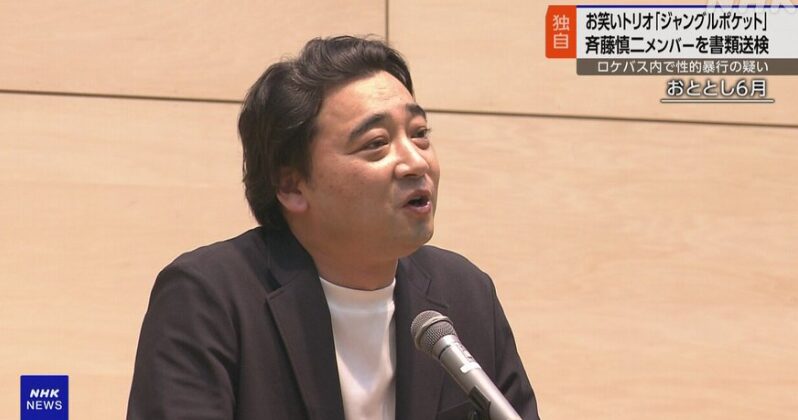
The following is from X (formerly Twitter)
[Dark HunterBy】


引用元 https://news.yahoo.co.jp/articles/0bd254852d16471cea786af8574242e3c191238fEveryone's comments
- If diplomatic relations between Japan and South Korea improve, the number of visitors from South Korea will increase. This means that tourist spots may become less crowded from next year onwards.
- The reason why there are so many Koreans visiting Japan is simply because traveling to Japan is interesting and fun, not because Japan-Korea relations are good. Even during the NoJapan campaign, the number of visitors decreased, but many still came to visit.
- It's not overwhelming. In terms of population, Taiwan is higher (higher visit rate), and Hong Kong is even higher. Even though there are various problems, China, with a population of over 14 billion, is just too small.
- Conversely, when we asked which countries Japanese people often go to, the order was Korea, America, Taiwan, Thailand, and Vietnam. Canada, Australia, and Europe ranked low, perhaps because they are far away and expensive, or perhaps because people don't find them very attractive.
- I'm not happy at all about the increase in foreign tourists. I want something done about the weak yen soon. There are too many foreigners, not just from Asia but also from Europe and America, who shouldn't come here.
- Duty-free shopping spree? Let's stop tax-free shopping. We want tourists from Taiwan, Europe and America.
- Taiwan's population is less than half that of South Korea and one-sixtieth that of China. Considering this, the rate at which Taiwanese people visit Japan is overwhelmingly high.
- They probably come to Japan simply because it is cheap, close, and short. In other words, they don't have the energy to go far away. I wouldn't say it's a nuisance, but I'm not very happy about it either.
- It doesn't matter where foreigners are from as long as they behave properly, follow Japanese rules, don't cause trouble for others, don't litter, etc.
- Hey, what happened to the boycott of Japan? I need you to do something about it.
- Considering the population ratio, Taiwan has an overwhelming number of overseas visitors. One in four people have been there. So, does that mean one in four Japanese people go abroad in a year? No way.
- Hmm, please spare me >_
- The fact that so many foreigners are coming to Japan means that the country has become a cheap place. It's all because of Kishida.
- The country with the lowest spending among visitors to Japan is South Korea.
- The actual numbers are being grasped and tracked, and they may just disappear from the sinking ship.
- It's not overwhelmingly strong right now, but won't China overtake us in about two months?
- What happened to the NO JAPAN movement?
Editor B’s opinion
When I saw the news that the number of foreign tourists visiting Japan had reached a record high, I felt a strong sense of recovery and development in the tourism industry. I was particularly surprised to see that visitors from South Korea came out on top, but at the same time, I was also drawn to the high proportion of visitors from Taiwan. This data shows once again that Japan is gaining popularity around the world as a tourist destination.
The number of foreign visitors to Japan from January to November this year has already been reported to be 1 million, exceeding the record set in 11 and symbolizing a major recovery for Japan's tourism industry. It is gratifying to see that, having overcome the difficult situation caused by the COVID-3338 pandemic, many foreign tourists are once again visiting Japan.
In particular, there were an overwhelming number of visitors from South Korea, at 795 million, accounting for approximately 23.8% of the total. However, when considered in terms of population ratio, the number of visitors from Taiwan seems small at 555 million, but considering the population of about 2300 million, this works out to approximately 23% of people visiting Japan. This is an extremely high percentage, showing how much Taiwanese people value the opportunity to visit Japan.
Meanwhile, reports point out that the reason behind South Korea's rise to the top in terms of visitors is the improvement in Japan-South Korea relations. However, even in times past when Japan-South Korea relations deteriorated, the number of tourists from South Korea continued to visit Japan without a significant decline, so it cannot be said that the reason is simply the improvement in relations. Rather, I think a major factor is that the attractions of Japan's tourist destinations, food culture, and shopping continue to be highly valued.
Additionally, the number of visitors from China was 638 million, second only to South Korea, but this figure is down compared to 2019. This is believed to be due to the slowdown in the Chinese economy and the fact that air travel has not yet fully recovered. However, depending on future economic conditions and the expansion of air travel, it seems likely that the number of visitors from China will increase again.
Thus, while an increase in foreign tourists is expected to have an economic effect, I feel that many issues remain, such as inbound measures and easing congestion at tourist spots. In particular, in tourist spots, there are concerns about manners and increased burdens on waste disposal, which may have an impact on local residents. I think an important issue will be how to coexist with local residents while welcoming tourists.
Furthermore, in order for the tourism industry to continue to grow as a pillar supporting the economy, I feel that it is necessary to further increase the appeal of tourist destinations and create an environment in which foreign tourists can enjoy themselves comfortably, such as by strengthening multilingual support and promoting cashless payment.
As the number of foreign visitors to Japan increases, shouldn't we strengthen our efforts to attract tourists not only to tourist destinations but also to regional cities? I think it will be important to take steps to revitalize regional economies while easing congestion in urban areas. For example, if we can increase interest in regional areas by promoting historical buildings and traditional culture, the scope of tourism will likely expand.
The recovery of the tourism industry will have a ripple effect on many industries, including the accommodation, food and beverage, and retail industries, so it will be necessary to continue strengthening inbound strategies. However, as the number of foreign tourists increases, problems with public safety and manners may arise, so it is essential to take a balanced approach with local residents.
While this data reaffirms Japan's appeal as a tourism-based nation, it also highlights future issues. In particular, popular tourist destinations need to alleviate overcrowding and improve transportation. I also think that measures to encourage people to disperse to rural areas, rather than just to tourist destinations, are necessary.
It is good to see that an increase in foreign tourists will help spread awareness of Japanese culture and its charms, but at the same time, we should also promote guidelines to prevent trouble before it happens and educate tourists on tourist etiquette. By creating an environment where tourists can enjoy themselves with peace of mind, we can attract more repeat visitors.
The recent record-breaking number of foreign visitors to Japan is evidence that Japan's tourism industry is regaining vitality, but I believe it is important not to let this end as a passing fad, but to develop it into a sustainable tourism policy.
Written by: Editorial Department B
Recent Posts
-
I truly believe that agriculture is national defense, right?
-
Video [Saori Sato] "I believe that if we leave immigrants alone, Japan will perish like the Roman Empire" - about the (self-proclaimed) refugees coming to Japan by plane
-
[Korea] Japanese tourists ripped off at underground shopping center, Korean internet angry at store owner's attitude
-
[Prime Minister Ishiba] Request for cooperation in passing on price hikes to ensure wage increases that do not fall behind inflation
-
[10-year visas for wealthy Chinese] Concerns that Japan will become "China-ized"...



Comment